
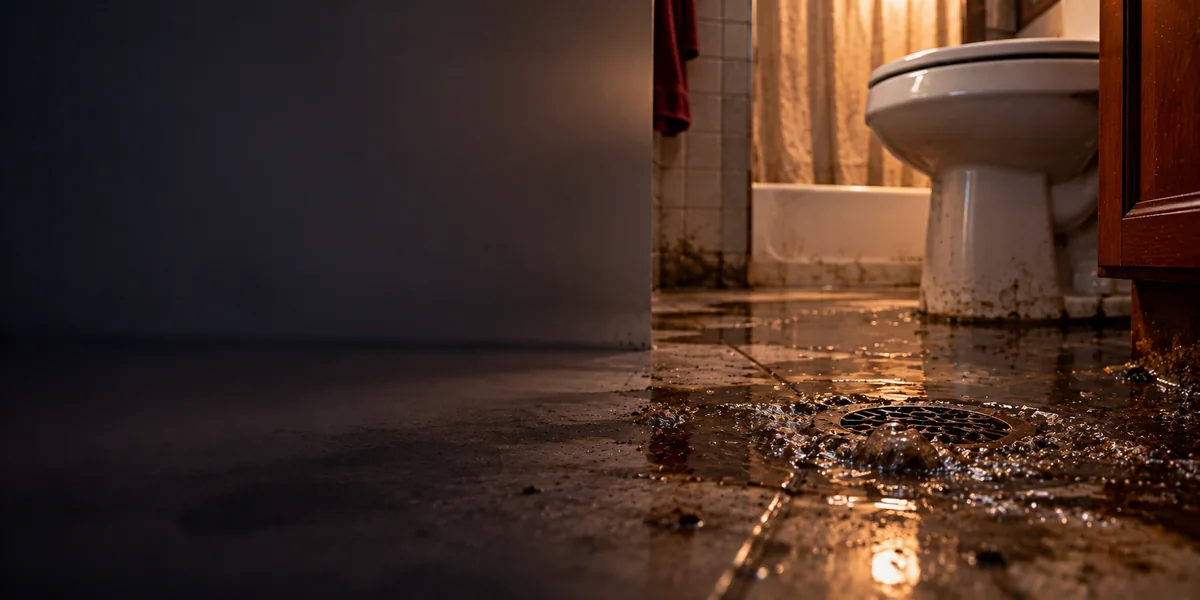
Yes, you can sue your landlord for a raw sewage backup.
A sewage backup is treated by courts and city health departments as an immediate 24-hour biohazard emergency. Unless the landlord can prove with a plumber's report that you personally clogged your own toilet with a foreign object, the landlord is legally required to fix the sewer line immediately and hire a professional biohazard cleanup crew. You can sue in Small Claims Court (or hire an attorney if you got sick) to recover:
- 100% Rent Refund for every day your home had raw sewage, no working toilet, or smelled like human waste.
- Emergency Hotel & Meal Costs while the sewage is cleaned and disinfected.
- 100% Replacement Value for Sewage-Touched Belongings (rugs, shoes, clothes, furniture, and towels touched by sewage cannot be safely washed and count as a total loss).
- Refund of Any Illegal Plumber Bill if the landlord tried to charge you for a building main-line or tree-root clog.
What to Know Before You Act
- A Mop or Carpet Shampooer Is Illegal for Raw Sewage: Raw sewage is classified as "Category 3 Black Water." If sewage soaked into your apartment's carpet, carpet pad, or lower drywall, the landlord cannot just wet-vac or shampoo it—by industry health standards, porous materials soaked in sewage must be torn out and replaced.
- How to Beat the "You Flushed Wipes!" Blame Game: Landlords almost always try to blame the tenant for a sewer backup. However, if sewage bubbles up into your bathtub or shower when you aren't even flushing your toilet (or when upstairs neighbors run water), that proves the clog is in the building's main sewer line or underground street pipe—which is 100% the landlord's responsibility.
- Never Clean Raw Sewage Yourself: Raw sewage carries E. coli, Hepatitis A, Salmonella, and parasites. Do not let your landlord tell you to "bleach it yourself." If they refuse to send a biohazard crew within 24 hours, call your City Health Department (or 311) immediately.
- Everything Porous Touched by Sewage Is a Total Replacement Loss: Take photos of every pair of shoes, rug, suitcase, piece of clothing, or furniture leg that touched the sewage water before throwing it away—judges do not expect you to keep or wash items soaked in human waste.
- 24 Hours Is the Legal Deadline, Not 30 Days: Unlike a broken cabinet that can wait two weeks, a backed-up sewer line or non-working toilet is an emergency that landlords must start fixing within 24 hours.
Who Is Responsible for the Sewer Clog? (How to Prove You Didn't Cause It)
Whenever raw sewage erupts into an apartment, landlords instinctively deploy the same defensive accusation: "You must have flushed flushable wipes, grease, or hygiene products—this repair bill is on you." In apartment buildings, plumbing physics tells a completely different story.
Use this breakdown to prove exactly where the obstruction occurred and why the property owner is legally liable:
| Symptom & Location | Plumbing Reality & Physics | Who Is Legally Responsible? |
|---|---|---|
| Sewage Bubbling Up in Ground-Floor / Basement Tub | By gravity, the whole building's upstairs drainage flows downward. If the underground main line or municipal sewer connection is blocked, all upstairs wastewater backs up out of the lowest drain in the building—even if your own faucets are turned off. | 100% Landlord Responsibility: The tenant in the ground-floor unit did not cause the backup; they are simply the lowest exit point for the entire complex. |
| Tree Roots, Mud, or Collapsed Clay Sewer Pipes | Older apartment complexes often have exterior clay or cast-iron pipes invaded by tree roots or crushed by soil settling dozens of feet outside the building foundation. | 100% Landlord Responsibility: Ask the plumber: "Did your motorized snake pull back tree roots or mud?" Photograph the auger head on site. |
| Multiple Fixtures Gurgling and Backing Up Simultaneously | If the toilet bubbles when the shower drains, or wastewater rises into both the tub and kitchen sink, the blockage is deep inside the building's central vertical stack, not an individual fixture trap. | 100% Landlord Responsibility: Common structural lines and vertical stacks are common building infrastructure under landlord duty. |
| Single Isolated Toilet Overflow | Water only backs up over the rim of one specific toilet when flushed, while the tub, sink, and other drains flow freely. | Tenant Responsibility (Unless Line Was Clogged Before Move-In): Confined to the internal porcelain toilet trap. |
Never Pay a Landlord's Plumber Invoice Without an Inspection Camera Video
If your landlord attempts to deduct hundreds or thousands of dollars from your deposit or add a plumbing fee to your monthly rent, refuse to pay unless they provide an unedited, continuous sewer camera video showing an obstruction caused by you inside your private line. Without that objective proof, small claims judges routinely dismiss landlord plumbing charges against tenants.
To understand overall small claims dollar limits and court procedures across all tenant disputes, consult our master guide on suing your landlord.
Why "Mopping & Shampooing" Raw Sewage Breaks Health Standards (IICRC S500 Rules)
Property managers frequently try to cut corners by handing the on-site janitor a shop vac and a bottle of bleach, or renting a home carpet shampooer. In the eyes of public health officials and building code inspectors, this is not just inadequate—it is an unlawful hazard.
Under the IICRC S500 Standard for Professional Water Damage Restoration, raw sewage is classified as Category 3 "Black Water". Black water contains pathogenic microorganisms, including Salmonella, E. coli, Hepatitis A, rotavirus, endotoxins, and parasitic roundworms.
- Mandatory Removal of Porous Materials: Carpeting, foam carpet padding, upholstered baseboards, and water-softened gypsum drywall cannot be sanitized after absorbing raw sewage. The porous matrix traps microscopic pathogens permanently. Certified restoration requires slicing out carpet, bagging it in biohazard disposal containers, and cutting dry lines in drywall at least 12 inches above the water mark.
- Hospital-Grade EPA Antimicrobials: After extraction, structural framing, concrete slabs, and subflooring must be saturated with professional EPA-registered biocides designed specifically for human biohazards.
- Industrial HEPA Air Scrubbers: Sewage water releases microscopic aerosolized bacteria into the air. True remediation requires commercial air scrubbers equipped with certified HEPA filtration running continuously to cleanse circulating air.
If your landlord refuses to remove sewage-soaked carpets or lower drywall, take photos immediately and call your Municipal Health Department or Code Enforcement (311). An inspector will issue an official notice of violation compelling professional biohazard remediation.
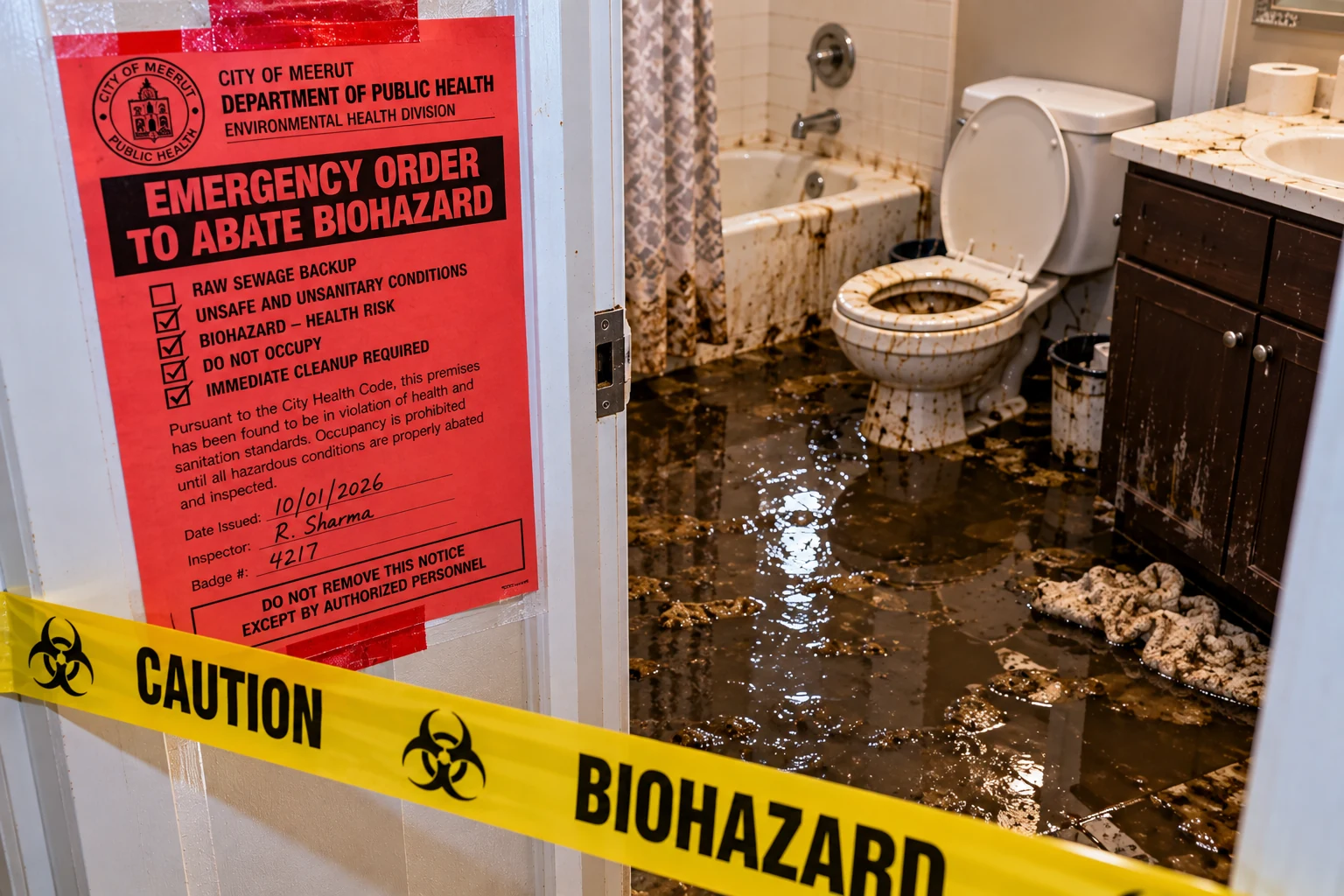
Health Risks of Raw Sewage Backups (CDC & EPA Standards)
Raw municipal sewage is classified under environmental health protocols as Category 3 Black Water—defined as grossly contaminated liquid containing pathogenic microorganisms and biological toxins capable of causing severe human illness or death upon ingestion, inhalation, or skin contact.
According to guidelines established by the Centers for Disease Control and Prevention (CDC) and the U.S. Environmental Protection Agency (EPA), untreated wastewater carries numerous hazardous infectious agents:
- Bacterial Pathogens: Escherichia coli (E. coli), Salmonella, Shigella, and Campylobacter, which trigger acute gastroenteritis, bloody diarrhea, abdominal cramping, dehydration, and potential kidney failure (Hemolytic Uremic Syndrome).
- Viral Contaminants: Norovirus, Rotavirus, and Hepatitis A, which can survive on damp surfaces for days and cause severe acute viral illness.
- Parasitic Organisms: Cryptosporidium and Giardia lamblia, microscopic protozoa that cause persistent gastrointestinal infections resistant to basic chlorine disinfection.
- Airborne Bioaerosols & Endotoxins: As raw wastewater bubbles up through floor drains or toilets, it releases microscopic aerosolized droplets and bacterial endotoxins that irritate mucous membranes and trigger acute respiratory distress, particularly in children and immunocompromised tenants.
How Documented Health Effects Support a Legal Damages Claim
In residential tenant lawsuits, experiencing medical symptoms does not automatically inflate a case into a speculative windfall. Instead, courts require documented proximate causation:
- Documenting Contemporaneous Care: If you or your children experienced nausea, fever, vomiting, eye infections, or respiratory distress, seek clinical medical evaluation immediately. Inform the physician that you were exposed to raw sewage in your home so the etiology is recorded in the permanent medical chart.
- Recovering Medical Expenses: Actual clinical expenses—including urgent care copays, diagnostic stool pathogen tests, IV hydration therapy, and prescribed medications—are directly recoverable as economic damages in Small Claims or Civil Court.
- Supporting Habitability Abatement: Objective medical records provide compelling evidence of the home's complete unfitness for human occupancy, preventing the landlord from claiming that the sewage leak was a "minor temporary inconvenience."
Primary Legal & Health Authorities (Sources)
- Centers for Disease Control and Prevention (CDC): Health Hazards of Wastewater and Sewage Exposures (Guidance for Environmental Health Professionals).
- U.S. Environmental Protection Agency (EPA): Flood Cleanup and the Air in Your Home (EPA Document 402-F-01-025).
- Institute of Inspection, Cleaning and Restoration Certification (IICRC): IICRC S500 Standard for Professional Water Damage Restoration (Category 3 Water Criteria).
- American Public Health Association (APHA): Standard Methods for the Examination of Water and Wastewater.
- California Civil Code § 1941.1 & Texas Property Code § 92.052: Statutory landlord obligations to maintain plumbing and sewer systems in sanitary condition.
What to Do in the First 24 Hours (Step-by-Step Emergency Playbook)
The first 24 hours of a sewer backup are critical for protecting your health, preserving your possessions, and securing your legal standing for court:
-
1
Evacuate Vulnerable Occupants and Restrict Contact
Keep children, infants, and pets completely out of the contaminated rooms. Do not walk through sewage puddles in cloth sneakers or barefoot; wear rubber boots and wash hands thoroughly.
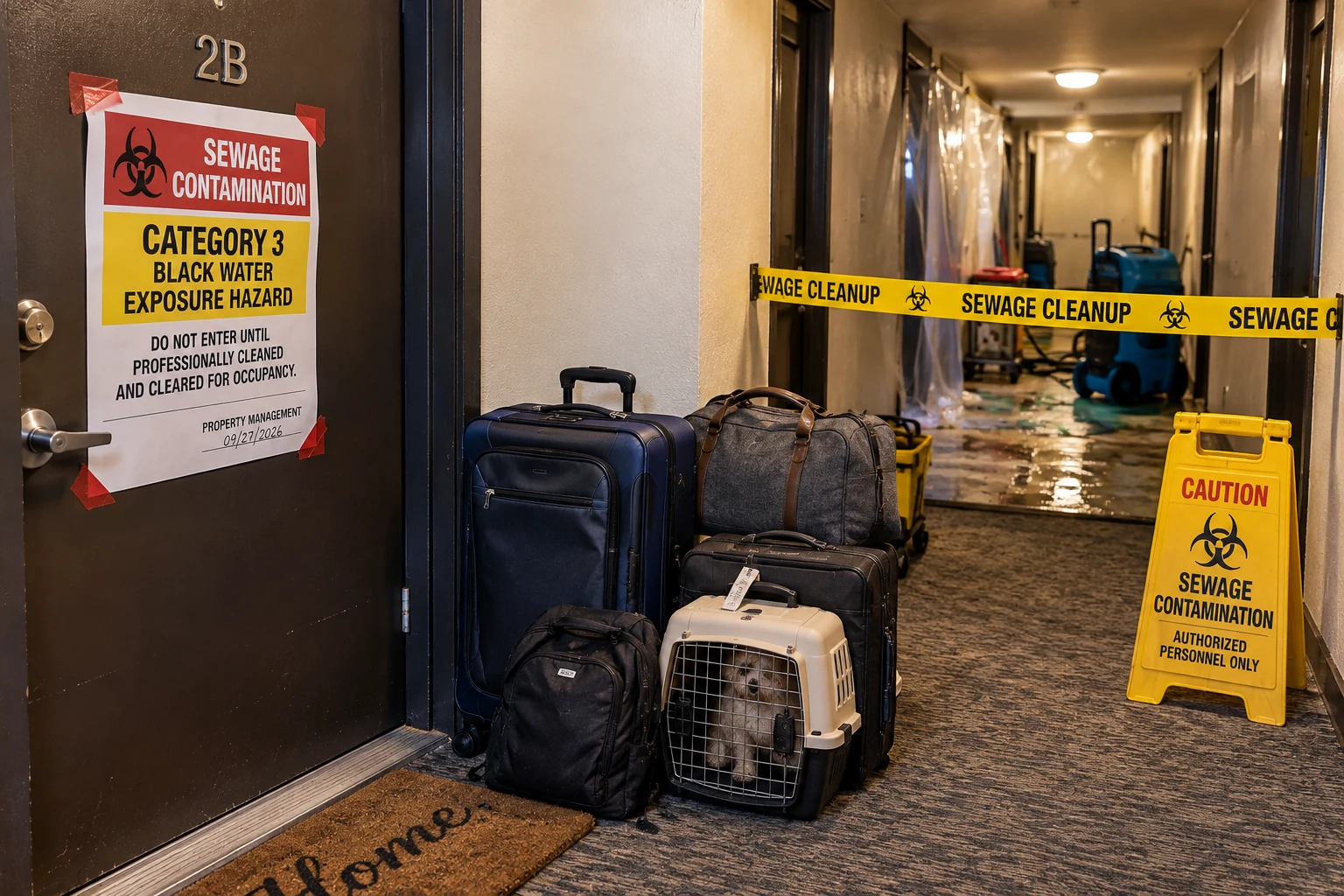
Step 1 Containment: Immediately isolate sewage-flooded zones and relocate family and pets away from Category 3 biohazards. -
2
Record Video of Drains Actively Gurgling or Bubbling
Capture a continuous 30-second video showing murky water and toilet paper rising up from the bathtub drain or floor drain while your own faucets are turned off. This provides definitive evidence that sewage is backing up from the building line rather than overflowing from your own use.
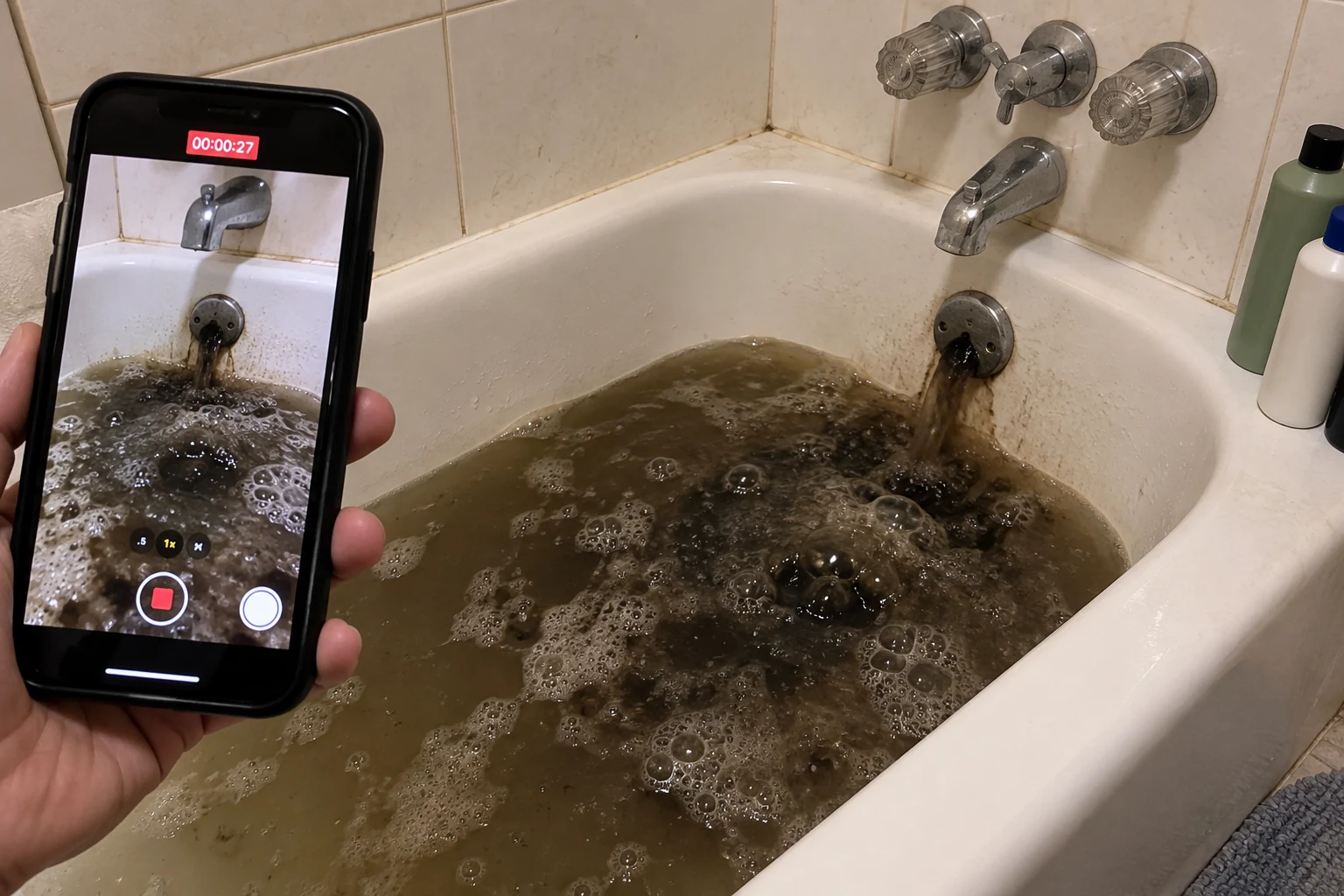
Step 2 Video Evidence: An uncut video showing active backflow with fixtures turned off conclusively refutes landlord claims of tenant misuse. -
3
Interview the Responding Plumber and Capture the Ticket
When the plumber snakes the line, politely ask: "How many feet down the pipe was the blockage, and what did the auger pull out?" Ask them to write the footage (e.g., "Main line clear at 50 ft — roots") on their work ticket. Take a quick photo of the ticket before they hand it to management.
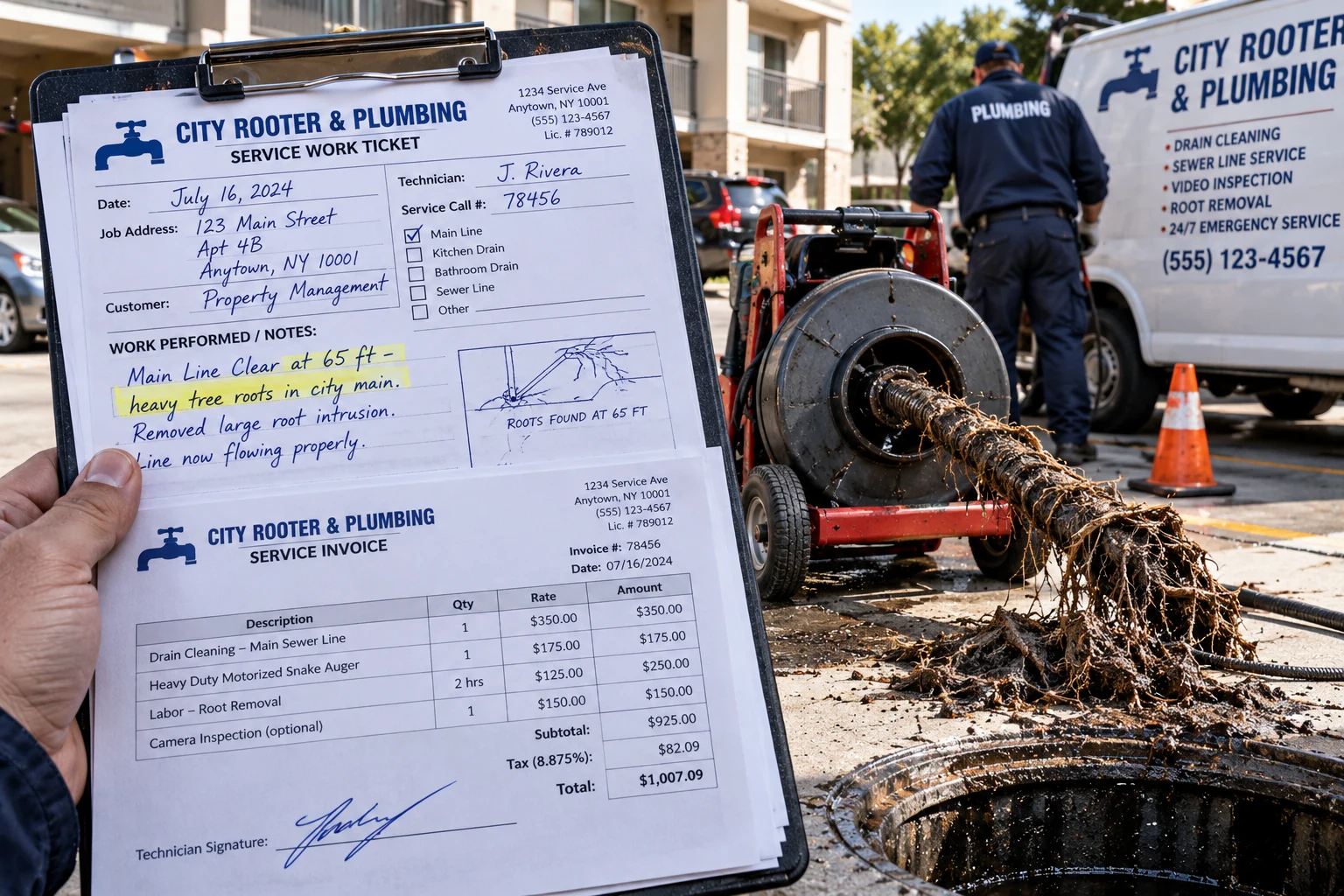
Step 3 Root-Cause Proof: Plumber service tickets documenting tree roots or main stack blockages establish 100% landlord liability. -
4
Submit Urgent Notice in Writing & Request Hotel Relocation
Send an email or message through the landlord's online portal stating that the apartment has experienced a Category 3 Black Water event, renders the home legally uninhabitable, and demands immediate hotel relocation.
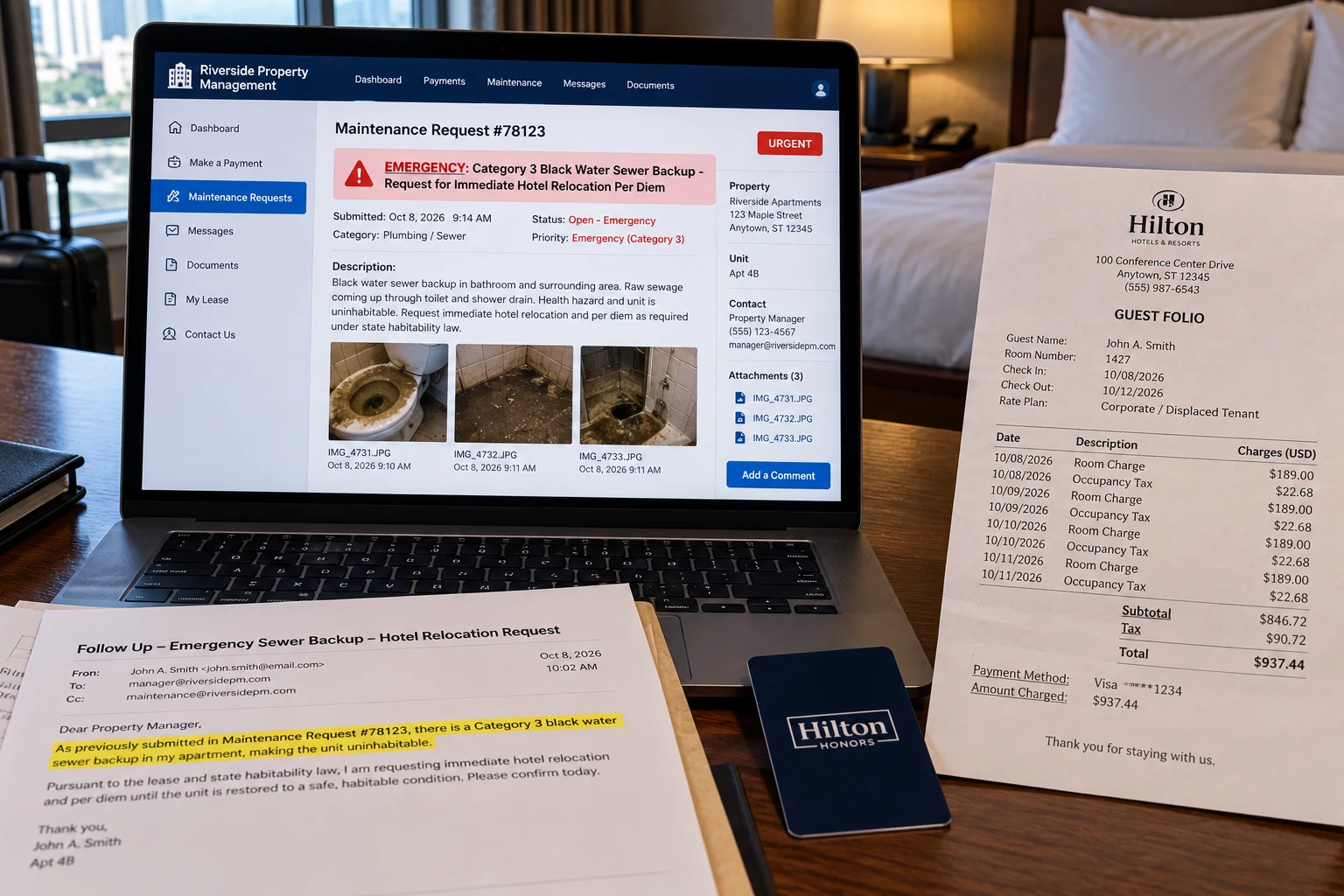
Step 4 Emergency Notice: Written notice of uninhabitability delivered alongside hotel receipts preserves your statutory right to full relocation reimbursement. -
5
Contact City Health Department If Unaddressed Within 24 Hours
If the landlord fails to dispatch a licensed plumber and certified biohazard cleanup crew within 24 hours, dial 311 or contact your County Department of Public Health immediately to trigger a mandatory emergency inspection.
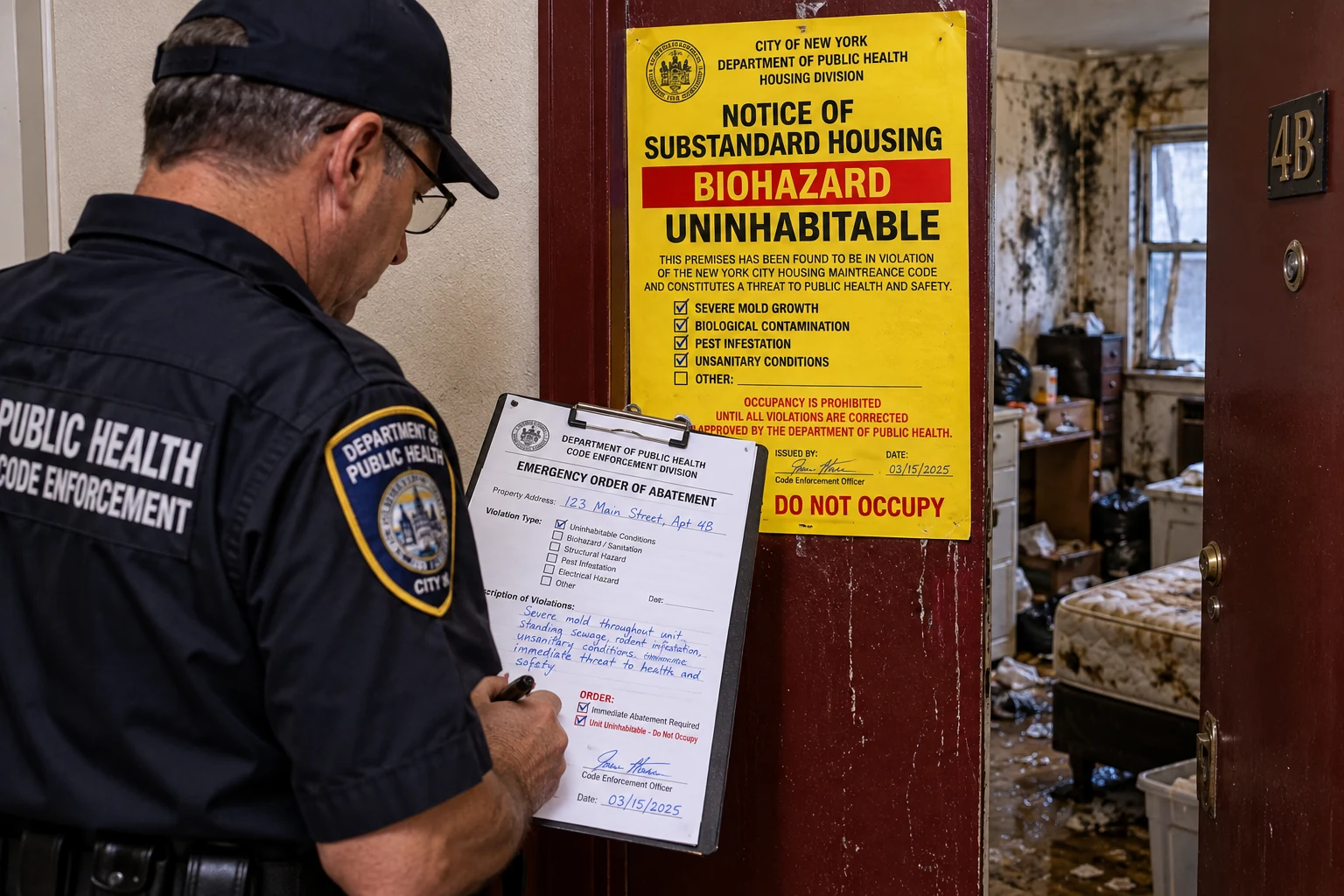
Step 5 Code Enforcement: Official public health abatement orders trigger automatic statutory rent withholding and constructive eviction rights.
How to Claim 100% Replacement for Sewage-Ruined Belongings
Unlike fresh water damage where certain hard goods can simply be wiped down, items contaminated by raw sewage are treated under legal standards as a total loss. Judges and insurance adjusters do not expect tenants to wear shoes, sleep on mattresses, or use towels that have been steeped in raw fecal matter.
Follow these strict documentation guidelines to claim 100% replacement value in Small Claims Court:
| Category of Personal Property | Remediation Standard | How to Prove Value in Court |
|---|---|---|
| Porous Goods (Shoes, Rugs, Bedding, Clothes, Towels) | Total Loss (100% Replacement): Bacteria and viral particles embed deeply into fabric weaves and foam insoles. | Photograph items sitting in the sewage from a safe doorway. List brand names, sizes, and take screenshots of current retail prices online. |
| Cardboard Boxes, Luggage, and Paper Documents | Total Loss (100% Replacement): Cardboard and canvas absorb sewage fluids instantaneously. | Photograph waterlines on closet or basement storage boxes before discarding. Itemize destroyed contents. |
| Hard Non-Porous Items (Plastic, Metal, Glass) | Sanitizable: Can be soaked in hospital-grade disinfectant and rinsed clean. | Claim compensation for disinfectant cleaning supplies or professional sanitization fees. |
| Medical Copays & Prescription Records | Personal Injury Damages: Gastroenteritis, skin rashes, respiratory irritation, or nausea. | Keep urgent care discharge summaries, physician notes, and pharmacy receipts for antibiotic treatments. |
Never Throw Ruined Items Away Without Visual Proof
Do not let maintenance crews quickly toss your contaminated sneakers, laundry baskets, and furniture out the window into a trailer without taking clear photos first. In court, an empty spreadsheet without photos will be questioned; a spreadsheet supported by clear photos of sewage-stained belongings will result in full compensation.
Ready-to-Send Raw Sewage Biohazard & Reimbursement Demand Letter
Because raw sewage represents an acute health emergency, your formal demand letter must specify strict 24-hour response deadlines, cite Category 3 Black Water biohazard cleanup protocols, and request emergency relocation and full property restitution.
Use this template, fill in your details, and deliver it immediately via electronic portal/email followed by USPS Certified Mail:
VIA CERTIFIED MAIL (RETURN RECEIPT REQUESTED) & HAND DELIVERY / EMAIL

Date: [CURRENT DATE]

To: [LANDLORD OR PROPERTY MANAGEMENT COMPANY NAME]
Address: [OFFICIAL LEASE NOTICE ADDRESS]
City, State, Zip: [CITY, STATE, ZIP]

From: [YOUR FULL NAME]
Rental Address: [YOUR APARTMENT NUMBER AND STREET ADDRESS]
Phone Number: [YOUR PHONE NUMBER]
Email: [YOUR EMAIL ADDRESS]

SUBJECT: EMERGENCY FORMAL NOTICE OF RAW SEWAGE BIOHAZARD BACKUP — DEMAND FOR LICENSED REMEDIATION, 100% RENT ABATEMENT, HOTEL RELOCATION, AND PROPERTY RESTITUTION

Dear [LANDLORD OR PROPERTY MANAGER NAME],

This letter serves as emergency written notice under state sanitary housing codes and the implied warranty of habitability that my rental unit at [YOUR APARTMENT NUMBER] has suffered an active raw sewage backup, creating an acute biohazard and rendering the premises immediately uninhabitable.

1. OCCURRENCE AND SOURCE OF SEWAGE OVERFLOW:
On [DATE AND TIME OF INCIDENT], raw sewage containing human waste, wastewater, and noxious fumes erupted into my living space through [SPECIFY: bathtub drain / shower basin / toilet / basement floor drain].
- Main-Line Nature of Clog: Wastewater bubbled up into lower fixtures while my fixtures were not in use, confirming that the obstruction is located in the building's central vertical stack or main sewer connection. (Video and photographic evidence attached).
- Scope of Inundation: Sewage has saturated [SPECIFY: bathroom floor / hallway / bedroom carpet / drywall].

2. MANDATORY CATEGORY 3 BLACK WATER REMEDIATION STANDARDS:
Under IICRC S500 Standards and municipal health codes, raw sewage constitutes Category 3 Black Water laden with pathogenic bacteria (E. coli, Salmonella) and infectious biohazards. Merely mopping or shampooing carpet is illegal and insufficient. Professional remediation requires:
a. Removal and disposal of all sewage-saturated carpeting, padding, and affected drywall baseboards.
b. Application of hospital-grade EPA-registered antimicrobial biocides to subflooring and framing.
c. Continuous operation of commercial HEPA air scrubbers.

3. REQUIRED IMMEDIATE REMEDIES (STRICT 24-HOUR DEADLINE):
Because raw sewage in living quarters is an acute emergency, I demand that management initiate the following actions within TWENTY-FOUR (24) HOURS of receipt of this notice:
1. Retain an IICRC-certified biohazard restoration contractor to perform complete extraction and structural tear-out.
2. Provide immediate hotel accommodations or confirm a 100% daily rent refund ($[DAILY RENT, e.g., $60/day]) until the unit is certified sanitary.
3. Withdraw any unauthorized plumbing charges or repair bills improperly assessed against my account.
4. Agree to reimburse me in the amount of $[TOTAL SUM] for ruined personal belongings (shoes, rugs, bedding, furniture) that suffered total loss from sewage contact (itemized sheet attached).

4. RESERVATION OF RIGHTS:
If certified biohazard remediation and emergency accommodations are not provided within 24 hours, I will immediately report this violation to the County Department of Public Health and municipal Code Enforcement, and pursue all available legal remedies—including filing an emergency action in Small Claims Court for rent abatement, property damages, and declaring constructive eviction to terminate my lease without penalty.

Please confirm your scheduled course of emergency action in writing immediately at [YOUR EMAIL ADDRESS].

Sincerely,

_________________________________________
[YOUR SIGNATURE]

[YOUR PRINTED NAME]
Tenant at [YOUR APARTMENT NUMBER]
Emergency Delivery Guidelines:
- Deliver immediately: Hand-deliver a physical copy to the on-site leasing office and email a copy marked "URGENT: HEALTH CODE EMERGENCY."
- Mail Certified copy: Follow up immediately with a USPS Certified Mail copy with Return Receipt Requested for your formal court file.
- Attach proof bundle: Staple your video screenshots, photo proof of contaminated items, and plumber work ticket to the letter.
Frequently Asked Questions
24 hours. Raw sewage is classified as Category 3 Black Water containing dangerous pathogens like E. coli, Hepatitis A, and parasites. Municipal housing codes and the implied warranty of habitability classify a sewage backup as an emergency health hazard, requiring landlords to begin licensed plumbing repairs and certified biohazard cleanup within 24 hours.
No, unless the landlord has objective, certified photographic proof from a licensed plumber showing you personally flushed foreign, non-flushable objects directly down your own fixture trap. When wastewater bubbles up into ground-floor bathtubs or toilets from the building drain stack, the clog is situated in the main building line or municipal sewer connection, making it 100% the landlord's financial responsibility.
Yes. Under national restoration health standards (IICRC S500 Standard for Professional Water Damage Restoration), carpet, carpet padding, and porous baseboards saturated with Category 3 raw sewage cannot be sanitized through surface mopping or wet-vacuuming. They represent an ongoing biohazard and must be completely removed, discarded, and replaced with new materials alongside antimicrobial disinfection of the subfloor.
Yes. An apartment without functioning, sanitary toilet facilities is legally uninhabitable under state housing codes from the moment the backup occurs. If management cannot restore sanitary plumbing on the same day, they must either pay directly for reasonable hotel lodging or provide a 100% daily rent abatement so the tenant can arrange emergency accommodation.
Yes. Recurring sewage overflows represent a severe, constructive eviction and an incurable breach of the warranty of habitability. If your landlord fails to resolve root pipe collapses, recurrent main-line blockages, or perform certified biohazard decontamination after written notice, you are legally entitled to terminate your lease immediately without early termination fees and demand a full refund of your security deposit.
SueLegal is an independent educational legal publisher, not a law firm or lawyer referral service. The information provided in this guide is for general informational and educational purposes only and does not constitute formal legal advice. Residential landlord-tenant laws, repair notice periods, and statutory remedies vary significantly across state and municipal jurisdictions. If you are facing eviction, severe uninhabitable conditions, or complex litigation, consult a licensed attorney in your jurisdiction or contact your local legal aid organization. For more details on our standards, read our Editorial Policy and Legal Research Methodology.