
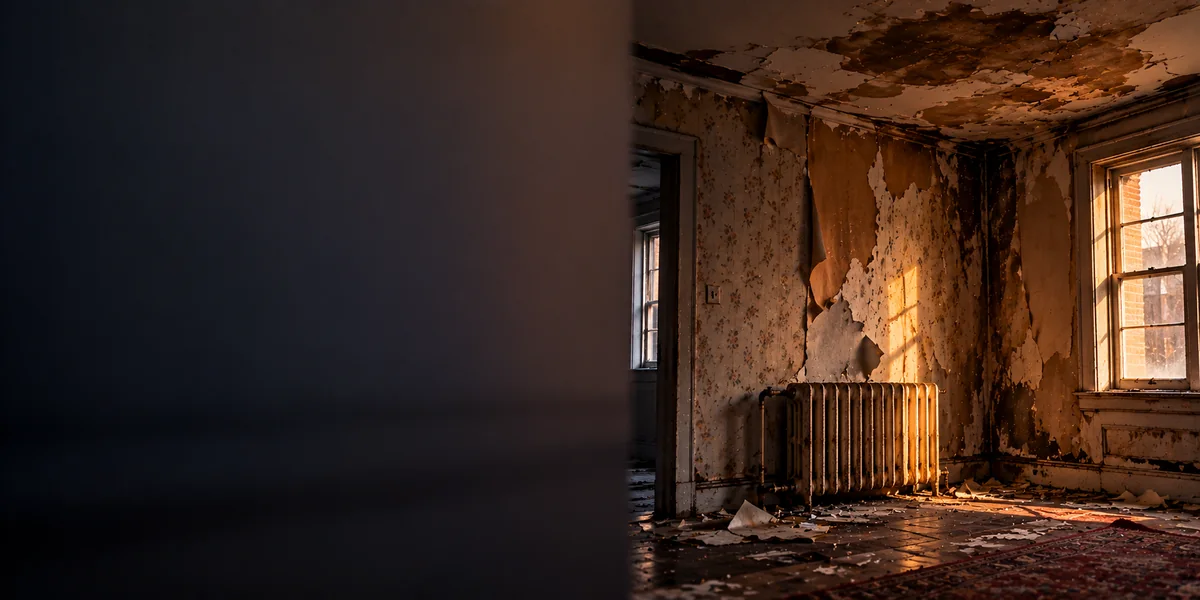
Yes, you can sue your landlord for an uninhabitable apartment.
Under state safe-housing laws (the Warranty of Habitability), a landlord cannot collect full rent for an apartment that lacks basic living essentials like heat, hot water, working plumbing, safe electricity, a leak-free roof, or pest-free rooms. Depending on whether you want to stay or move out, you have two ways to sue in Small Claims or Housing Court:
- If You Stayed in the Apartment (Sue for a Retroactive Rent Refund): You can sue to get back 25% to 100% of the rent you paid during every month the apartment was partly or totally unlivable, plus money for hotel nights, space heaters, spoiled food, and ruined belongings.
- If You Were Forced to Move Out (Break Your Lease & Sue for Moving Costs): If the landlord ignored your written repair deadline and you had to vacate, you owe $0 in future rent and can sue for 100% of your security deposit back, moving truck and hotel bills, and the monthly rent difference if your new apartment costs more than your old lease.
What You Need to Know
- Judges Calculate Rent Refunds by Lost Space & Severity: If a ceiling leak, mold, or lack of heat makes your bedroom unusable—and that bedroom is 35% of your apartment's floor space—a judge can order your landlord to refund 35% to 50% of your rent for every month it went unfixed.
- You Do NOT Have to Move Out to Sue for a Rent Refund: Many renters mistakenly think they have to pack up and leave before suing. You can stay in your apartment, keep paying rent so you can't be evicted, and sue in Small Claims Court for a big refund of the rent you already paid.
- If You DO Move Out, Follow the 4-Step "Bulletproof Exit" Rules First: Never just toss the keys on the counter after a phone argument—or your landlord will sue you for breaking the lease. Always send a final written deadline, call 311 for a free City Code Enforcement violation report, and hand over a written Notice of Surrender when you leave.
- You Can Sue for the "Rent Difference" at Your New Apartment: If an uninhabitable apartment forces you to break a $1,700/month lease with 6 months left, and a similar safe apartment nearby costs $2,000/month, you can sue your old landlord for that extra $300/month ($1,800 total).
- No Lease Clause Can Waive Your Right to a Livable Home: Even if your lease says you rented the apartment "as is" or makes you responsible for maintenance, state law makes those clauses 100% illegal and void for major health and safety problems.
What Legally Makes an Apartment "Uninhabitable"? (The 9 Core Standards vs. Minor Annoyances)
Every residential lease in the United States (except under narrow conditions in Arkansas) includes an automatic legal guarantee called the implied warranty of habitability. This rule establishes that your landlord must provide a safe, structurally sound, and sanitary living environment—regardless of any "as-is" clauses or waivers written into your lease agreement.
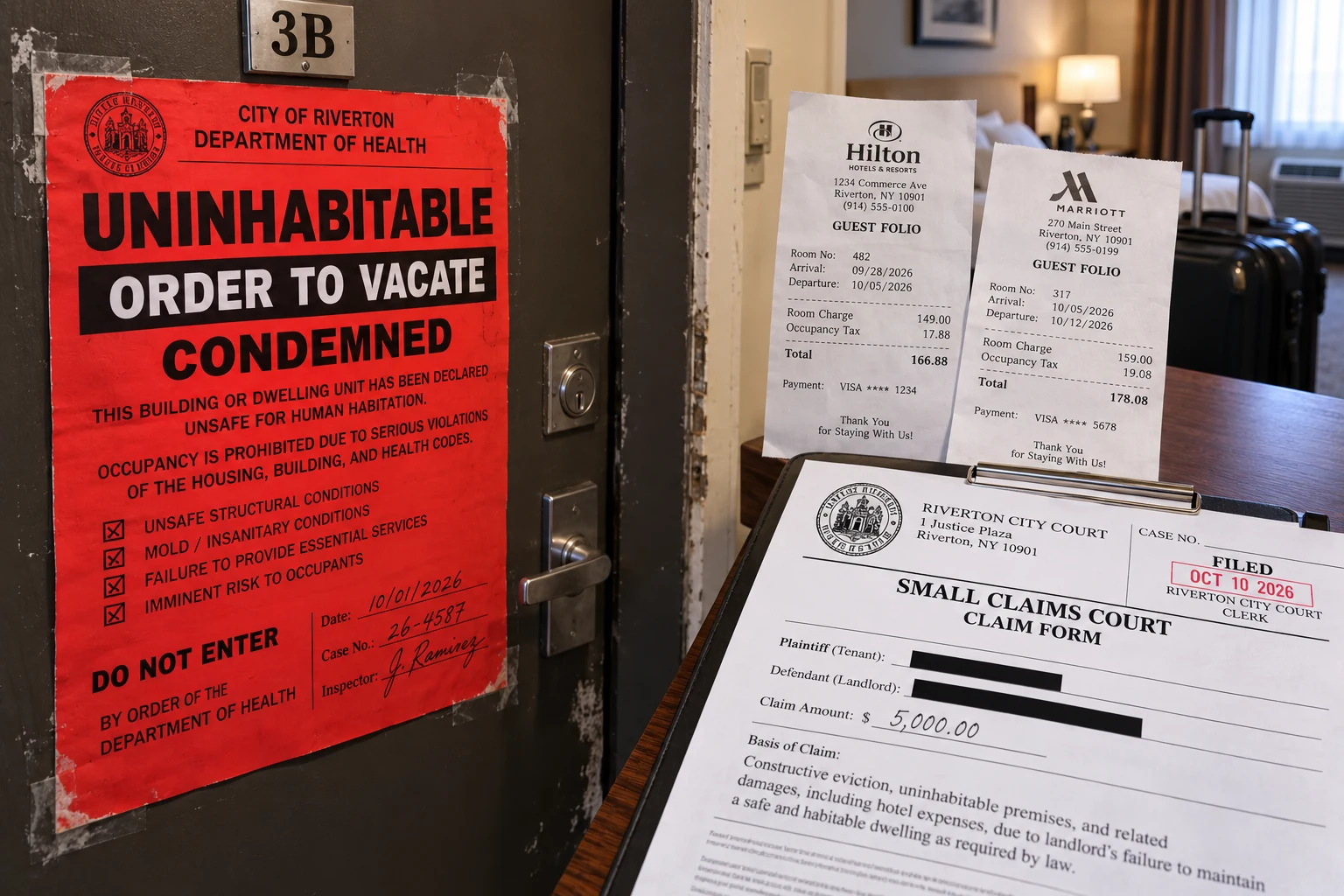
However, courts distinguish between severe housing violations that render a home legally uninhabitable and cosmetic flaws that cause frustration. The comparison table below highlights the 9 core habitability standards that win rent refunds and lease exits in court versus non-actionable annoyances:
| Legally Uninhabitable (Wins Rent Refunds & Lease Breaks) | Annoying, But NOT Uninhabitable (Hard to Break Lease) |
|---|---|
| 1. No Heat in Cold Weather: Indoor temperatures dropping below statutory minimums (typically 65°F to 68°F during winter heating seasons). | Slightly drafty window frames when the central heating system still maintains 68°F indoors. |
| 2. No Running Water or Hot Water: Complete water shutoff or water temperature failing to reach 110°F–120°F for more than 24 hours. | Low water pressure in a secondary bathroom showerhead or a slow-draining kitchen sink. |
| 3. Raw Sewage Backup / Broken Toilet: Sewage bubbling up into bathtubs or a non-working toilet in a 1-bathroom home. | A toilet handle that requires jiggling to stop running or an old toilet seat. |
| 4. Active Roof Leaks or Toxic Black Mold: Water pouring through ceilings or systemic toxic mold caused by plumbing failures. | Minor surface mildew along shower tile caulk resulting from normal bathroom humidity. |
| 5. Heavy Vermin Infestation: Severe infestations of rats, mice, bed bugs, or cockroaches infesting walls and furniture. | Discovering two isolated ants in the kitchen or an occasional spider near the balcony door. |
| 6. Dangerous Electrical Wiring or Power Outage: Sparking outlets, exposed live wires, or blown subpanels leaving rooms dark. | A single burned-out recessed ceiling bulb or a stiff wall dimmer switch. |
| 7. Broken Front Door Locks or Insecure Windows: Ground-floor windows or exterior doors that fail to latch or lock securely. | Squeaky interior bedroom door hinges or scuffed hallway baseboard paint. |
| 8. Structural Hazards & Toxic Materials: Collapsing ceilings, rotted stairs, flaking lead paint, or friable asbestos. | Worn or stained carpeting, chipped laminate, or dated 1990s kitchen cabinetry. |
| 9. Inaccessible or Blocked Fire Exits: Overflowing trash chutes creating fire hazards or blocked emergency egress stairs. | Upstairs neighbor walking loudly or temporary maintenance closure of the complex swimming pool. |
For a comprehensive overview of small claims thresholds and lawsuit evidence, visit our pillar guide on suing your landlord.
How Judges Calculate Your Rent Refund (The 2 Official Court Formulas)
When you sue your landlord in Small Claims Court for living in an unlivable home, you must provide the judge with a clear, mathematically sound dollar figure. Under landlord-tenant jurisprudence established by landmark decisions such as Green v. Superior Court, 10 Cal. 3d 616 (1974), courts use two recognized calculation methods for rent abatement:
Formula 1: The "Percentage of Lost Space" Method (Easiest for Judges to Approve)
This formula calculates what portion of your apartment was rendered physically unusable by the defect. Small Claims judges favor this method because it relies on objective floor plans rather than subjective estimates.
Formula 2: The "Fair Market Value vs. Broken Value" Method
When a defect impacts the entire apartment—such as freezing indoor temperatures with no heat, raw sewage odors, or a severe roach infestation—the lost space method does not capture the full disruption. Here, you compare the agreed lease rent against the true open-market value of the substandard dwelling.
Want to Break Your Lease & Move Out? Avoid the "$10,000 Constructive Eviction Trap"
When an apartment becomes completely unlivable, tenants often pack their bags and move out under the doctrine of constructive eviction. Because the landlord's maintenance failures forced you out, the law treats the departure as an unlawful eviction by the landlord, releasing you from future rent obligations.
However, landlords routinely countersue departing tenants for $5,000 to $10,000+ in unpaid rent, claiming the tenant broke the lease illegally. To prevent this, avoid the three fatal mistakes that derail constructive eviction claims:
Mistake #1: Moving Out Without Giving a Final Written Deadline
If you vacate immediately after a heated phone argument without having delivered a formal written notice giving the landlord a statutory window (24–72 hours for emergencies or 7–14 days for other hazards) to cure the defect, judges will hold that you breached the lease agreement.
Mistake #2: Waiting 6 Months After Declaring the Home "Unlivable" to Actually Move
Courts enforce a strict timeliness rule: if a home is genuinely uninhabitable, an occupant cannot continue residing there for six months and then claim sudden constructive eviction. You must vacate within a reasonable window (typically 2 to 4 weeks) after your final cure deadline expires.
Mistake #3: Leaving Without an Independent City Inspection Report
Without an official municipal citation, the dispute becomes your word against the landlord's in court. Protect yourself by following this 4-step checklist:
The 4-Step "Bulletproof Exit" Checklist:
- Deliver Formal Written Notice to Cure: Send a final demand giving your landlord 24–72 hours for emergency defects or 7–14 days for general habitability hazards.
-
Obtain a Free 311 Inspection Report: Have a city building or health inspector inspect the home before you pack, generating an authenticated government Notice of Violation.
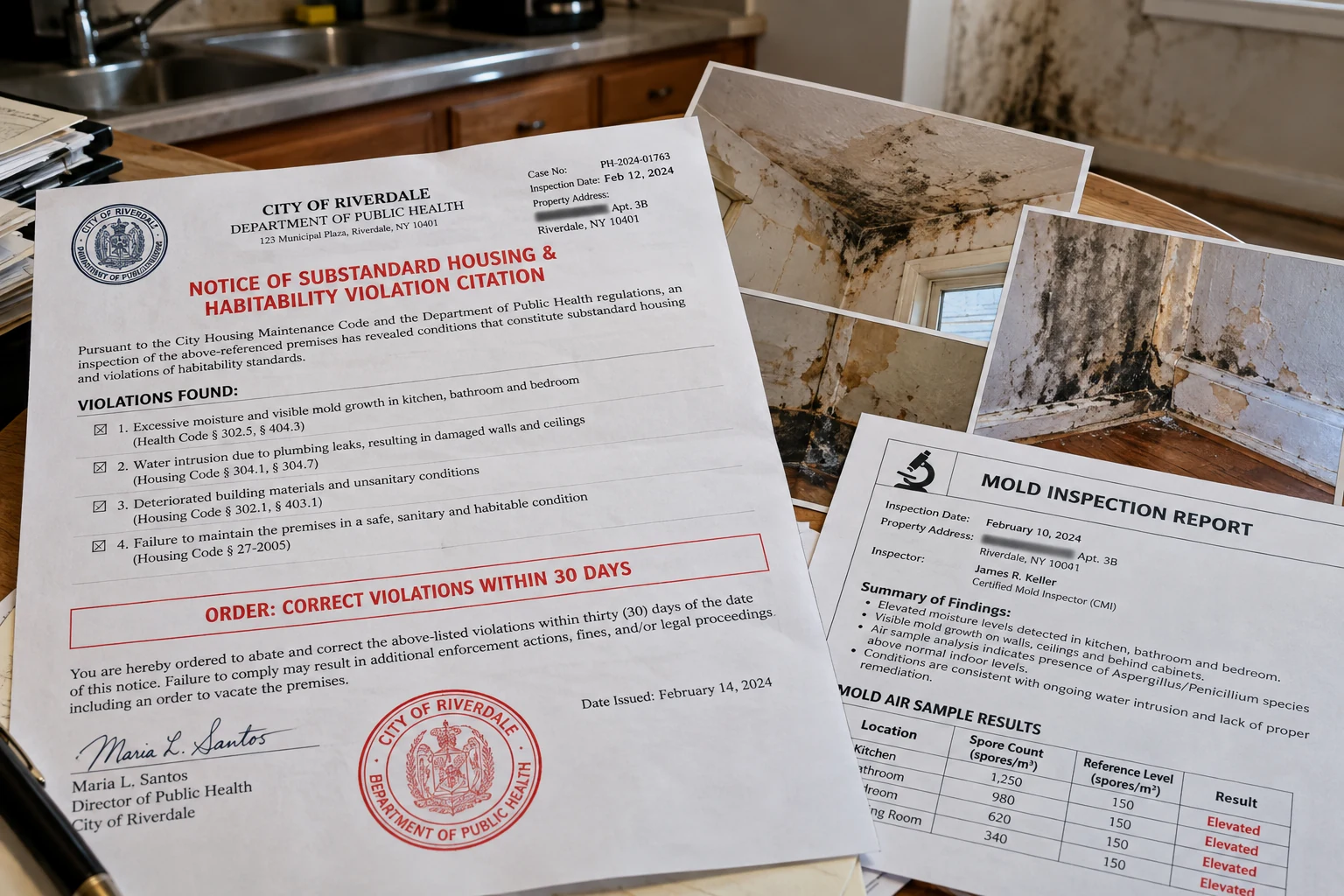
Government Code Inspection: An authenticated municipal notice of violation or substandard housing citation proves legal unlivability in court. - Record Complete Walkthrough Video: Film continuous, timestamped video capturing the specific defects, operational status of fixtures, and the clean, undamaged condition of all rooms.
- Execute a Formal Notice of Surrender: Return keys in person or via certified mail accompanied by our written Notice of Lease Termination Due to Uninhabitable Conditions so the landlord cannot allege abandonment.
Don't Forget "Rent Differential" Damages (Making Your Landlord Pay When Your New Apartment Costs More)
When tenants are forced to break a lease due to uninhabitable living conditions, most renters only think to ask for their security deposit back and moving truck expenses. However, contract law in virtually every U.S. jurisdiction provides an additional, powerful damage category: Rent Differential Damages (the "benefit of the bargain").
If your landlord's breach forces you out of a rent-controlled or below-market apartment, and the cheapest comparable safe dwelling you can locate on short notice costs more each month, your former landlord must make up that difference for the remainder of your original lease contract:
Real Small Claims Court Example of Rent Differential:
Suppose your signed lease rate was $1,600/month running through December. Severe, untreated toxic mold or sewage intrusion forces you to vacate in June—leaving 6 full months remaining on your lease contract.
Due to rising local market rents, the cheapest comparable 1-bedroom apartment you can locate nearby costs $1,950/month. The landlord's unlawful failure to maintain habitability directly inflicts an out-of-pocket loss of $350 every single month:
In Small Claims Court, you add this $2,100 rent differential directly on top of your full security deposit refund ($1,600), moving truck rental ($450), and retroactive rent abatement ($2,400), bringing your total judgment against the landlord to $6,550.00.
Ready-to-Send Uninhabitable Apartment Demand & Lease-Exit Notice
Choose the appropriate template below based on your current legal strategy. Tab 1 is designed for tenants remaining in the home who demand immediate professional repairs and retroactive rent refunds. Tab 2 serves as a formal Notice of Surrender and Constructive Eviction for tenants forced to break their lease early.
[TEMPLATE 1: DEMAND FOR IMMEDIATE REPAIRS & RENT ABATEMENT (STAYING IN HOME)]
SENT VIA USPS CERTIFIED MAIL (RETURN RECEIPT REQUESTED) & ELECTRONIC MAIL

DATE: [Date]
CERTIFIED MAIL TRACKING NUMBER: [Certified Mail Tracking Number]

TO (LANDLORD / PROPERTY MANAGEMENT):
[Landlord or Property Management Entity Name]
[Management Office Address]
[City, State, ZIP Code]
[Management Email Address]

FROM (TENANT):
[Your Full Legal Name(s)]
[Rental Address & Unit Number]
[City, State, ZIP Code]
[Your Phone Number & Email]

RE: FINAL NOTICE OF UNINHABITABLE HOUSING CONDITIONS & DEMAND FOR RENT REFUND
PREMISES: [Full Rental Property Address, Including Unit #]

Dear [Landlord or Property Manager Name]:

This letter constitutes formal legal notice under state landlord-tenant statutes and the statutory implied warranty of habitability that the dwelling unit leased to me at [Your Rental Address, Unit Number] is in a severe state of disrepair that renders the premises legally uninhabitable.

1. STATEMENT OF UNINHABITABLE DEFECTS:
The following substantial defects currently disrupt essential services and violate local housing maintenance codes:
• Defect #1: [e.g., complete lack of heating during freezing temperatures / raw sewage backing up into bathroom].
• Defect #2: [e.g., active water intrusion through ceiling causing drywall collapse and toxic mold].
Prior Notice History: These conditions were reported on [Dates of Prior Texts, Emails, or Portal Ticket Numbers]. Despite statutory cure periods having elapsed, permanent repairs have not been performed.

2. RENT ABATEMENT DEMAND:
Because these uncorrected defects substantially destroy the living value of the property, I am legally entitled to retroactive rent abatement. My full monthly rent of $[Monthly Rent Amount] compensates you for a safe, code-compliant home.
• Retroactive Rent Abatement Demanded: $[Amount, e.g., $1,950.00] representing [Percentage, e.g., 50%] diminution in rental value over the past [Number] months.
• Out-of-Pocket Reimbursement: $[Amount, e.g., $450.00] for direct expenses incurred (itemized receipts attached for heaters, hotel nights, or spoiled groceries).

3. FINAL STATUTORY CURE DEADLINE:
I hereby demand that you dispatch licensed, bonded contractors to commence and complete permanent repairs within [24–72 Hours for emergency heat/water/sewage / 7 Days for other habitability defects], no later than [Specific Date, e.g., October 12, 2026].

If full repairs and rent credits are not executed within this window, I will exercise all available statutory remedies, including filing an action in Small Claims Court for rent abatement and statutory penalties, reporting the violations to City Code Enforcement (311), and exercising repair-and-deduct or court escrow options.

Sincerely,

________________________________________
[Your Signature]
[Your Printed Full Legal Name]
Tenant, Unit #[Your Unit Number]
How Much Compensation Can You Recover for Uninhabitable Conditions?
When pursuing a legal claim against your landlord in Small Claims Court or Housing Court, financial recovery is determined by statutory damages categories, proven out-of-pocket losses, and rent reduction formulas:
| Recovery Category | Calculation Standard | Statutory Authority & Limits |
|---|---|---|
| 1. Complete Rent Abatement | Refund of rent paid during the period the rental unit failed municipal building and health codes. | Warranty of Habitability in 49 states. |
| 2. Relocation & Hotel Displacement | Cost of alternative temporary lodging and moving expenses to permanent habitable housing. | Constructive eviction damages. |
| 3. Statutory Habitability Penalties | Special civil penalties for landlords who demand or collect rent on uncorrected code violation orders. | E.g., Cal. Civ. Code § 1942.4 ($100 to $5,000 statutory damages). |
Small Claims Filing Limits: Most tenants resolve these disputes without hiring an attorney in Small Claims Court. Maximum claim limits vary by state: for example, $12,500 in California (California Courts Self-Help), $10,000 in New York City (NY Courts Small Claims), and $20,000 in Texas (Texas Judicial Branch). If your total damages exceed small claims thresholds, you may file in standard civil district court.
Frequently Asked Questions
In many cities and states—or under your lease—if an apartment has zero heat, zero running water, raw sewage, or a ceiling collapse that makes it impossible to sleep inside, the landlord must either pay for temporary hotel lodging or waive/refund 100% of your daily rent while you stay elsewhere; if the landlord's negligence caused the problem, you can sue in Small Claims Court for your full hotel receipts.
Yes! In fact, waiting until after you have safely moved out and got your new place is one of the most popular times to sue in Small Claims Court. You generally have 2 to 6 years under state contract and habitability laws to sue a former landlord for retroactive rent refunds, moving costs, and unreturned security deposits.
When a landlord breaks the Implied Warranty of Habitability first by leaving your home unlivable, they breached the lease—not you. You do not owe any early-termination fee or future rent, provided you gave written notice, allowed the legal repair window, and documented the condition with photos and a city inspection before leaving.
Judges typically award 20% to 35% for a single unusable room or appliance failure, 40% to 60% for severe mold, rats, bed bugs, or chronic leaks, and 75% to 100% for total loss of heat in winter, no running water, raw sewage, or days you were forced out of the unit.
Call 311 or your local City Code Enforcement / Health Department to request a free housing inspection. An official city violation report stating that your unit violates municipal health or building codes is accepted by judges nationwide as objective proof.
SueLegal is an independent educational legal publisher, not a law firm or lawyer referral service. The information provided in this guide is for general informational and educational purposes only and does not constitute formal legal advice. Residential landlord-tenant laws, repair notice periods, and statutory remedies vary significantly across state and municipal jurisdictions. If you are facing eviction, severe uninhabitable conditions, or complex litigation, consult a licensed attorney in your jurisdiction or contact your local legal aid organization. For more details on our standards, read our Editorial Policy and Legal Research Methodology.