

Yes, you can sue your landlord.
You can take your landlord to court if they refuse to fix unsafe living conditions (like mold, rats, leaks, or no heat), keep your security deposit unfairly, enter your home without warning, lock you out illegally, or punish you for complaining.
To win in court, you usually need 3 things:
- Written Proof You Told Them: A text, email, or letter showing you reported the problem.
- Time to Fix It: Proof you gave the landlord a fair number of days to make the repair (unless it was an emergency or illegal lockout).
- Real Losses: Proof that the problem cost you money, ruined your belongings, hurt your health, or made the home worth less than the rent you paid.
What You Need to Know
- Always Complain in Writing First: Written notice creates an admissible evidentiary paper trail. Verbal and phone complaints are difficult to prove in court, so always send an email, text, or certified letter to establish official notice.
- "As-Is" Lease Rules Are Fake: Even if your lease says you are responsible for repairs or take the apartment "as is," state law overrides the lease for major health and safety problems.
- Never Just Stop Paying Rent on Your Own: Simply refusing to pay rent can get you evicted. In most states, you must first put the rent into a special court bank account ("rent escrow") or follow strict state notice rules.
- You Don't Need an Expensive Lawyer: Most tenant lawsuits happen in Small Claims Court, where filing costs only $20–$75, cases take 15 minutes, and you represent yourself to win up to $5,000–$25,000 (depending on your state).
- Save Every Photo and Receipt: Take clear photos with dates, save hotel and repair receipts, and call your local city building inspector to create an official report.
Choosing the Right Forum: Small Claims Court vs. Housing Court vs. Civil Court
Selecting the correct judicial forum is critical to securing your remedy without incurring unnecessary legal expenses:
| Court Forum | Primary Jurisdiction | Typical Monetary Ceiling | Attorney Required? | Average Resolution Timeline |
|---|---|---|---|---|
| Small Claims Court | Security deposit disputes, property damage, repair reimbursements, and rent refunds. | $2,500 to $20,000 (Varies by state) | No (Pro se self-representation; attorneys barred in CA & MI small claims) | 30 to 60 Days |
| Municipal Housing Court | Emergency repair orders (HP actions), illegal lockout re-entry, and rent escrow withholding actions. | Injunctive orders & rent abatement | Optional (Legal aid or tenant advocates frequently assist) | 7 to 30 Days (Emergency hearings) |
| Civil District / Superior Court | Severe personal injury torts, toxic mold illness, carbon monoxide hypoxia, or catastrophic fire burns. | Unlimited jurisdiction | Yes (Represented by contingency personal injury counsel) | 12 to 24 Months |
Renting a home is a business contract. You agree to pay rent on time, and your landlord legally promises to provide a clean, safe, and livable home.
When a landlord refuses to fix a broken furnace, ignores black mold, steals your security deposit, or locks you out without a court order, you do not have to accept it. You have the legal right to sue your landlord to force repairs and recover your lost money.
This comprehensive guide explains your legal rights, state options, and steps to take. Below, you will find our lawsuit value calculator, state-by-state small claims limits, a ready-to-send warning demand letter, and guides for 60 specific tenant problems.
Your Core Tenant Rights and Legal Protections
Every tenant lawsuit relies on established legal rights that protect renters across the country. Here are the five legal rules that protect you:
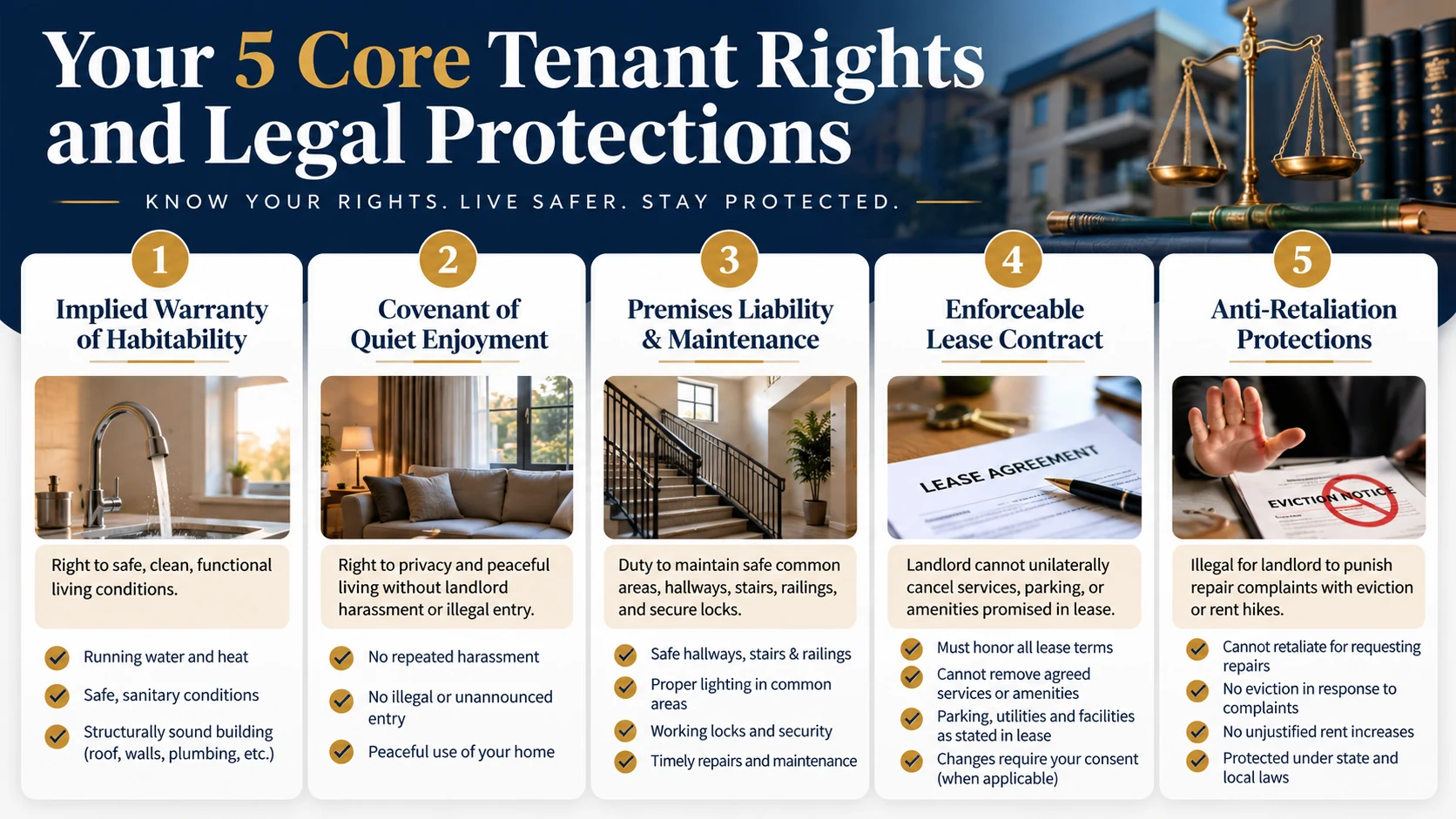
Your Right to a Safe, Livable Home (Implied Warranty of Habitability)
Implied Warranty of Habitability means "Your Right to a Safe, Livable Home." This is the law requiring your landlord to keep running water, working heat, electricity, solid roofs, and working locks—even if your lease says you rent the apartment "as is."
In famous court cases like Javins v. First National Realty Corp. and Green v. Superior Court, judges ruled that a lease is not just a piece of land—you are paying for a safe place to live. If the landlord does not fix major problems, you do not owe full rent for a broken home. You can sue for breach of habitability to get a rent refund or money for repairs.
Your Right to Peace and Privacy (Quiet Enjoyment & Constructive Eviction)
Covenant of Quiet Enjoyment means "Your Right to Peace and Privacy." This rule guarantees that your landlord cannot barge into your home without warning, harass you, or make it impossible to live in your rental.
When conditions become so terrible that you are forced to move out, the law calls this Constructive Eviction, which means "Forced to Move Out by Unlivable Conditions." If severe leaks, no heat, or toxic fumes force you to pack up and leave, you can sue your landlord under constructive eviction to recover your moving costs, security deposit, and the extra rent you had to pay elsewhere.
Careless Property Maintenance (Negligence and Premises Liability)
Landlords must keep shared areas—like hallways, stairs, front steps, and parking lots—reasonably safe. In leading cases like Sargent v. Ross and Kline v. 1500 Massachusetts Ave., courts held that landlords must fix loose railings, salt icy walkways, and keep common-entry doors locked to protect tenants from foreseeable dangers.
If your landlord knows about a safety hazard and fails to fix it within a reasonable time, an injured tenant can sue for landlord negligence to pay for hospital bills, lost wages, and pain.
Broken Lease Promises (Breach of Contract)
Your lease agreement is an enforceable contract. If your landlord promised working air conditioning, assigned parking, a washer-dryer, or storage space, they cannot simply stop providing them while charging you full rent.
In the landmark case Berg v. Wiley, judges also ruled that landlords can never take the law into their own hands to lock you out or cut utilities—they must go through the proper court eviction process. If they break these contractual obligations, you can sue for breach of lease.
Consumer and Civil Rights Laws
State and federal statutes give renters extra legal firepower when landlords cross specific lines:
- Illegal Payback (Retaliation): Established in Edwards v. Habib, landlords cannot evict you, raise your rent, or cut services just because you complained about repairs or called a city inspector (retaliation claims).
- Self-Help Lockouts: A landlord cannot pad-lock your door or haul your furniture to the curb without a judge’s formal eviction order (illegal eviction lawsuits).
- Triple Money Penalties (Treble Damages): In many states, if a landlord keeps your security deposit in bad faith, the judge can award "Triple Money Penalties" (2x or 3x the deposit amount) plus attorney fees (security deposit claims).
- Civil Rights Protections: Refusing to rent or denying accommodations for disabilities or emotional support animals violates federal fair housing laws (housing discrimination).
The 5 Things You Must Prove to Win in Court
To win money in a tenant lawsuit, you do not just tell a judge you are unhappy. You must prove five basic legal elements with clear evidence:
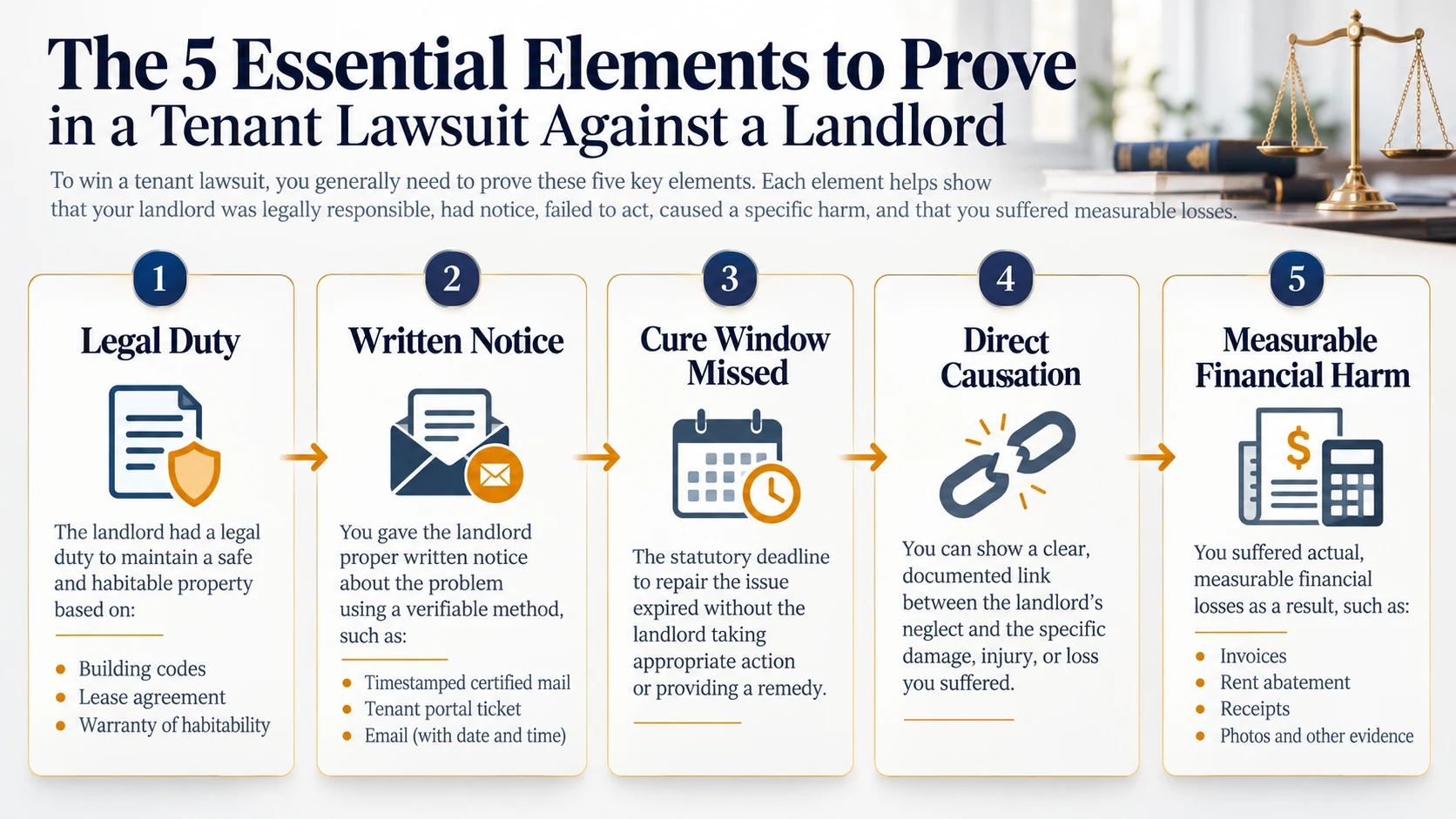
Legal Duty
Show the landlord was legally required to maintain or provide the item.
Written Notice
Proof you informed the landlord in writing about the problem.
Deadline Missed
The landlord failed to fix the issue within the legal deadline.
Clear Connection
Proof the landlord’s failure directly caused your loss or damage.
Real Dollar Losses
Receipts, invoices, or rent values showing exact financial harm.
What You Can Sue For (All 60 Specific Problems)
Tenants take landlords to court for specific problems that disrupt daily life. Below, we organize all 60 primary lawsuit reasons into 9 clear categories. Click on any topic to read our detailed guide.
Pest and Bug Infestations
Insects, bugs, and rodents spread diseases and make homes unlivable. Landlords must provide professional pest control under local health and housing codes. If pests take over your apartment, explore your legal options:
Toxic Hazards and Health Threats
Hidden poisons, toxic gases, and black mold cause severe breathing problems and permanent illnesses. Landlords must follow strict environmental safety laws:
Broken Heat, Water, and Major Repairs
Every state requires landlords to maintain basic utilities and fix broken living essentials. If your landlord ignores repair requests, you can take action under these guides:
Dangerous Stairs, Railings, and Fire Hazards
Structural decay and fire code violations put tenant lives at risk. Landlords must obey city building and fire safety codes:
Landlord Harassment and Privacy Violations
Your rental is your private home. Landlords cannot barge in unannounced, place cameras outside your bedroom, or bully you:
Illegal Lockouts, Payback, and Lease Disputes
Only a judge has the legal power to evict a tenant. Landlords who change locks, shut off power, or lie about apartment terms face serious court penalties:
Stolen Security Deposits and Illegal Fees
Deposit theft is the number one reason tenants sue landlords in Small Claims Court. Learn how to get your full deposit and penalties back:
Slip-and-Falls, Dog Bites, and Injuries
When broken steps, missing handrails, or aggressive animals cause physical injuries, personal injury laws allow you to recover full medical and wage damages:
Discrimination and Service Animal Denials
Federal and state civil rights laws protect renters from bias, prejudice, and disability discrimination:
Written Notice: Why Complaining by Phone Loses Cases
In almost every lawsuit about broken apartments, written notice is required by law. If you walk into court without proof you warned your landlord in writing, the judge will almost certainly dismiss your case.
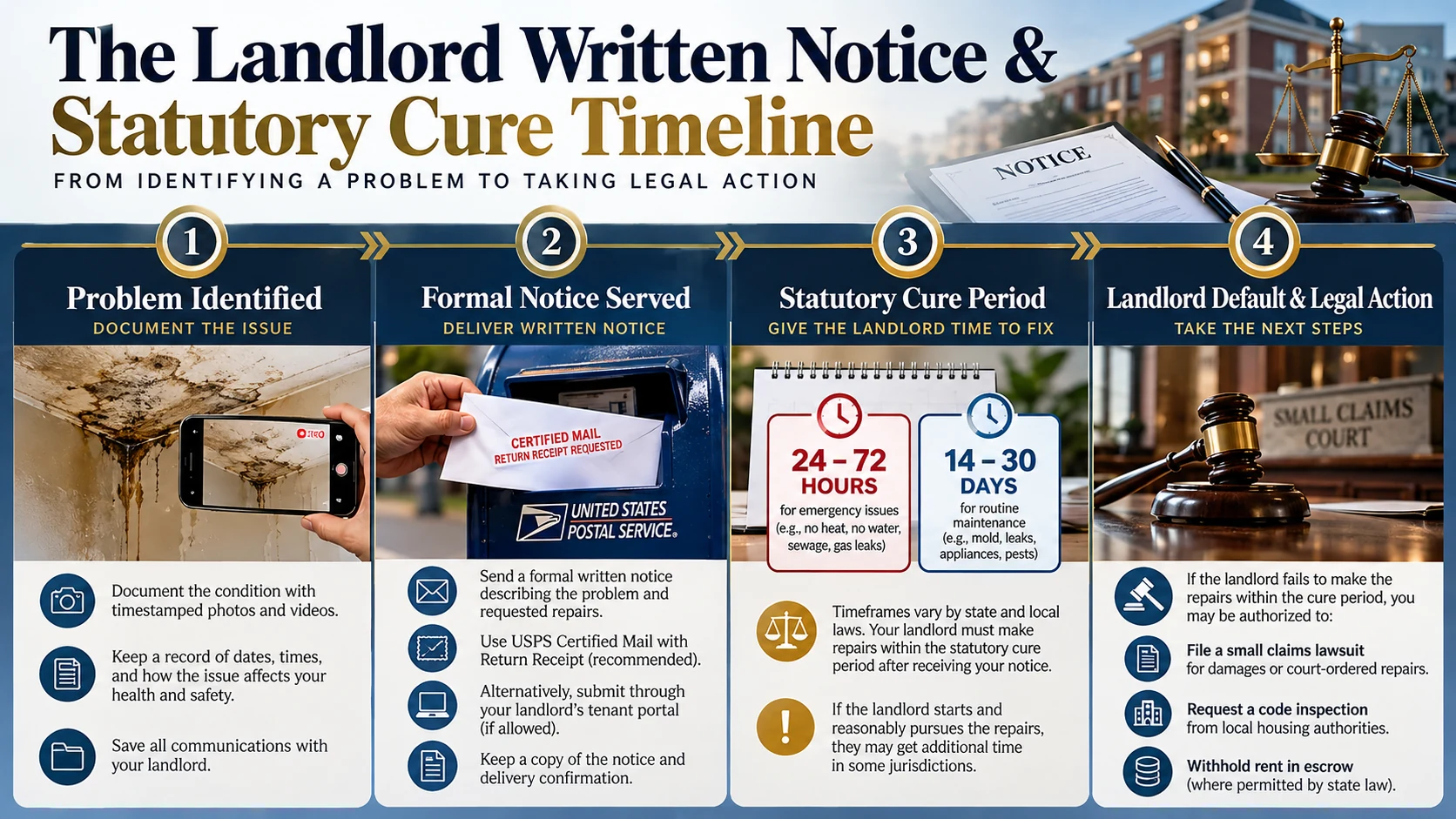
Why Phone Calls Do Not Count
In landlord-tenant litigation, judges and hearing officers require contemporaneous documentary proof that the landlord had legally sufficient notice of the defect and a reasonable opportunity to repair. Oral phone conversations are vulnerable to a landlord claiming they were never notified. Delivering a written notice creates an unshakeable evidentiary record that triggers statutory repair deadlines under state law.
When you have a written text, email, or certified letter, you have undeniable proof showing the exact day and time your landlord knew about the defect.
The Best Ways to Send Notice
- Certified Mail with Return Receipt: The gold standard in court. You get a green card back with the landlord's signature showing the exact delivery date.
- Tenant Portal Tickets: Always take a screenshot or print the confirmation screen showing your ticket submission date and time.
- Email: Send to the official email address listed in your lease and keep the sent message in your records.
- Text Message: Take clear screenshots that show both your message and your landlord's phone number or reply.
Evidence Checklist: How to Prove Your Case to a Judge
Judges decide cases based on facts and papers, not who tells the sadder story. The tenant with organized photos, receipts, and government inspection reports wins.
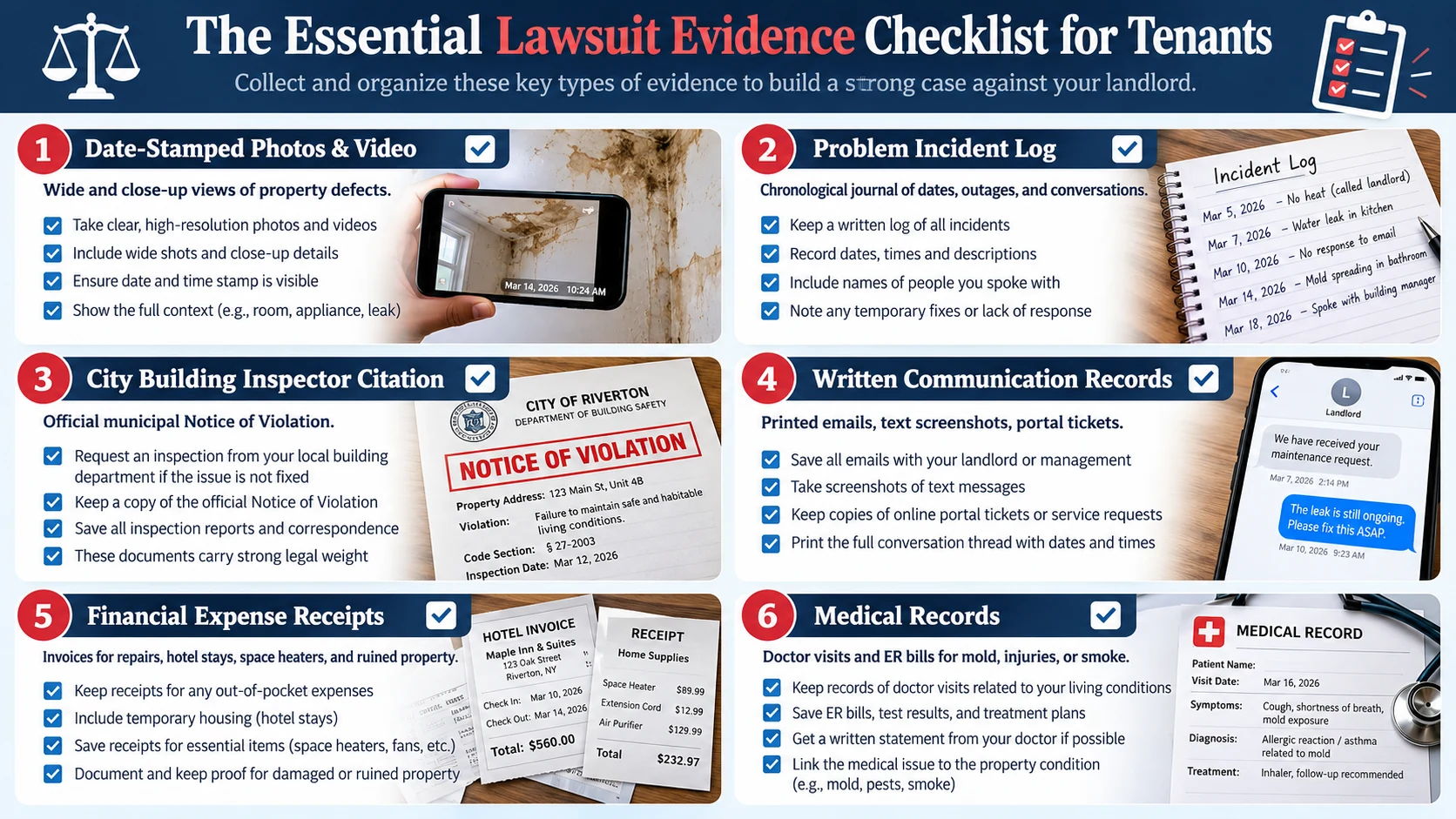
Your Lawsuit Evidence Checklist
-
Photos and Videos with Dates: Take wide photos of the whole room and close-up photos of the damage. Make sure your phone camera date stamps are saved.
-
Daily Problem Log: Write down every date the heat did not work, the toilet overflowed, or you saw rats. Note every call and conversation with your landlord.
-
City Building Inspector Report: Call your local city housing or health department. When a city inspector issues an official Notice of Violation, the landlord cannot deny the problem.
-
All Written Messages: Print out every email, text message, maintenance ticket, and warning letter you sent.
-
Every Out-of-Pocket Receipt: Keep receipts for space heaters, hotel rooms, ruined rugs, laundromat fees, storage lockers, and replacement food.
-
Doctor and ER Notes: If mold caused asthma attacks or a broken step broke an ankle, bring your medical records and hospital invoices.
Lawsuit Payouts: What Money Can You Actually Get Back?
When you sue your landlord, you can ask the judge for specific types of money damages:
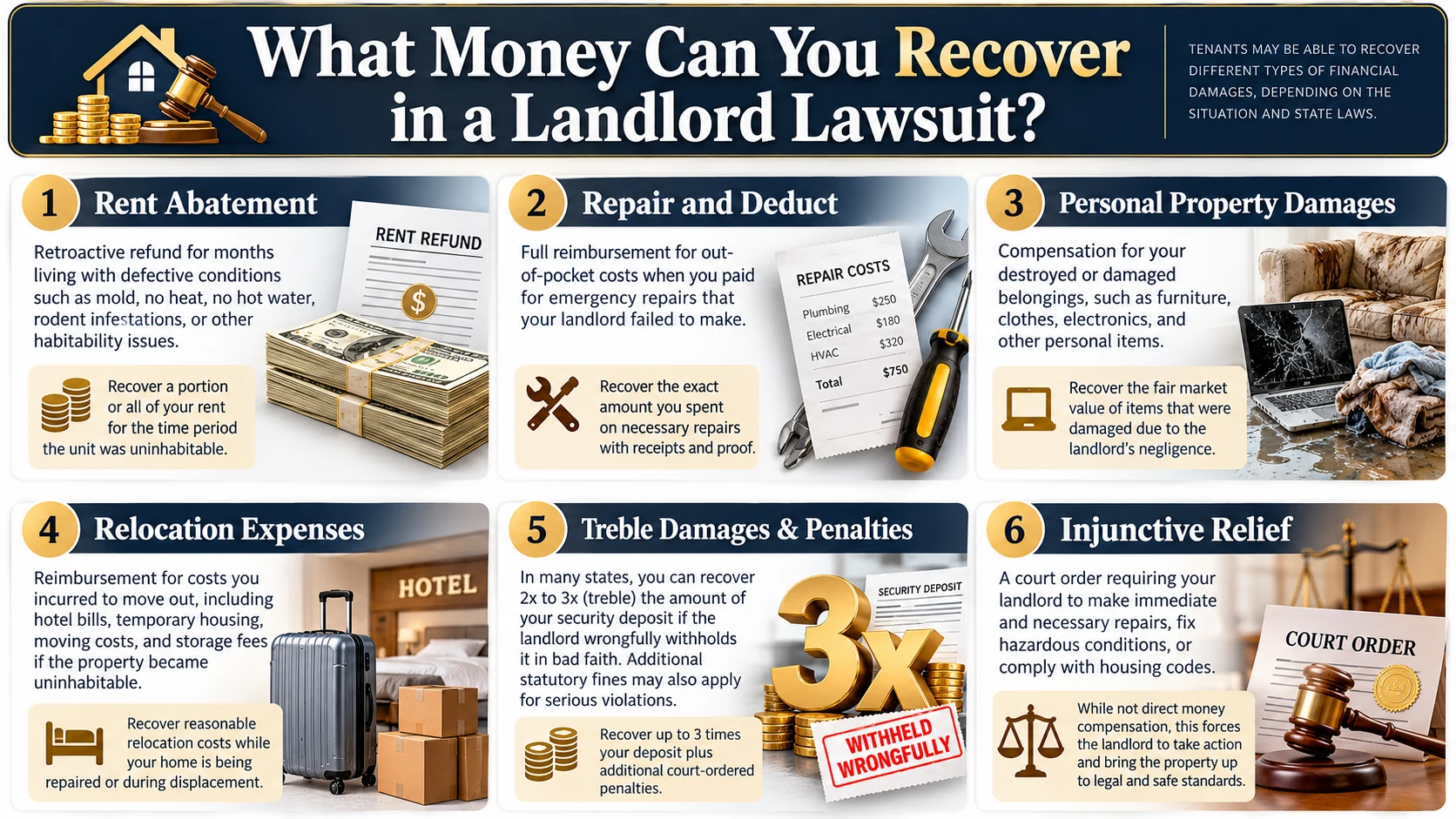
| Payout Type | What It Means | What You Can Get Back |
|---|---|---|
| Rent Abatement | A Rent Refund or Discount | Getting money back for the months you paid full rent while part of your home was broken or unusable. |
| Repair and Deduct | Deducting Repair Costs from Rent | Paying a licensed handyman to fix an urgent problem yourself after giving proper notice, and subtracting the cost from next month’s rent. |
| Property Damage | Ruined Belongings Reimbursement | Full cash value for clothes, computers, beds, and furniture ruined by water leaks, collapsed ceilings, or sewage spills. |
| Relocation Costs | Hotel and Moving Reimbursement | Reimbursement for hotel bills, moving trucks, and utility setup fees if forced to leave an unlivable home. |
| Treble Damages | Triple Money Penalties | Extra statutory penalties (2x or 3x the deposit or damages) awarded in many states if a landlord stole your deposit in bad faith. |
| Court Injunction | Emergency Court Order to Repair | An official order signed by a judge forcing the landlord to turn the heat back on or fix a dangerous hazard immediately. |
Excuses Landlords Use in Court (And How to Beat Them)
Landlords and their property managers use the same four arguments in almost every lawsuit. Here is how you defeat each one:
"The Tenant Caused the Damage"
Landlords often claim that mold is from the tenant taking long showers, or that rats came because the tenant left food crumbs.
How to beat it: Get an inspection report from a city code inspector or professional plumber showing the problem came from leaking building pipes inside walls, not your housekeeping.
"I Never Knew About It"
Landlords often tell the judge they were never informed about the repair.
How to beat it: Hand the judge your printed certified mail return receipts, maintenance portal tickets, or text message screenshots.
"The Tenant Wouldn't Let Us In"
The landlord may claim they sent a repair crew, but the tenant refused to let them into the apartment.
How to beat it: Save your texts and emails offering multiple specific days and times for repair workers to enter.
"It Was Just a Minor Issue"
The landlord will argue that a broken window or no hot water was merely a small inconvenience, not a legal violation.
How to beat it: Show city housing code regulations proving that heat, hot water, and waterproof windows are mandatory legal requirements under state law.
50-State Rules: Small Claims Limits & Repair Deadlines
Landlord-tenant laws differ by state. Use the live search tool below to find your state's Small Claims Court limit, security deposit return deadlines, bad-faith penalties, and repair notice wait times:
Tenant Lawsuit Rules for 20 Major States
| State | Small Claims Limit | Deposit Deadline | Deposit Penalty | Repair Wait Time |
|---|---|---|---|---|
| California | $12,500 | 21 Days | Up to 2x deposit in statutory damages | 30 Days (24–72 hrs for emergencies) |
| Texas | $20,000 | 30 Days | 3x deposit + $100 + attorney fees | 7 Days |
| New York | $10,000 | 14 Days | Up to 2x deposit (actual + punitive) | Reasonable time (24 hrs for heat/water) |
| Florida | $8,000 | 15–30 Days | Full deposit return + tenant attorney fees | 7 Days written notice |
| Illinois | $10,000 | 30–45 Days | 2x deposit amount + attorney fees | 14 Days |
| Pennsylvania | $12,000 | 30 Days | 2x deposit amount | Reasonable notice (typically 14–30 days) |
| Ohio | $6,000 | 30 Days | 2x wrongfully kept amount + attorney fees | 30 Days (or reasonable time) |
| Georgia | $15,000 | 30 Days | 3x deposit + reasonable attorney fees | Reasonable time (typically 14–30 days) |
| North Carolina | $10,000 | 30 Days | Actual damages + tenant attorney fees | Reasonable time after written notice |
| Michigan | $7,000 | 30 Days | 2x deposit amount | Reasonable time (often 14–30 days) |
| New Jersey | $5,000 | 30 Days (5 for fire) | 2x wrongfully kept amount + attorney fees | Reasonable time (24–48 hrs for essential services) |
| Virginia | $5,000 | 45 Days | Actual damages + reasonable attorney fees | 21–30 Days (immediate for emergencies) |
| Washington | $10,000 | 30 Days | Up to 2x deposit + reasonable attorney fees | 24 hrs (heat/water), 10 days (general) |
| Arizona | $3,500 | 14 Business Days | 2x wrongfully kept amount | 5 Days (safety) or 10 Days (general) |
| Massachusetts | $7,000 | 30 Days | 3x deposit + 5% interest + attorney fees | 14 Days after written notice |
| Colorado | $7,500 | 30–60 Days | 3x wrongfully kept amount + attorney fees | 24–96 Hours (safety) or 10–14 Days |
| Maryland | $5,000 | 45 Days | Up to 3x wrongfully kept amount + attorney fees | 30 Days after notice |
| Indiana | $10,000 | 45 Days | Full deposit return + reasonable attorney fees | Reasonable time after written notice |
| Tennessee | $25,000 | 30–60 Days | Actual damages + punitive damages if bad faith | 14 Days |
| Missouri | $5,000 | 30 Days | Up to 2x wrongfully kept amount | 14 Days (for repair-and-deduct) |
Free Warning Demand Letter & 4-Step Action Checklist
Before heading down to the courthouse to file paperwork, complete these four simple steps to make sure your claim is rock-solid:
-
Audit Your Lease Agreement
Find the official address for legal notices in your lease. Remember that any lease clause saying you took the home "as is" or must pay for major plumbing or heating repairs is void under state law.
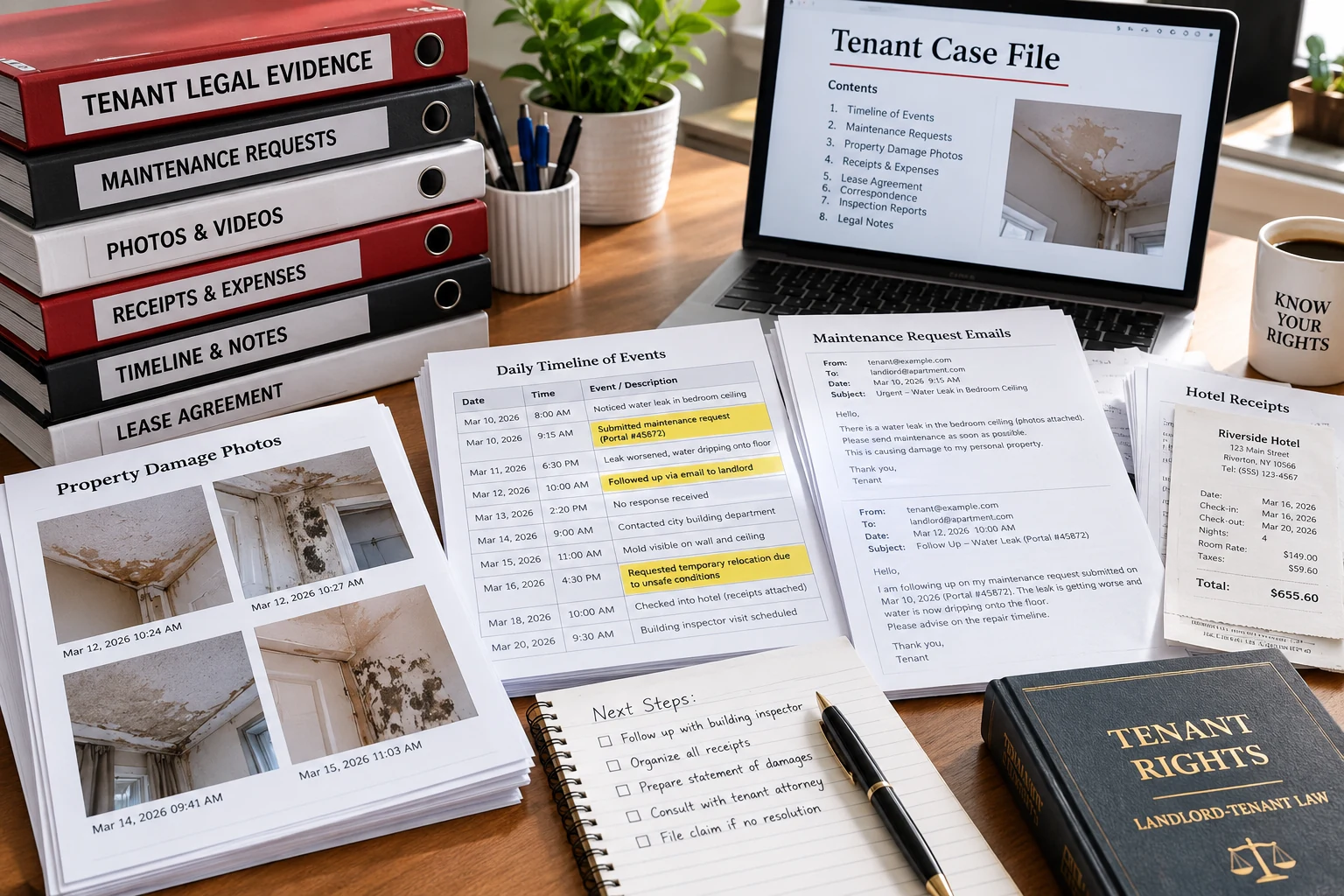
Step 1 Preparation: Systematically organize all date-stamped photos, maintenance tickets, and expense receipts into a case binder. -
Send a Formal Warning Demand Letter
Give your landlord one final chance to fix the defect or refund your money. Use our copy-and-paste demand letter template below and send it via Certified Mail with Return Receipt.
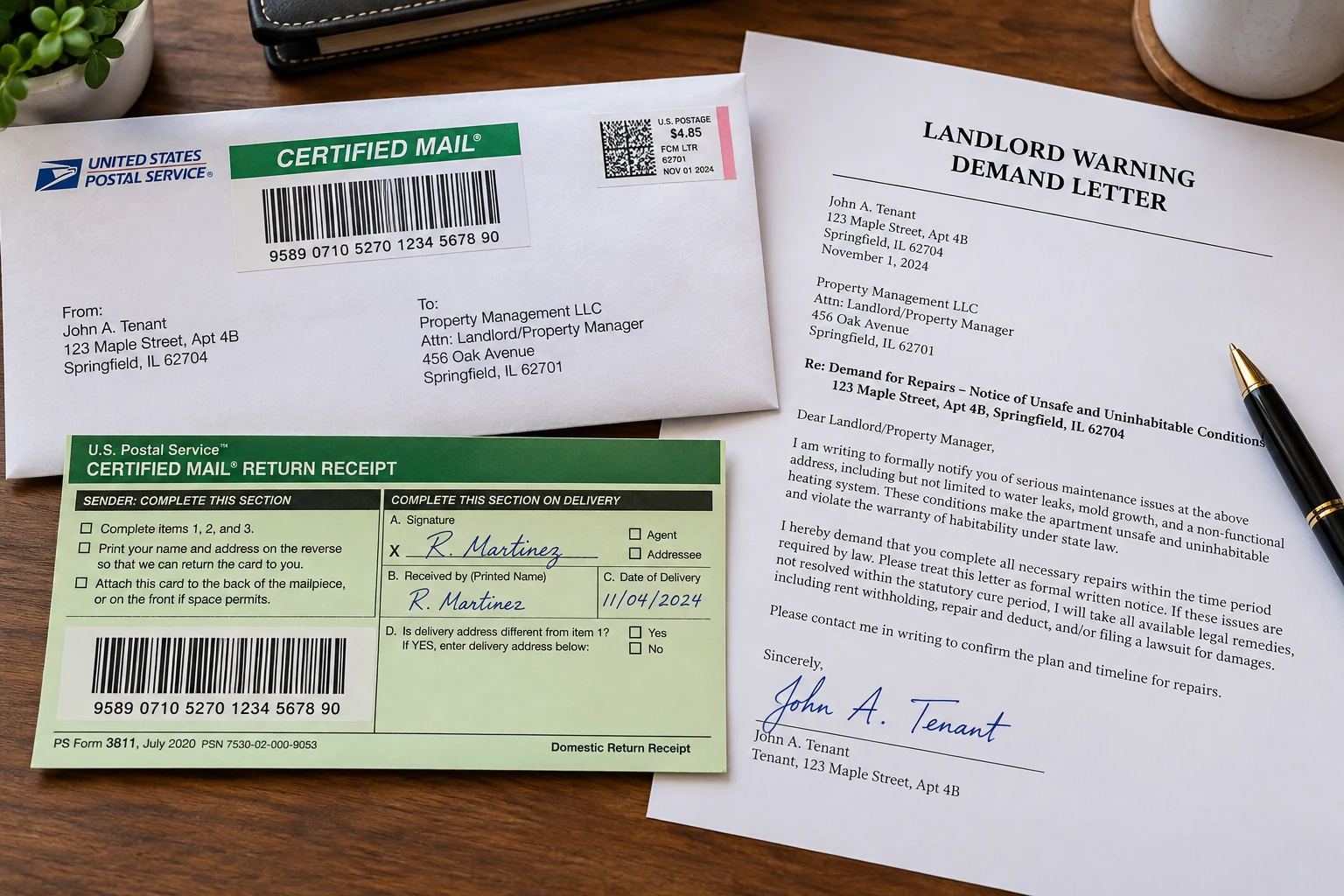
Step 2 Delivery: Send your final warning demand letter via USPS Certified Mail with Return Receipt to establish proof of delivery in court. -
Call Local City Housing Code Enforcement
If the issue is serious (no heat, black mold, raw sewage, rats, or broken stairs), ask your city or county building department to inspect. An official Notice of Violation from a city inspector is the strongest proof you can show a judge.
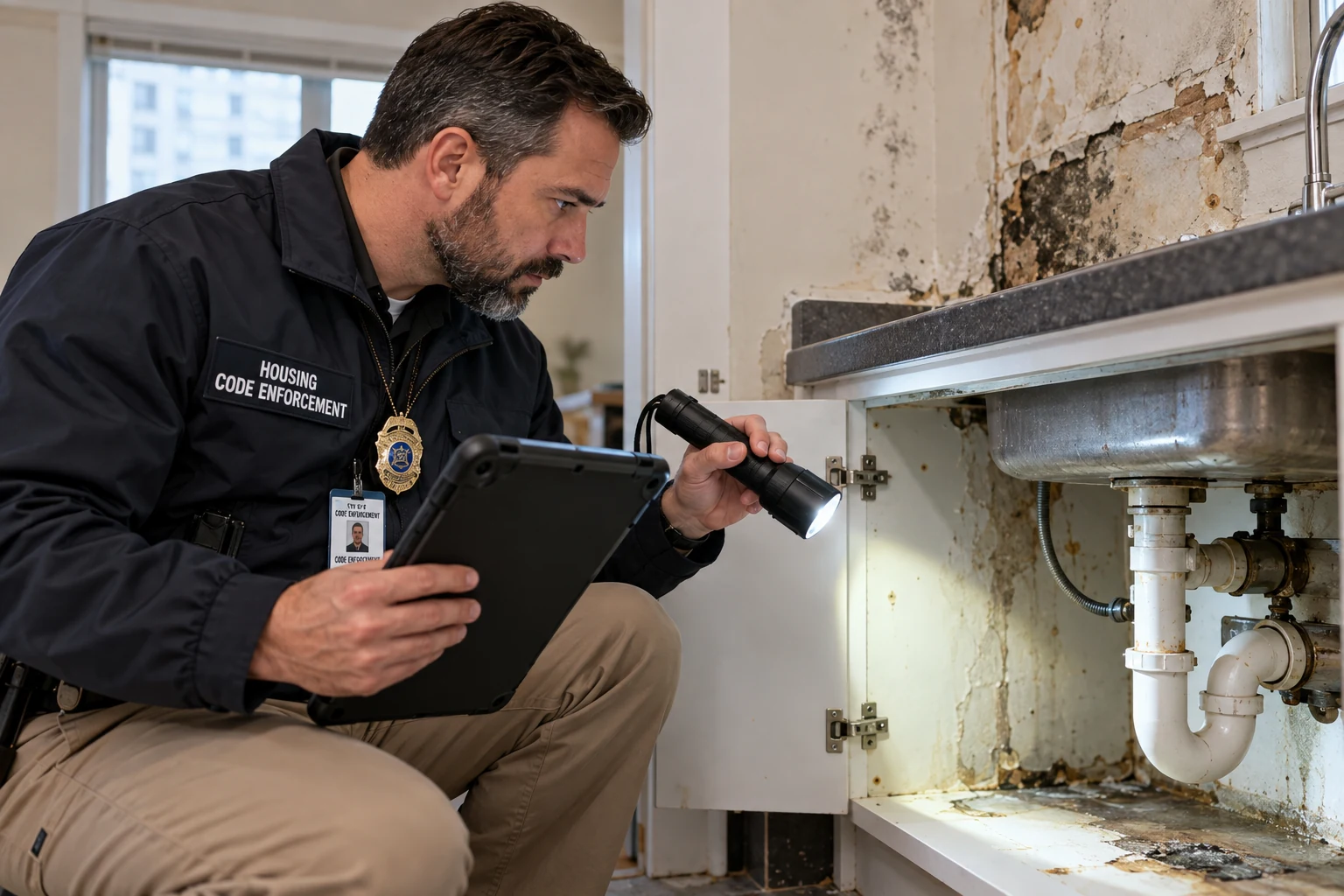
Step 3 Verification: Request an official inspection from your local housing department to produce an independent government violation citation. -
Choose Small Claims Court vs General Court
For claims under your state's small claims limit (usually $5,000 to $20,000), choose Small Claims Court. You do not need a lawyer, cases are fast, and filing costs only $20–$75.
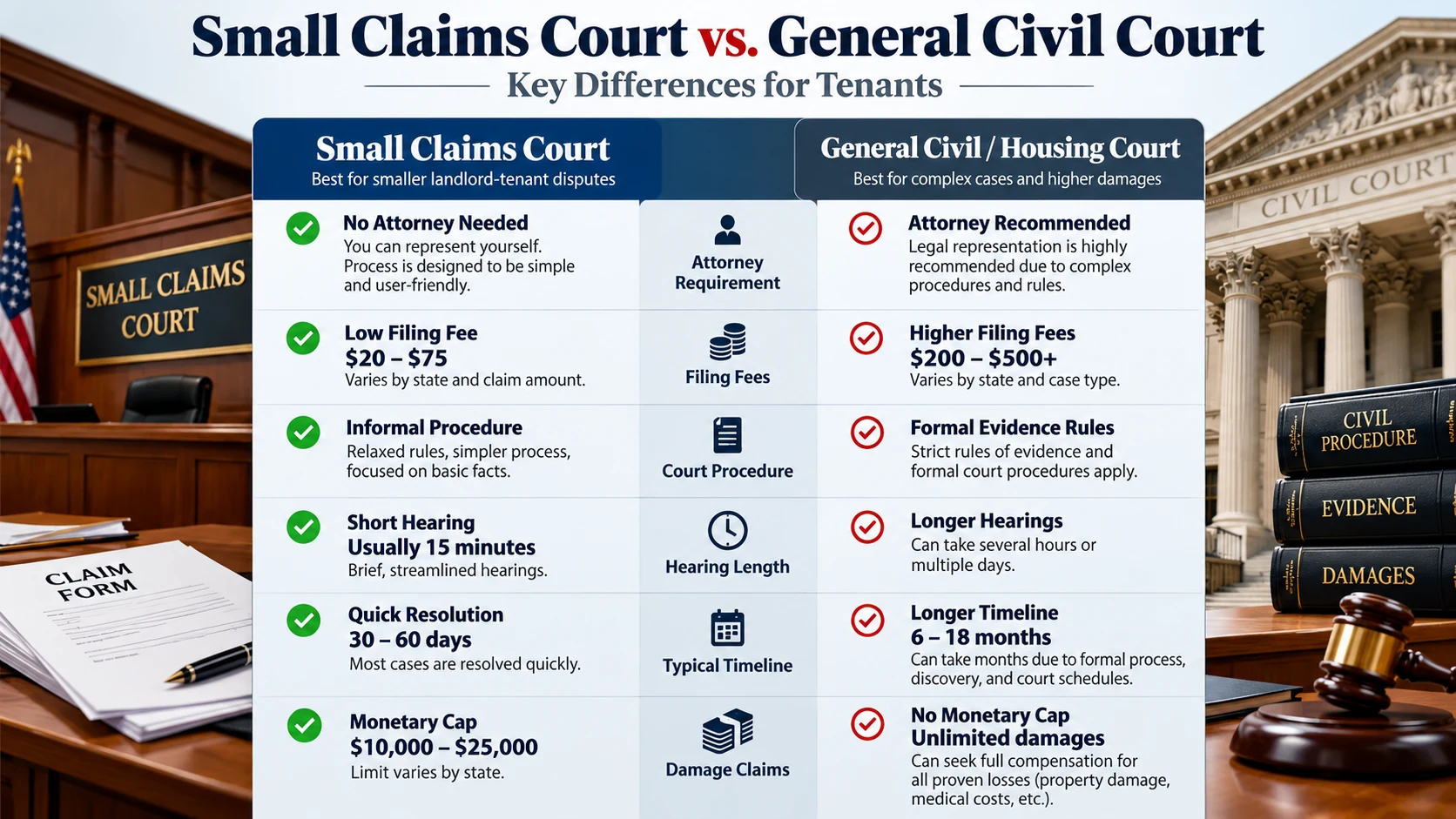
Step 4 Forum Selection: Compare Small Claims Court vs. General Civil Court to choose the most cost-effective and fastest path to recovery.
VIA CERTIFIED MAIL WITH RETURN RECEIPT REQUESTED
AND VIA ELECTRONIC DELIVERY (EMAIL / TEXT)

Date: [TODAY'S DATE, e.g. October 15, 2026]

To: [LANDLORD OR PROPERTY MANAGEMENT COMPANY NAME]
Address: [OFFICIAL LEASE NOTICE ADDRESS]
City, State, Zip: [CITY, STATE, ZIP]

From: [YOUR FULL NAME]
Rental Address: [YOUR APARTMENT NUMBER AND STREET ADDRESS]
Phone Number: [YOUR PHONE NUMBER]
Email: [YOUR EMAIL ADDRESS]

SUBJECT: FORMAL NOTICE OF UNRESOLVED HOUSING DEFECTS AND FINAL DEMAND FOR REMEDY / SETTLEMENT

Dear [LANDLORD OR PROPERTY MANAGER NAME],

This letter serves as formal written notice under applicable state property law and the implied warranty of habitability regarding ongoing, unaddressed conditions at the rental property referenced above.

1. DESCRIPTION OF DEFECTS:
The following conditions currently exist in my rental home and severely impair its safety and livability:
- [DESCRIBE PROBLEM #1 HERE: e.g., Severe water leak through master bedroom ceiling creating black mold]
- [DESCRIBE PROBLEM #2 HERE: e.g., Furnace completely inoperable with indoor temperatures dropping below 55 degrees]

These hazardous conditions began on or about [DATE ISSUE STARTED] and have remained unresolved for [NUMBER] days/weeks.

2. PRIOR NOTICE GIVEN:
You and your management representatives have received prior notice of these defects on multiple occasions, including:
- Maintenance request submitted on: [DATE OF FIRST TICKET/EMAIL]
- Written follow-up email/text on: [DATE OF SECOND NOTICE]

Despite these communications, reasonable and timely repairs have not been performed, in violation of state tenant protection statutes and local municipal housing codes.

3. REQUIRED ACTION AND STATUTORY DEADLINE:
I hereby demand that you complete all necessary, licensed repairs to fully resolve these conditions within [NUMBER: 7 OR 14] CALENDAR DAYS of receipt of this notice.

Additionally, due to the diminished value of the rental unit and out-of-pocket costs I have incurred during this period, I request an immediate rent reimbursement / credit of $[TOTAL DOLLAR AMOUNT REQUESTED, e.g. $1,200].

4. NOTICE OF LEGAL INTENT:
If these conditions are not fully cured or if a satisfactory settlement is not reached within [NUMBER: 7 OR 14] days of your receipt of this letter, I intend to exercise all statutory legal remedies available under state law without further notice, including:
- Filing a lawsuit in Small Claims Court for rent abatement, out-of-pocket expenses, and statutory penalties.
- Contacting the municipal Department of Building and Housing Code Enforcement to request an immediate official inspection and citation.
- Exercising statutory rent withholding or repair-and-deduct remedies where authorized by law.

Please contact me in writing immediately at [YOUR EMAIL ADDRESS] or by phone at [YOUR PHONE NUMBER] to schedule required repair crews.

Sincerely,

_________________________________________
[YOUR SIGNATURE]

[YOUR PRINTED NAME]
Tenant at [YOUR APARTMENT NUMBER]
How to Send This Letter So It Counts in Court:
- Fill in the brackets: Replace all the bracketed text with your real dates, dollar amounts, and descriptions.
- Send one copy by email or text: Send an immediate digital copy so your landlord sees it right away.
- Mail a printed copy by Certified Mail with Return Receipt: Go to the Post Office, pay around $8 for Certified Mail, and keep the green postal receipt card. When the landlord signs for it, you have proof for the judge that they received it.
Frequently Asked Questions
Filing a lawsuit in Small Claims Court usually costs between $20 and $75, depending on your state and county. If you cannot afford the filing fee, you can ask the court clerk for a fee waiver (called "in forma pauperis"). If you win your case, the judge will usually order your landlord to pay back your filing fee and process server costs.
No, retaliatory eviction is illegal in almost every state. If your landlord serves an eviction notice, raises your rent, or cuts off services within 90 to 180 days after you complain or file a lawsuit, courts presume it is illegal payback. The landlord must prove in court that they had an independent, valid reason to evict you.
No, you do not need a lawyer for cases filed in Small Claims Court. Small Claims Court was specifically created for regular people to resolve disputes quickly without expensive attorney fees, and some states like California and Michigan even forbid lawyers from speaking for either party. For claims exceeding small claims limits or involving severe injuries, consulting a tenant attorney is recommended.
Yes, you can sue your landlord after moving out for problems that occurred while you lived there, including withheld security deposits, rent refunds for broken conditions, or moving costs from constructive eviction. You must simply file your lawsuit before your state's statute of limitations expires, which is usually between two and four years.
Your deadline to sue—called the statute of limitations—typically ranges from two to four years depending on your state and legal claim. Lawsuits based on a written lease usually have longer deadlines (often 3 to 6 years), while personal injury or oral agreement claims must generally be filed within 2 to 3 years. It is best to file as soon as possible while photos, receipts, and records are fresh.
You can theoretically sue for emotional distress, but winning money for stress alone without physical injury or intentional extreme harassment is very difficult. Most judges require clear medical records, therapy bills, or psychiatric diagnoses showing severe trauma before awarding damages for emotional suffering. You will have a much stronger case focusing on financial damages, such as rent refunds, repair costs, and security deposits.
SueLegal is an independent educational legal publisher, not a law firm or lawyer referral service. The information provided in this guide is for general informational and educational purposes only and does not constitute formal legal advice. Residential landlord-tenant laws, repair notice periods, and statutory remedies vary significantly across state and municipal jurisdictions. If you are facing eviction, severe uninhabitable conditions, or complex litigation, consult a licensed attorney in your jurisdiction or contact your local legal aid organization. For more details on our standards, read our Editorial Policy and Legal Research Methodology.