
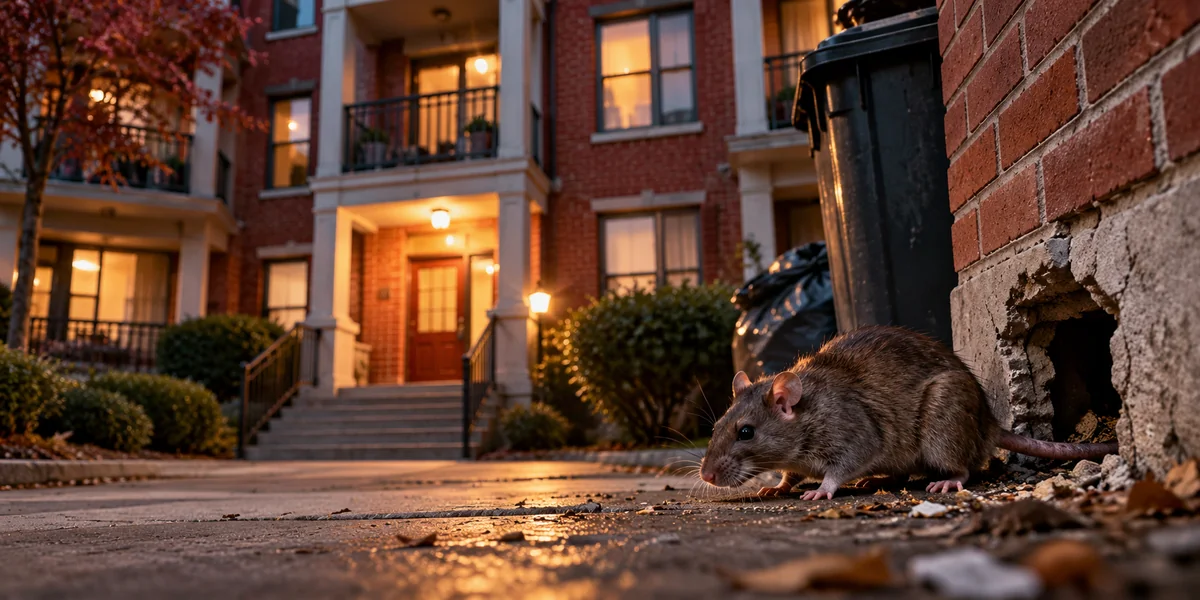
Yes, you can sue your landlord for rats.
In almost every state and city, landlords are legally required to keep rental homes free of rats. Because rats carry serious diseases and chew through electrical wires, courts treat a rat infestation as an urgent health and safety violation. You can sue your landlord in Small Claims Court to get part of your rent refunded, get paid back for ruined food, furniture, or chewed car wires, and cover hotel or exterminator bills if:
- You told the landlord in writing (by text, email, or letter) as soon as you saw rats, droppings, or heard scratching in the walls.
- You gave the landlord a fair chance to fix it (usually 2 to 7 days for urgent rat problems, or up to 14 days depending on your state).
- The landlord ignored you or only did a temporary fix (like tossing down two cheap traps instead of hiring a professional to seal the holes where rats get inside).
Important Things to Know
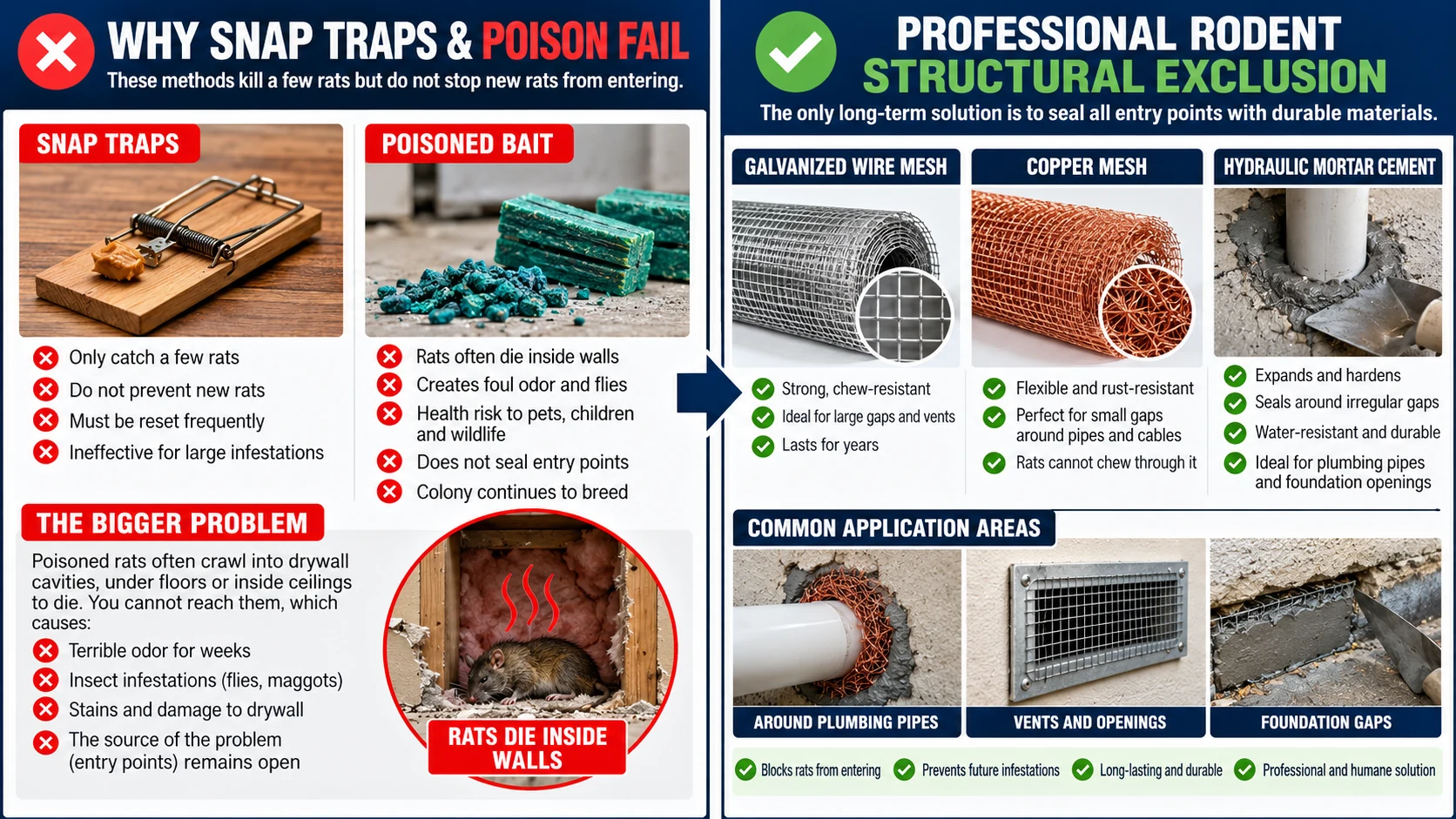
- Setting Cheap Traps Is Not Enough: A landlord does not fulfill their legal duty just by handing you snap traps or poison blocks. They must hire a professional to seal the holes in the walls, floors, and foundation so rats cannot keep coming back.
- Watch Out for Poison Inside Walls: If a landlord puts out cheap rat poison instead of sealing entry holes, rats often die inside the walls or ceiling—creating a terrible smell and maggots that also make the home unlivable.
- Apartment Buildings vs. Single-Family Homes: In an apartment building or duplex (2+ units), the landlord is almost always 100% responsible for getting rid of rats. In a rented single-family house, the landlord is responsible if rats were there when you moved in or are getting inside through gaps in the roof, siding, pipes, or foundation.
- Call 311 or Your Local Health Department: A free inspection report from your city Health Department or Code Enforcement officer is the strongest proof you can show a judge.
- Take Photos Before You Clean: Always take clear photos of rat droppings, chewed food packages, gnawed baseboards, and the holes around pipes before cleaning up—plus photos showing you keep your kitchen clean and trash sealed.
Can You Sue Your Landlord for Rats?
Yes, you can sue your landlord if rats or mice have invaded your rental home and your landlord refuses to solve the problem. In every state except Arkansas, the law requires landlords to keep apartments and rental houses fit for human habitation under a legal rule called the Warranty of Habitability. By law, every lease comes with a basic promise that your home is safe and clean to live in. A home with rats breaks that law—even if your lease claims you rented the apartment "as is."
Rats are not a minor annoyance. Norway rats and roof rats gnaw through structural drywall, contaminate kitchen pantries with urine and feces, chew through fire-alarm conduits and live electrical wiring, and carry dangerous diseases including Salmonellosis, Leptospirosis, and Hantavirus. When a landlord ignores your reports or takes half-measures, you have the right to take them to court for substantial financial recovery.
In Small Claims Court or Housing Court, tenants suing over an unaddressed rat problem can recover:
- Getting Part of Your Rent Refunded: Getting a 20% to 50%+ refund of the monthly rent you paid while forced to live with rodents in your home.
- Ruined Belongings & Damaged Wiring: Money to replace chewed mattresses, sofas, contaminated groceries, and wire repairs for vehicles parked in the building's lot.
- Out-of-Pocket Extermination Costs: Reimbursement if you had to hire a professional exterminator yourself under state repair-and-deduct statutes.
- Breaking Your Lease Without Penalty: Exercising your right to move out immediately without paying termination fees if rats make the apartment completely uninhabitable.
Landlord vs. Tenant Responsibility for Rat Infestations
When rats invade a rental property, landlords frequently attempt to deflect blame by asserting that tenant housekeeping caused the problem. However, statutory property codes and judicial habitability standards allocate responsibility based on building architecture, structural entry points, and causative conduct:
| Infestation Scenario | Responsible Party | Statutory & Habitability Basis |
|---|---|---|
| Multi-Unit Apartment Building (2+ Units) | Landlord (100%) | Rats migrate through shared inter-wall chases, plumbing stacks, drop ceilings, and subfloors. Under the Implied Warranty of Habitability, individual tenants have neither the authority nor the physical ability to seal building-wide structural voids. |
| Structural Gaps, Foundation Holes & Roof Voids | Landlord (100%) | Landlords have an affirmative duty to maintain the structural building envelope weatherproof and rodent-proof. Missing crawlspace screens, rotted exterior siding, and unsealed pipe gaps violate municipal housing maintenance codes. |
| Pre-Existing Infestation at Move-In | Landlord (100%) | Landlords are statutorily required to deliver clean, habitable premises at inception of the tenancy. If droppings, nests, or burrow holes exist during initial walk-through, the landlord breached the delivery covenant. |
| Dumpster Enclosures & Building Common Grounds | Landlord (100%) | Landlords must provide adequate, rodent-proof sanitary trash receptacles and maintain outdoor grounds free of rodent harborage. |
| Single-Family House With Intact Exterior Envelope | Varies by State / Lease Terms | In detached single-family rentals where the structural exterior is fully sealed and vermin enter due to open doors or localized food storage, some state codes allow leases to assign interior extermination to the tenant. [VERIFY state-specific single-family exemption clauses]. |
| Tenant Causation / Extreme Waste Hoarding | Tenant Responsibility (Exception) | When a landlord proves with photographic evidence and pest technician reports that a tenant created the condition through uncontained rotting food waste or severe hoarding, the tenant can be held liable for remediation costs under tenant statutory duties (e.g., Cal. Civ. Code § 1941.2). |
Review our comprehensive guide to unsafe living conditions and the master tenant lawsuit guide for full statutory steps.
Why Traps and Poison Aren't Enough (The Exclusion Rule)
When tenants report rats, bad landlords frequently rely on half-measures to save money. They might drop off two cheap snap traps or throw poison pellets under the kitchen sink and claim they "handled the problem." In a court of law, this excuse fails completely.
The Three Big Failures of Cheap Landlord Fixes
- The Cheap Trap Excuse: Setting snap traps or sticky glue pads only catches individual foraging rodents; it does not eliminate the nesting colony or stop new rats from entering from outside.
- Why Poison Makes the Apartment Worse: When landlords throw down poison bait blocks without sealing entry holes, poisoned rats retreat deep inside wall voids, ceiling joists, or HVAC ducts to die. Within 48 hours, the decomposing carcass produces an overpowering stench of rot, attracts swarms of black blowflies, and creates airborne bacteria that make the apartment entirely unlivable for 2 to 4 weeks.
- The Legal Requirement for "Rodent Exclusion": Under municipal building codes (such as the International Property Maintenance Code § 309), getting rid of rats requires structural exclusion. The landlord must dispatch a licensed pest contractor to inspect the building perimeter and permanently seal every opening larger than a half-inch (the size of a quarter) using heavy-gauge galvanized steel mesh, copper wire cloth, and hydraulic cement mortar.
Judicial Precedent: Rodent Infestations as Fundamental Contract Breaches
Courts across the country hold that property owners cannot satisfy their habitability duties with superficial pest treatments while structural gaps remain open.
In the landmark housing case Lemle v. Breeden (Supreme Court of Hawaii), a tenant rented a residential home that turned out to be severely infested with rats running across ceiling beams at night. The landlord argued that the tenant had inspected the home and accepted it. The Supreme Court decisively rejected that defense, establishing that residential leases carry an automatic guarantee of fitness and safety. The court ruled that the rat infestation broke the lease contract, entitling the tenant to cancel the lease immediately and recover all pre-paid rent and security deposits.
This ruling established a nationwide standard: a severe rat infestation goes to the core of the rental agreement. If management fails to seal structural breaches and eliminate the rodents, the tenant is legally justified in pursuing lease cancellation and full rent refunds under our guide to breach of the warranty of habitability.
How to Prove the Rats Aren't Your Fault (5-Step Evidence Checklist)
To win a rat lawsuit in Small Claims Court, you must eliminate the landlord's favorite defense: claiming you caused the rodents through poor housekeeping. Follow this 5-step evidence routine to build an airtight case:
| Evidence Step | What to Document & Action to Take | Why It Wins in Court |
|---|---|---|
| ✓ Step 1: Take "Clean Kitchen" Photos First | Before calling your landlord or reporting the issue to city inspectors, thoroughly clean your kitchen counters, sweep and mop the floors, take out all trash, and store pantry dry goods in heavy plastic or glass containers. Take wide-angle, dated photographs showing a spotless, organized home. | Eliminates "Dirty Tenant" Excuse: Proves to the judge you did not cause the infestation through dirty dishes, uncollected trash, or open food. |
| ✓ Step 2: Photograph & Video Physical Evidence | Take clear, close-up photos of rat droppings next to a coin or ruler for scale, gnawed baseboards, chewed pantry boxes, grease smudge marks along floorboards, and dead rodents in traps with phone timestamps enabled. | Forensic Evidence: Gives the court indisputable physical proof of active vermin infestation and ongoing property damage. |
| ✓ Step 3: Record Nighttime Audio & Video | Rats are nocturnal and most active between 11 PM and 5 AM. Use your smartphone to record 30-second video clips capturing the loud scratching, scurrying, or squeaking sounds inside bedroom walls or ceiling joists. | Habitability Deprivation: Proves persistent sleep deprivation and confirms rodents are nesting directly inside the building's structural cavities. |
| ✓ Step 4: Call 311 for a Free Municipal Health Inspection | Contact your local city or county Department of Health or Code Enforcement division. An official municipal inspector will examine the premises for free and issue an official Notice of Violation ordering the landlord to seal exterior holes. | Unbeatable Government Citation: An official city citation carries immediate legal authority that landlords cannot dispute in court. |
| ✓ Step 5: Save Every Out-of-Pocket Receipt | Keep every single receipt for thrown-out groceries, airtight storage containers, disinfectants, snap traps, ruined mattress pads or couches, hotel stays, and car mechanic repair bills for chewed electrical wiring. | Dollar-for-Dollar Reimbursement: Establishes the exact out-of-pocket financial losses the judge can award in your Small Claims judgment. |
Visual Evidence Protocol (Step-by-Step Proof for the Judge)
-
Take "Clean Kitchen" Photos Before Reporting
Thoroughly clean your kitchen counters, sweep floors, seal food into airtight containers, and photograph the spotless room with a dated phone screen to immediately kill the "dirty tenant" excuse.
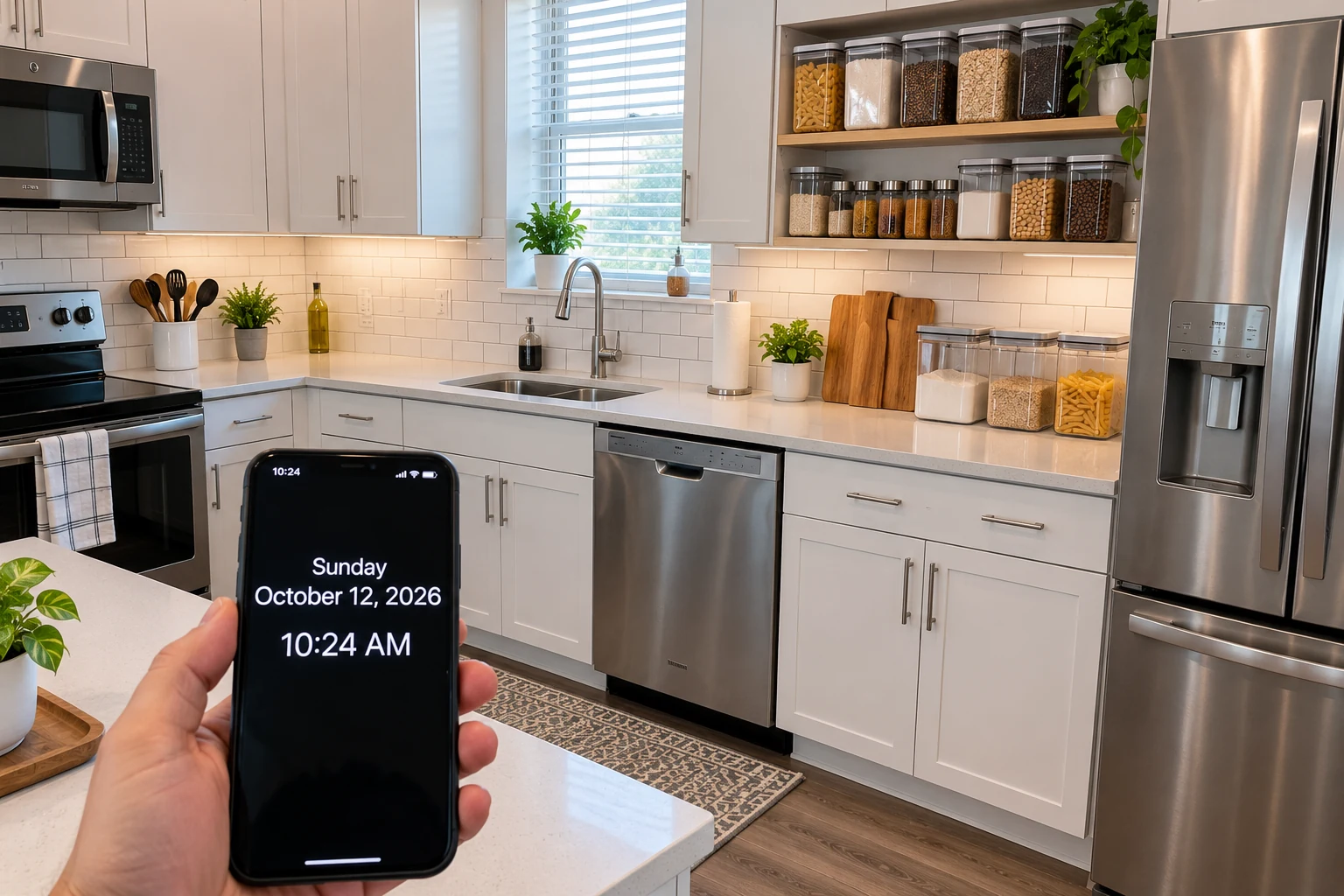
Step 1 Documentation: Date-stamped photos of spotless counters and sealed food jars eliminate landlord claims of poor housekeeping. -
Photograph Physical Droppings & Gnaw Marks with Scale
Capture macro photos of rat droppings next to a ruler or coin for exact measurement, plus chewed baseboards, shredded pantry boxes, and gnawed drywall holes.
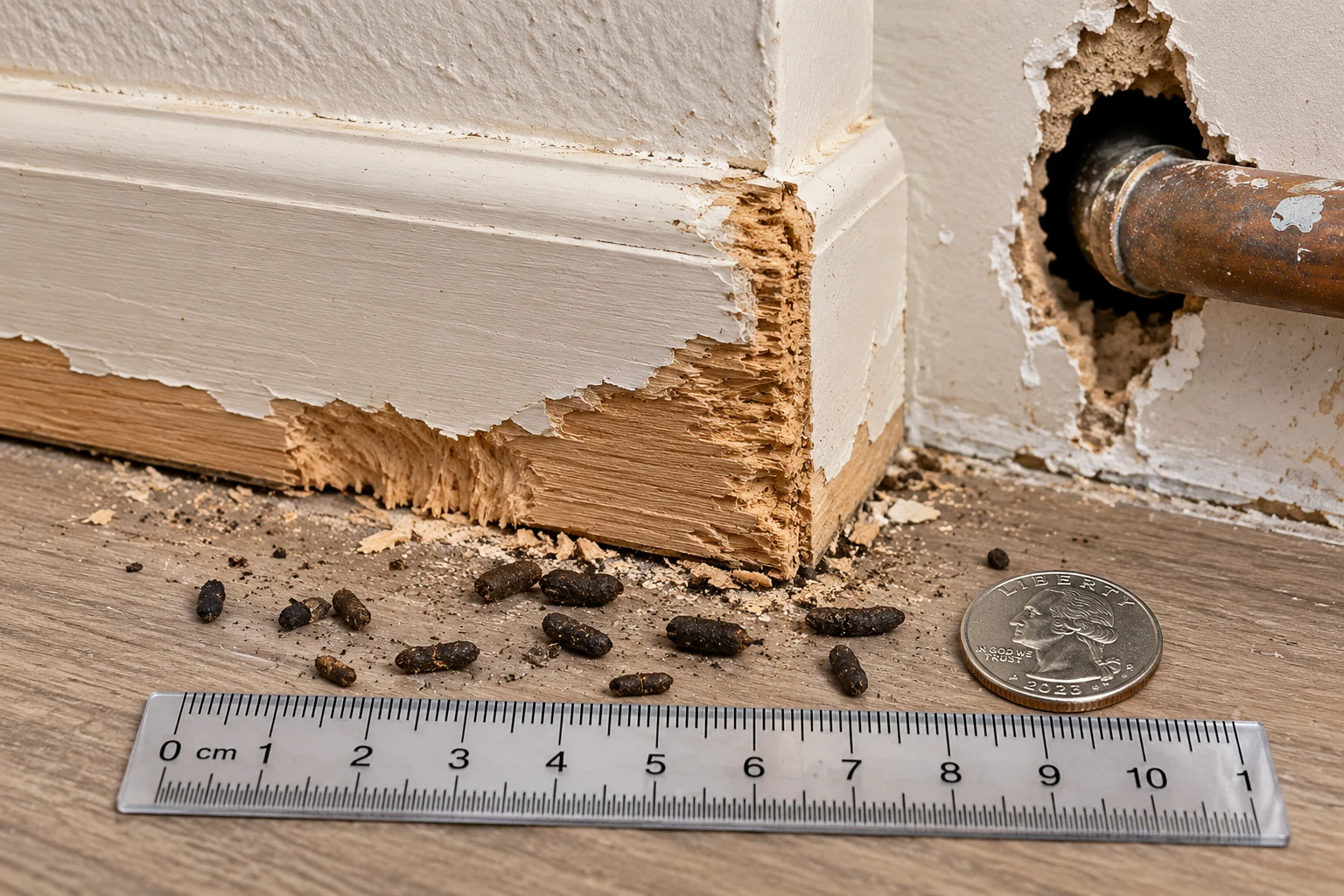
Step 2 Forensic Proof: Clear photos showing fresh rodent droppings and gnaw marks against a ruler give the court indisputable physical evidence. -
Record Nighttime Audio & Video Inside Walls
Film 30-second clips of loud nocturnal scratching, squeaking, and scurrying inside bedroom walls and ceiling joists between 11 PM and 5 AM.
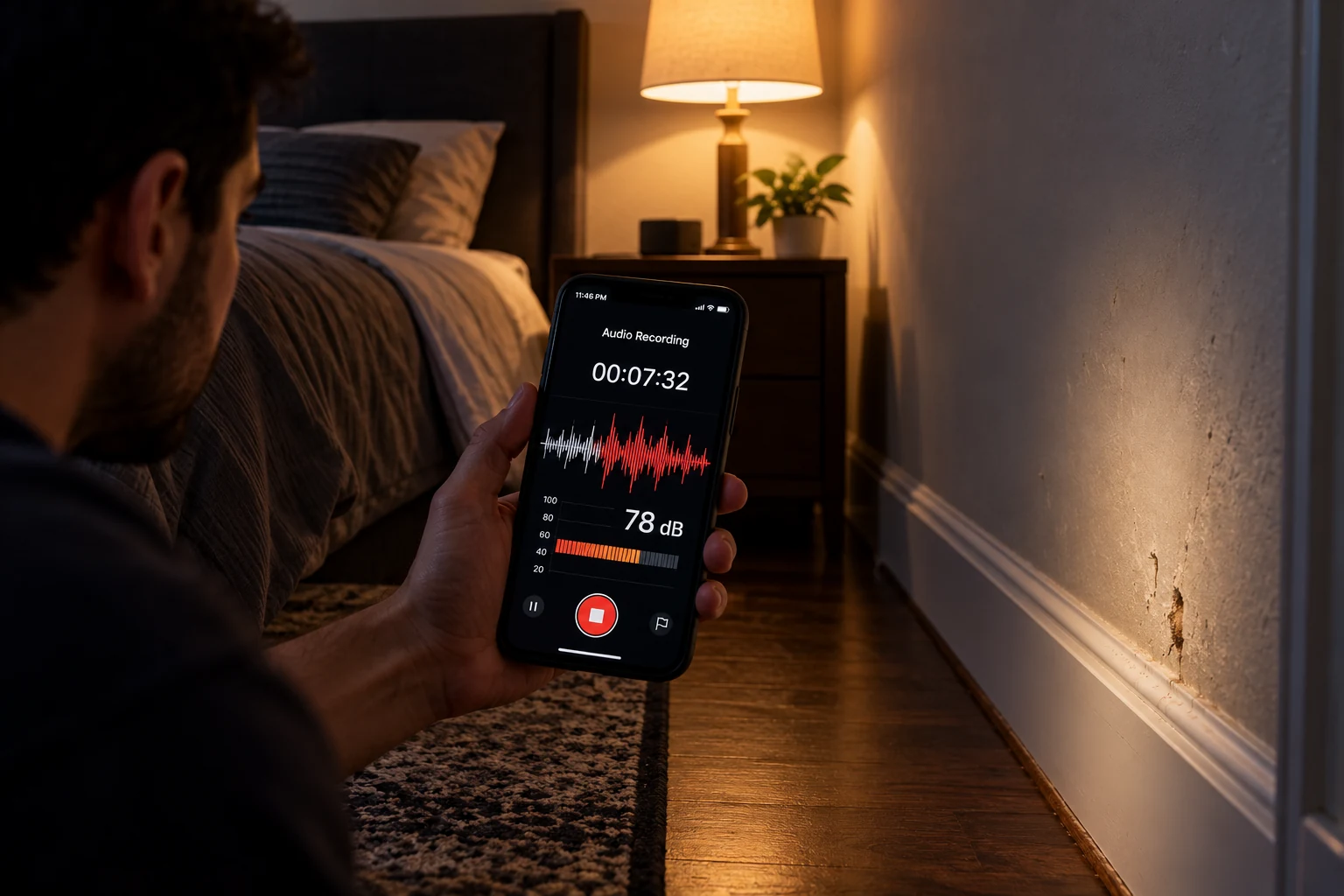
Step 3 Sound Evidence: Nighttime smartphone audio/video clips confirm active nesting inside the building's structural wall cavities. -
Call 311 for a Municipal Health Department Citation
Request an official municipal code inspection. A city Notice of Violation ordering the landlord to seal exterior foundation gaps is unassailable government proof.
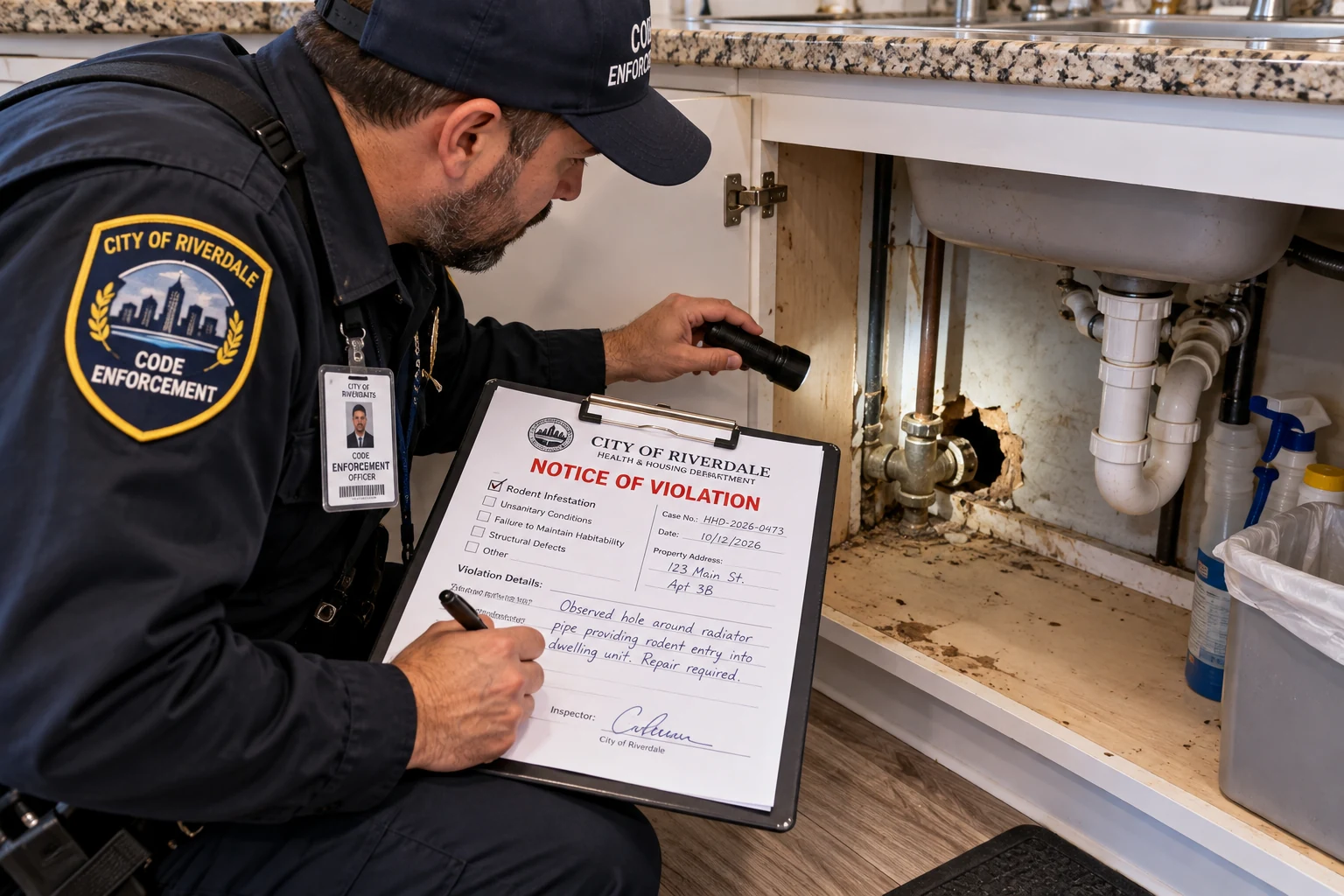
Step 4 Government Inspection: An official health department Notice of Violation carries neutral legal authority that landlords cannot dispute. -
Itemize Receipts for Belongings, Chewed Wires & Hotels
Compile every receipt: contaminated pantry groceries, plastic storage bins, hotel nights, and mechanic invoices for rat-chewed vehicle wiring in the parking area.
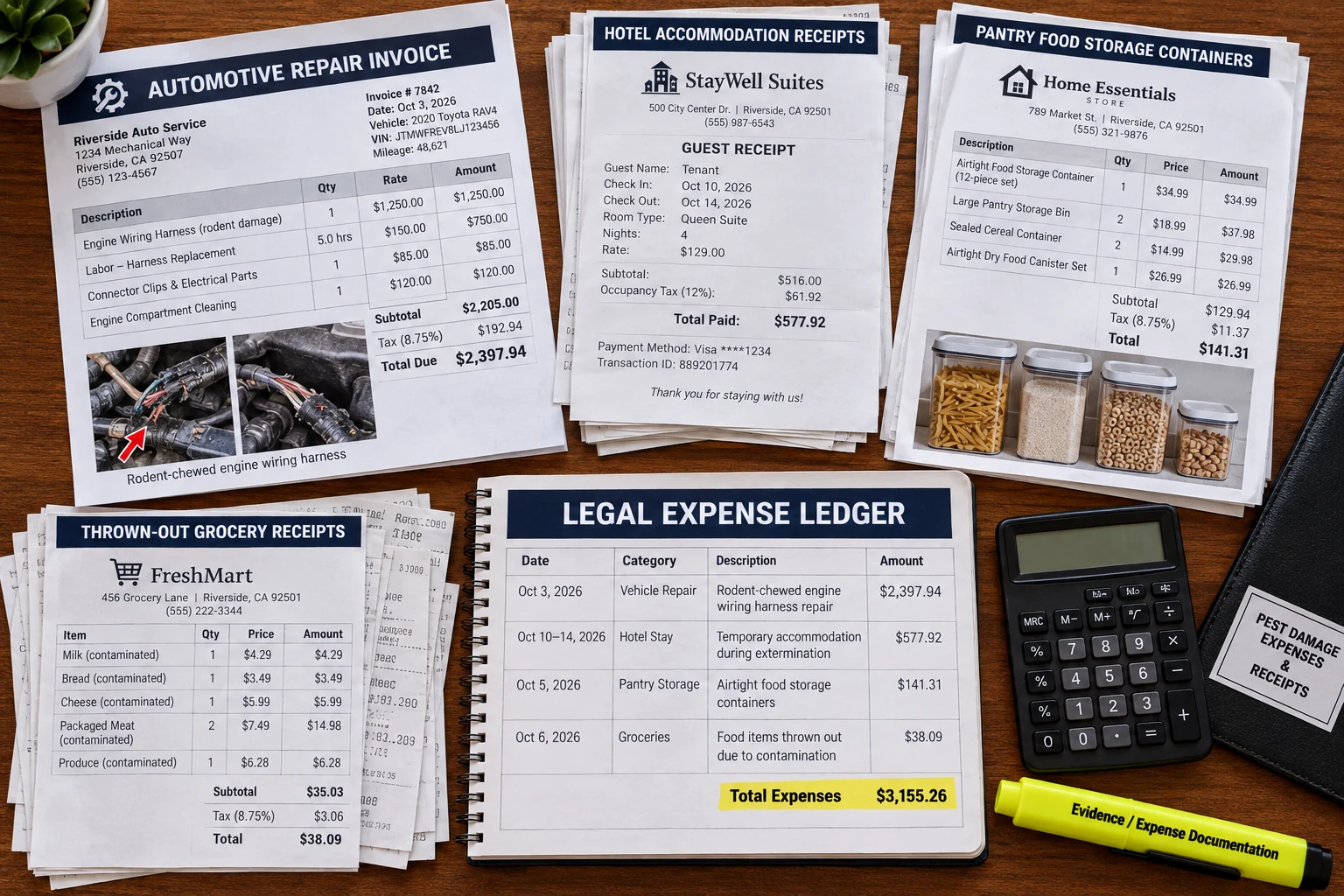
Step 5 Financial Ledger: An itemized folder of receipts establishes dollar-for-dollar damages the judge can award in your judgment.
Organize your evidence folder with dated photo prints, a log of maintenance requests, receipts for ruined groceries, and Certified Mail tracking slips showing exactly when your landlord was notified.
For broader strategies on capturing insect and rodent proof across multiple rooms, read our comprehensive resource on suing for pest infestations.
How Much Can I Sue My Landlord for a Rat Infestation?
When taking your landlord to Small Claims Court or Housing Court over an unaddressed rat infestation, your potential financial recovery is structured into several distinct legal damage categories recognized by state property codes and common law:
| Damages Category | Legal Standard & Calculation Method | Statutory Authority & Links |
|---|---|---|
| 1. Retroactive Rent Abatement | Refund of rent paid while living with rodents after landlord received notice. Courts calculate abatement based on proportional reduction in habitability (often 20% to 50%+ of monthly rent depending on whether rats entered bedrooms or kitchens). | Common law habitability standard (Green v. Superior Court, 10 Cal.3d 616; Javins v. First National Realty Corp., 428 F.2d 1071). |
| 2. Contaminated Property Damage | Fair market replacement value for chewed mattresses, gnawed upholstered sofas, contaminated food groceries, and chewed engine wiring harnesses for vehicles parked in the building parking structure. | Actual tort property damages. Require itemized receipts or comparative retail listings. |
| 3. Pest-Control & Cleaning Expenses | Full reimbursement if you hired a licensed exterminator or professional sanitation crew after the landlord failed to act within statutory cure windows. | Authorized under state repair-and-deduct statutes (e.g., Cal. Civ. Code § 1942; Tex. Prop. Code § 92.0561). |
| 4. Medical Treatment Costs | Documented healthcare bills, emergency room visits, antibiotics, or asthma inhaler prescriptions if family members contracted Leptospirosis, Salmonellosis, rat-bite fever, or suffered severe respiratory reactions to rodent dander and urine. | Compensatory personal injury damages. Supported by physician records and diagnosis codes. |
| 5. Emergency Relocation & Lodging | Reasonable hotel room charges and moving expenses if severe rodent activity forced you to vacate under constructive eviction. | Relocation expenses under constructive eviction standards. |
| 6. Attorney Fees & Statutory Penalties | Where authorized by statute or lease contract, prevailing tenants can recover filing fees, process server fees, and court costs. Some jurisdictions award statutory penalties if a landlord knowingly collects rent on an uncorrected vermin notice. | E.g., Cal. Civ. Code § 1942.4 (statutory damages from $100 to $5,000 plus attorney fees for habitability violations). |
Small Claims Jurisdictional Limits: Tenants filing without an attorney can sue in Small Claims Court up to their state statutory monetary limit. For example, the small claims cap is $12,500 in California (for individual claims; California Courts Official Self-Help), $10,000 in New York City Civil Court (NY Courts Small Claims), and $20,000 in Texas Justice Courts (Texas Judicial Branch). If your total damages exceed your state's small claims threshold, you may choose to cap your claim to remain in small claims court or file in general civil court.
Ready-to-Send Rat Extermination & Rent Refund Demand Letter
Before filing a lawsuit in Small Claims Court, you should send one final formal demand letter. This document serves as undeniable proof that you notified the landlord in writing and gave them a fair opportunity to fix the issue:
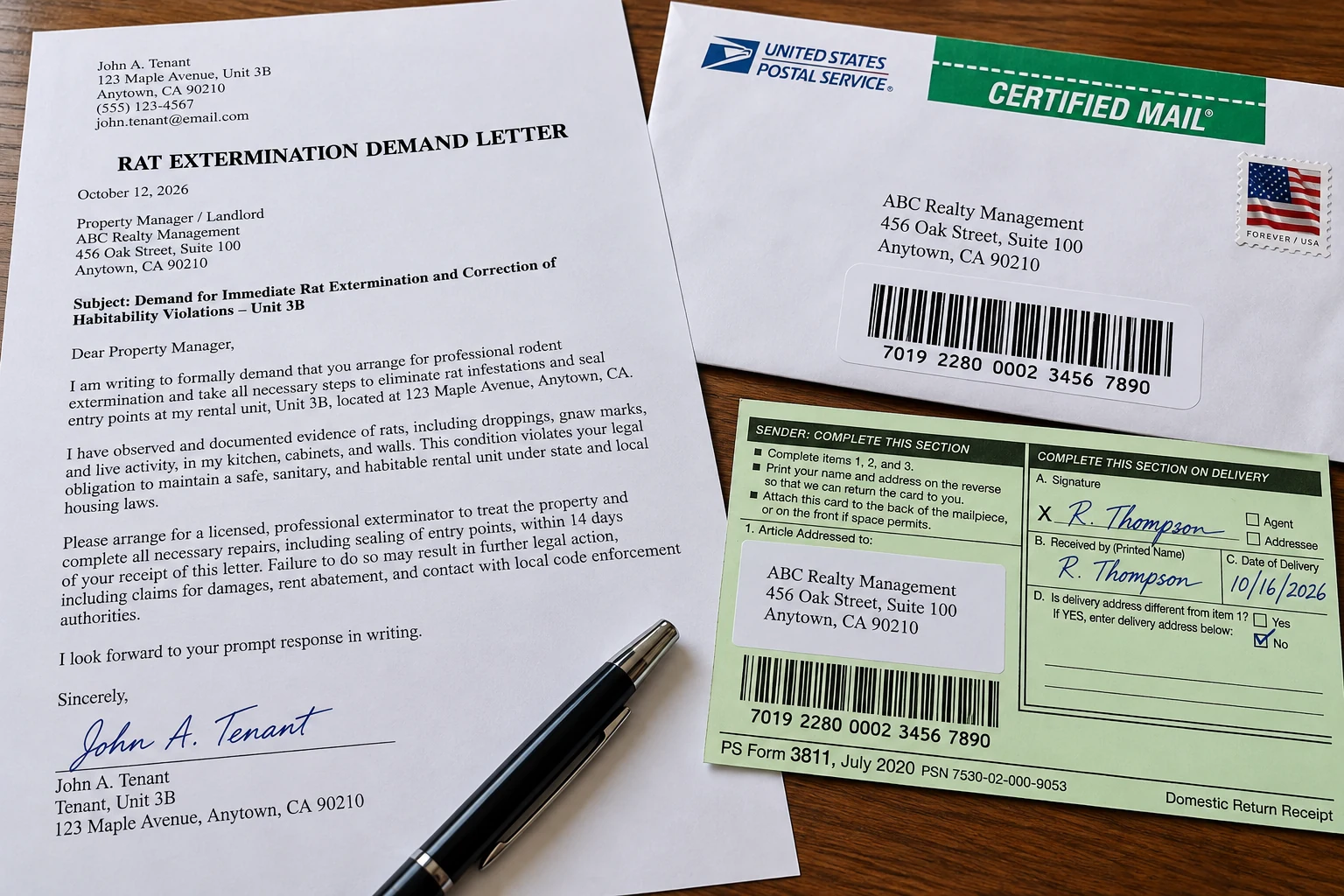
VIA CERTIFIED MAIL WITH RETURN RECEIPT REQUESTED
AND VIA ELECTRONIC DELIVERY (EMAIL / TENANT PORTAL)

Date: [TODAY'S DATE, e.g. October 15, 2026]

To: [LANDLORD OR PROPERTY MANAGEMENT COMPANY NAME]
Address: [OFFICIAL LEASE NOTICE ADDRESS]
City, State, Zip: [CITY, STATE, ZIP]

From: [YOUR FULL NAME]
Rental Address: [YOUR APARTMENT NUMBER AND STREET ADDRESS]
Phone Number: [YOUR PHONE NUMBER]
Email: [YOUR EMAIL ADDRESS]

SUBJECT: FORMAL NOTICE OF SEVERE RAT INFESTATION AND FINAL DEMAND FOR PROFESSIONAL EXCLUSION, EXTERMINATION, AND RENT REIMBURSEMENT

Dear [LANDLORD OR PROPERTY MANAGER NAME],

This letter serves as formal written notice under applicable state property statutes and the warranty of habitability that my rental dwelling is experiencing an active, unresolved rodent (rat) infestation.

1. TIMELINE AND DISCOVERY:
Rodent activity was first observed inside the premises on [DATE YOU FIRST SAW RATS/DROPPINGS], and was formally reported to your office on [DATE OF FIRST REPORT] via [EMAIL / TEXT / PORTAL TICKET].

Evidence of this infestation includes active rodent droppings, gnaw marks along baseboards, nocturnal scratching sounds inside walls and ceilings, and visible rodents in living and kitchen quarters.

My dwelling is consistently maintained in a clean, sanitary condition, with all food items stored in airtight hard containers and domestic trash removed daily. The rodents are entering the premises through structural breaches, unsealed plumbing pipe chases, and foundation gaps that are the landlord's sole legal responsibility to maintain.

2. INADEQUACY OF PRIOR RESPONSE:
[CHOOSE APPLICABLE OPTION:]
- To date, management has failed to inspect or dispatch pest control personnel to remedy this habitability violation.
- The temporary placement of over-the-counter snap traps or poison pellets on [DATE] has failed to eliminate the problem. Placing bait without performing structural exclusion leaves open pathways for continuous rodent entry and risks rodents dying inside wall cavities.

3. DEMAND FOR PROFESSIONAL CORRECTIVE ACTION:
Under municipal property maintenance codes and state habitability laws, you are legally required to provide a vermin-free home. I hereby demand that you take the following corrective steps within SEVEN (7) CALENDAR DAYS of receipt of this notice:
1. Dispatch a licensed pest management professional to perform comprehensive rodent eradication.
2. Permanently seal all structural entry points, exterior foundation gaps, plumbing chases, and wall voids with gnaw-proof materials (heavy-gauge steel wire mesh, copper mesh, and mortar cement).
3. Reimburse me in the amount of $[TOTAL AMOUNT, e.g. $650] for contaminated groceries, ruined personal property, and vehicle wiring repairs (itemized receipts attached).
4. Provide a retroactive rent refund of $[AMOUNT, e.g. $1,200] representing the diminished rental value of the property during the [NUMBER] months of ongoing infestation.

4. NOTICE OF FORMAL LEGAL REMEDIES:
If professional remediation is not initiated and confirmed in writing within seven (7) days, I will immediately exercise all statutory tenant rights without further notice, including:
- Filing an official inspection request with the Municipal Department of Health and Code Enforcement.
- Exercising statutory Repair-and-Deduct or Rent Escrow remedies as authorized by state law.
- Initiating a formal lawsuit in Small Claims Court for retroactive rent abatement, property damages, and court costs.
- Declaring constructive eviction, terminating the tenancy without penalty, and holding you liable for all moving and relocation costs.

Please contact me in writing immediately at [YOUR EMAIL ADDRESS] to schedule professional inspection and repair appointments.

Sincerely,

_________________________________________
[YOUR SIGNATURE]

[YOUR PRINTED NAME]
Tenant at [YOUR APARTMENT NUMBER]
How to Send This Letter So It Counts in Court:
- Fill in the brackets: Replace all bracketed placeholder text with your real dates, unit number, and actual dollar losses.
- Send an email copy immediately: Email or upload the letter through your tenant portal so your landlord has immediate timestamped notice.
- Mail via USPS Certified Mail: Go to your local post office and send the letter via Certified Mail with Return Receipt Requested. Keep the green signed return receipt as primary proof for the Small Claims judge.
Frequently Asked Questions
Because rats carry serious infectious diseases and chew through electrical wiring, most state laws and municipal health codes treat them as an urgent emergency. Landlords are generally required to begin professional extermination and structural sealing within 24 hours to 7 days after receiving written notice, and must conclude remediation efforts within 14 days. If your landlord ignores you or merely drops off a plastic trap, they are in immediate violation of the lease.
Yes. Under the legal rule known as Constructive Eviction, you have the right to break your lease and move out without paying early termination fees if rats make your apartment unsafe or unlivable. Before packing up, you must send a final written notice giving your landlord a clear deadline (typically 7 days) to fix the issue, take photos of the rodent evidence, and ideally request an inspection from your city health department to protect yourself against future lawsuits for unpaid rent.
Never simply keep rent money in your personal bank account without following state law, or your landlord can legally file an eviction lawsuit against you for nonpayment. Instead, use legal remedies authorized by your state: either Repair and Deduct (hiring a licensed exterminator yourself and subtracting the paid receipt from next month's rent) or depositing your rent into an official court-supervised rent escrow account until the landlord seals all structural holes.
Yes. If your landlord knew about an active rat infestation near the building's dumpster area, carport, or parking garage and failed to take reasonable pest control measures after complaints, they can be held liable under premises negligence. You can sue in Small Claims Court to recover your mechanic's repair bill or your auto insurance comprehensive deductible.
A dead animal decaying inside walls or ceiling vents produces sickening odors, attracts blowflies, and creates hazardous bacteria, which directly violates the Warranty of Habitability. Your landlord is legally required to open the wall void, remove the carcass, and disinfect the area immediately. If management fails to remediate the odor promptly, you are entitled to a substantial rent credit or temporary hotel accommodations paid for by the landlord until the home is fresh and safe.
SueLegal is an independent educational legal publisher, not a law firm or lawyer referral service. The information provided in this guide is for general informational and educational purposes only and does not constitute formal legal advice. Residential landlord-tenant laws, repair notice periods, and statutory remedies vary significantly across state and municipal jurisdictions. If you are facing eviction, severe uninhabitable conditions, or complex litigation, consult a licensed attorney in your jurisdiction or contact your local legal aid organization. For more details on our standards, read our Editorial Policy and Legal Research Methodology.