

Yes, you can sue your landlord for a personal injury—even if your lease has a "hold harmless" waiver claiming the landlord isn't responsible for accidents.
Under Premises Liability and the Implied Warranty of Habitability, landlords have a strict legal duty to maintain safe common areas and promptly repair dangerous conditions inside your rental home. If you, your child, or a guest were hurt because your landlord ignored a hazard, violated a building code, or did a sloppy repair, you can recover three buckets of money:
- Full Personal Injury Insurance Settlements ($25,000 to $500,000+): Paid by the landlord's commercial liability insurance policy (at $0 upfront cost through a contingency injury lawyer) covering 100% of your ER/hospital bills, physical therapy, surgery, missed paychecks, and pain and suffering.
-
Instant "$5,000–$10,000 No-Fault MedPay" Coverage: Most landlord insurance policies include Coverage C (
MedPay), which reimburses your immediate ER copays, X-rays, and ambulance bills automatically without requiring you to prove fault. - Habitability Rent Refunds & Property Damage ($1,500 to $15,000): On top of your injury claim, you can recover a 25% to 75% retroactive rent refund, hotel bills, and replacement costs for any furniture or belongings ruined by the hazard (like a ceiling collapse or flood).
Your Key Rights & Responsibilities
- Your Lease’s "Landlord Is Not Responsible for Injuries" Clause Is Void in Nearly All 50 States: Don’t let your landlord scare you with fine print. Statutes in CA (
Civ. Code § 1953), NY (GOL § 5-321), TX (Prop. Code § 92.006), IL (765 ILCS 705/1), FL (Fla. Stat. § 83.47), MA, WA, and 35+ other states strictly ban landlords from waiving liability for negligent injuries! - A Building Code Violation Proves Landlord Fault Automatically (
Negligence Per Se): If you were hurt by a missing stair handrail, a step height off by more than⅜ inch, tap water hotter than120°F, non-tempered glass, or a missingGFCIoutlet, violating the building code proves the landlord was negligent automatically. - Guests, Children & Delivery Drivers Have the Exact Same Right to Sue: You do not have to be on the lease to sue a negligent landlord. If your child, visiting parent, friend, or delivery driver was injured by a building defect, the landlord’s insurance policy covers them too.
- Stop the Landlord’s Handyman From Destroying the Evidence in the First 48 Hours: Right after an injury, landlords rush to haul away the collapsed plaster, rotted porch railing, or broken step so you can’t prove it was rotted. Take photos and video immediately and call 311 / City Building Inspection before maintenance touches it!
- You Pay $0 Out of Pocket to Hire a Tenant Injury Lawyer: Personal injury attorneys handle landlord negligence lawsuits on 100% contingency—meaning they advance all medical/engineering expert costs and only get paid a percentage of the insurance settlement they win for you.
The 8 Most Common Apartment Injuries You Can Sue Your Landlord For (And What Each Settles For)
When a physical accident occurs inside a rental building, property managers and insurance claims adjusters will try to convince you that landlords are immune from bodily injury lawsuits.
In American premises liability law, landlords owe a mandatory duty of reasonable care to maintain common areas, structural components, and essential interior utilities in safe condition. When management ignores a known hazard or violates a municipal safety code, their Commercial General Liability (CGL) insurance policy is legally responsible for your full financial recovery. For foundational principles on holding management accountable, review our master guide to Can I Sue My Landlord? and our analysis of suing a landlord for negligence.
| Type of Apartment Injury | How the Landlord Was Negligent | Building / Safety Code Violated (Negligence Per Se) | Typical Insurance Settlement Range |
|---|---|---|---|
| 1. Wet Ceiling or Plaster Collapse | Landlord ignored upstairs plumbing/roof leaks or water stains until heavy soaked drywall/plaster caved in on the tenant. | IPMC § 304.7 (Roofs) & § 305.3 (Interior Ceilings — No Peeling/Loose Plaster) | $35,000 to $300,000+ Head/neck trauma, concussion, herniated discs, ruined furniture. |
| 2. Broken Stairs, Missing Handrails, or Balcony/Deck Collapse | Rotted wooden steps, loose wobbly handrails, uneven step heights (greater than ⅜ inch variance), or rusted balcony bolts giving way. | IBC § 1011 & IPMC § 304.10 / § 305.4 (Stairs, Guards & Handrails) | $40,000 to $500,000+ Broken ankles, wrists, hips, or spinal compression fractures. |
| 3. Slip-and-Fall on Ice, Wet Lobby, or Leaking Pipe | Unsalted black ice (especially from a leaking roof gutter), freshly mopped lobby with no warning sign, or chronic indoor pipe leaks. | ADA § 303.2 (> ½-inch sidewalk lip) & Local Snow Removal Ordinances | $20,000 to $250,000+ Knee tears (torn meniscus/ACL), coccyx fractures, shoulder dislocations. |
| 4. Scalding Hot Shower / Tap Water Burns (> 120°F) | Building boiler/water heater thermostat set excessively high (140°F–160°F) or missing anti-scald mixing valves, burning a tenant or child in seconds. | International Plumbing Code (IPC § 412.3) & State Codes (120°F Maximum) | $35,000 to $400,000+ 2nd- and 3rd-degree scald burns occur in just 2 to 5 seconds at 150°F. |
| 5. Falling Window Sash, Heavy Cabinet, or Shattered Non-Tempered Glass | Broken window balance springs ("guillotine windows" slamming down on hands), improperly anchored wall cabinets falling, or annealed plate-glass shower doors shattering. | IPMC § 304.13.1 (Window Sash Hardware) & IBC § 2406 (Safety Glazing / Tempered Glass) | $25,000 to $200,000+ Severed hand tendons, digital nerve lacerations, deep glass puncture scars. |
| 6. Electrical Shock, Apartment Fire, or Carbon Monoxide Leak | Missing bathroom/kitchen GFCI outlets, wet light switches, dead smoke/CO alarms, or cracked furnace heat exchangers leaking odorless gas. | NEC § 210.8 (GFCI Protection), NFPA 101 (Life Safety Code) & State Alarm Statutes | $35,000 to $1,000,000+ Severe burn injuries, smoke inhalation lung damage, neurological hypoxia. |
| 7. Unsafe Elevator Drop, Misleveling Trip, or Door Slam | Elevator cab stopping 2+ inches uneven with the hallway threshold, broken door light curtains crushing passengers, or sudden hydraulic drops. | ASME A17.1 Elevator Safety Code & Common Carrier Highest Duty of Care | $30,000 to $450,000+ Whiplash spine injuries, tripping fractures, crushed extremity soft tissue. |
| 8. Violent Crime (Negligent Security) or Dog Bite Attack | Broken exterior gate locks, unlit parking lots with known prior criminal history, or harboring an aggressive tenant dog with known vicious propensities. | State Security Device Statutes (TX § 92.153, CA § 1941.3, NY MDL § 50-a) & Common-Law Premises Duty | $50,000 to $1,000,000+ Permanent facial scarring, puncture wound infections, severe psychological PTSD. |
The 4 Legal Ways to Prove Your Landlord Is At Fault (Even If You Got Hurt INSIDE Your Own Apartment!)
Landlords and insurance adjusters frequently attempt to deflect responsibility by asserting: "You were injured inside your own private apartment. The landlord does not reside in your unit, so you cannot blame management."
Under American tort law, this assertion is completely inaccurate. You only need to satisfy one of the following four legal doctrines to establish full landlord liability for an injury occurring inside your home:
Prior Warning & Failure to Repair ("Actual Notice")
Did you, a roommate, or a prior tenant send an email, text message, or resident portal maintenance ticket warning management about the ceiling drip, loose railing, broken window spring, or malfunctioning water heater before the incident occurred?
Once a landlord receives actual notice of a hazardous condition and fails to rectify it within a reasonable window, they are 100% liable for resulting injuries.
Building Code Violation ("Negligence Per Se")
Even if you never complained prior to the accident, if your injury resulted from the violation of an enacted building or safety standard, liability is established automatically as a matter of law.
Examples include shower tap water delivered above 120°F (IPC § 412.3), staircases lacking required handrails (IBC § 1011.11), non-tempered annealed glass in shower doors (IBC § 2406), or missing kitchen/bath GFCI outlets (NEC § 210.8).
Sloppy Handyman Work ("Affirmative Negligent Repair")
Under the Rule of Negligent Undertaking, even if a landlord originally had no common-law obligation to repair an interior fixture, once they send workers to make repairs, they owe a continuous duty to perform that work competently.
If maintenance slapped cosmetic compound over a sagging ceiling without fixing the pipe, hung a heavy cabinet into hollow drywall instead of wall studs, or rigged a wobbly step with undersized nails that subsequently collapsed, the landlord is directly liable without any prior notice requirement.
Pre-Existing Concealed Danger ("Latent Defect")
A landlord is legally responsible if a hidden hazard existed on the property before you took possession and the landlord knew—or should have known—about it without warning you.
Classic examples include painting over dry-rotted balcony beams, laying vinyl flooring over cracked rotted subfloors, or knowing about faulty circuit breakers and failing to disclose them prior to lease execution.
Why the Lease’s "Hold Harmless / Liability Waiver" Clause Cannot Stop Your Injury Lawsuit
Virtually every standard apartment lease includes a clause titled "Limitation of Landlord Liability" or "Tenant Indemnification & Hold Harmless" asserting that management is not responsible for any personal injuries occurring on the property.
When tenants get hurt, property managers point to this provision to discourage claims. In civil courtrooms across the nation, judges routinely discard these exculpatory clauses. State legislatures have determined that allowing landlords to contract away liability for personal injuries subverts basic public safety.
State Anti-Waiver Statutes That Void Lease Exculpatory Clauses:
| Jurisdiction | Governing Statutory Citation | Legal Effect on Tenant Injury Claims |
|---|---|---|
| California | Cal. Civ. Code § 1953(a)(5) & § 1668 | Any lease clause modifying or waiving a landlord’s duty of care to prevent personal injury is declared strictly void as against public policy. |
| New York | NY General Obligations Law § 5-321 | Every agreement exempting a lessor from liability for injuries to person or property caused by landlord negligence is wholly void and unenforceable. |
| Texas | Tex. Prop. Code § 92.006 | Landlords cannot contract away their statutory repair duties regarding conditions materially affecting health and safety. |
| Florida | Fla. Stat. § 83.47 | Lease provisions that purport to waive or preclude tenant rights or remedies under the Florida Residential Landlord and Tenant Act are void. |
| Illinois | 765 ILCS 705/1 (Lessor’s Liability Act) | Exculpatory clauses exempting landlords from liability for bodily injury or property damage are contrary to public policy and void. |
| Massachusetts & URLTA States | M.G.L. c. 186 § 15 & URLTA § 1.403 | Prohibits exculpatory lease provisions; landlords who knowingly insert void waiver provisions face statutory consumer protection penalties. |
What About "Comparative Fault"?
In states operating under modified comparative fault rules, an insurance company may claim you were partially distracted when you tripped or fell. Under comparative fault doctrines, you can still recover substantial compensation as long as the landlord’s fault was the primary proximate cause (e.g., in a 51% bar state, if the jury finds the landlord 80% responsible for the missing handrail and you 20% responsible for looking down, you still collect 80% of your total assessed verdict).
How to Force Your Landlord to Reveal Their Insurance Policy (And Claim Instant $5k–$10k "MedPay"!)
When tenants notify management of an injury, landlords frequently refuse to provide their insurance details. Understanding the structure of commercial landlord policies allows you to unlock compensation quickly.
No-Fault Medical Payments ("MedPay") ($5k–$10k)
Most commercial landlord policies contain Coverage C MedPay. This coverage reimburses ambulance transport, emergency room copays, diagnostic X-rays, and stitches without requiring you to prove fault. It is designed to pay medical bills immediately, regardless of who was at fault for the slip or fall.
Commercial Bodily Injury Liability ($500k–$2M+)
Coverage A pays full compensatory damages when landlord negligence caused the incident. This bucket covers surgical costs, ongoing physical therapy, lost earnings, future impairment, and general damages for pain and suffering.
Statutory Mandates Forcing Insurance Disclosure:
Multiple states enforce mandatory pre-litigation insurance disclosure statutes:
- Florida (Fla. Stat. § 627.4137): Requires liability insurers and insured property owners to provide a sworn statement disclosing insurer name, insured identity, and policy limits within 30 days of written demand.
- New York (CPLR § 3101(f)): Guarantees plaintiffs complete discovery of the existence and contents of any insurance agreement covering the risk.
- Virginia (Va. Code § 8.01-417) & Georgia (O.C.G.A. § 33-3-28): Obligate property owners and insurers to provide copies of policy limits upon written request showing medical bills exceeding statutory thresholds.
The "Late Notice" Leverage That Unlocks Coverage
If a landlord refuses to forward your injury claim to their insurance company, our written Notice and Legal Hold informs them of policy conditions. Commercial insurance policies contain prompt notification requirements. If a property owner conceals an injury claim and delays reporting, the insurance company can legally deny defense and indemnity for untimely notice—leaving the landlord personally exposed to court judgments and property liens.
What to Do in the First 72 Hours After Getting Hurt in Your Apartment
Securing fair compensation depends heavily on actions taken within the first 72 hours—before management disposes of physical components or alters the scene. Follow this evidentiary roadmap:
Step 1: Document & Measure Before Notifying Management
Take 15 clear photographs and an unbroken video of the hazard before texting management.
- If burned by scalding water, hold a cooking thermometer under the stream on video showing temperatures above 120°F.
- If injured by broken stairs or uneven pavement, place a ruler or coin alongside the lip to document height variance.
- Photograph the surrounding lighting conditions, missing handrails, or water pooling.
Step 2: Request an Official 311 / Municipal Inspection
Contact municipal Code Enforcement or the local Building Department immediately.
- Request an on-site inspection for structural code violations (broken steps, collapsed ceilings, unsafe railings).
- An official government citation documenting building code non-compliance prevents insurance adjusters from denying fault.
- Secure a copy of the final inspector violation report for your claim portfolio.
Step 3: Seek Immediate Medical Care & Detail the Cause
Visit an emergency room or urgent care center within 24 hours of the incident.
- Inform triage personnel specifically: "I fell when the rotted exterior step broke at my apartment" or "A waterlogged ceiling collapsed on my neck."
- Securing an contemporaneous medical history links the injury directly to the premises defect in official hospital records.
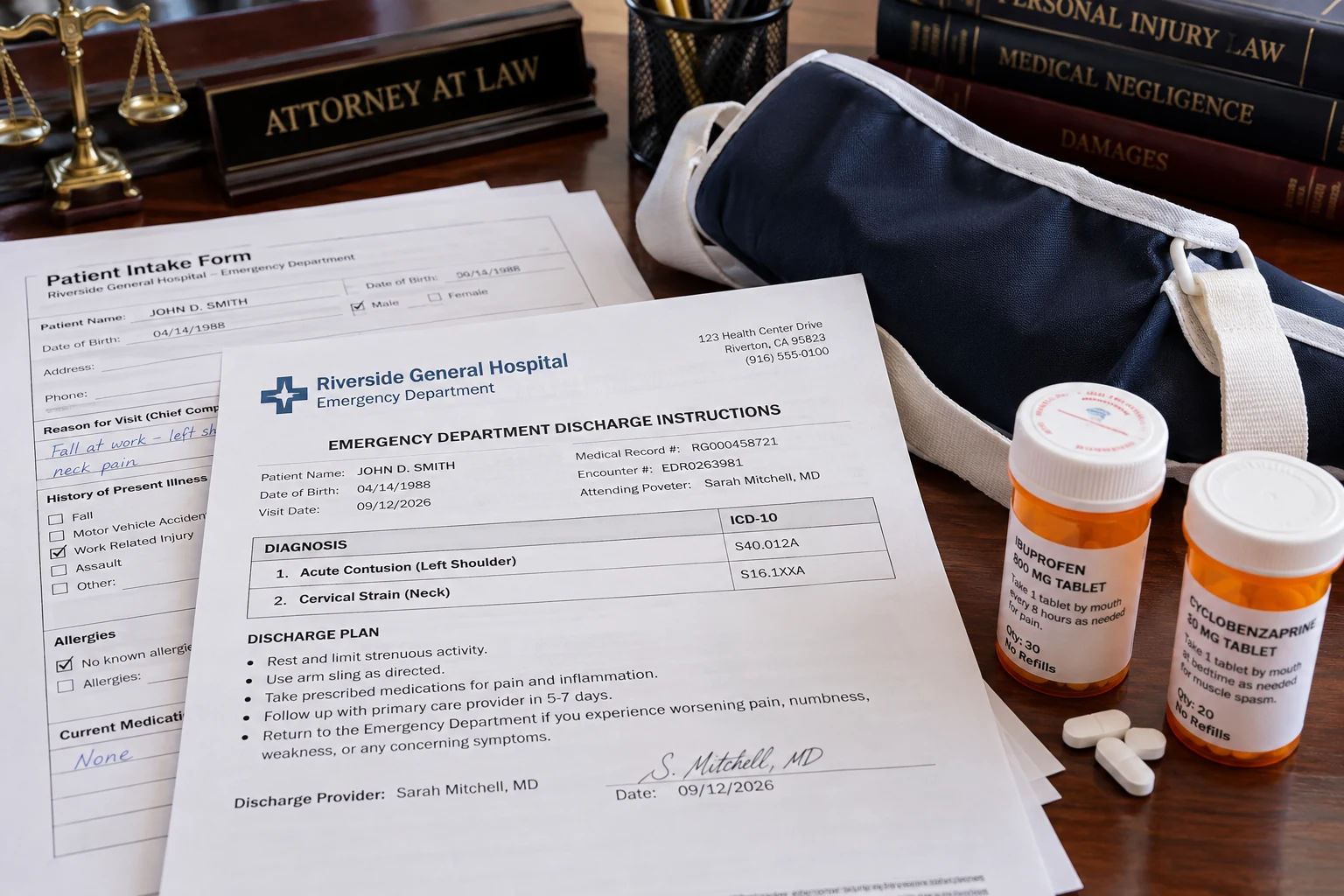
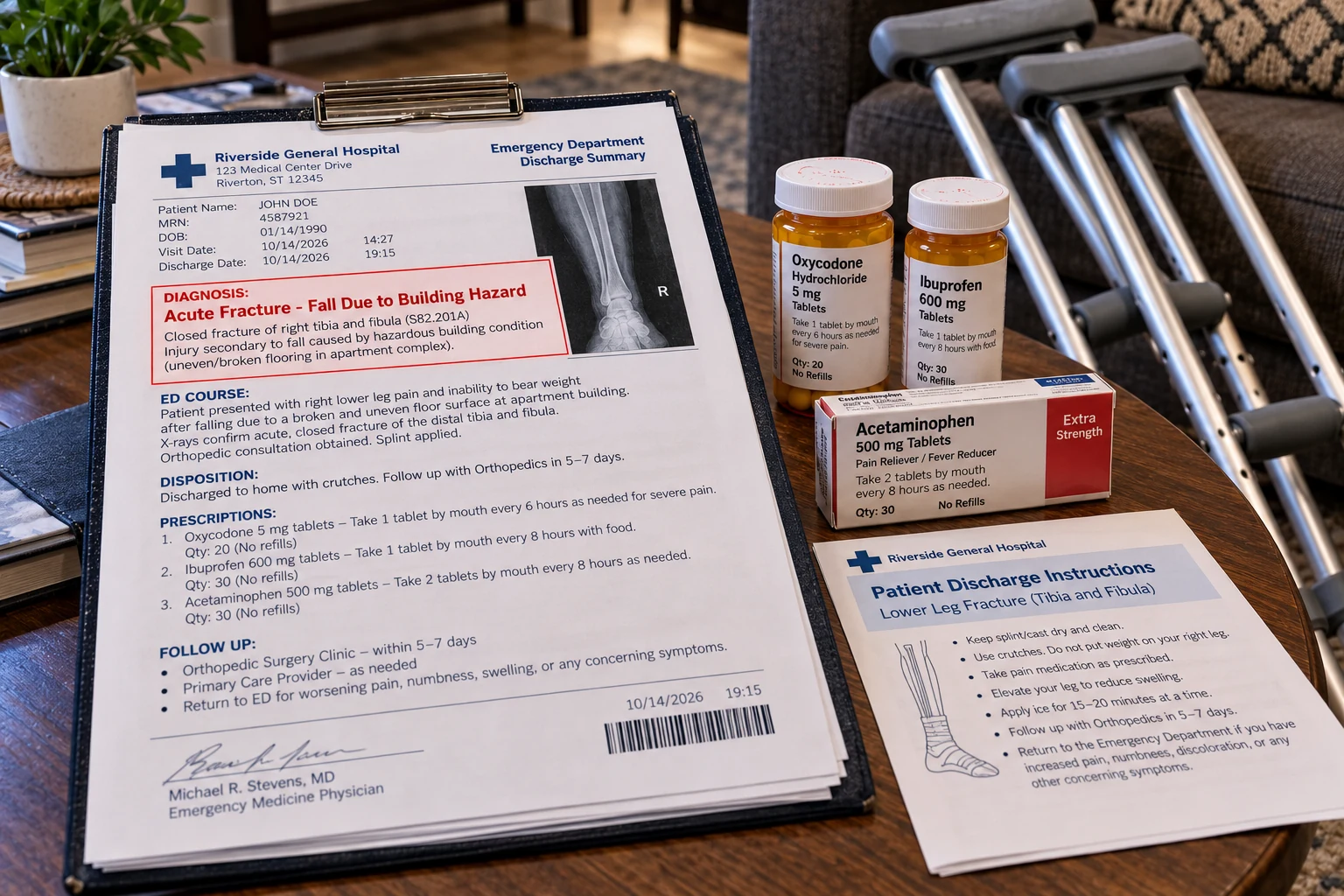
- Preserve all discharge instructions, diagnostic imaging disks, and pharmacy slips.
Step 4: Decline Unrepresented Recorded Statements
Insurance adjusters will contact you quickly seeking a recorded statement.
- Politely decline to give recorded audio statements until your full diagnostic workup (MRIs, specialist evaluations) is complete.
- Adjusters use early recordings to lock in premature statements before internal soft-tissue or disc injuries manifest.
- Direct the adjuster to communicate through written correspondence or your retained injury counsel.
Ready-to-Send Personal Injury Notice, Evidence Hold & Insurance Demand Letters
Select the legal notice tailored to your procedural posture below. Copy the text or download the pre-formatted .txt file to deliver via certified mail and your landlord’s resident online portal.
How Much Compensation Can You Recover for an Injury?
When taking legal action in Small Claims Court or Civil Court, financial recovery is based on established tort principles, documented out-of-pocket expenses, and statutory damages:
| Recovery Category | Calculation Standard | Statutory Authority & Limits |
|---|---|---|
| 1. Past & Future Medical Expenses | 100% recovery for emergency room bills, surgery, physical therapy, diagnostic imaging, and prescribed mobility equipment. | Premises liability special damages. |
| 2. Lost Wages & Diminished Earning Capacity | Reimbursement for missed shifts, used vacation days, and long-term vocational impairment caused by physical injury. | Economic loss tort recovery. |
| 3. Pain, Suffering & Comparative Fault | General damages for physical suffering and loss of life enjoyment, adjusted by state comparative fault rules (e.g., Fla. Stat. § 768.81). | State comparative negligence statutes. |
Small Claims Filing Limits: Most tenants resolve property and minor habitability disputes without hiring an attorney in Small Claims Court. Maximum claim limits vary by state: for example, $12,500 in California (California Courts Self-Help), $10,000 in New York City (NY Courts Small Claims), and $20,000 in Texas (Texas Judicial Branch). If physical injuries or permanent trauma damages exceed small claims limits, cases proceed to standard Civil Court.
Frequently Asked Questions (FAQ)
Calculate Your Landlord Personal Injury Settlement Value
Estimate your potential financial recovery across medical expenses, lost earnings, pain and suffering multipliers, and no-fault MedPay coverage.
SueLegal is an independent educational legal publisher, not a law firm or lawyer referral service. The information provided in this guide is for general informational and educational purposes only and does not constitute formal legal advice. Residential landlord-tenant laws, repair notice periods, and statutory remedies vary significantly across state and municipal jurisdictions. If you are facing eviction, severe uninhabitable conditions, or complex litigation, consult a licensed attorney in your jurisdiction or contact your local legal aid organization. For more details on our standards, read our Editorial Policy and Legal Research Methodology.