
What You Should Know
- Key Condition: Landlord must fail to maintain essential services like cooling or heat after written statutory notice.
- Typical Deadline: 2 years for personal injury and mental anguish; 1 year for statutory penalty enforcement under A.R.S. § 12-541.
- Cost Range: $65 to $100 for Arizona Justice Court filing and process server fees.
- Best Next Step: Deliver a formal 5-day emergency repair notice under A.R.S. § 33-1361 via hand delivery or certified mail.
How Arizona Law Protects Renters Suffering from Unlivable Housing
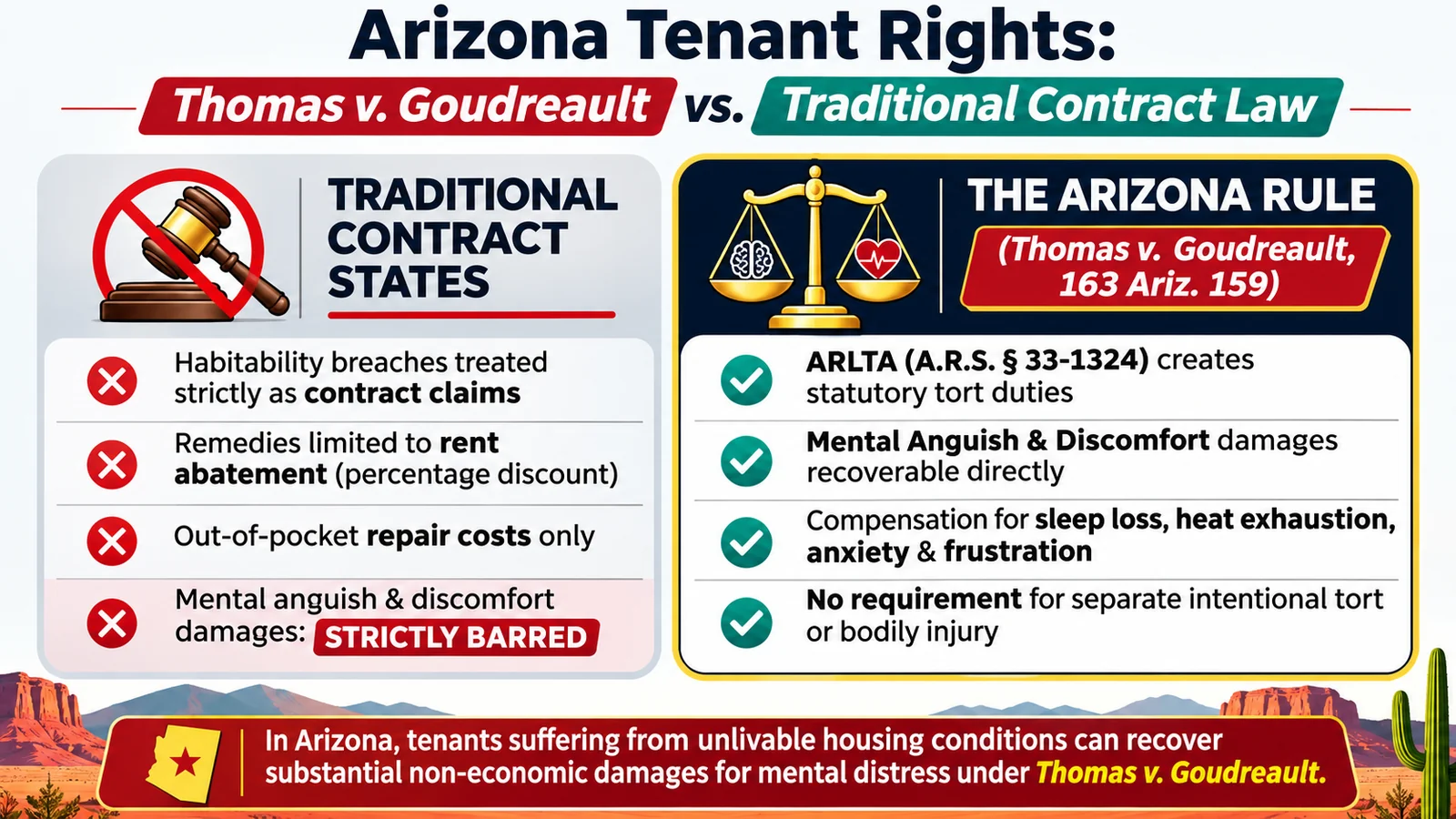
While most states strictly bar emotional distress damages for housing defects, Arizona stands out as a major exception. In the groundbreaking decision Thomas v. Goudreault (163 Ariz. 159), Division One of the Arizona Court of Appeals established that tenants can recover damages for mental anguish caused by substandard living conditions.
In Thomas, the landlord argued that damages under the Arizona Residential Landlord and Tenant Act (ARLTA) were limited strictly to economic losses—such as the difference in rental value. The appellate court squarely rejected that argument, holding that under A.R.S. § 33-1361(B), the statutory phrase "actual damages" includes annoyance, discomfort, and mental anguish suffered by a tenant during a landlord's failure to maintain fit and habitable premises under the implied warranty of habitability.
When evaluating Landlord-related emotional distress claims in Arizona, this precedent gives renters a decisive advantage: you do not need to prove an intentional tort or severe psychiatric injury to claim non-economic damages for the physical discomfort and stress of living with habitability violations.
Air Conditioning & Heat Rules: When Summer Failures Become Emergencies
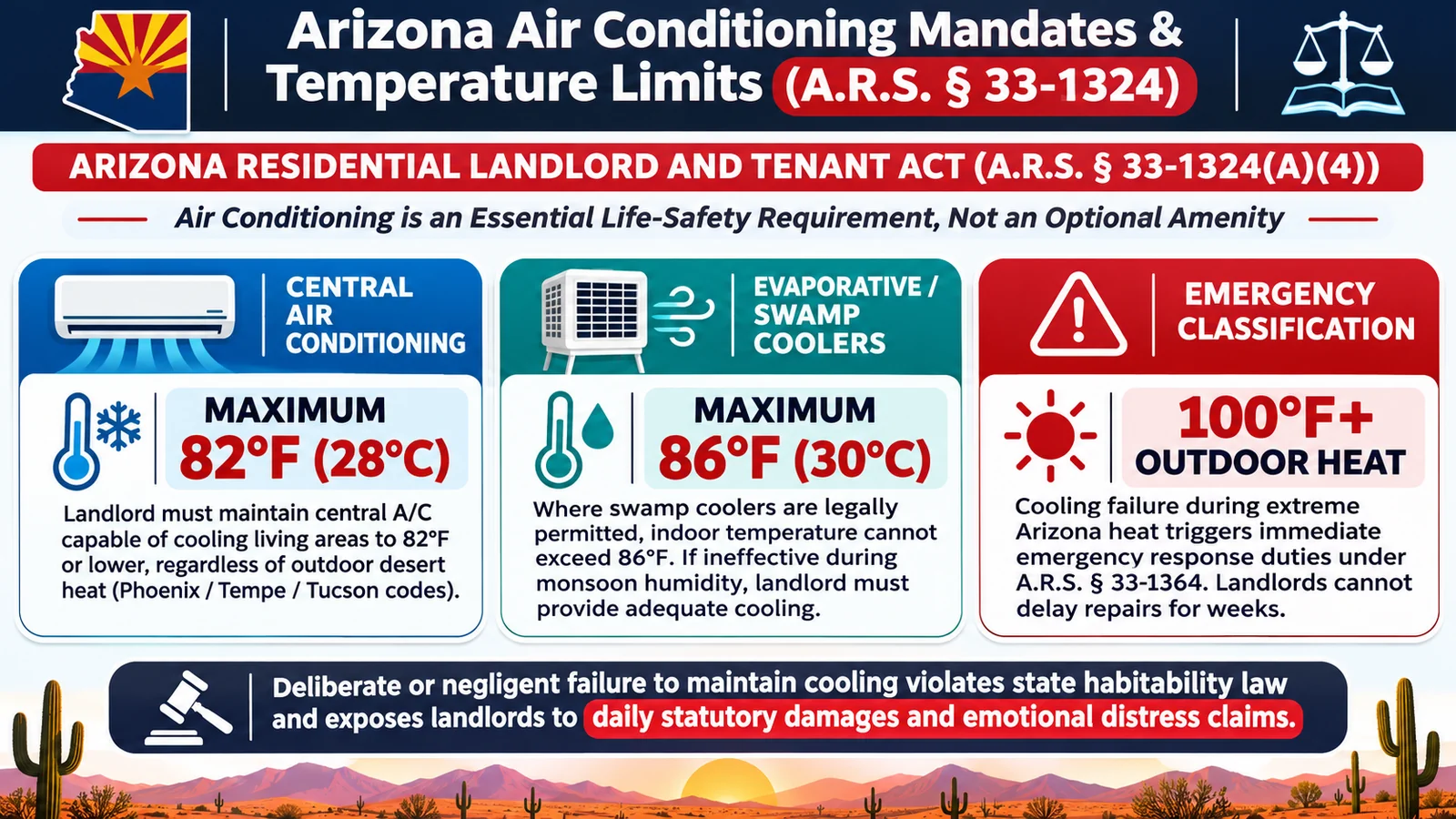
In Arizona, air conditioning is not an optional luxury—it is an essential life-safety requirement. Under A.R.S. § 33-1324(A)(4), landlords are statutorily required to maintain in good and safe working order all electrical, plumbing, sanitary, heating, ventilating, and air-conditioning appliances supplied by the landlord.
Local municipal housing codes enforce precise thermal thresholds that landlords must meet:
- City of Phoenix Housing Code (§ 39-5): Requires cooling equipment to maintain an indoor temperature of no more than 82°F in all habitable rooms if cooled by refrigeration (air conditioning), or no more than 86°F if cooled by evaporative coolers.
- City of Tucson Code: Mandates that cooling systems maintain indoor temperatures at least 15°F to 20°F below outdoor ambient temperatures.
- City of Tempe & Mesa Codes: Impose similar habitability standards, treating cooling failures during summer months as emergency health and safety violations.
When a landlord ignores broken cooling during an Arizona summer where exterior temperatures exceed 110°F, the physical discomfort, sleep deprivation, and health hazards provide compelling evidence for mental anguish damages under Thomas v. Goudreault.
Your Legal Rights When Water, Power, or AC Are Cut Off
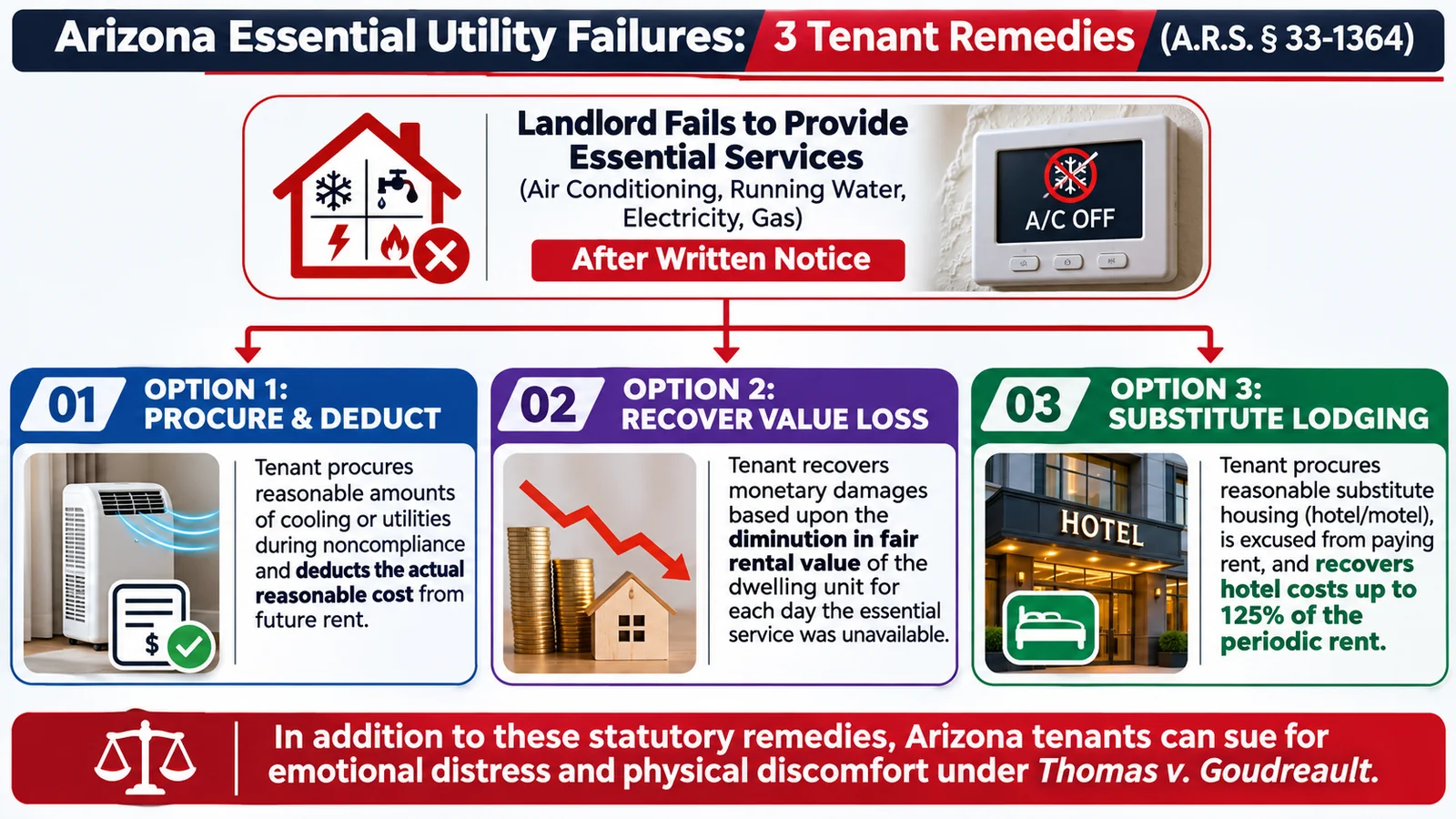
When an Arizona landlord deliberately or negligently fails to supply running water, gas, electricity, or reasonable cooling/heat, A.R.S. § 33-1364 gives tenants immediate statutory remedies upon giving reasonable written notice:
| Remedy Option | Statutory Procedure Under § 33-1364 | Tenant Recovery / Relief |
|---|---|---|
| Procure Essential Service | Tenant arranges emergency utility or AC repair directly | Deduct actual cost from rent upon submitting receipts |
| Rent Diminution Claim | Sue for reduction in fair rental value during service outage | Percentage refund of rent paid + anguish under Thomas |
| Procure Substitute Housing | Relocate to hotel during service outage after written notice | Excused from rent + landlord pays hotel up to 125% of rent |
Under A.R.S. § 33-1364(A)(3), if you relocate to a hotel, you are legally excused from paying rent to your landlord for the duration of the noncompliance, and your landlord is liable to reimburse you for the reasonable cost of substitute housing up to 125% of your daily prorated rent.
Illegal Lockouts: Recovering Double Damages When Locked Out
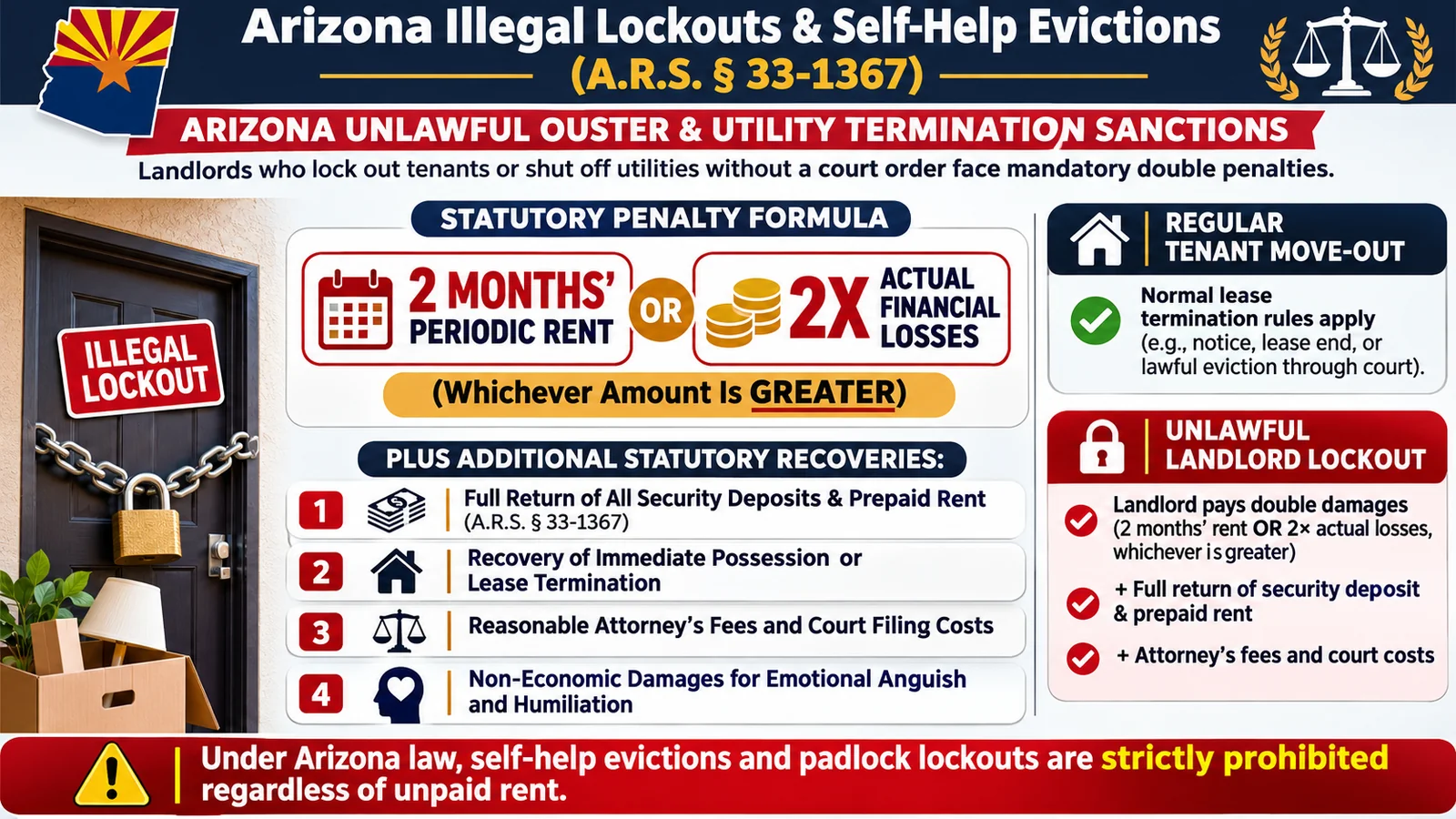
If an Arizona landlord attempts to bypass the judicial eviction process through self-help tactics, A.R.S. § 33-1367 imposes automatic statutory sanctions.
Under Section 33-1367, if a landlord unlawfully removes or excludes the tenant from the premises, or willfully diminishes services by interrupting electric, gas, water, or other essential service, the tenant may:
- Recover possession or terminate the rental agreement without penalty; and
- Recover an amount not more than two months' periodic rent or twice the actual damages sustained, whichever is greater; and
- Recover reasonable attorney's fees and court costs.
When landlords engage in an illegal lockout or retaliatory lock changes, Section 33-1367 provides clear financial recovery without needing to negotiate subjective emotional distress values.
Real Court Example: How a Tenant Won Damages for a Broken AC
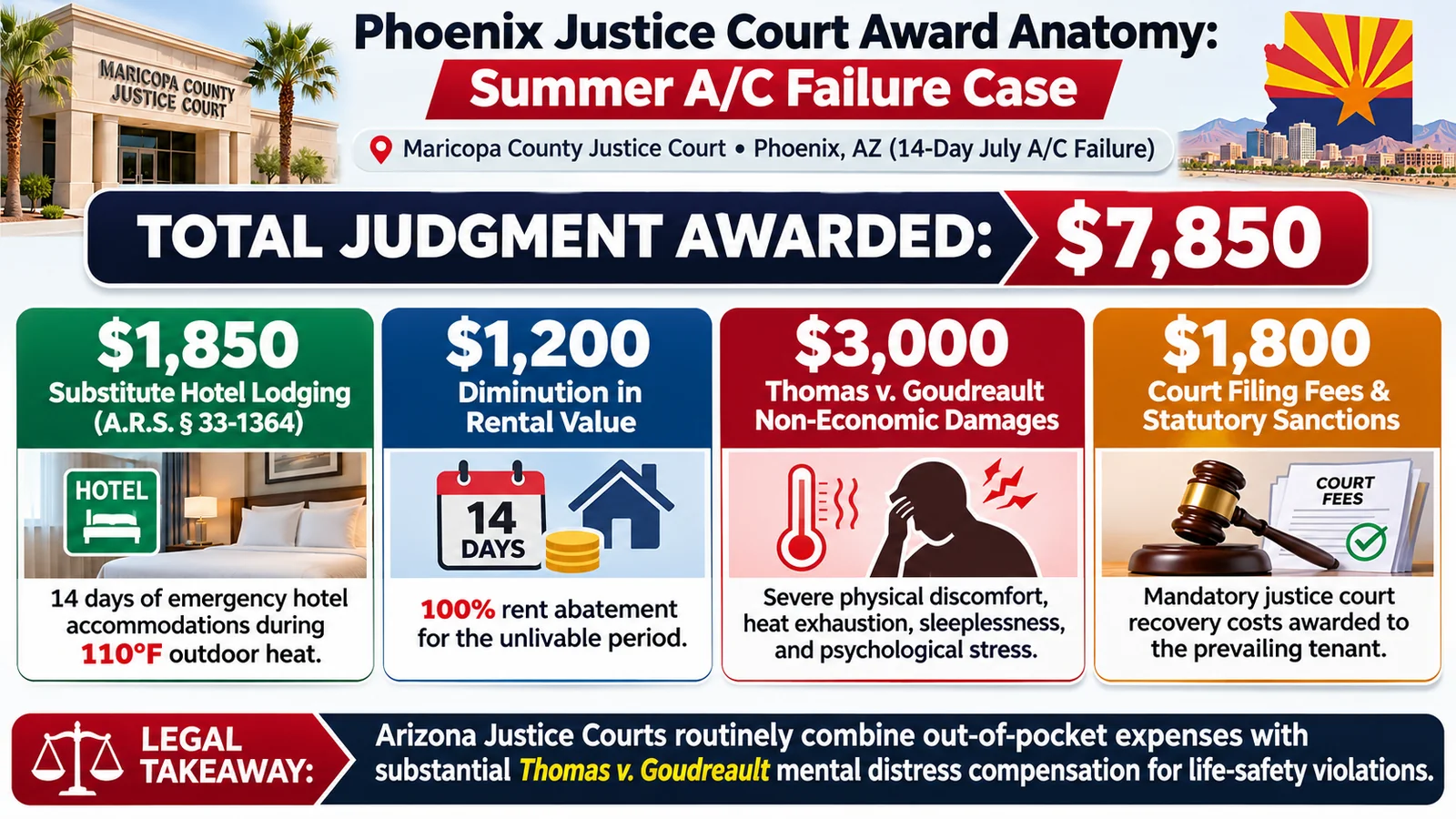
To illustrate how Arizona Justice Courts award damages under Thomas v. Goudreault and ARLTA, consider this representative composite case from Phoenix (Maricopa County Justice Court, Downtown Precinct):
Maricopa County Justice Court Heat Lawsuit Summary
The Dispute: A Phoenix tenant paying $1,500/month experienced an air conditioning failure in mid-June when outdoor temperatures reached 114°F. The tenant submitted hand-delivered written notice and sent text messages documenting that indoor temperatures hit 96°F. The landlord failed to send a certified HVAC technician for 12 days, claiming parts were unavailable and offering a portable fan. The tenant relocated to an extended-stay hotel for 10 nights.
The Small Claims Claim: The tenant filed a lawsuit for $7,500 in Maricopa County Justice Court alleging breach of A.R.S. § 33-1324, hotel reimbursement under § 33-1364, and mental anguish/discomfort damages under Thomas v. Goudreault. Evidence included certified mail receipts, date-stamped indoor digital thermometer photos, hotel receipts, and Phoenix Neighborhood Services inspection records showing temperatures exceeding the 82°F maximum.
The Justice of the Peace Ruling: The court awarded:
- $1,875 in substitute housing reimbursement under A.R.S. § 33-1364 (10 nights hotel @ 125% of daily rent).
- $500 in 100% rent abatement for the days the apartment was uninhabitable.
- $2,500 in general damages for mental anguish, physical discomfort, and heat distress under Thomas v. Goudreault.
- $250 in food spoilage and pet boarding fees.
- $120 in court filing and constable service fees.
- Total Money Judgment: $5,245, plus an order allowing the tenant to terminate the lease immediately without fee.
This case exemplifies how Arizona tenants can combine statutory essential-service remedies with common-law discomfort damages to achieve full financial justice.
Sample Arizona Tenant Demand Letter (Ready to Use)
In Arizona, delivering a certified demand letter triggers strict statutory cure timelines under A.R.S. §§ 33-1361 and 33-1364, while preserving your right to recover mental anguish damages under Thomas v. Goudreault.
Frequently Asked Questions: Arizona Tenant Rights
SueLegal is an independent educational legal publisher, not a law firm or lawyer referral service. The information provided in this guide is for general informational and educational purposes only and does not constitute formal legal advice. Residential landlord-tenant laws, repair notice periods, and statutory remedies vary significantly across state and municipal jurisdictions. If you are facing eviction, severe uninhabitable conditions, or complex litigation, consult a licensed attorney in your jurisdiction or contact your local legal aid organization. For more details on our standards, read our Editorial Policy and Legal Research Methodology.