
What You Should Know
- Don't Fall for the "Check Your Lease Waiver" Trick: Landlords love to point to a lease paragraph saying "Landlord is not responsible for water damage to tenant's property." In most states, that clause is illegal and unenforceable if the leak happened because the landlord ignored prior drips, brown ceiling spots, or overdue maintenance.
- Make the Landlord Pay for the Electric Bill From Giant Drying Fans: When water restoration crews plug 4 industrial blowers and dehumidifiers into your wall outlets for a week, they can add $100 to $300+ to your electric bill while making your apartment unlivably loud and hot. The landlord owes you for that electricity spike plus a rent discount.
- You Can Sue for Your $500–$1,000 Renters Insurance Deductible: Even if you file a claim with your own renters insurance to get your furniture replaced quickly, you can still take a negligent landlord to Small Claims Court to get back your out-of-pocket deductible and any uninsured losses.
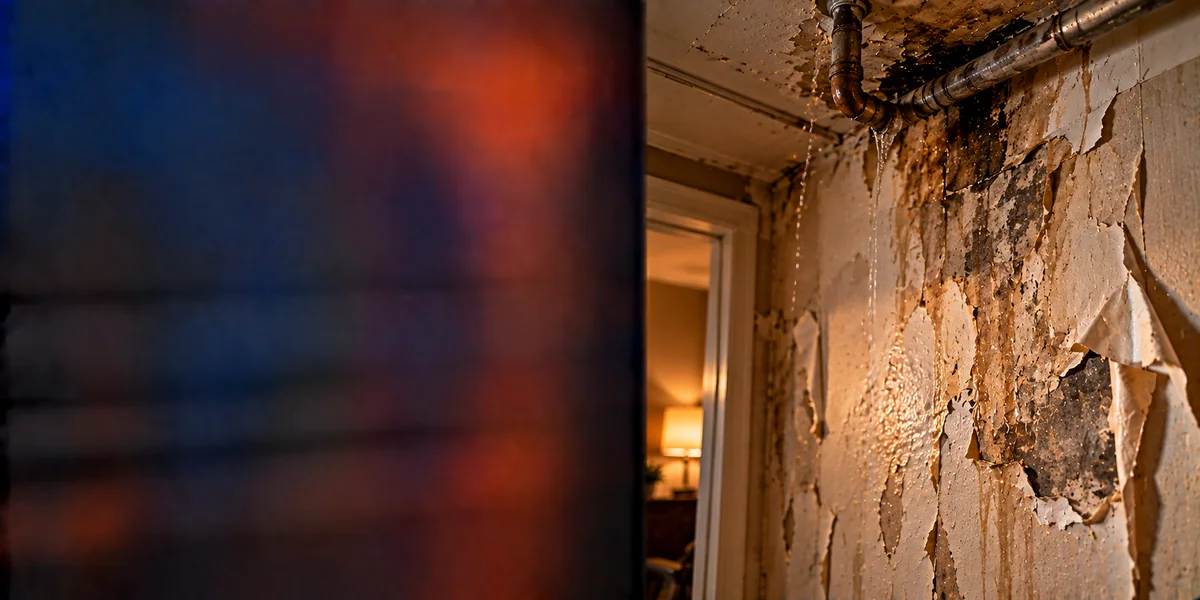
- Brown Rings on a Ceiling Prove the Leak Wasn't "Sudden": If your landlord claims "We had no idea the pipe or roof was leaking," take a close-up photo of dark brown or yellow rings on the drywall or rotted wood beams—that proves water was slowly leaking for weeks or months before it burst.
- The 48-Hour Mold Clock Starts Immediately: If your landlord just puts a bucket under a drip and leaves wet carpet padding or soaked drywall in place for more than 48 hours, toxic mold begins growing—turning a simple water claim into a much larger health and habitability lawsuit.
Who Pays for What? (Landlord vs. Renters Insurance vs. Upstairs Neighbor Table)
When water pours through your ceiling or seeps across your floors, landlords routinely give tenants a dismissive brush-off: "We aren't responsible for your belongings—file a claim with your renters insurance." In reality, the law does not work that way.
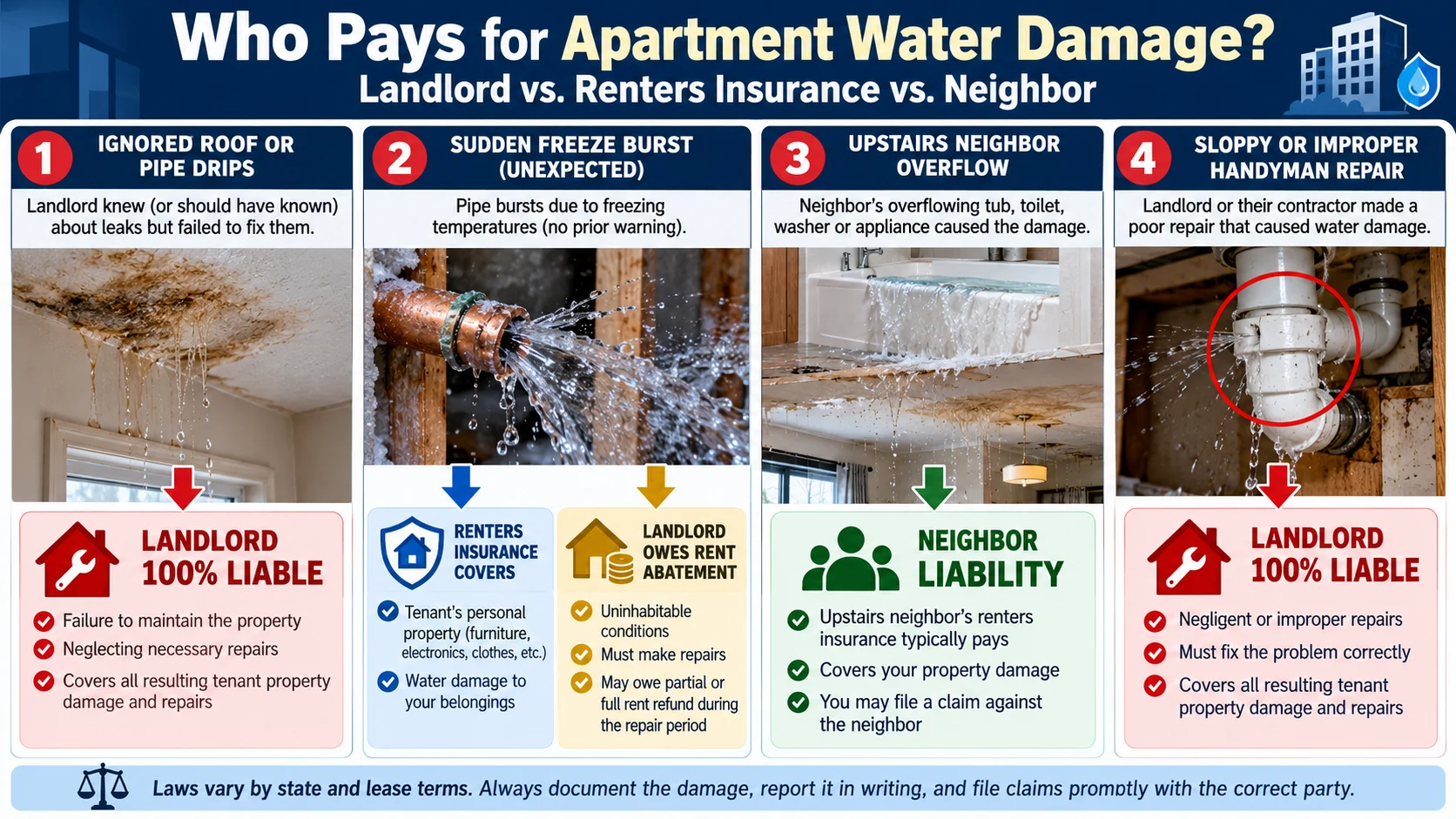
Who pays depends strictly on the root cause of the leak and whether negligence was involved:
| Water Damage Scenario | Who Pays for Ruined Belongings? | Who Pays for Rent Refunds & Hotel? | Legal Basis & Small Claims Rules |
|---|---|---|---|
| 1. Roof Leak, Old Pipe, or Earlier Drip Ignored by Landlord | Landlord Pays 100% | Landlord Pays 100% (Daily rent refund or hotel bills) | Active Landlord Negligence: Lease waivers attempting to excuse landlord negligence are void under state law. Small Claims Court awards full replacement cost. |
| 2. Sudden Frozen Pipe Burst (Zero Prior Signs or Warning) | Renters Insurance (Landlord pays deductible if shut-off was delayed) | Landlord Pays (Rent abatement for every unlivable day) | Warranty of Habitability: Even without landlord fault for the burst, the landlord cannot collect rent for unlivable or flooded days. |
| 3. Upstairs Neighbor Overflowed Bathtub, Toilet, or Washer | Upstairs Neighbor (via their renters liability insurance or Small Claims) | Landlord Pays (Rent refund and dry-out; landlord subrogates against neighbor) | Third-Party Tort: You can sue the upstairs neighbor directly in Small Claims Court. Landlord is still responsible for structural drying. |
| 4. Landlord's Maintenance Handyman or Contractor Punctures Pipe | Landlord & Contractor Pay 100% | Landlord Pays 100% | Respondeat Superior: The property owner is vicariously liable for damages caused by handymen and contractors working on their behalf. |
| 5. Ground Floodwater From Heavy Rainstorm or Hurricane | National Flood Insurance / Renter Rider (Landlords rarely liable for surface floods) | Landlord Pays (Lease termination or 100% rent abatement) | Constructive Eviction: If ground water renders the unit unlivable, you can break your lease without penalty and recover your deposit. |
Why Lease "Water Damage Waivers" Don't Protect Negligent Landlords
Almost every standard lease agreement contains an exculpatory clause stating that the landlord has no liability for water damage to personal property. In the overwhelming majority of states—including California, New York, Texas, Florida, and Illinois—courts hold that a landlord cannot legally contract away liability for their own active negligence. If you have evidence that management knew about a roof defect or dripping pipe and failed to fix it, that lease clause is legally dead on arrival in court.
For an overview of tenant lawsuit thresholds and court recovery formulas, consult our master guide on suing your landlord.
The "Loud Drying Fan & Electric Bill" Reimbursement Rule
After a major leak, restoration companies like Servpro or property maintenance crews roll in heavy commercial equipment: industrial centrifugal air movers and LGR commercial dehumidifiers. While these machines prevent immediate structural rot, they create two massive tenant burdens:
- Extreme Heat and Deafening Noise: Industrial blowers generate 75 to 85+ decibels of constant roaring noise—equal to having a vacuum cleaner running next to your bed 24 hours a day. Meanwhile, commercial dehumidifiers blow hot exhaust into your rooms, frequently pushing indoor temperatures to 85°F to 95°F. Living or sleeping inside the apartment becomes physically impossible.
- A Staggering Spike on Your Monthly Electric Bill: Restoration equipment draws enormous power. Four industrial air movers and a commercial dehumidifier running continuously for 7 days typically consume 300 to 800 kilowatt-hours (kWh) of electricity, adding $100 to $300+ to your personal electric bill.
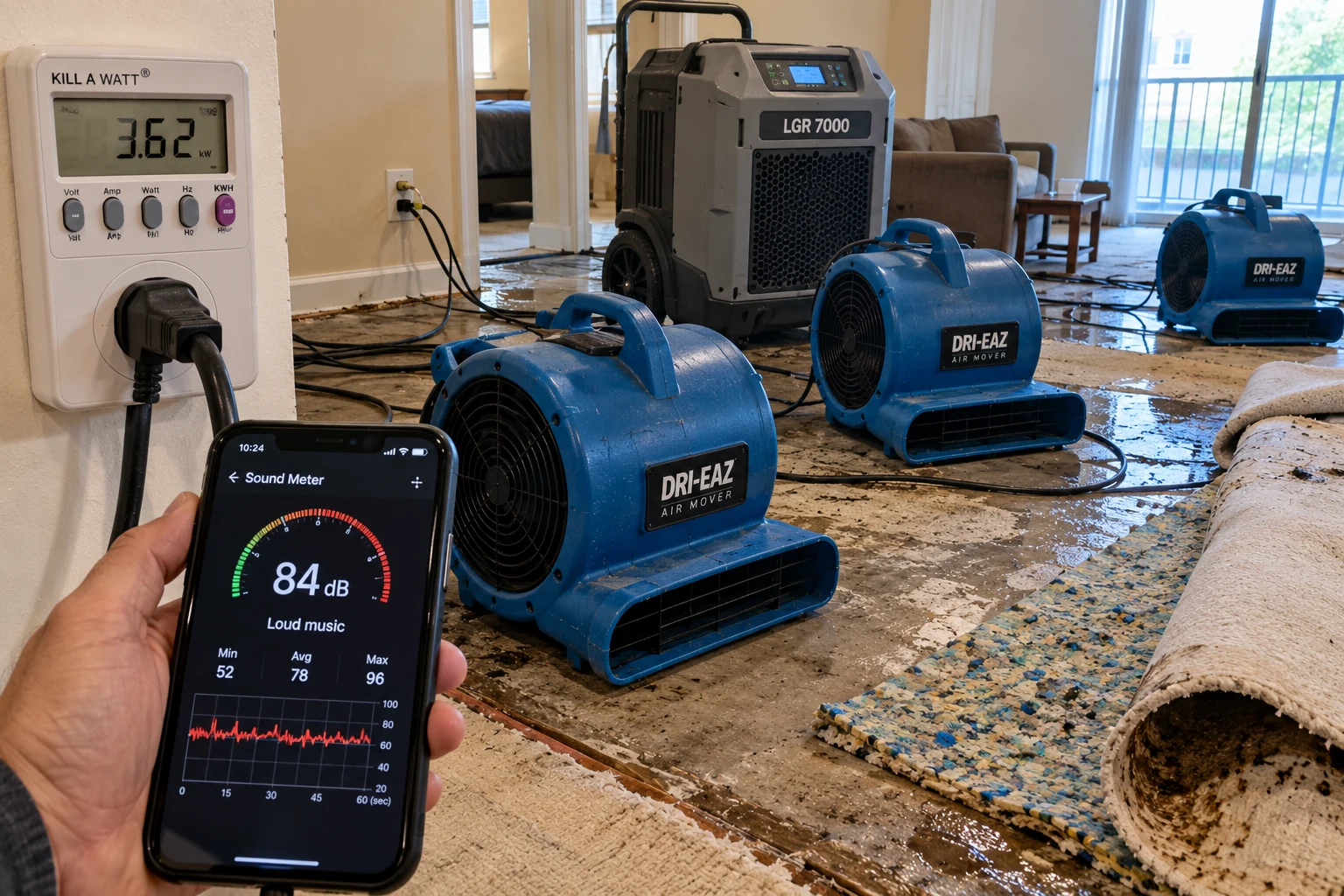
You are legally entitled to full reimbursement for that electricity. Compare your current electric bill to the same billing cycle from the previous year (or the prior month), isolate the excess kilowatt-hour charge, and include it in your written demand letter. Furthermore, you are entitled to a 50% to 100% daily rent refund for every day the equipment occupied your space.
How to Prove the Landlord Was Negligent (Even If You Never Texted Them Before)
When taking a water damage claim to Small Claims Court, many renters worry: "What if I never submitted a written maintenance ticket before the ceiling caved in?" You can still win hands down by letting the physical evidence tell the story.
Pipes and roofs rarely fail instantaneously without leaving an unmistakable historical paper trail etched into the building itself:
- Concentric Brown Water Rings: Fresh water creates faint, uniform dampness. A series of dark yellow, tan, or brown water rings indicates that water leaked, dried, leaked again, and repeated that cycle over weeks or months.
- Rust and Green Copper Corrosion: Photograph the pipe that ruptured. Thick reddish rust on galvanized iron or flaky green patina (verdigris) on copper fittings proves the joint had been weeping moisture for an extended duration.
- Black Rot and Softened Framing Joists: When drywall collapses, examine the wooden ceiling beams or subflooring. Wood takes weeks of saturated immersion to rot, turn black, or soften to the touch.
- Multiple Layers of Prior Spackle and Paint: If the drywall was patched with joint compound over an old leak without replacing the defective plumbing behind it, a cross-section photograph reveals the landlord's cosmetic cover-up.
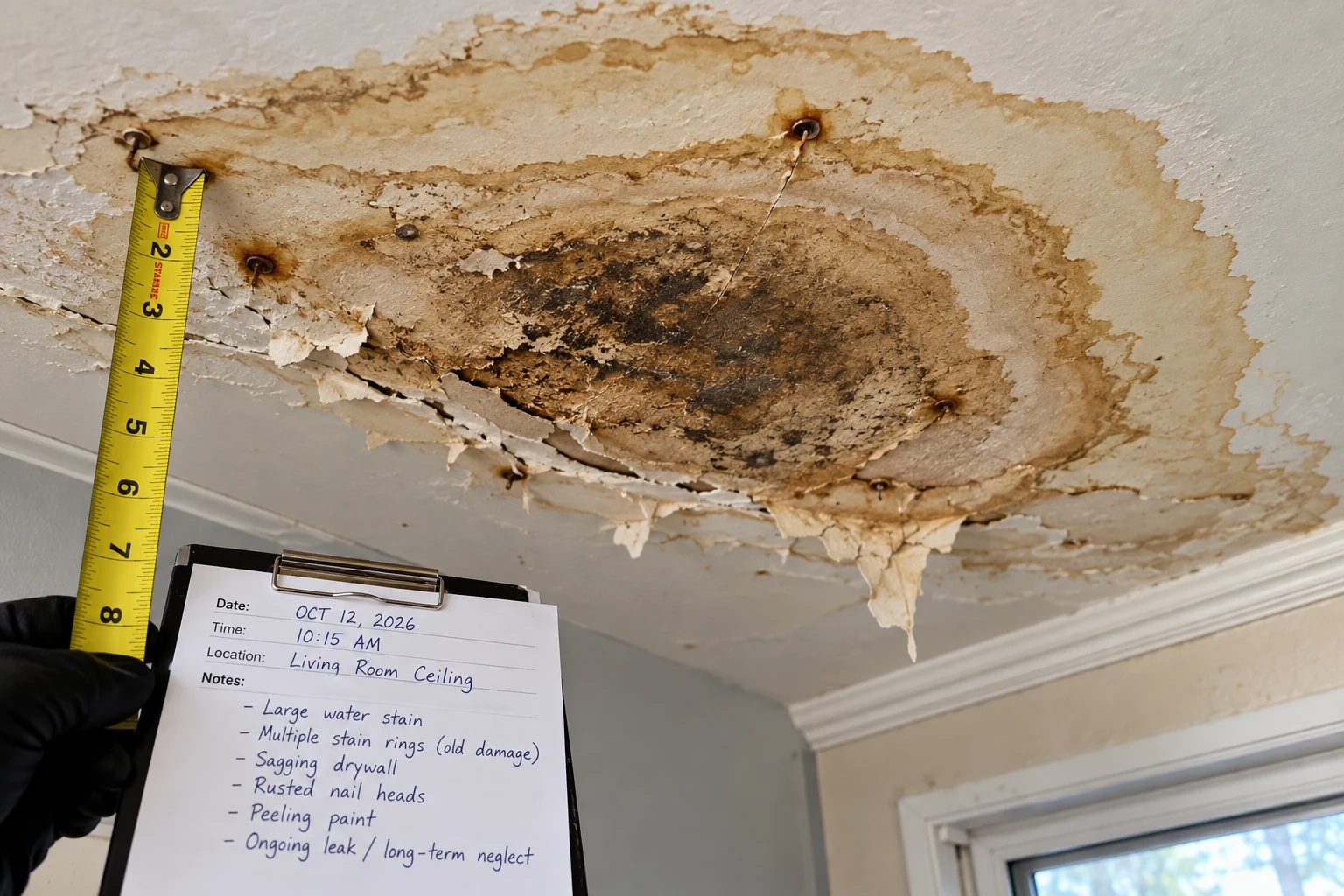
Take high-resolution, dated photographs of these structural indicators before maintenance finishes repairs and closes the ceiling. In court, physical evidence of long-term corrosion establishes constructive notice—meaning the landlord should have known about and fixed the defect through reasonable maintenance.
How to Document Ruined Belongings Before Throwing Them Out
Property restoration crews often rush to haul soaked items straight to the parking lot dumpster to dry out the subfloor. Once your ruined possessions are in a trash compactor, proving their true monetary value to an insurance adjuster or Small Claims judge becomes twice as hard.
Follow this mandatory 3-step proof protocol before discarding a single item:
| Step | Action Required | Courtroom Impact |
|---|---|---|
| 1. In-Situ Water Photos | Photograph every ruined item sitting directly in water or under the active ceiling drip before moving it. | Proves causation—shows the item was destroyed by the building leak, not pre-existing tenant damage. |
| 2. Labels & Serial Numbers | Photograph manufacturer tags on couches, mattress labels, and model/serial number plates on electronics and computers. | Establishes exact specifications, brand value, and prevents landlords from claiming cheap generic replacements. |
| 3. Replacement Cost Screenshot | Search online retailers (Amazon, Best Buy, Wayfair) for the identical or closest modern model and save a screenshot showing the retail price. | Provides the judge with an objective, verified dollar figure for your actual damages spreadsheet. |
Never Wash Saturated Porous Furniture
Upholstered couches, fabric mattresses, and thick rugs that sit in water for over 24 hours absorb bacteria and mold spores deep into internal polyurethane foam and batting. Surface shampooing cannot reach interior cavities. Courts routinely recognize soaked mattresses and upholstered furniture as 100% total losses.
Ready-to-Send Water Damage, Rent Credit & Property Reimbursement Demand Letter
Before filing a lawsuit in Small Claims Court, sending a formal, itemized demand letter is essential. It puts the landlord on written notice, provides an exact itemization of your economic damages, and proves to a judge that you acted reasonably and exhausted informal remedies first.
Use this template, customize the bracketed fields with your specific incident details, and send it via Certified Mail with a digital copy by email:
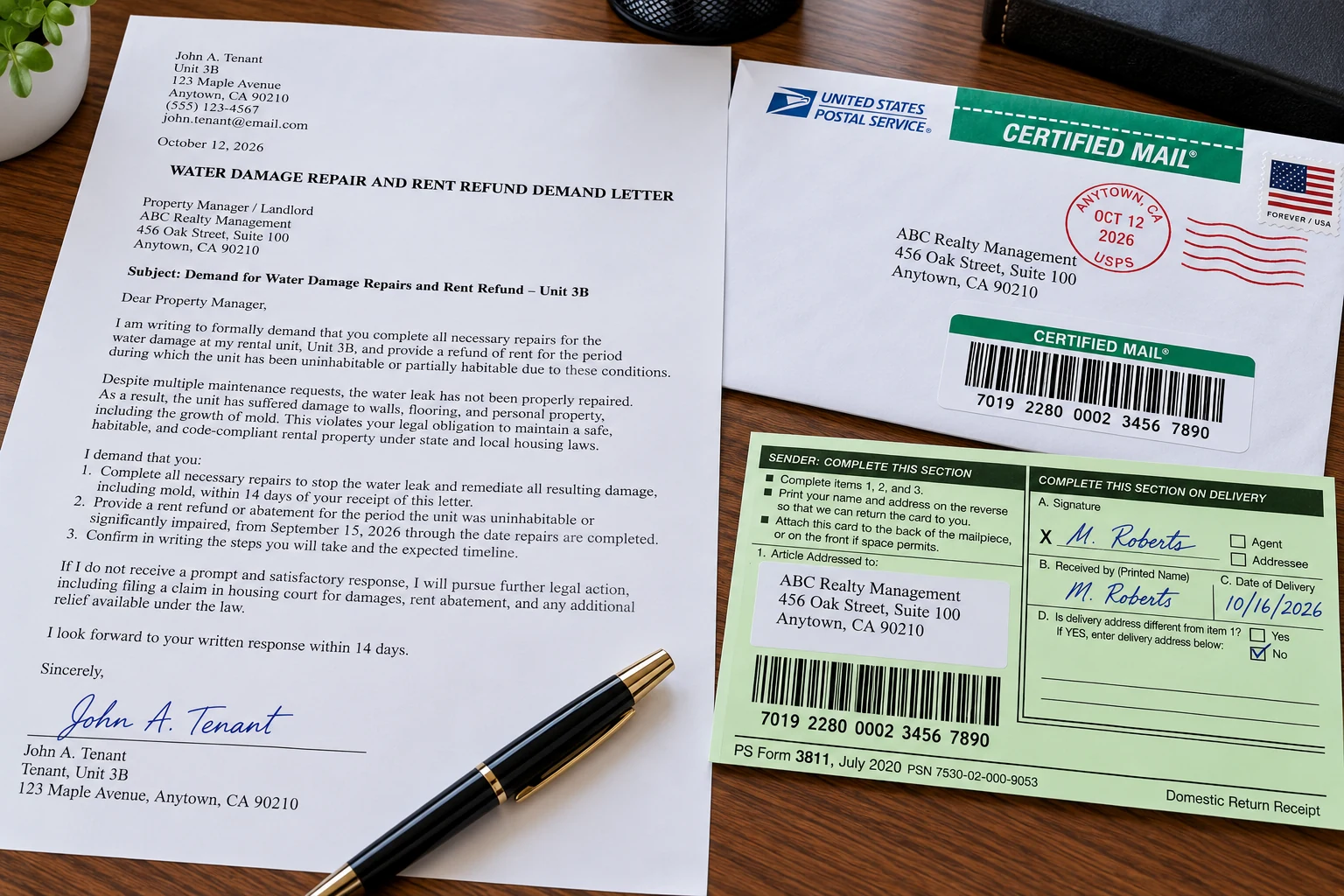
VIA CERTIFIED MAIL (RETURN RECEIPT REQUESTED) & EMAIL

Date: [CURRENT DATE]

To: [LANDLORD OR PROPERTY MANAGEMENT COMPANY NAME]
Address: [OFFICIAL LEASE NOTICE ADDRESS]
City, State, Zip: [CITY, STATE, ZIP]

From: [YOUR FULL NAME]
Rental Address: [YOUR APARTMENT NUMBER AND STREET ADDRESS]
Phone Number: [YOUR PHONE NUMBER]
Email: [YOUR EMAIL ADDRESS]

SUBJECT: FORMAL DEMAND FOR WATER DAMAGE REIMBURSEMENT, RENT ABATEMENT, AND RESTORATION ELECTRICITY EXPENSES

Dear [LANDLORD OR PROPERTY MANAGER NAME],

This letter serves as formal written notice and demand for damages resulting from a major water intrusion incident that occurred inside my rental home at [YOUR APARTMENT NUMBER] on [DATE WATER EVENT OCCURRED].

1. DESCRIPTION OF WATER EVENT AND CAUSE:
On [DATE], water infiltrated my living space originating from [SPECIFY: a ceiling leak / burst supply line / roof failure / overflowing plumbing from unit above].
[CHOOSE APPLICABLE SENTENCE:]
- This incident was the direct result of landlord negligence, as management had received prior written notices regarding ceiling discoloration and dripping pipes on [PAST DATE(S)] and failed to effect timely structural repairs.
- Physical evidence at the site of the break, including extensive pipe corrosion, dark concentric water rings, and decayed wood joists (photographs attached), documents that this was a long-standing structural defect rather than an unforeseeable event.

2. ITEMIZED ECONOMIC DAMAGES AND LOSS OF USE:
As a direct consequence of this water intrusion and the subsequent remediation process, I have incurred the following compensable damages:

A. Pro-Rated Rent Abatement (Loss of Use):
From [START DATE] to [END DATE] ([NUMBER] days), [SPECIFY: the entire apartment / master bedroom / living room] was rendered wholly uninhabitable due to standing water, torn-up flooring, and the continuous operation of deafening commercial drying fans.
- Monthly Rent: $[AMOUNT] (Daily rate: $[RENT/30])
- Rent Abatement Demand: $[AMOUNT]

B. Electricity Surge Reimbursement (Drying Equipment):
Management's remediation crew operated [NUMBER] industrial air blowers and dehumidifiers powered directly by my residential electric meter for [NUMBER] days. Based on comparison with prior utility statements, this continuous operation produced an excess electric bill charge of $[AMOUNT].

C. Personal Property Losses (Destroyed Possessions):
The following personal belongings were completely saturated and ruined (itemized spreadsheet, photos, and replacement cost documentation attached):
1. [ITEM, e.g., Living Room Sectional Couch]: $[AMOUNT]
2. [ITEM, e.g., Queen Mattress & Bedding]: $[AMOUNT]
3. [ITEM, e.g., Electronics / Laptop / TV]: $[AMOUNT]
4. [ITEM, e.g., Clothing, Shoes & Area Rugs]: $[AMOUNT]
Personal Property Subtotal: $[AMOUNT]
[OR, IF CLAIMING THROUGH INSURANCE: Out-of-pocket insurance policy deductible: $[DEDUCTIBLE AMOUNT]]

D. Out-of-Pocket Lodging and Emergency Expenses:
Emergency hotel accommodations during active flooding and remediation: $[AMOUNT].

TOTAL REIMBURSEMENT DEMAND: $[TOTAL SUM]

3. REQUIRED REMEDIAL ACTION (10-DAY DEADLINE):
I demand that you issue a check or provide written confirmation of rent credit in the amount of $[TOTAL SUM] within TEN (10) BUSINESS DAYS of receipt of this letter. Additionally, please provide written confirmation that professional moisture meter readings have verified that the wall cavities and subflooring are dried below 15% moisture content to prevent toxic mold colonization.

Please be advised that standard lease exculpatory clauses attempting to disclaim property damage liability do not protect property owners against claims founded upon landlord negligence under state law.

If this matter is not resolved within 10 business days, I will immediately initiate an action in Small Claims Court for the full amount of these damages, plus court costs and statutory interest.

Please confirm receipt in writing at [YOUR EMAIL ADDRESS].

Sincerely,

_________________________________________
[YOUR SIGNATURE]

[YOUR PRINTED NAME]
Tenant at [YOUR APARTMENT NUMBER]
How to Send This Letter for Maximum Courtroom Leverage:
- Complete all bracketed details: Insert exact dates, room names, itemized property amounts, and utility figures.
- Attach proof packets: Staple your photo evidence sheet, utility bill comparison, and replacement cost screenshots to the back.
- Send via USPS Certified Mail: Always mail via Certified Mail with Return Receipt Requested (the green card). Keep the delivery signature confirmation alongside an electronic copy sent through your landlord's resident portal or email.
How Much Can I Recover for Landlord Water Damage?
When taking your landlord to Small Claims Court or Housing Court, financial recovery is determined by statutory damages categories, proven out-of-pocket losses, and rent reduction formulas:
| Recovery Category | Calculation Standard | Statutory Authority & Limits |
|---|---|---|
| 1. Ruined Personal Belongings | Fair market value compensation for furniture, mattresses, rugs, electronics, and clothing ruined by ceiling or pipe leaks. | Tort property damages (bailment/negligence). |
| 2. Proportional Rent Abatement | Refund of rent for every day water intrusion rendered rooms, closets, or living areas unusable. | Implied Warranty of Habitability. |
| 3. Drying & Mold Remediation Outlays | Reimbursement for industrial dehumidifiers, air scrubbers, or independent testing when landlord delayed drying. | EPA 24-to-48-hour moisture protocols; see mold guide. |
Small Claims Filing Limits: Most tenants resolve these disputes without hiring an attorney in Small Claims Court. Maximum claim limits vary by state: for example, $12,500 in California (California Courts Self-Help), $10,000 in New York City (NY Courts Small Claims), and $20,000 in Texas (Texas Judicial Branch). If your total damages exceed small claims thresholds, you may file in standard civil district court.
Frequently Asked Questions
Yes. While leases frequently contain exculpatory clauses disclaiming liability for tenant personal property, the overwhelming majority of state courts hold that landlords cannot legally contract away liability for their own active negligence. If the water damage resulted from a known maintenance defect, an unaddressed leak, or improper repairs, that lease waiver is legally void and unenforceable in Small Claims Court.
Under the implied warranty of habitability, a landlord cannot collect rent for days an apartment is uninhabitable. If standing water, saturated floors, or roaring commercial drying equipment make living or sleeping impossible, the landlord must either pay directly for reasonable hotel lodging or provide a 100% daily pro-rated rent refund so you can secure alternative accommodations yourself.
The landlord must pay 100% of the electricity costs. Commercial air movers and dehumidifiers consume substantial power and can easily add $100 to $300 or more to a tenant's electric bill within a single week. Tenants are legally entitled to calculate the kilowatt-hour surge by comparing utility bills and demand full reimbursement from the landlord or restoration company.
If an upstairs tenant accidentally overflowed a tub or sink, that neighbor is legally liable for destroying your personal belongings through their own negligence (payable through their renters liability insurance or Small Claims Court). However, your landlord remains 100% responsible for drying out your building structure, repairing damaged drywall, and providing you with rent abatement for the days your apartment was unlivable.
Yes. If a landlord fails to dry wet building cavities within 48 hours and visible mold colonization or damp, musty odors render the apartment hazardous to your health, the landlord is in breach of the implied warranty of habitability. After delivering formal written notice and providing a statutory cure window, you have the legal right to declare constructive eviction, vacate the unit without penalty, and recover your entire security deposit.
SueLegal is an independent educational legal publisher, not a law firm or lawyer referral service. The information provided in this guide is for general informational and educational purposes only and does not constitute formal legal advice. Residential landlord-tenant laws, repair notice periods, and statutory remedies vary significantly across state and municipal jurisdictions. If you are facing eviction, severe uninhabitable conditions, or complex litigation, consult a licensed attorney in your jurisdiction or contact your local legal aid organization. For more details on our standards, read our Editorial Policy and Legal Research Methodology.