

The Main Points
- Owing Back Rent Does NOT Give Your Landlord the Right to Cut Utilities: Even if you are 3 months behind on rent or your lease ended yesterday, a landlord can never flip your circuit breaker or turn off your water/gas to force you out. Only a court judge and Sheriff can carry out an eviction.
- You Can Call the Police & Local Court Today to Get Power Back On: In many states and cities (like New York, California, Illinois, and New Jersey), an intentional utility shutoff is a criminal offense. Calling the police with your lease in hand—or filing a same-day Emergency Order to Restore Utilities at your local courthouse—can get your utilities turned back on within hours.
- Don't Fall for the "I Shut It Off for Repairs" Lie: Landlords often cut the power or water and claim "We are doing maintenance." Unless they gave advance notice AND a licensed plumber or electrician is actively working on-site right now, judges treat a multi-day "repair shutoff" as an illegal lockout.
- Cutting Off Lease-Included Wi-Fi, AC, or Gas Stoves Counts Too: If your lease includes internet/Wi-Fi, air conditioning, or laundry and your landlord changes the Wi-Fi password or pulls the AC fuse during a dispute, they are violating state anti-harassment and utility laws.
- What If the Utility Company Shut It Off Because the Landlord Didn't Pay the Bill?: Call the electric, gas, or water company immediately—by law in most states, tenants have the right to pay just the current month's charge (or transfer the account into their own name) to restore service immediately and subtract every dollar from next month's rent.
Few moments trigger more panic than coming home from work to find your lights won't turn on, your refrigerator has gone warm, and your water or gas valve has been padlocked. When you contact your landlord, they hit you with an ultimatum: "Pay the late fee by tomorrow or the power stays off."
Here is the most critical rule of residential tenancy in the United States: A landlord can NEVER disconnect your utilities to force you to pay rent or move out. Regardless of whether you owe one month of rent or six months, turning off your electricity, gas, heat, or water is classified under the law as an illegal self-help eviction.
Because judges and state legislatures treat utility shutoffs as dangerous and abusive, the legal consequences for landlords are brutal. You do not just get your utilities turned back on; in almost every state, you are entitled to automatic statutory cash penalties—often totaling two to three times your monthly rent—plus full reimbursement for spoiled food, hotel stays, and your attorney's fees.
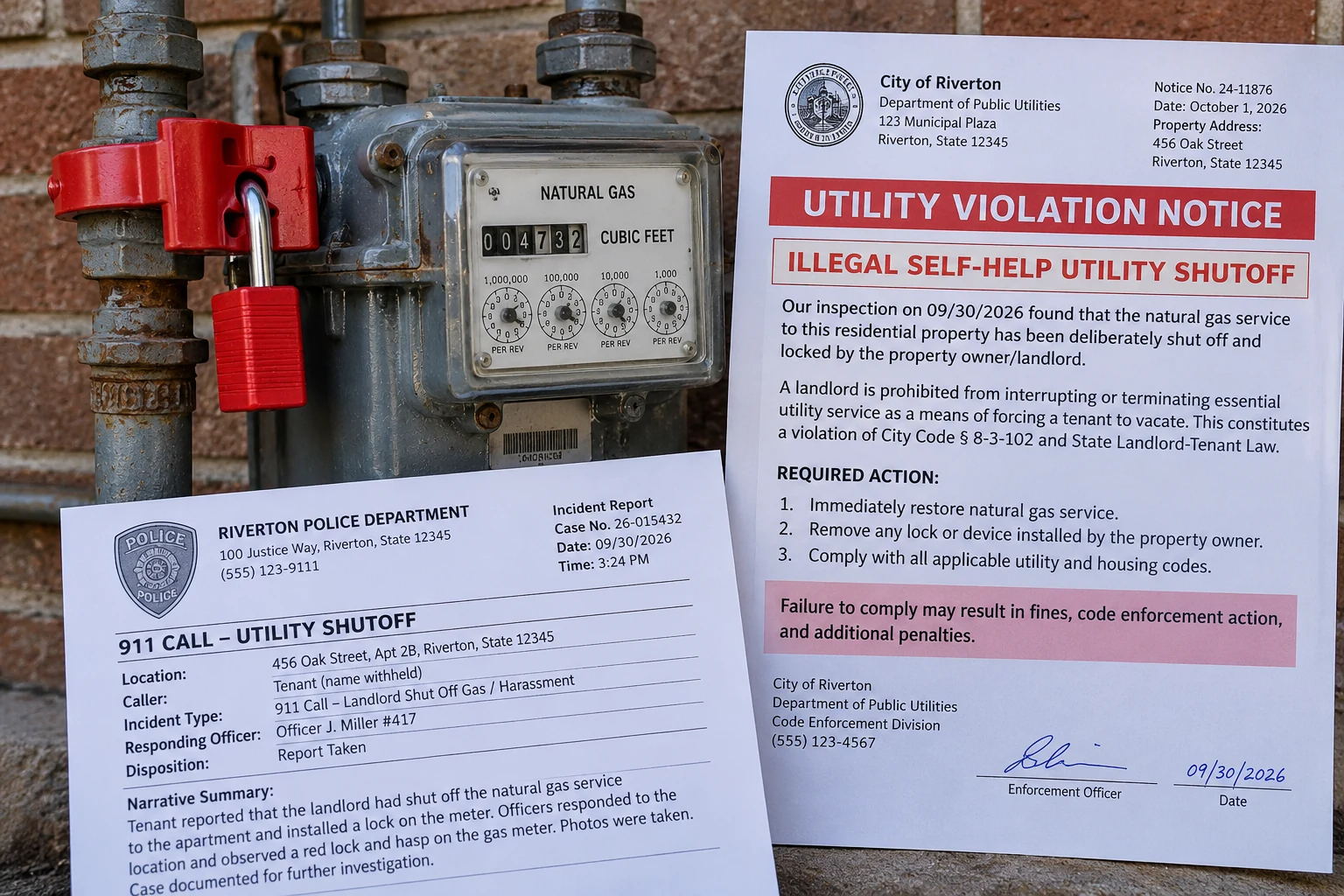
For a complete walkthrough of small claims damage limits and tenant court procedures, visit our master guide on suing your landlord.
What to Do in the First 4 Hours: How to Get Your Power, Water, or Gas Back ON Tonight
When your utilities are cut, waiting weeks to see a lawyer or filing a routine court claim is unacceptable. You need light, refrigeration, and sanitation immediately. Follow these four emergency steps to get your utilities restored today:
Step 1: Record a 60-Second Video Documenting the Outage
Before making calls, create unshakeable courtroom evidence on your smartphone:
- Film yourself flipping light switches on and off to prove there is no power.
- Open your refrigerator and freezer doors on camera, showing the internal light is dark and documenting the food items beginning to spoil.
- Turn faucet handles to show zero water flow, or attempt to ignite a gas stove burner to verify the gas supply is dead.
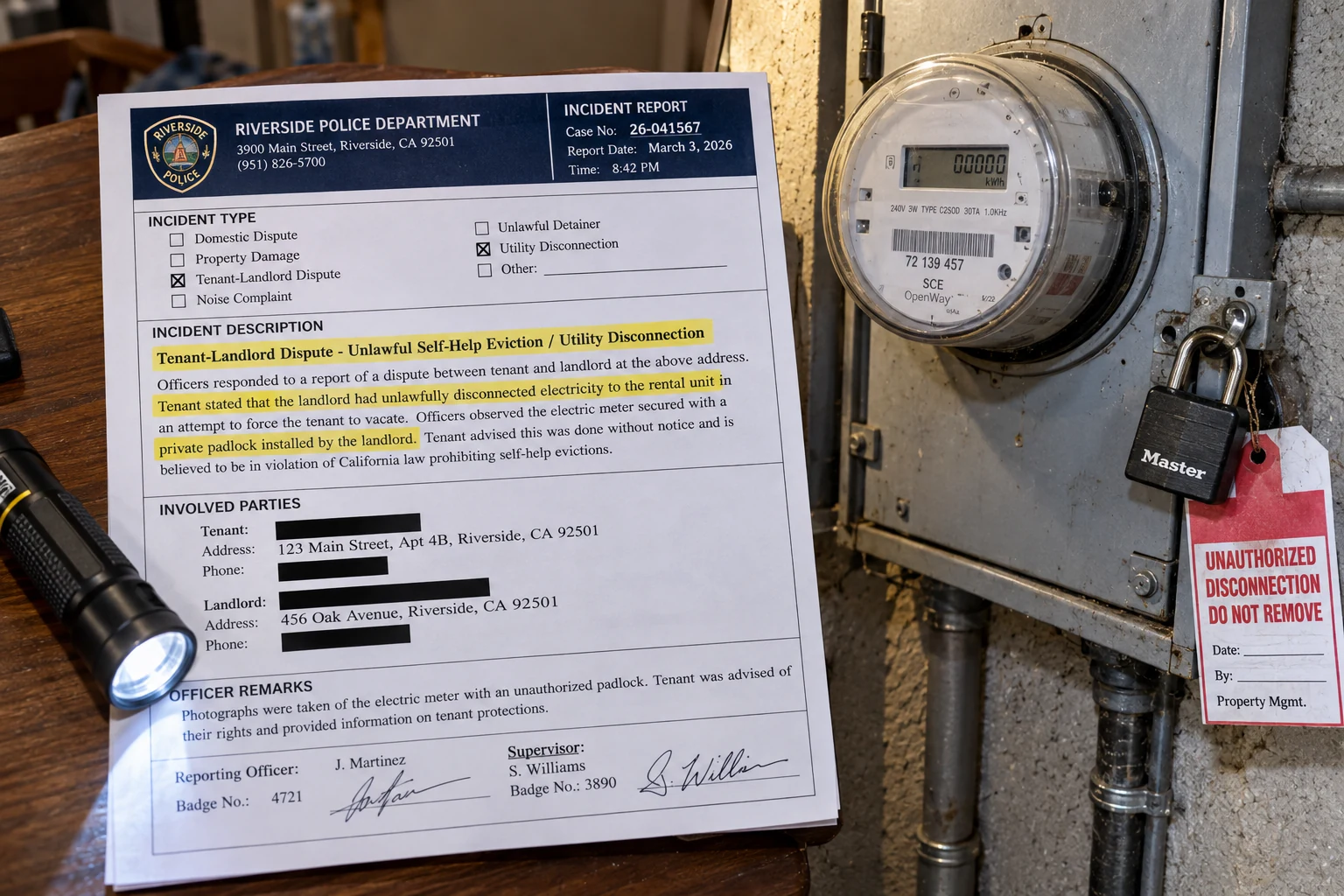
- Walk to the basement or outside utility meter area and film the padlocked breaker panel, tagged meter, or turned-off valve.
Step 2: Send One Immediate Written Text & Email Warning
Transmit a concise written message to your landlord or property management portal:
"Under state landlord-tenant law, intentionally interrupting or terminating essential utility service constitutes an unlawful self-help eviction carrying mandatory statutory damages and attorney fee-shifting. If domestic utility service is not fully restored within two hours, I will contact local law enforcement, report the violation to Municipal Code Enforcement, and file an emergency court order."
Many landlords immediately reverse course once they realize you know the law and intend to bring police and housing inspectors to the building.
Step 3: Call the Police Non-Emergency Line (Show Your Lease)
In many jurisdictions—including New York (Real Prop. Law § 235), California (Penal Code § 418 / Civ. Code § 789.3), Illinois, Massachusetts, and New Jersey—shutting off a tenant's utilities to force them out is a criminal misdemeanor.
When police officers arrive, show your valid residential lease or utility bills proving you are in lawful possession. Officers routinely warn the landlord that tampering with utility feeds without a judicial eviction warrant constitutes an illegal eviction and order the power or water turned back on immediately to prevent arrest.
Step 4: File a Same-Day "Emergency Order to Restore Utilities"
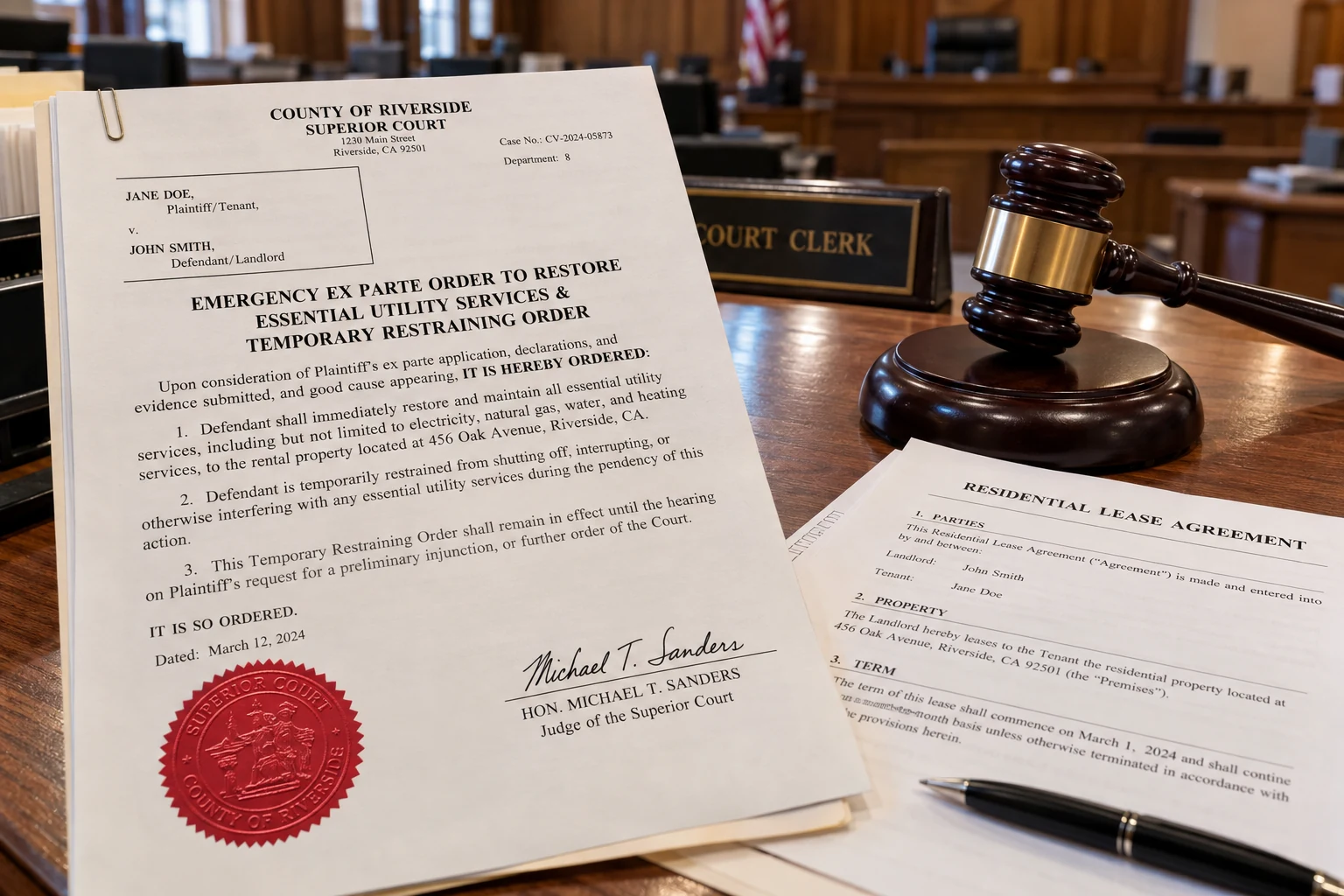
If the landlord refuses to comply, walk directly into the clerk's office at your local Municipal Court, Housing Court, or Justice of the Peace Court (in Texas). Request an Emergency Ex Parte Application for a Temporary Restraining Order or Writ of Restoration.
Judges treat utility shutoffs with urgent priority, frequently holding a hearing the exact same day. The resulting court order directs the Sheriff or constable to accompany a technician to reopen the utility lines. If the landlord violates the order, they face immediate contempt of court and incarceration.
50-State Utility Shutoff Penalty Lookup Table: What You Can Win in Court
State laws establish punitive civil penalties designed to deter landlords from ever touching a circuit breaker or water valve. Below are the governing statutes and automatic damage benchmarks across major U.S. jurisdictions:
If your landlord shut off running water specifically, see our companion guides on suing for no running water and hot water temperature laws. If they cut heating in the winter, review landlord heat requirements and hotel claims.
What If the Utility Company Shut It Off Because the Landlord Didn't Pay the Bill?
A frequent excuse offered by property owners is: "I didn't turn off your power or water—the utility company cut it off because I don't have the money to pay the master building bill."
In the eyes of the law, letting a utility get disconnected for non-payment carries the exact same legal liability as walking into your basement and cutting the physical wires. Under state utility protection statutes, landlords with master-metered buildings or leases including utilities have an affirmative duty to keep accounts in good standing.
How to Restore Service Today Without Paying the Landlord's Debt:
- Contact the Master Meter / Tenant Rights Desk: Call the electric, gas, or water utility and ask to speak with their Specialized Landlord-Tenant Department. Inform them that you are a tenant residing in a master-metered dwelling.
- You Are Protected From Past-Due Arrears: Under statutory protections—such as New York Real Property Law § 235-a, California Public Utilities Code § 10009, the Illinois Rental Property Utility Service Act, and Texas Property Code § 92.301—utility companies cannot demand that a tenant pay months of accrued landlord arrears.
- Pay Current Charges & Deduct From Rent: You have the statutory right to pay only the current billing cycle (or open a direct billing account in your own name) to maintain service. You then subtract 100% of that payment from your upcoming rent payment, attaching the utility receipt to your rent stub.
Even after service is reconnected, you can still bring a Small Claims Court claim against the landlord to recover money for the days your apartment sat in the dark.
Ready-to-Send Utility Shutoff Cease-and-Desist & Statutory Penalty Demand Letters
When demanding immediate utility restoration or filing a claim for statutory penalties, delivering formal written notice establishes the timestamp necessary for courtroom recovery.
Select the tab below that matches your current status, enter your specific details into the bracketed prompts, and click Copy Letter to Clipboard or Download .TXT.
How Much Compensation and Statutory Penalties Can You Recover?
When taking your landlord to Small Claims Court or Housing Court, financial recovery is determined by statutory damages categories, proven out-of-pocket losses, and rent reduction formulas:
| Recovery Category | Calculation Standard | Statutory Authority & Limits |
|---|---|---|
| 1. Statutory Per-Day Penalties | Automatic statutory fines: $100 per day in California (Cal. Civ. Code § 789.3), up to 3x monthly rent in Florida & Massachusetts. | Fla. Stat. § 83.67; M.G.L. c. 186 § 14; Tex. Prop. Code § 92.008. |
| 2. 100% Rent Abatement & Hotel Bills | Full daily rent refund plus 100% lodging and dining reimbursement for days without essential utility service. | Actual compensatory damages. |
| 3. Mandatory Attorney Fees | Statutory fee-shifting requires the landlord to pay all reasonable tenant attorney fees and court filing costs. | Statutory self-help eviction penalty sections. |
Small Claims Filing Limits: Most tenants resolve these disputes without hiring an attorney in Small Claims Court. Maximum claim limits vary by state: for example, $12,500 in California (California Courts Self-Help), $10,000 in New York City (NY Courts Small Claims), and $20,000 in Texas (Texas Judicial Branch). If your total damages exceed small claims thresholds, you may file in standard civil district court.
Frequently Asked Questions About Landlord Utility Shutoffs
Can my landlord shut off my electricity or water if I haven't paid rent or my lease expired?
No—never. In all 50 states, cutting off a tenant's utilities because they owe rent or stayed past the end of a lease is strictly illegal. Even if you owe thousands in back rent, the landlord's only legal option is to file an eviction case in court. If they shut off your utilities, you can countersue them for statutory penalties ($100/day to 3x rent) that often wipe out the back rent you owed!
What if I live in the landlord's house and rent a single room—can they shut off the power or Wi-Fi?
No—even if you are a room renter or "lodger" in an owner-occupied house and don't have a written lease, once you live there and pay rent (or stay past 30 days), you are protected by state anti-lockout and utility-shutoff laws. Your landlord cannot flip off the breaker to your bedroom, lock the bathroom, or cut off utilities included in your rental agreement.
Can my landlord shut off utilities for "repairs" for several days?
A landlord may only briefly turn off water or electricity for bona fide emergency or scheduled repairs—usually for 2 to 6 daytime hours after giving you advance notice, while a licensed plumber or electrician is actively working on the pipes or wires. If the landlord shuts off utilities overnight or for days with no contractor working on-site, courts treat it as an illegal utility shutoff.
How do I prove how much food spoiled in my refrigerator when the landlord shut off the power?
Open your refrigerator and freezer doors and take clear photos of every shelf of spoiled meat, milk, groceries, and medications before throwing them in the trash, and pull up your recent grocery store receipts or bank/debit card statements from the past 2 weeks. Small Claims judges routinely award $150 to $500+ for spoiled groceries based on photos and bank statements.
Do I need to hire a lawyer to sue for a utility shutoff, or can I use Small Claims Court?
You have both great options: because almost every state's utility-shutoff law includes mandatory attorney fee-shifting—meaning the judge forces the landlord to pay your lawyer's bill—many tenant lawyers will take an illegal utility shutoff case for $0 upfront. Or, if you want fast cash without a lawyer, you can file in Small Claims Court yourself for ~$35–$75 and claim both your out-of-pocket costs and your state's statutory penalty up to the court limit.
SueLegal is an independent educational legal publisher, not a law firm or lawyer referral service. The information provided in this guide is for general informational and educational purposes only and does not constitute formal legal advice. Residential landlord-tenant laws, repair notice periods, and statutory remedies vary significantly across state and municipal jurisdictions. If you are facing eviction, severe uninhabitable conditions, or complex litigation, consult a licensed attorney in your jurisdiction or contact your local legal aid organization. For more details on our standards, read our Editorial Policy and Legal Research Methodology.