

Yes, you can sue your landlord for leaving you with no running water.
Running water is the most basic requirement for a livable home—without it, you cannot flush toilets, wash hands, cook, or drink. In all 50 states, a total loss of running water is an immediate 24-hour health emergency. Depending on why your water is off, you can sue in Small Claims or Housing Court to recover:
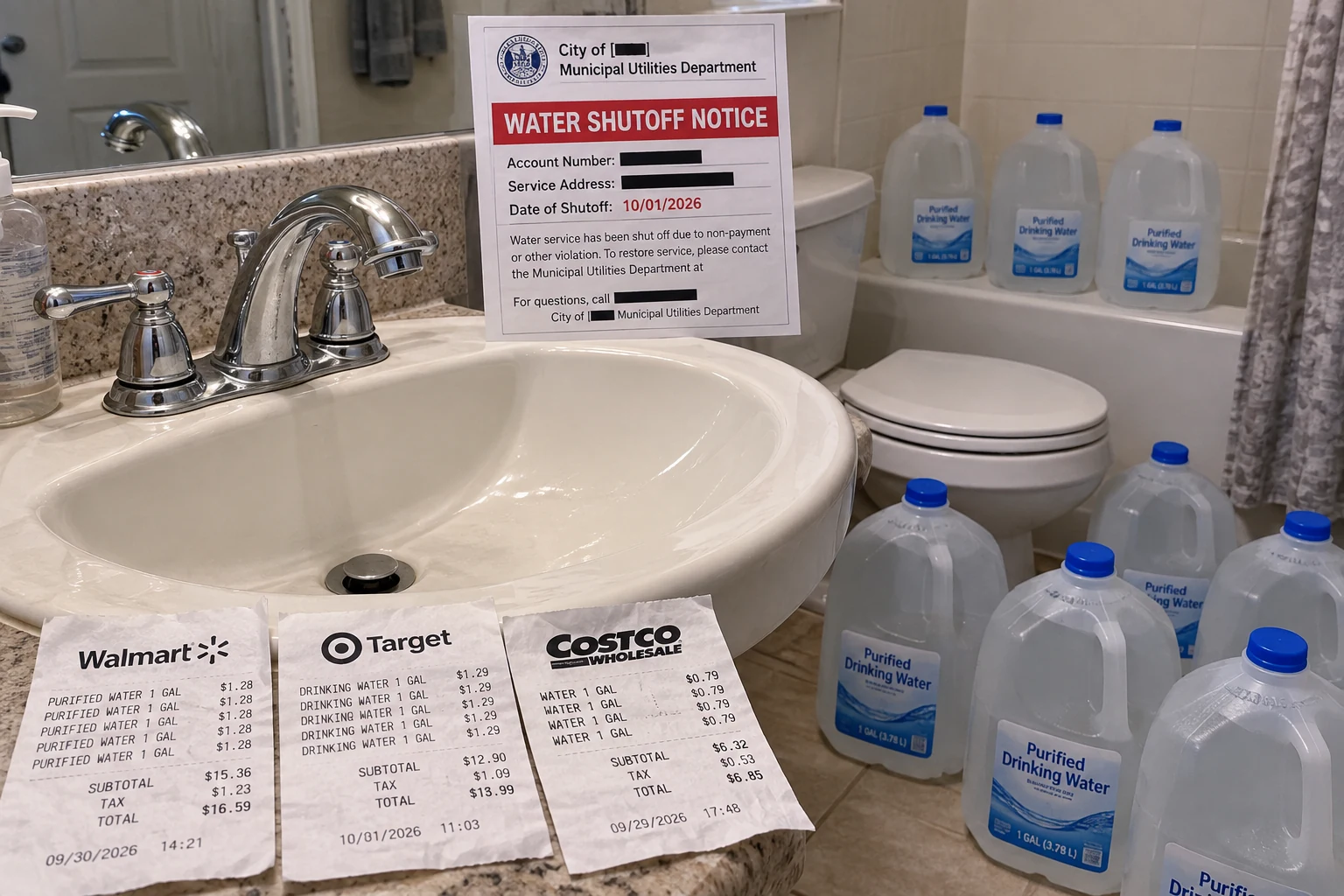
- If a Pipe Broke or Well Pump Failed (Landlord Delayed Repair): You can recover a 100% daily rent refund for every day you had no water, plus 100% reimbursement for hotel stays, cases of bottled/gallon water, takeout meals, gym showers, and laundromat bills.
- If the Landlord Shut Off the Water on Purpose (or Didn't Pay the Building Water Bill): Turning off a tenant's water—even if you are behind on rent—is strictly illegal in all 50 states. On top of your hotel bills and rent refund, you can sue for automatic statutory cash penalties ranging from $100 per day (in CA & WA) to 1x–3x your full monthly rent (in TX, FL, MA, NY, & AZ) plus lawyer fees.
At a Glance
- 24 Hours Is the Legal Emergency Limit (Not 7 or 30 Days): Unless the city's own street water main broke, a landlord generally has only 24 hours to restore running water or provide emergency drinking/sanitation water and hotel lodging.
- A Landlord Can NEVER Turn Off Your Water Over Late Rent: Even if you owe back rent or your lease expired, it is 100% illegal in every U.S. state for a landlord to shut off your water valve to force you out. Doing so triggers heavy automatic money penalties in court.
- What If the City Shut Off the Water Because Your Landlord Didn't Pay the Bill?: Call the municipal water utility immediately. In almost every state, tenants can pay the past-due amount (or open a tenant account) to get the water turned back on today and deduct every penny from next month's rent.
- No Running Water = 100% Rent Refund for Those Days: Because city health codes declare a home without flushable toilets unfit for human occupancy, judges routinely award a 100% daily rent credit (plus hotel costs) for every day past the first 24 hours.
- Rural & House Renters: A Broken Well Pump Is 100% the Landlord's Job: If your rented house gets water from a private well and the electric well pump, pressure switch, or tank dies, your landlord is legally required to repair or replace it on an emergency timeline—they cannot make you pay for a well pump.
Immediate Steps When You Have No Running Water
Losing running water is an immediate health emergency. Without running water, toilets cannot flush, food cannot be safely prepared, and personal sanitation breaks down. In every state, landlords are legally required to provide continuous access to potable water under the implied warranty of habitability. Follow these four sequential steps immediately:
-
1. Send Immediate Written Notice (Timestamped Record):
Never rely solely on a phone call or verbal conversation. Send an urgent text message, submit a priority portal maintenance ticket, and follow up with an email or letter explicitly stating: "Emergency Notice: Zero running water in unit. Inability to flush toilets or access drinking water violates the warranty of habitability. Immediate 24-hour repair required." Take a screenshot of your sent message with the date and time stamp.
-
2. Contact Local Code Enforcement or Your Municipal Water Utility:
Call your city or county building code enforcement division, housing department, or health department (dial 311 in most major metro areas). Code officers classify total water outages as an urgent health code violation and will dispatch an inspector within 24 to 48 hours. An official municipal inspection notice establishes irrefutable evidence of breach in court. If you suspect nonpayment of a master building bill, call the water utility directly to verify if the shutoff is municipal.
-
3. Document All Living Conditions & Out-of-Pocket Expenses:
Record video of dry faucets and empty toilet tanks. Retain every single receipt for emergency purchases: bottled drinking water, gallon jugs for flushing toilets, takeout meals (when unable to cook or wash dishes), laundromat fees, gym shower memberships, and emergency hotel accommodations.
-
4. Evaluate State-Specific Statutory Remedies (Do Not Assume Rent Withholding Is Universal):
Depending on your specific state property code, tenants have access to powerful statutory remedies—but strict statutory procedures must be followed:
- Repair and Deduct: Permitted in approximately 30 states (e.g., California Civil Code § 1942; Texas Property Code § 92.0561). If the landlord fails to act after reasonable emergency notice, you may hire a licensed plumber yourself and deduct the cost (often capped at 1 month's rent) from your next rent check.
- Rent Withholding or Court Escrow: Warning: Do NOT simply stop paying rent into your personal checking account. While states like New York, Massachusetts, and Ohio allow rent withholding, many jurisdictions require depositing rent into an official court-supervised rent escrow account (e.g., under Ohio Rev. Code § 5321.07 or Washington RCW 59.18.115). Withholding rent without statutory compliance can expose you to a summary eviction lawsuit for nonpayment.
- Lease Termination (Constructive Eviction): If water is not restored within statutory emergency cure windows, the apartment is legally uninhabitable. You may vacate and terminate the rental agreement without early termination penalties under the doctrine of constructive eviction.
Note on Intentional Shutoffs: If your landlord deliberately turned off your main shutoff valve to force you out over rent disputes, this is an illegal self-help eviction. See our dedicated guide to suing your landlord for an unlawful utility shutoff for per-day statutory multiplier penalties.
Turning on your bathroom or kitchen faucet only to hear a hollow hiss or silence is an immediate crisis. Unlike an appliance breakdown or a cosmetic flaw that reduces your apartment's comfort, having zero running water makes basic human existence impossible. You cannot flush a toilet, wash your hands, cook meals, brush your teeth, or take a shower.
Under the laws of all 50 states and municipal health codes nationwide, a residential home without running water is deemed immediately uninhabitable. Your landlord does not have weeks or months to address the situation. They generally have a strict 24-hour emergency window to begin restoring service or provide you with safe substitute water and hotel accommodations.
If your landlord delays repairs, ignores your calls, or intentionally turned off the water valve to force you out, you have powerful legal rights. You can sue in Small Claims Court for a full 100% rent refund, recover every dollar spent on hotels and bottled water, and trigger severe statutory cash penalties.
To understand court filing procedures and recovery limits for emergency housing breaches, see our central guide on suing your landlord.
Which Situation Are You In? The 3 Causes of No Running Water & What You Can Win
Before taking legal steps, you must identify why your running water is off. In housing court, the cause of the water loss determines the exact laws you cite, your landlord's legal deadline, and how much money you can recover.
When a landlord claims they are "waiting on parts" or that a plumber is unavailable for four days, they are breaching the Implied Warranty of Habitability. Because a home without running water cannot support sanitation, judges view any delay beyond 24 hours as an emergency failure requiring full compensation.
State-by-State Water Shutoff Penalties & 24-Hour Emergency Laws
When demanding immediate action from a property manager, citing the exact statutory code in your text message or formal letter transforms your complaint from a routine maintenance ticket into an urgent legal liability. Landlords know that violating utility statutes can cost them thousands of dollars in automatic damages.
If you are also suffering from lukewarm or missing hot water while cold water runs, check our detailed guide on suing for no hot water under 110°F–120°F standards. However, when both lines are completely dead, the failure is treated as an immediate health shutdown.
What to Do If the City Shut Off Your Water Because the Landlord Didn't Pay the Bill
One of the most alarming surprises for renters in multi-family apartments and small buildings occurs when the municipal water authority shuts off the main water meter because the property owner failed to pay the bill. The landlord collected your monthly rent, but pocketed the utility funds.
Here is the exact step-by-step roadmap to get your water turned back on today while preserving your claims:
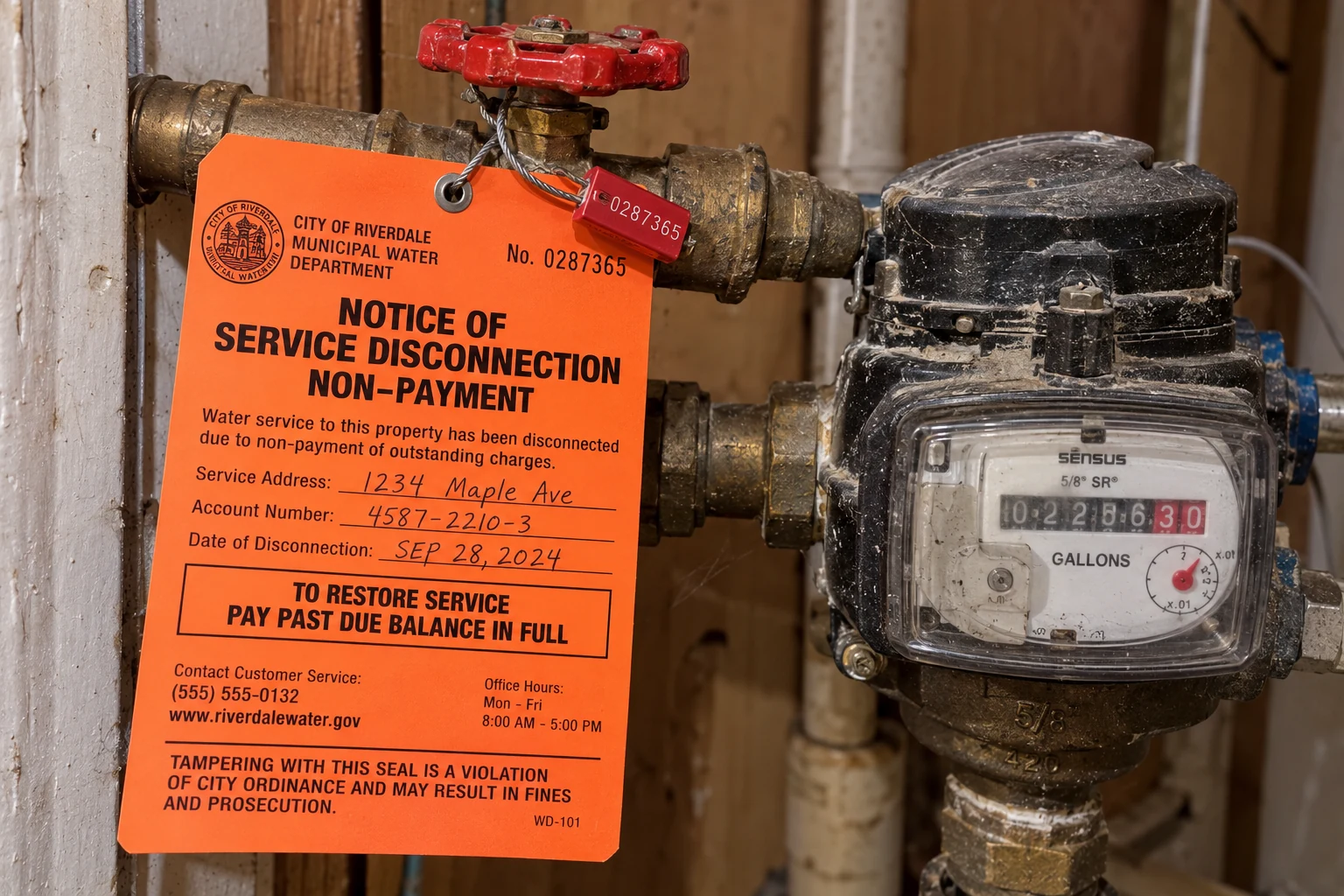
Step 1: Check the Front Door Tag & Call Municipal Water Customer Service
Municipal utilities almost always place a brightly colored shutoff tag or notice on the building's exterior door or main meter box. Call the customer service number listed immediately and ask:
"Was the water service at this address disconnected due to an unexpected main line break, or was it shut off for non-payment on the master landlord account?"
Request that the customer service representative email you written verification of the non-payment disconnection. This document provides undeniable proof in court that your water loss was caused by landlord neglect.
Step 2: Exercise Your Statutory "Pay and Deduct" Utility Right
You do not have to wait for your landlord to answer their phone. Under utility protection statutes nationwide, municipal water suppliers must permit tenants to restore service directly:
- New York (RPL § 235-a): Tenants in multi-family dwellings have the explicit statutory right to pay the utility company to prevent or restore water service and deduct the entire payment from future rent payments.
- Texas (Tex. Prop. Code § 92.301): If a landlord fails to pay a utility bill they agreed to supply, the tenant may pay the utility directly and deduct that exact dollar sum from their next rent payment.
- California (Cal. Pub. Util. Code § 10009): Tenants in multi-unit master-metered properties can assume billing responsibility or pay the current delinquency to maintain essential water flow.
- Illinois (765 ILCS 735/ Rental Property Utility Service Act): Tenants can pay past-due bills to keep water flowing and subtract every penny from their rent obligation.
Always keep the official stamped payment receipt from the city water utility and send a formal copy with your adjusted rent check.
Step 3: Sue for the Days You Were Deprived of Water
Paying the water utility to restore service solves today's emergency, but it does not erase the landlord's wrongdoing. You can still bring a claim in Small Claims Court for the days you lived without water, seeking full rent reimbursement, hotel nights, bottled water expenses, and state statutory penalties for illegal utility shutoffs.
What If You Rent a House on a Private Well (Broken Well Pump or Dry Well)?
If you rent a single-family house, duplex, or rural property that relies on a private water well rather than city municipal lines, a sudden water outage usually points to three mechanical failures: a burned-out submersible well pump, a cracked pressure tank switch, or an electrical control box failure.
When tenants report a dead well, landlords frequently try to avoid the steep repair cost with common excuses:
"Pulling the well pump up from 300 feet underground costs $3,500. Your residential lease says you are responsible for minor repairs and plumbing upkeep!"
The Legal Reality: A well pump, pressure tank, and deep-well water delivery apparatus are core structural mechanical systems, equivalent to the building's foundation or roof. Under state landlord-tenant acts, a property owner cannot legally contract away their duty to supply clean, potable water. Any lease clause attempting to shift the cost of a replacement well pump onto a tenant is void and unenforceable as against public policy.
The Landlord's Legal Duties During a Well Failure:
- 24 to 48 Hours: The landlord must retain a licensed well-drilling or pump contractor to diagnose and repair the electrical switch, tank, or downhole pump.
- Temporary Potable Water & Sanitation: If specialized well equipment requires several days to source or install, the landlord must provide clean bulk drinking water, temporary sanitation solutions, or reimburse you for hotel lodging.
- 100% Daily Rent Abatement: You do not pay rent for any day a home with a dry well lacks water for flushing and washing. If the well has permanently gone dry and cannot produce water, you have the right to declare constructive eviction, terminate the lease, and recover your security deposit and moving expenses.
Ready-to-Send Emergency No-Running-Water & Shutoff Penalty Demand Letters
Never rely on verbal phone calls when your water is off. A written record establishes the exact moment the landlord was notified, triggering statutory cure clocks and creating critical evidence for the court.
Select the tab below that matches your situation, fill in the bracketed information, and click Copy Letter to Clipboard or Download .TXT.
Frequently Asked Questions About No Running Water in Rental Properties
How long can a landlord legally leave a tenant without running water?
At most 24 hours for an accidental plumbing emergency. Because you cannot flush toilets, wash hands, or drink water, every city health department treats zero running water as an immediate life-safety violation. If a major pipe repair takes longer than 24 hours, the landlord must provide alternative housing/hotel reimbursement or a 100% daily rent refund.
Can my landlord shut off my water if I am late on rent or fighting an eviction?
No—never. In all 50 states, turning off a tenant's water, electricity, or heat to force them to pay rent or move out is an illegal self-help eviction. You can call the police or local housing court for an emergency order forcing the landlord to turn the valve back on immediately, and sue the landlord for $100/day to 3 times your monthly rent in statutory penalties.
Does my landlord have to pay for a hotel if the water is shut off for repairs?
If your landlord turns the water off for a quick 3-hour daytime pipe repair after giving you advance notice, they do not owe for a hotel. However, if the water stays off overnight or for multiple days—leaving you with no working toilet or shower—the apartment is legally uninhabitable, and you can recover reasonable hotel costs plus a 100% daily rent refund in Small Claims Court or under state essential-service laws like Arizona's 125% hotel rule and Chicago's RLTO.
How do I prove in court that my running water was completely off?
Record a continuous 30-second timestamped video on your phone walking from the kitchen sink to the bathroom sink, turning both the hot and cold handles all the way on so the judge can see and hear that zero water comes out, and then pressing the toilet handle to show the tank will not refill. Save that video every morning and night the water is out, and call 311 or City Code Enforcement for an official inspector report.
Can I break my lease immediately if my apartment has no running water?
Yes. If your landlord fails to restore running water after receiving your written emergency notice and passing the 24-to-72-hour legal cure window, you can have a 311 city code inspector document the violation, give written notice of Constructive Eviction, move out without owing any future rent, and sue for your full security deposit and moving costs.
SueLegal is an independent educational legal publisher, not a law firm or lawyer referral service. The information provided in this guide is for general informational and educational purposes only and does not constitute formal legal advice. Residential landlord-tenant laws, repair notice periods, and statutory remedies vary significantly across state and municipal jurisdictions. If you are facing eviction, severe uninhabitable conditions, or complex litigation, consult a licensed attorney in your jurisdiction or contact your local legal aid organization. For more details on our standards, read our Editorial Policy and Legal Research Methodology.