

Key Points to Know
- Don't Let Your Landlord Stick You With the Exterminator Bill: Landlords frequently try to blame tenants for bringing bed bugs home and charge them $1,000+ for treatment. In multi-unit apartment buildings, the law almost always puts the burden on the landlord unless they can prove in court that you caused it.
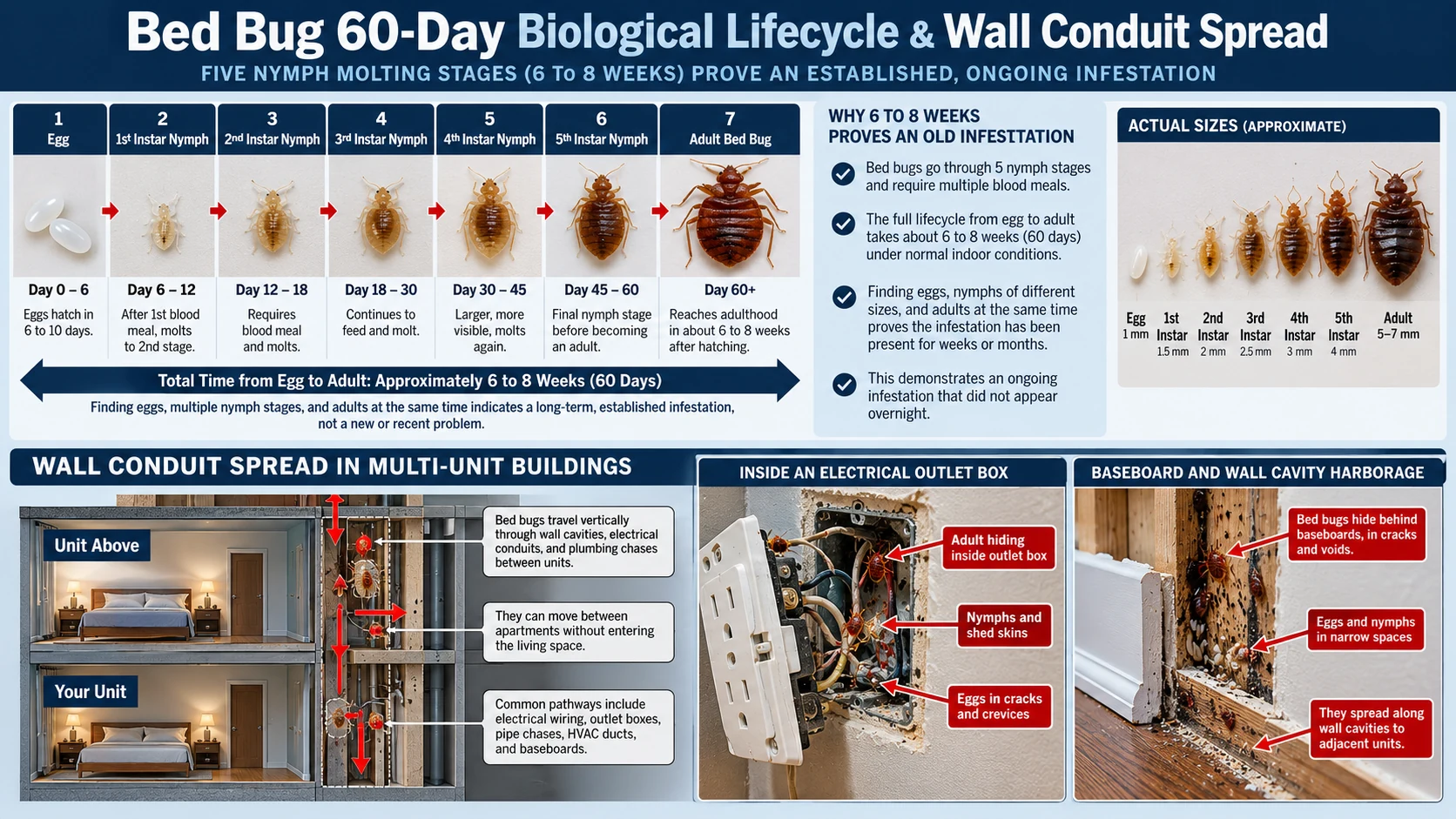
- The "Electrical Outlet & 60-Day" Rule Proves You Didn't Bring Them: Because bed bugs reproduce slowly, spotting lots of bugs, dark spots along baseboards, or bugs crawling out of electrical outlets within 30 to 60 days of moving in proves the infestation was already inside the walls before you moved in.
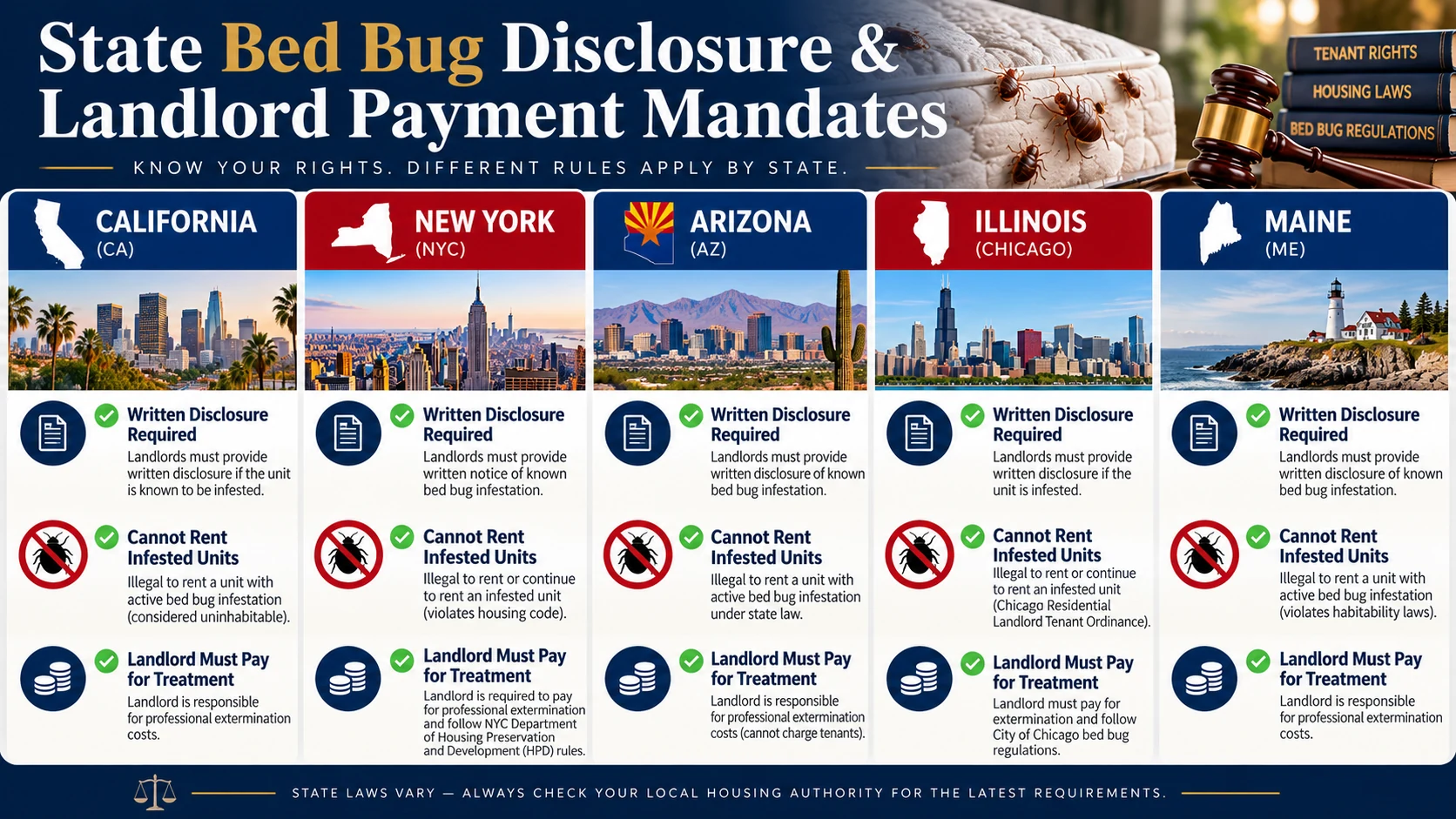
- 21 States Have Specific Bed Bug Laws: States like California, New York, Arizona, Maine, Illinois, and Virginia require landlords to give written bed bug disclosures or ban landlords from renting out any unit with an active bed bug problem.
- Save Your Laundromat & Prep Receipts: Preparing an apartment for bed bug heat or chemical treatment takes days of work and hundreds of dollars in high-heat laundry, plastic bins, and mattress covers. Keep every receipt—you can sue for all of it.
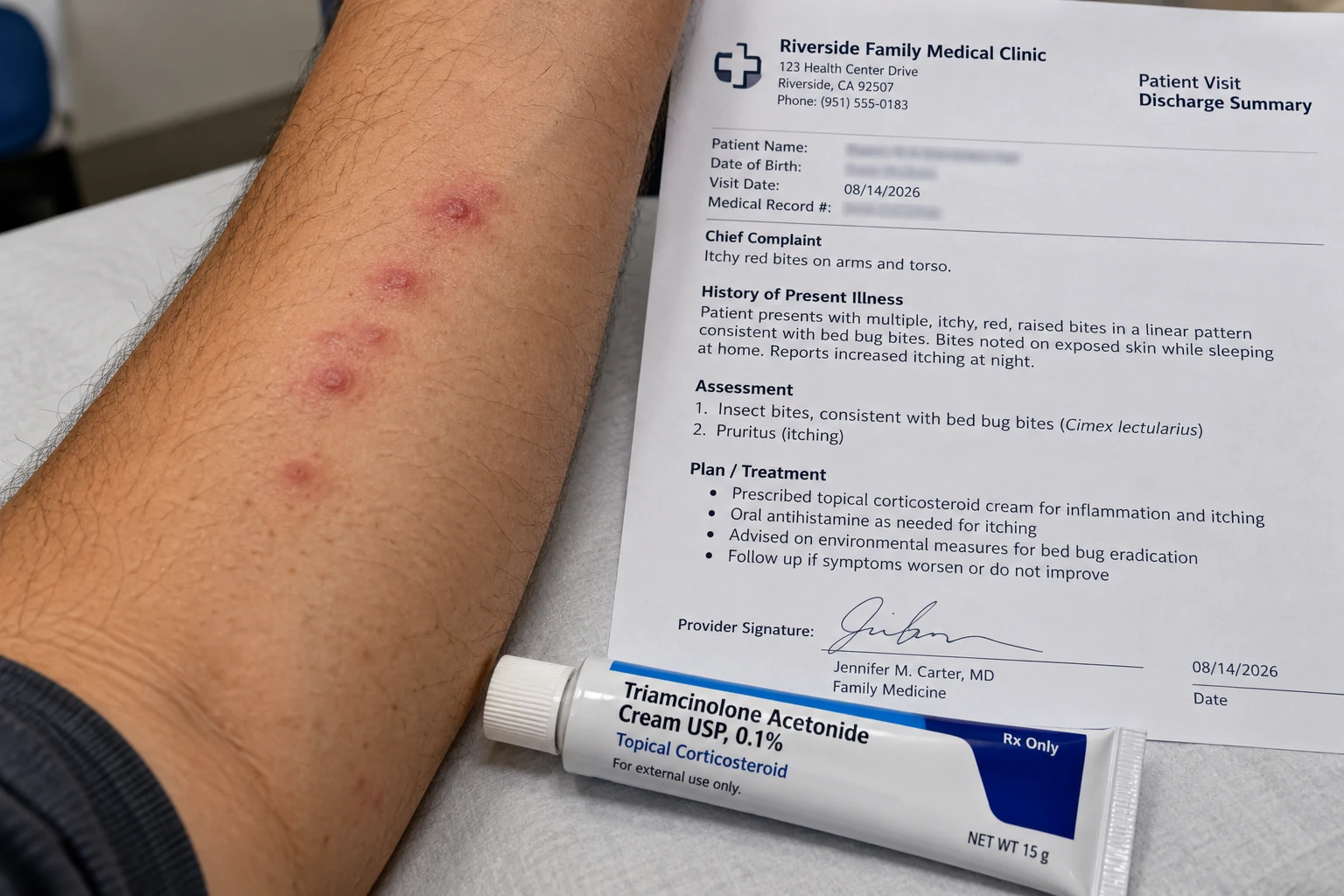
- Catch a Live Bug & Photograph Your Bites Next to a Date: Landlords often claim "those are just mosquito bites or carpet beetles." Catch a bug in a clear sealed bag or on clear tape, take dated photos of it on your mattress seam, and ask an urgent care doctor to note "suspected bed bug bites" in your medical chart.
Can You Sue Your Landlord for Bed Bugs?
Yes, you can sue your landlord for a bed bug infestation. Under state law, every residential lease carries an automatic guarantee called the Warranty of Habitability. State law requires your landlord to provide a clean, safe home suitable for sleeping, and a bed-bug-infested bedroom violates that law—even if your lease contains an unfair clause attempting to make you pay for pest control.
Bed bugs are nocturnal parasites that cause relentless physical bites, trigger painful allergic skin reactions, destroy expensive mattresses, and make sleep impossible. When a landlord rents an apartment that already harbored bed bugs, hides a building-wide history of infestations, or takes days to respond with cheap bug sprays, they face substantial civil liability under Negligence and Premises Liability laws.
Depending on the severity of the infestation, tenants can recover compensation for:
- Ruined Furniture & Bedding: Full replacement value for infested mattresses, box springs, upholstered bed frames, couches, and rugs.
- High-Heat Laundromat & Prep Expenses: Repaying the hundreds of dollars spent on commercial high-heat dryer cycles, airtight storage bins, and heavy-duty mattress encasements.
- Rent Refunds (Rent Abatement): A partial or full rent refund for every month you couldn't sleep in your bedroom (frequently 50% to 100% of your rent).
- Medical Expenses, Bites & Emotional Suffering: Compensation for urgent care visits, steroid creams, scarring, and the acute anxiety of bed bug exposure under our guide to suing for emotional distress.
How to Prove You Didn't Bring the Bed Bugs In (Beating the Landlord's Blame Game)
When tenants report bed bugs, property managers almost immediately try to claim: "You brought them home from a vacation or bought infested used furniture." To beat this blame game in court, you can use the biology of bed bugs and physical building evidence:
Four Proven Ways to Prove the Building Was Already Infested
- The "First 60 Days" Biology Rule: A single female bed bug lays only 1 to 5 eggs per day. Eggs take 6 to 10 days to hatch, and nymphs must go through five distinct molting stages over 5 to 8 weeks before reaching adulthood. If you discover dozens of adult bugs, shed skins, and dark ink-like fecal spotting along baseboards within 30 to 60 days of moving in, pest control experts can confirm the colony is many months old—proving it was there before you ever arrived.
- Check Behind Electrical Faceplates and Baseboards: Bed bugs travel between apartments through wall voids along electrical wires and plumbing chases. Unscrew an electrical outlet cover near your bed or sofa. If you see tiny brown bug shells or black droppings inside the wall box, the bugs are crawling directly out of the building's walls, not your suitcase.
- Look for Landlord Cover-Up Clues: Inspect closet baseboards, radiator pipes, and heater vents. Landlords frequently apply fresh, thick paint or caulk over old infestations between tenants. Finding dried, dead bed bugs painted into corners is direct proof of Fraudulent Concealment, proving management knew about the problem and hid it from you.
- Talk to Immediate Neighbors: Knock on the doors of tenants directly next door, above, and below your apartment. If a neighbor confirms that their apartment was treated for bed bugs weeks or months earlier, your landlord's claim that you introduced the pests collapses completely.
Judicial Precedent: Concealing Bed Bugs Triggers Punitive Damages
When a property owner knows an apartment has bed bugs and continues renting it out without effective extermination, courts treat this as reckless and fraudulent conduct.
In the landmark decision Mathias v. Accor Economy Lodging (347 F.3d 672), the U.S. Court of Appeals for the Seventh Circuit addressed management that knew rooms were infested with bed bugs but continued renting them anyway to protect rental revenue. The court upheld substantial punitive damages against the owner, establishing that deliberately exposing occupants to bed bugs while concealing the infestation constitutes willful and wanton misconduct.
This ruling matters because landlords cannot hide behind lease fine print when they knowingly conceal a bed bug problem. If management painted over dead bugs or ignored neighbor reports before handing you the keys, you can pursue both full financial refunds and punitive damages.
Documenting these physical clues early prevents the landlord from charging you for pest control and sets up an airtight case under our master guide on suing your landlord.
State-by-State Bed Bug Disclosure & Landlord Payment Laws
Over 21 states and major cities have enacted specific statutes that protect renters from bed bug costs and require landlords to disclose prior outbreaks before signing a lease:
| State / City | Must Landlord Disclose Prior Bed Bugs? | Can Landlord Rent an Infested Unit? | Who Pays for Extermination? | Key Law / Legal Standard |
|---|---|---|---|---|
| California | Yes (Written notice required; must share inspection findings within 2 business days) | Illegal (Cal. Civ. Code § 1954.602) | Landlord | Landlords cannot show, rent, or lease any unit known to have bed bugs; tenant retaliation is banned for 180 days under § 1942.5. |
| New York (NYC) | Yes (Must provide 1-year building-wide bed bug filing history at lease signing) | Illegal | Landlord | NYC Admin. Code § 27-2018.1 requires annual HPD bed bug filing, mandatory extermination, and treating adjacent units. |
| Arizona | Yes (Educational materials required; cannot rent known infested unit) | Illegal (A.R.S. § 33-1319) | Landlord (multi-unit) | Landlord must provide educational materials and cannot enter lease if unit has active bed bugs; tenants must report within 3 days. |
| Illinois (Chicago) | Yes (Brochure required; must disclose prior unit treatment on request) | Illegal | Landlord | Chicago Mun. Code § 5-12-101 requires landlord to hire pest pro within 10 days of notice and treat units above, below, and beside. |
| Maine | Yes (Must disclose when unit & adjacent units were last inspected/found free) | Illegal (14 M.R.S.A. § 6021-A) | Landlord | Landlord must contact a pest control agent within 5 days of tenant notice and cannot charge the tenant for treatment. |
| Virginia, Oregon, Nevada, New Jersey, PA (Philly) | Yes / Strict Treatment Rules | Illegal | Landlord (unless proof of tenant fault) | Landlords must inspect promptly upon complaint and cannot shift building-wide extermination expenses onto innocent tenants. |
| Texas, Florida, Ohio, Georgia, NC & Others | Covered under general habitability statutes | Illegal if concealed or left untreated | Landlord (move-in/multi-unit) | Even without a bed-bug-specific statute, renting an infested home or ignoring written repair requests breaks state safe-housing laws. |
What Can You Actually Sue For? (Don't Forget the Hidden "Prep" Costs)
Bed bug infestations impose massive out-of-pocket expenses that tenants often forget to claim in court. Make sure you calculate every compensable loss:
| Compensable Bed Bug Loss / Expense | Evidence Needed, Action to Take & Payout Value |
|---|---|
| ✓ Ruined Mattresses, Box Springs & Upholstered Furniture | Bed bugs nest inside mattress coils, tufts, and deep sofa seams. Exterminators and health departments routinely advise discarding heavily infested upholstered items. Always photograph live bugs on the mattress seam before trashing it, and save screenshot prices of comparable replacement items ($800 to $3,500+). |
| ✓ The "Exterminator Prep" & High-Heat Laundry Nightmare | Before an exterminator treats your home, you must wash and dry every piece of clothing, curtain, and bedsheet on high heat (over 120°F). Keep receipts for commercial laundromat machines, drop-off wash-and-fold services, heavy-duty contractor trash bags, plastic storage bins, and certified bed-bug mattress encasements ($80 to $150 each). |
| ✓ Rent Refunds for Loss of Bedroom Use (Rent Abatement) | Because the primary purpose of renting a residential apartment is having a safe place to sleep, judges routinely award a 40% to 100% rent refund for every month you were forced to sleep on a living room air mattress or stay in a hotel. |
| ✓ Doctor Visits, Severe Bites, Scarring & Lost Sleep | Bed bug bites cause severe itching, secondary bacterial skin infections from scratching, and permanent dark hyperpigmented scars. If you visited an urgent care clinic or dermatologist, your medical bills, prescription steroid creams, and compensation for insomnia and distress are fully recoverable ($3,000 to $75,000+). |

To learn how courts evaluate health violations across different pests, explore our guide to suing for pest infestations and our resource on cockroach lawsuits.
Small Claims Court vs. Hiring a Bed Bug Lawyer (Which One Should You Pick?)
Depending on the financial amount of your losses and whether you suffered severe bites, you have two primary legal routes:
| Legal Path | When to Choose This Option | Cost & Recovery Expectations |
|---|---|---|
| Small Claims Court (Represent Yourself) |
|
Filing fee is typically $25 to $75. You present photos, receipts, and demand letters directly to the judge. You keep 100% of the money awarded. |
| Contingency Bed Bug Injury Lawyer |
|
Lawyers work on contingency: $0 upfront. They only get paid (typically 33%–40%) if they win a settlement or jury verdict ($15,000 to $100,000+). |
Ready-to-Send Bed Bug Demand & Bill-Dispute Letter
Before heading to court, send a formal demand letter. This letter serves three crucial purposes: it creates official written notice, formally rejects any attempt by the landlord to bill you for extermination, and establishes a strict deadline for professional eradication and reimbursement:
VIA CERTIFIED MAIL WITH RETURN RECEIPT REQUESTED
AND VIA ELECTRONIC DELIVERY (EMAIL / TENANT PORTAL)

Date: [TODAY'S DATE, e.g. October 15, 2026]

To: [LANDLORD OR PROPERTY MANAGEMENT COMPANY NAME]
Address: [OFFICIAL LEASE NOTICE ADDRESS]
City, State, Zip: [CITY, STATE, ZIP]

From: [YOUR FULL NAME]
Rental Address: [YOUR APARTMENT NUMBER AND STREET ADDRESS]
Phone Number: [YOUR PHONE NUMBER]
Email: [YOUR EMAIL ADDRESS]

SUBJECT: FORMAL NOTICE OF ACTIVE BED BUG INFESTATION, DISPUTE OF EXTERMINATION CHARGES, AND FINAL DEMAND FOR PROFESSIONAL REMEDIATION AND REIMBURSEMENT

Dear [LANDLORD OR PROPERTY MANAGER NAME],

This letter serves as formal written notice under state landlord-tenant statutes and the implied warranty of habitability that my rental home is suffering from an active bed bug (Cimex lectularius) infestation.

1. DISCOVERY, TIMELINE AND PHYSICAL PROOF:
Bed bug activity was first identified in the apartment on or about [DATE YOU FIRST SAW BUGS OR BITES]. Formal notice was provided to your office on [DATE OF FIRST REPORT] via [EMAIL / PORTAL TICKET / TEXT].

Physical evidence confirming this infestation includes live insect specimens preserved in a sealed container, dark fecal staining along mattress seams and baseboards, and photographic documentation of active bites (attached).

2. DISPUTE OF EXTERMINATION LIABILITY & CAUSATION:
To the extent management has asserted or intends to assert that I am responsible for the costs of extermination, I hereby formally reject that claim:
- In multi-unit residential buildings, property owners maintain a non-delegable statutory obligation to eradicate vermin.
- The biological development and density of this infestation indicate that the condition predated my tenancy or originated from adjacent units and shared wall conduits.
- Under applicable state law, lease clauses attempting to transfer statutory habitability obligations onto tenants in multi-family dwellings are void and unenforceable.

3. REQUIRED CORRECTIVE ACTIONS AND DEADLINE:
Under state property maintenance codes, you are legally required to maintain a habitable, vermin-free dwelling. I demand that you complete the following actions within [NUMBER: THREE (3) TO FIVE (5)] BUSINESS DAYS of receipt of this notice:
1. Retain a licensed pest management contractor to execute comprehensive eradication (such as structural heat treatment or certified chemical protocols).
2. Inspect and treat all adjacent units above, below, and beside my apartment to eliminate the source harborage in shared wall cavities.
3. Reimburse me in the amount of $[TOTAL AMOUNT, e.g. $1,450] for ruined bedding, mattress encasements, laundromat high-heat prep costs, and replacement furniture (itemized receipts attached).
4. Provide a retroactive rent refund of $[AMOUNT, e.g. $1,800] representing the diminished rental value of the property during the infestation period.

4. NOTICE OF LEGAL ACTION:
If licensed professional remediation is not scheduled and confirmed in writing within the deadline above, I will immediately pursue all statutory remedies without further notice, including:
- Requesting an emergency inspection citation from the City Department of Health and Municipal Code Enforcement.
- Exercising statutory Repair-and-Deduct or Rent Escrow remedies as authorized by law.
- Initiating legal proceedings in Small Claims Court for property damages, rent abatement, and statutory penalties.
- Exercising my right to declare constructive eviction, terminating the tenancy without penalty, and holding you liable for all moving and relocation expenses.

Please contact me in writing immediately at [YOUR EMAIL ADDRESS] to coordinate inspection and treatment dates.

Sincerely,

_________________________________________
[YOUR SIGNATURE]

[YOUR PRINTED NAME]
Tenant at [YOUR APARTMENT NUMBER]
How to Send This Letter So It Counts in Court:
- Fill in the brackets: Replace all bracketed placeholder text with your real dates, unit number, and itemized property losses.
- Send an email copy immediately: Email or upload the letter through your tenant portal so your landlord has immediate timestamped notice.
- Mail via USPS Certified Mail: Go to your local post office and send the letter via Certified Mail with Return Receipt Requested. Keep the green signed return receipt as primary proof for the judge.
How Much Can I Sue My Landlord for a Bed Bug Infestation?
When taking your landlord to Small Claims Court or Housing Court, financial recovery is determined by statutory damages categories, proven out-of-pocket losses, and rent reduction formulas:
| Recovery Category | Calculation Standard | Statutory Authority & Limits |
|---|---|---|
| 1. Contaminated Mattress & Furniture Losses | Fair market replacement value for infested bedding, box springs, and upholstered furniture discarded due to exterminator failure. | Consequential property damages. |
| 2. Extermination Cost Reimbursement | Refund of any pest control fee improperly charged to tenant in multi-family buildings. | State bed bug statutes (e.g., Cal. Civ. Code § 1954.603; NY Real Prop. Law § 235-c). |
| 3. Medical & Bite Treatment Outlays | Documented doctor visits, antihistamines, antibiotics for secondary skin infections, and hotel stays during heat treatments. | Compensatory medical damages. |
Small Claims Filing Limits: Most tenants resolve these disputes without hiring an attorney in Small Claims Court. Maximum claim limits vary by state: for example, $12,500 in California (California Courts Self-Help), $10,000 in New York City (NY Courts Small Claims), and $20,000 in Texas (Texas Judicial Branch). If your total damages exceed small claims thresholds, you may file in standard civil district court.
Frequently Asked Questions
In multi-unit apartment buildings (2+ units), landlords generally cannot legally force you to pay for extermination unless they can prove in court that you directly introduced the pests. Even if your lease contains a fine-print clause attempting to shift pest control costs onto you, such clauses are strictly void and unenforceable under the implied warranty of habitability in states like California, New York, Illinois, Maine, and Arizona.
Yes, under the legal doctrine of Constructive Eviction. If you provide formal written notice of the bed bugs, allow reasonable access for treatment, and the infestation continues unaddressed or was concealed from you prior to move-in, you have the legal right to vacate, terminate your lease without early termination fees, and recover your security deposit and moving expenses. Obtaining an official city health or code enforcement inspection report provides vital protection.
Bed bugs nest deep inside wall voids, electrical outlets, and baseboards, and their eggs are naturally resistant to common chemical sprays. If your landlord conducts only superficial sprays without applying comprehensive heat treatments, insect growth regulators, or treating adjacent units, they have failed their legal duty to remediate. You can sue for retroactive rent refunds and out-of-pocket costs.
To prove bed bug bites to a judge or insurance adjuster, trap a live specimen or shed nymph casing inside a clear zip-top bag or on clear tape to confirm the exact species. Take dated, high-resolution photographs of bites, welts, or rash patterns next to a calendar or coin for scale, and visit an urgent care clinic or dermatologist so an official diagnosis of suspected bed bug dermatitis is recorded in your medical chart.
In Small Claims Court, claims for property damage, ruined mattresses/furniture, high-heat laundry prep expenses, and retroactive rent refunds typically settle or win between $2,500 and $10,000. In general civil court, personal injury lawsuits involving extensive bodily bites, permanent skin scarring, emotional distress, or children regularly settle between $15,000 and $100,000+, often handled on contingency by specialized tenant lawyers.
SueLegal is an independent educational legal publisher, not a law firm or lawyer referral service. The information provided in this guide is for general informational and educational purposes only and does not constitute formal legal advice. Residential landlord-tenant laws, repair notice periods, and statutory remedies vary significantly across state and municipal jurisdictions. If you are facing eviction, severe uninhabitable conditions, or complex litigation, consult a licensed attorney in your jurisdiction or contact your local legal aid organization. For more details on our standards, read our Editorial Policy and Legal Research Methodology.