
Yes, you can sue your landlord for a serious pest infestation.
In almost every state, landlords are legally required to keep rental homes free of dangerous or disgusting pests like bed bugs, rats, mice, cockroaches, and fleas. You can sue your landlord in Small Claims Court to get a rent refund, pay for ruined furniture/mattresses and spoiled food, or cover exterminator and hotel bills if:
- You didn't cause the bugs (they were there when you moved in, came from a neighbor's unit, or crawled through unsealed holes in the building).
- You warned the landlord in writing (by text, email, or letter).
- The landlord ignored you—or only did a "fake fix" (like handing you a $5 can of bug spray instead of hiring a real exterminator) after a reasonable waiting period (usually 7 to 14 days).
What You Need to Know
- Apartment Buildings vs. Single-Family Houses Matter: If you live in an apartment building with 2 or more units, the landlord is almost always 100% responsible for pest control. If you rent a standalone single-family house, the landlord is responsible if the pests were there when you moved in or get inside through broken screens, roof gaps, or foundation holes.
- Lease Clauses That Blame You Are Often Illegal: In states like California, New York, Texas, and Florida (plus 21 states with strict bed bug laws), a landlord cannot use fine print in a lease to force apartment tenants to pay for building-wide pest problems.
- Spraying Cheap Bug Spray Does Not Let Your Landlord Off the Hook: If your landlord sets two cheap mouse traps or sprays once and the pests keep coming back because they won't seal the walls or treat the whole building, you can still sue.
- Beat the "Dirty Apartment" Excuse Early: Before you complain or call the city inspector, clean your kitchen, put all food in sealed containers, and take dated photos of your clean apartment so the landlord cannot blame your housekeeping in court.
- Call the City Health Inspector for Free Proof: A single free report from your city Code Enforcement or Health Department stating your apartment has an infestation is the strongest piece of evidence you can hand a judge.
Waking up to bed bug bites, seeing roaches scatter across your kitchen counter, or hearing rats inside your bedroom walls is terrifying and stressful.
Under state property laws across the country, you do not have to live with pests. In almost every state, your landlord is legally required to hire a licensed exterminator and eradicate the infestation.
If your landlord ignores your complaints, tries to blame your housekeeping, or hands you a cheap can of bug spray, you have the legal right to take them to Small Claims Court for a rent refund and replacement money.
For a comprehensive breakdown of small claims court filing steps and legal remedies, read our master pillar on suing your landlord.
Which Pests Can You Actually Sue For? (Comparison Table)
Not all bugs qualify for a lawsuit. Judges care about pests that spread serious bacteria, trigger asthma, ruin property, or make an apartment physically unlivable.
Check the table below to see if your specific pest qualifies for a lawsuit and click the link to read our dedicated guide:
| Pest Type | Can You Sue? | Why It Wins in Court | Typical Wait Time After Notice | Detailed Guide |
|---|---|---|---|---|
| Bed Bugs | Yes (High Payout) | 21 states have strict bed bug laws. Bed bugs ruin mattresses, cause painful bites, sleep loss, and force tenants to pay hotel bills. | 24 hours to 7 days | Read Bed Bug Guide → |
| Rats | Yes (High Urgency) | Rats carry dangerous diseases, gnaw on electrical wiring, and violate municipal sanitary health codes in every major city. | 24 hours to 7 days | Read Rat Guide → |
| Mice | Yes | Mice contaminate food pantries and kitchen counters with feces and urine. They almost always enter through structural gaps in exterior walls. | 7 to 14 days | Read Mice & Rodent Guide → |
| Cockroaches | Yes | German cockroaches trigger severe pediatric asthma and allergies. In apartment buildings, they spread between units through shared plumbing pipes. | 7 to 14 days | Read Cockroach Guide → |
| Termites, Fleas & Wasps | Sometimes | You can sue if fleas existed at move-in, wasps block safe entry doors, or whole-building termite tenting forces you into a hotel without reimbursement. | 7 to 14 days | Read Termite Guide → |
| Sugar Ants & Spiders | Rarely | Courts treat occasional harmless outdoor spiders or seasonal sugar ants as minor household annoyances, unless the infestation is overwhelming. | 14 to 30 days | Minor household issue |
Your Right to a Bug-Free, Livable Home
Your Right to a Bug-Free, Livable Home (Implied Warranty of Habitability): Under state property law, every lease includes a legal promise that the home is clean, safe, and fit for human living. This law requires your landlord to keep the building free of disease-carrying vermin, even if your lease claims the landlord is not responsible for pest control.
In the famous case Hilder v. St. Peter, the state supreme court ruled that a landlord cannot collect full rent for an apartment infested with insects and rodents. The court made it clear that "as-is" clauses in leases are fake—a landlord cannot force a tenant to sign away their basic right to a clean, bug-free home.
In apartment buildings with two or more units, cockroaches and mice travel through walls, shared pipes, and hallway ceilings. Because you cannot spray your neighbor's apartment, the landlord is 100% legally responsible for building-wide extermination.
How to Defeat the Landlord's "Dirty Tenant" Excuse
The "Dirty Tenant" Excuse (Affirmative Defense of Tenant Negligence): In almost every pest lawsuit, the landlord's number one defense is to blame the tenant. They tell the judge: "The tenant lives in filth, leaves dirty dishes out, and caused the bugs themselves."
Here is your 4-step playbook to shut down the "Dirty Tenant" excuse before you ever set foot in a courtroom:
4 Steps to Prove the Pests Aren't Your Fault
-
1. Take "Clean Kitchen" Photos First: Before the landlord or exterminator inspects your home, thoroughly sweep your floors, empty your sink, wipe down counters, and seal your trash cans. Take wide-angle photos showing your clean home with timestamps enabled on your phone.
-
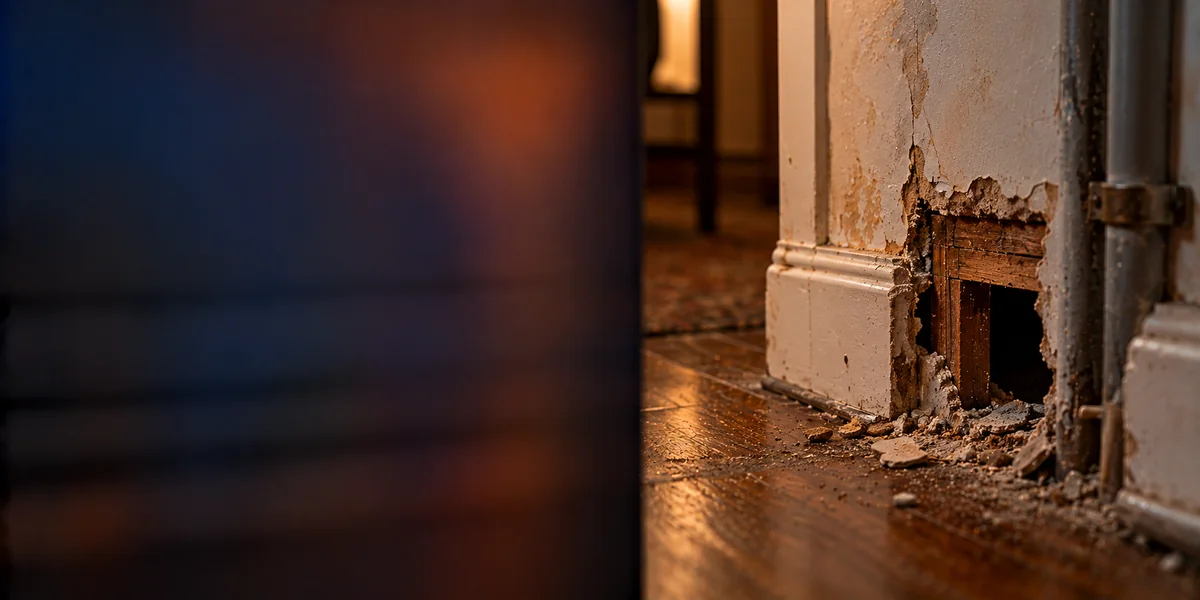
2. Photograph All Entry Holes: Look under your kitchen sink, behind the stove, and around bathroom water pipes. Take close-up photos of unsealed pipe gaps, missing baseboards, cracks in exterior bricks, and torn window screens where pests crawl inside.
-
3. Ask Your Neighbors: If the apartment next door, upstairs, or down the hall has bugs or mice too, ask them for a quick text message or signed note. When two or more tenants have the same bugs, a judge will instantly recognize that the building has a shared structural problem.
-
4. Ask the Exterminator for a Written Note: When the pest control technician arrives, politely ask: "Where do you think they are coming from?" Ask for a copy of the service slip noting that the infestation is coming from wall voids, shared building lines, or structural gaps.
When Landlords Are Held Liable in Court
Judges hold landlords legally and financially accountable when any of the following five conditions occur:
- The Infestation Was Present at Move-In: If you discovered bed bugs or roaches within the first 14 days of moving in, courts recognize that the building was already infested before you arrived.
- The Landlord Offered a "Fake Fix": Setting two cheap plastic mouse traps or handing you a $5 grocery-store spray can is not professional pest control. Landlords must hire licensed exterminators.
- Structural Entry Holes Ignored: When rodents or roaches enter through cracked foundations, unsealed plumbing pipes, or rotten window sills, the landlord is liable under our guide to unsafe living conditions.
- City Health Department Citations: When a city building or health inspector issues an official Notice of Violation, the landlord cannot deny the problem exists.
- Retaliation or Eviction Threats: Under our guide to landlord retaliation, it is illegal for a landlord to threaten eviction or raise rent because you reported pests to the city.
What You Can Win: Rent Refunds, Ruined Furniture & Moving Costs
If you take your landlord to Small Claims Court, here are the exact remedies and cash payouts you can ask the judge to award:
| Legal Remedy | What It Means | What You Can Recover |
|---|---|---|
| Rent Abatement | Getting a Partial Rent Refund | Getting 25% to 50% of your rent money back for every month you paid full rent while living with an unaddressed infestation. |
| Repair and Deduct | Hiring Your Own Exterminator and Subtracting It From Rent | In states that authorize it, paying a licensed pest control company yourself after proper notice and subtracting the receipt from next month's rent. |
| Personal Property Losses | Ruined Furniture and Mattress Reimbursement | Full cash replacement cost for mattresses, box springs, sofas, clothing, and food ruined by bugs or discarded during heat treatments. |
| Constructive Eviction | Breaking Your Lease Without a Penalty Because Pests Made It Unlivable | Moving out without paying a lease break fee, getting your full security deposit back, and getting moving truck and hotel costs paid under our guide to constructive eviction. |
Free Copy-Paste Demand Letter for Extermination & Refunds
Before filing in court, you must send one final formal demand letter. This letter proves to a judge that you gave your landlord a fair opportunity to fix the issue:
VIA CERTIFIED MAIL WITH RETURN RECEIPT REQUESTED
AND VIA ELECTRONIC DELIVERY (EMAIL / PORTAL)

Date: [TODAY'S DATE, e.g. October 15, 2026]

To: [LANDLORD OR PROPERTY MANAGEMENT COMPANY NAME]
Address: [OFFICIAL LEASE NOTICE ADDRESS]
City, State, Zip: [CITY, STATE, ZIP]

From: [YOUR FULL NAME]
Rental Address: [YOUR APARTMENT NUMBER AND STREET ADDRESS]
Phone Number: [YOUR PHONE NUMBER]
Email: [YOUR EMAIL ADDRESS]

SUBJECT: FORMAL NOTICE OF ACTIVE PEST INFESTATION AND FINAL DEMAND FOR PROFESSIONAL EXTERMINATION AND RENT REIMBURSEMENT

Dear [LANDLORD OR PROPERTY MANAGER NAME],

This letter serves as formal written notice under applicable state property law and the implied warranty of habitability regarding an active and unresolved pest infestation inside my rental home.

1. DESCRIPTION OF INFESTATION:
My apartment is currently experiencing an ongoing infestation of:
- [IDENTIFY PEST: e.g., German cockroaches / Bed bugs / Mice / Rats]

This condition was first detected on or about [DATE ISSUE STARTED] and was formally reported to you on [DATE OF FIRST TEXT/EMAIL/TICKET].

My home is maintained in a clean, sanitary condition with all food stored in sealed containers and trash emptied daily. The pests are entering through unsealed wall gaps and shared building plumbing chases.

2. INADEQUACY OF PRIOR ATTEMPTS:
[CHOOSE ONE:]
- To date, you have taken no action to inspect or eliminate the pests.
- The single over-the-counter spray / traps provided on [DATE] failed to eradicate the breeding colony, and pests remain actively present.

3. REQUIRED CORRECTIVE ACTION AND DEADLINE:
Under state habitability statutes and municipal sanitary health codes, you are legally required to maintain a vermin-free dwelling. I hereby demand that you take the following actions within [NUMBER: 7 OR 14] CALENDAR DAYS of receipt of this notice:
1. Schedule a licensed, professional pest control contractor to perform building-appropriate eradication.
2. Seal all structural entry points, baseboard gaps, and pipe penetrations in the kitchen and bathroom.
3. Reimburse me for out-of-pocket expenses and damaged property totaling $[TOTAL AMOUNT, e.g. $850] (receipts attached for ruined mattress / food / traps).
4. Provide a retroactive rent refund of $[AMOUNT, e.g. $700] for the [NUMBER] months this condition impaired my living conditions.

4. NOTICE OF LEGAL ACTION:
If a licensed exterminator is not dispatched and a written repair schedule provided within [NUMBER: 7 OR 14] days, I will immediately pursue all legal remedies without further notice, including:
- Contacting the City Department of Health and Municipal Code Enforcement to request an immediate official inspection.
- Exercising statutory Repair-and-Deduct or Rent Escrow remedies as authorized by state law.
- Filing an action in Small Claims Court for rent abatement, property damages, and statutory court costs.

Please contact me immediately in writing at [YOUR EMAIL ADDRESS] to schedule the inspection and treatment.

Sincerely,

_________________________________________
[YOUR SIGNATURE]

[YOUR PRINTED NAME]
Tenant at [YOUR APARTMENT NUMBER]
How to Send This Letter So It Counts in Court:
- Fill in the brackets: Replace all bracketed text with your real dates, pest type, and dollar amounts.
- Email or text a copy first: Send a quick digital copy so your landlord sees it right away.
- Send by USPS Certified Mail: Go to the Post Office, pay around $8 for Certified Mail with Return Receipt, and save the green signed card as proof for the judge.
What to Do Next: 6-Step Action Checklist
Follow this proven 6-step checklist to build a winning pest infestation case:
-
Take Timestamped Photos & Video
Film pests scurrying at night, take close-ups of droppings in cupboards, and photograph bite marks on your skin.
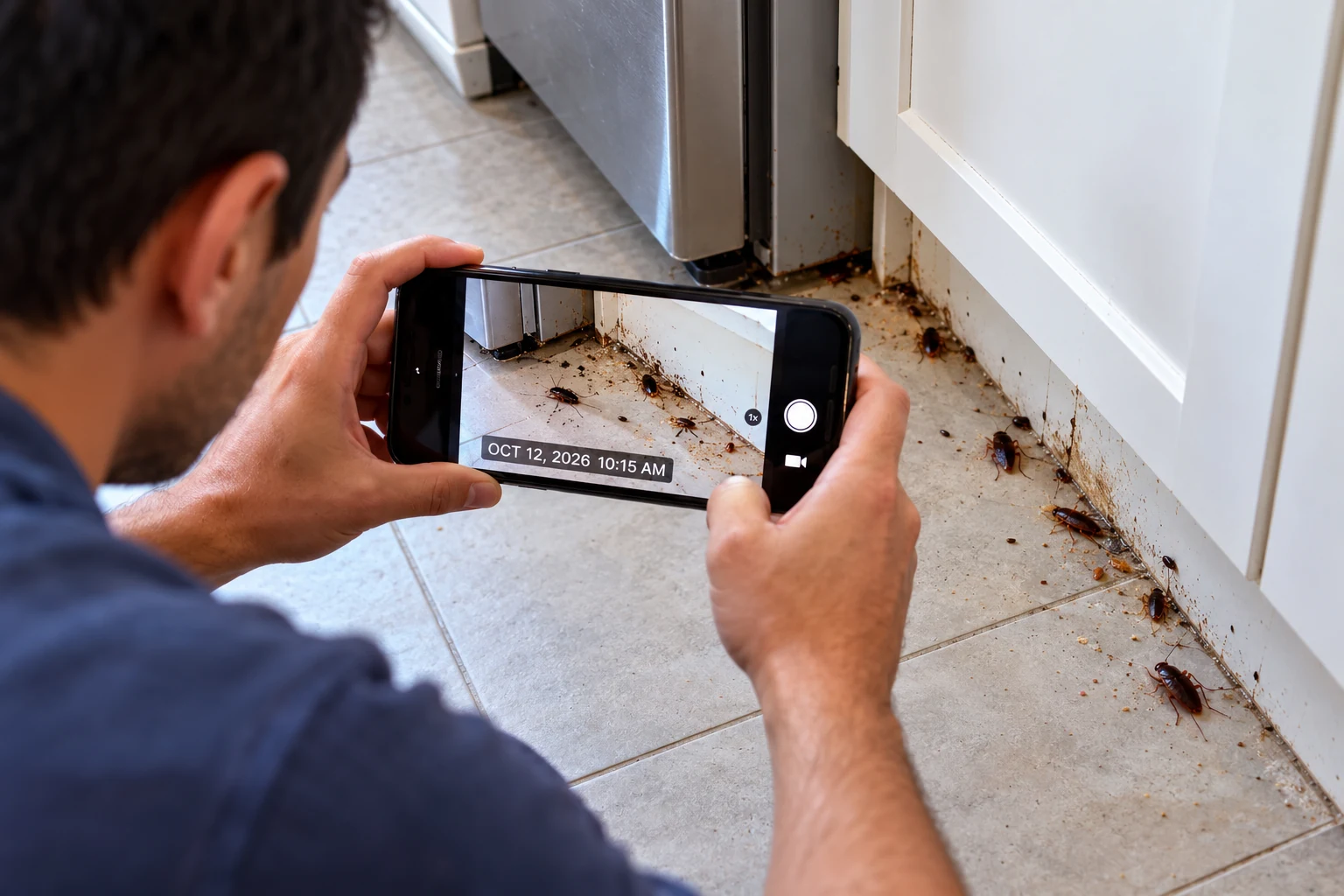
Step 1 Documentation: Capture clear date-stamped photos and video of pests and droppings along baseboards and pantries. -
Catch Specimens on Sticky Traps
Put down sticky glue traps and seal captured bugs in a clear Ziploc bag. Bringing physical specimens to court proves the exact pest species.
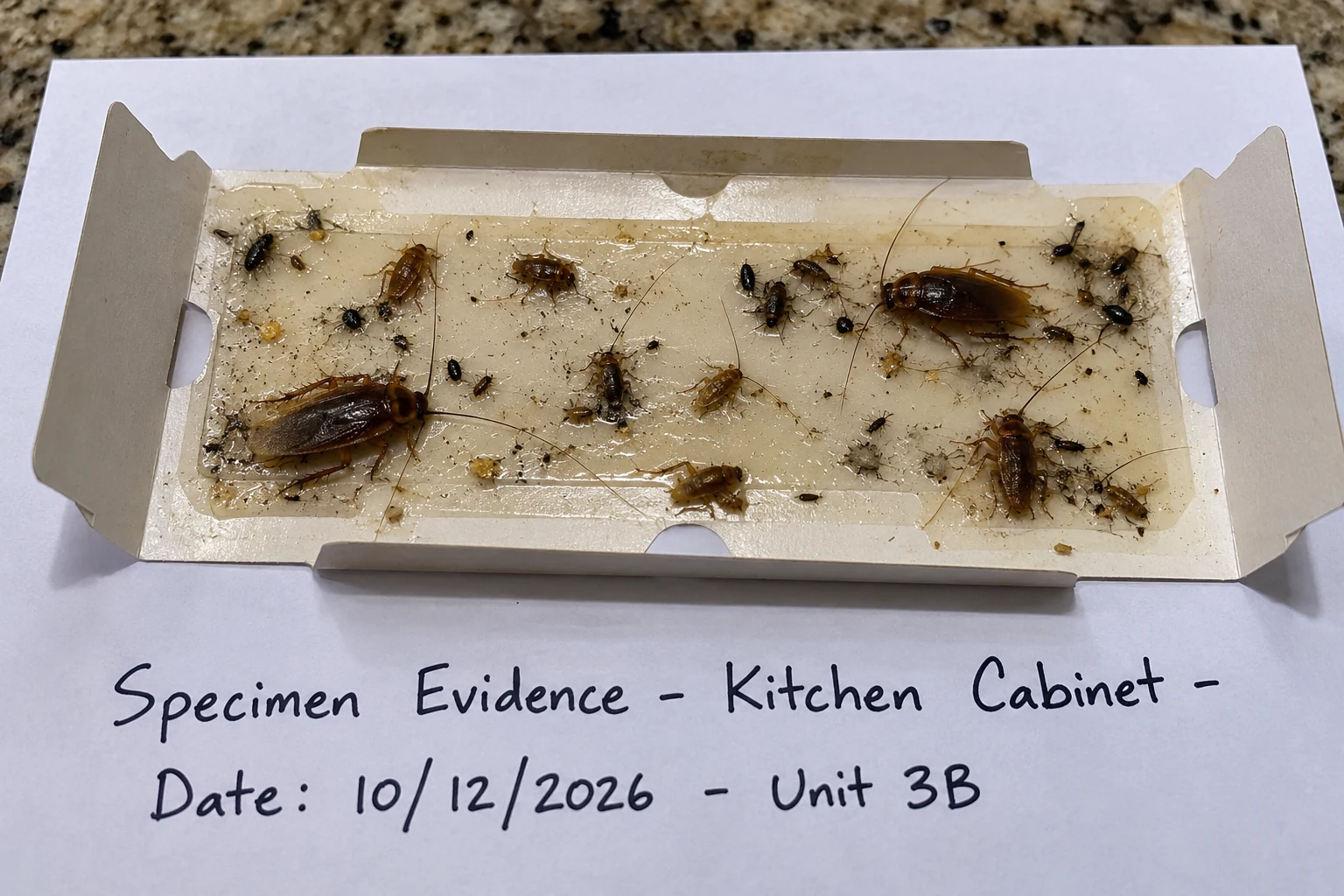
Step 2 Physical Evidence: Place sticky glue traps and preserve captured specimens to conclusively prove the pest species in court. -
Send the Written Demand Letter
Copy our demand letter above and mail it via Certified Mail with Return Receipt to start your landlord's legal countdown clock.
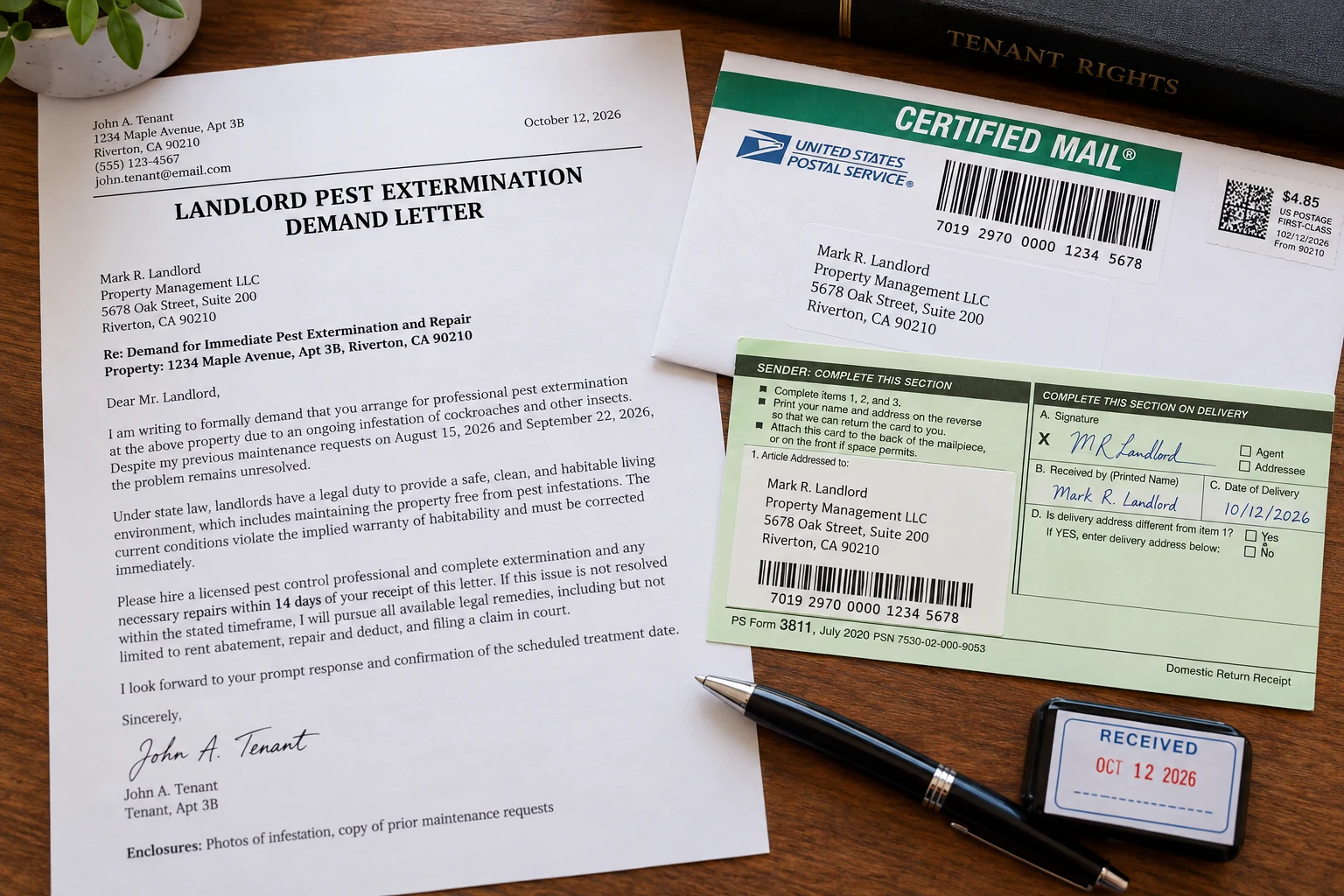
Step 3 Formal Notice: Deliver your demand letter via USPS Certified Mail with Return Receipt to start the landlord's statutory repair countdown. -
Call City Health Code Enforcement
Ask your local city or county health department for an official inspection. A municipal Notice of Violation is neutral, indisputable proof for the judge.
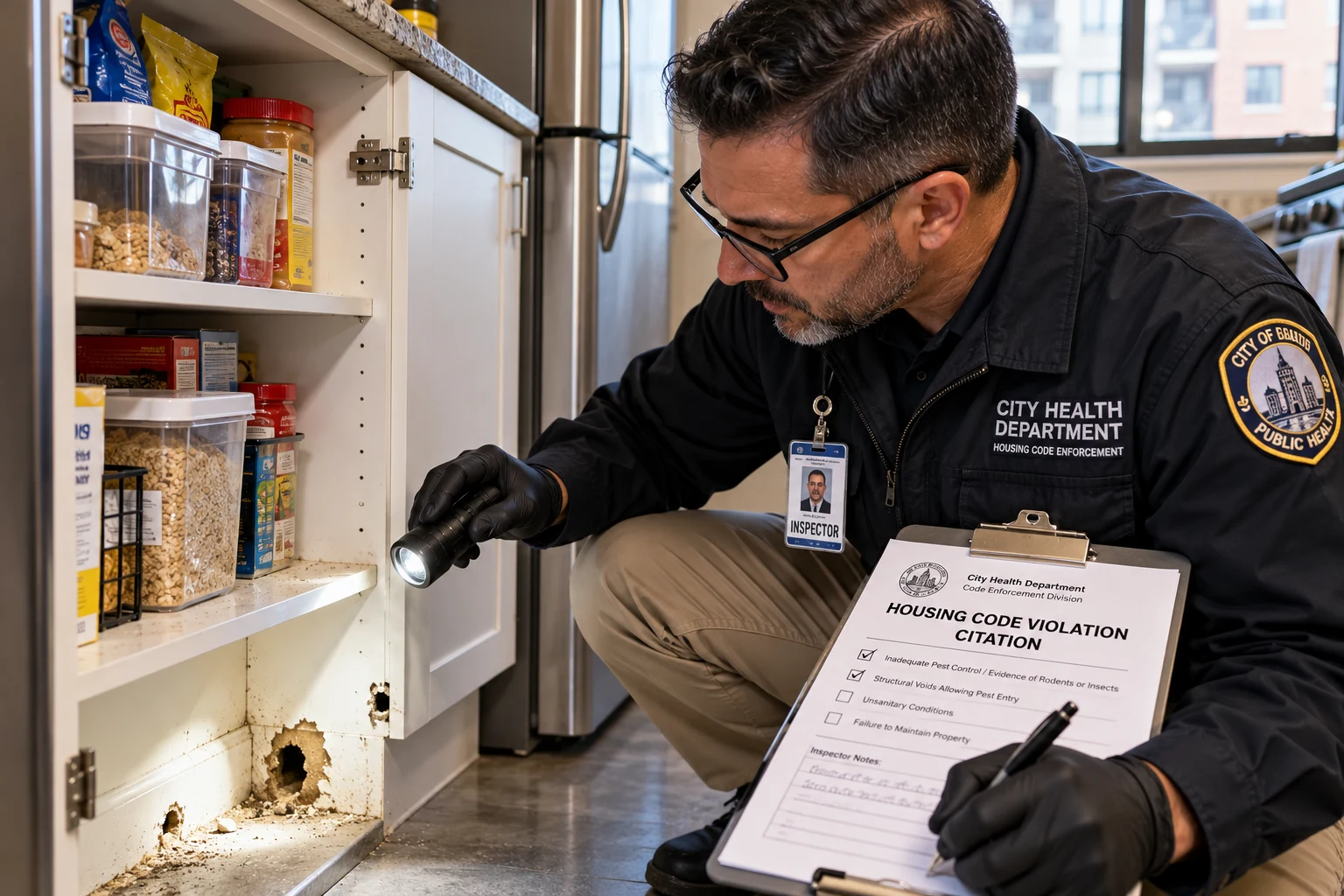
Step 4 Government Inspection: Request an official health department inspection to produce an independent municipal Notice of Violation. -
Save Every Receipt
Save receipts for bug sprays, laundry loads, replacement groceries, ruined furniture, and hotel stays.
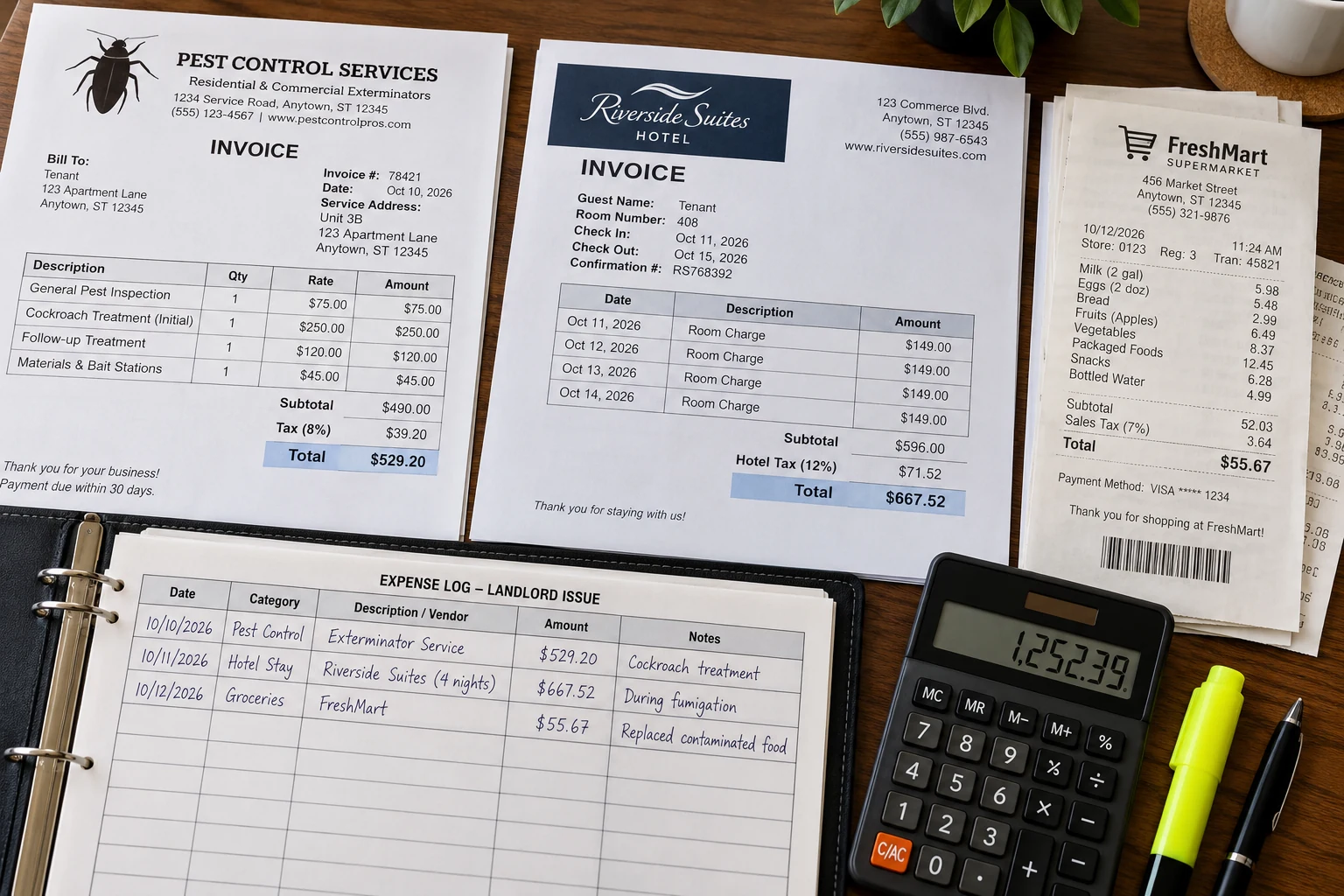
Step 5 Financial Ledger: Maintain an itemized ledger of exterminator invoices, hotel receipts, and replacement grocery costs. -
File in Small Claims Court
If the landlord refuses to pay, file a Small Claims lawsuit for your rent refund and ruined belongings. Filing fees cost only $20–$75, and you represent yourself.
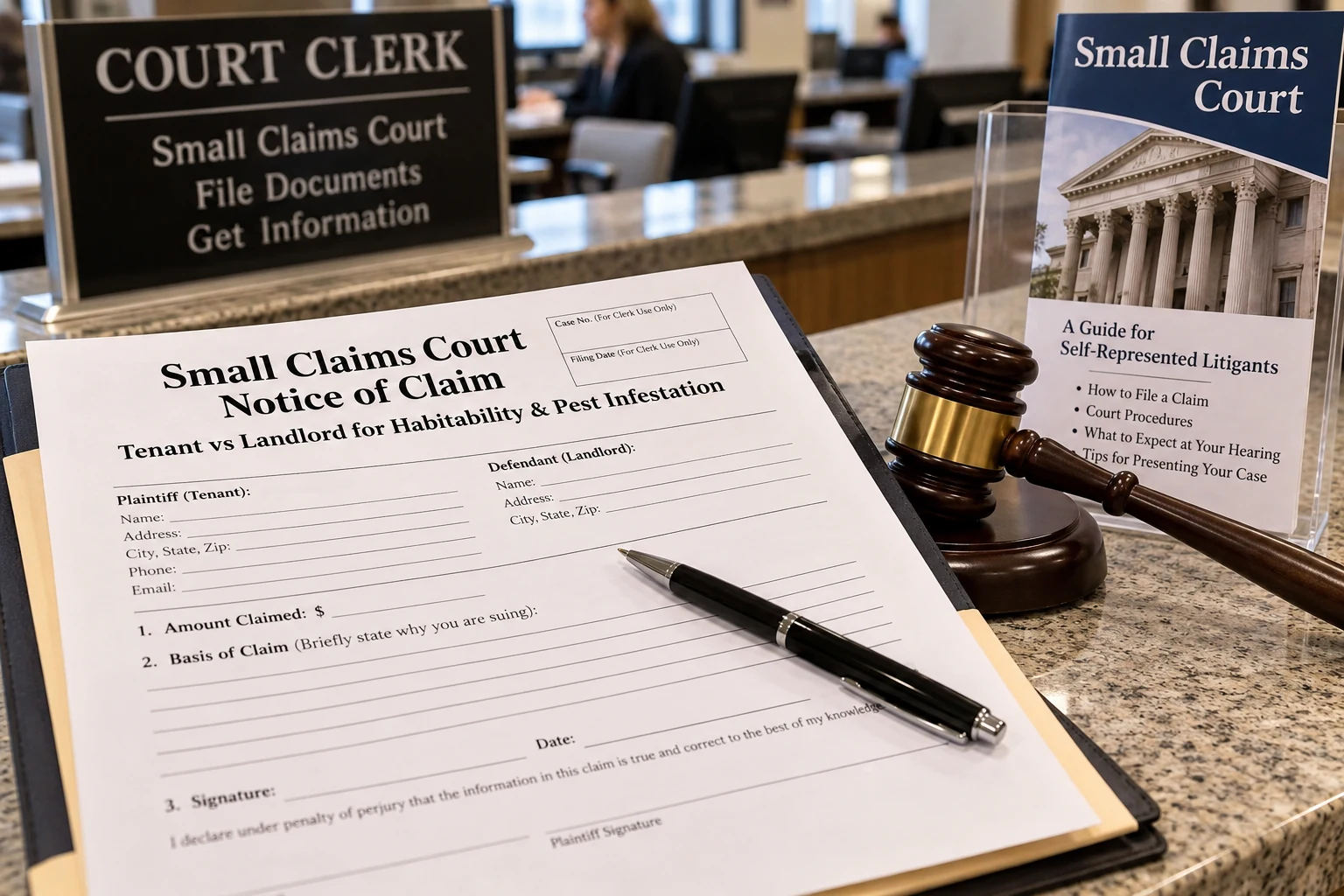
Step 6 Court Action: File your claim at the Small Claims clerk counter to recover rent refunds, property damages, and court costs.
How Much Compensation Can You Recover for Pest Infestations?
When taking your landlord to Small Claims Court or Housing Court, financial recovery is determined by statutory damages categories, proven out-of-pocket losses, and rent reduction formulas:
| Recovery Category | Calculation Standard | Statutory Authority & Limits |
|---|---|---|
| 1. Proportional Rent Abatement | Refund of 20% to 50%+ of monthly rent for every month active vermin infested the living space after notice. | Warranty of Habitability. |
| 2. Exterminator & Trapping Receipts | Full reimbursement of out-of-pocket pest control treatments and structural sealing under state cure laws. | State repair-and-deduct statutes. |
| 3. Specific Pest Compensation | See specialized damage guides: rats & wiring, cockroaches & appliances, bed bugs, and termites. | Species-specific tort damages. |
Small Claims Filing Limits: Most tenants resolve these disputes without hiring an attorney in Small Claims Court. Maximum claim limits vary by state: for example, $12,500 in California (California Courts Self-Help), $10,000 in New York City (NY Courts Small Claims), and $20,000 in Texas (Texas Judicial Branch). If your total damages exceed small claims thresholds, you may file in standard civil district court.
Frequently Asked Questions
Never just keep rent money in your pocket without following your state's legal process, or your landlord can evict you for nonpayment. In many states, you can either use "Repair and Deduct" (hiring an exterminator yourself and subtracting the receipt from rent) or deposit your rent into an official court "Rent Escrow" account until the pests are gone.
Yes, in most cases you can still hold the landlord responsible. State habitability laws strictly override unfair lease clauses in apartment buildings and multi-unit rentals. A landlord cannot shift the legal duty to pay for building-wide pests, pests present at move-in, or pests entering through holes in exterior walls and roofs onto an individual tenant.
Yes, under the legal rule called Constructive Eviction (breaking your lease without penalty because pests made it unlivable). Before moving out, you must give the landlord a final written notice with a firm deadline to cure the problem (usually 7 to 14 days) and ideally get an official report from the city health department to protect yourself from future rent lawsuits.
In Small Claims Court, tenants typically recover between $1,500 and $7,500 for an unaddressed infestation. This total includes a 25% to 50% retroactive rent refund for each month you lived with the bugs, full replacement costs ($500 to $2,500) for ruined mattresses, couches, or pantry groceries, and reimbursement for hotel and laundry receipts.
A single spray does not satisfy your landlord's legal duty if the infestation continues. The law requires effective eradication, which typically requires multiple treatments, treating neighboring apartments, and sealing structural entry holes in walls and pipes. If your landlord sends one person who sprays and walks away while pests return, send a follow-up written notice documenting the ongoing issue.
SueLegal is an independent educational legal publisher, not a law firm or lawyer referral service. The information provided in this guide is for general informational and educational purposes only and does not constitute formal legal advice. Residential landlord-tenant laws, repair notice periods, and statutory remedies vary significantly across state and municipal jurisdictions. If you are facing eviction, severe uninhabitable conditions, or complex litigation, consult a licensed attorney in your jurisdiction or contact your local legal aid organization. For more details on our standards, read our Editorial Policy and Legal Research Methodology.