
The Short Answer
Yes, you can sue your landlord for lead paint hazards.
If your rental home or apartment was built before 1978, federal and state laws strictly regulate lead paint. Depending on your situation, you have two ways to take legal action:
- If Nobody Is Sick Yet (Small Claims, Lease Termination & 3x Disclosure Penalties): You can sue for a rent refund, hotel and moving costs, ruined furniture/rugs contaminated by sanding dust, or 3 times (3x) your damages if the landlord knew about lead paint and hid it when you signed the lease—or if they refuse to safely fix peeling paint and sloppy renovations.
- If a Child or Tenant Tests Positive for Lead Poisoning ($100,000 to $5,000,000+ Settlements): If peeling paint, window dust, or uncontained renovations caused an elevated blood lead test (3.5 µg/dL or higher), a lead poisoning lawyer can sue the landlord's insurance company for medical care, special education/tutoring, lifelong lost earning potential, and pain and suffering at $0 upfront cost to you.
Important Legal Information
- The "Pre-1978" Rule Is the First Thing to Check: The U.S. banned lead house paint in 1978. If your building was built before 1978 (which you can check for free on Zillow or your county tax website), the law automatically treats peeling paint as a potential lead hazard.
- Hiding Known Lead Paint Triggers Triple (3x) Damages: Under federal law (42 U.S.C. § 4852d), if your landlord knew the property had lead paint or past city violations and didn't disclose it before you signed your lease, they owe 3 times your actual financial losses plus your attorney fees.
- Never Let a Handyman Dry-Sand or Scrape Old Paint: If your landlord sends a worker who scrapes or sands pre-1978 paint without plastic containment and HEPA filters, toxic lead dust settles into your carpets, couch, and air vents. That violates federal EPA renovation rules.
- Windows and Doors Are Dangerous Even If Walls Look Fine: Landlords often claim lead paint is safe if it's painted over. However, opening and closing old windows and doors grinds painted wood together, releasing invisible, sweet-tasting lead dust onto windowsills and floors where toddlers play.
- Children Have Until Age 18+ to Sue: Unlike regular lawsuits that expire in 2 or 3 years, the legal clock for a child harmed by lead paint is paused until the child turns 18—meaning you can still sue a former landlord years after moving out.
Two Ways to Sue (Even If Nobody Has Lead Poisoning Yet)
Many tenants assume they cannot take legal action unless a doctor proves a child was poisoned. That is a dangerous myth. Federal and state laws give tenants powerful legal remedies the moment peeling paint or uncontained lead dust threatens their home:
| Your Situation | What You Can Sue For | Where You File | Do You Need a Positive Blood Test? |
|---|---|---|---|
| Path 1: Peeling Pre-1978 Paint, Missing Lease Disclosure, or Messy Renovations (No One Is Sick) |
|
Small Claims Court or Housing Court (plus free complaint to City Health Dept / EPA). | NO. You only need proof of the building's pre-1978 age, photos of peeling paint/dust, or the missing federal disclosure paperwork. |
| Path 2: Child or Pregnant Tenant Has an Elevated Blood Lead Test (3.5+ µg/dL) |
|
State or Federal Civil Court (Handled by a specialized lead poisoning lawyer on contingency for $0 upfront). | YES. A venous blood lead test from your doctor (3.5+ µg/dL) plus an environmental inspection connects the medical injury directly to the rental property. |
If your landlord refuses to safely remediate deteriorating surfaces, you may also have legal grounds to terminate your lease under our master guide to suing for unsafe living conditions.
For a broader view of small claims procedures and residential liability standards, check our central guide on suing your landlord.
The "Sloppy Handyman" Trap: Why Dry-Sanding Old Paint Breaks Federal Law
One of the most dangerous ways apartment tenants are poisoned today is not from eating paint chips—it is from uncontained maintenance work. When tenants complain about cracked paint on a windowsill or porch, dishonest landlords frequently dispatch an untrained handyman with sandpaper and a scraper.
How Handyman Dry-Sanding Creates Severe Toxic Hazards
- The Fine Dust Trap: Dry scraping or machine-sanding lead paint pulverizes the lead into microscopic airborne particles. Within one hour, toxic lead dust spreads through the entire home, settling into carpets, bedding, sofas, and air conditioning ducts. A single square foot of sanded lead paint can release enough toxic dust to poison an entire multi-family building.
- The EPA Renovation, Repair, and Painting (RRP) Rule: Under federal law (40 C.F.R. Part 745), any contractor or landlord disturbing more than 6 square feet of interior paint (or 20 square feet on exterior walls) in pre-1978 housing must be EPA Lead-Safe Certified. They are required by law to provide you with the federal "Renovate Right" pamphlet beforehand, seal the work zone with heavy 6-mil plastic, mist surfaces with water to suppress dust, and clean using certified HEPA vacuums.
- Dry-Sanding and Torching Are Strictly Banned: Federal regulations completely prohibit open-flame burning, torching, heat guns operating above 1,100°F, and power-sanding without a certified HEPA exhaust shroud. Violating these standards carries federal civil penalties up to $46,989 per day from the EPA.
- Stop the Worker Immediately: If you see a worker dry-scraping, dry-sanding, or using a heat gun without plastic floor containment and HEPA vacuums, tell them to stop immediately. You have the full legal right to halt uncertified work that endangers your health.
- Photograph and Video the Scene: Capture dated photos and video showing the uncontained work area, lack of plastic sheeting, the equipment being used, and the white dust settled across your furniture and personal belongings.
- Evacuate Children and Pregnant Family Members: Immediately take children and pregnant household members out of the apartment to a clean hotel or family home. Save every hotel, meal, and transportation receipt so your landlord can be forced to reimburse them.
- Do NOT Use a Household Vacuum: Never sweep with a broom or run a standard household vacuum cleaner. Regular vacuums lack certified HEPA filters; their exhaust will blast microscopic lead dust directly back into your breathing air.
- Report to the Health Department & EPA Hotline: Call your local City/County Health Department inspector immediately, and file an emergency complaint with the National Lead Information Center at 1-800-424-LEAD.
State & City Lead Laws That Give Renters Extra Power
In addition to federal regulations, several states and major metropolitan areas have enacted strict statutes that hold landlords strictly liable for lead hazards:
| State / City | Special Lead Law Protections for Renters | Why It Beats Landlord Excuses |
|---|---|---|
| New York City (Local Law 1 & Local Law 127) | Landlords of pre-1960 multi-family buildings (and 1960–1978 buildings with known lead) where a child under age 6 resides or spends 10+ hours per week must conduct annual audits, perform certified XRF inspections, and immediately remediate peeling paint and high-friction window/door tracks. | NYC law imposes a rebuttable presumption: in pre-1960 buildings, peeling paint is automatically legally presumed to be toxic lead paint. Landlords cannot claim they "did not know" about the hazard. |
| Massachusetts (Mass. Lead Law, M.G.L. c. 111, § 199) | Whenever a child under age 6 resides in a pre-1978 home, the property owner is legally mandated to inspect and fully delead or encapsulate all lead hazards up to five feet high on walls and completely abate all windowsills. | Massachusetts applies Strict Liability: property owners are 100% financially liable for medical costs and developmental injuries to children under six, regardless of whether the landlord knew lead was present. |
| Maryland (Environment Article § 6-8) | Under the Reduction of Lead Risk in Housing Act, landlords of pre-1978 rental properties must register the unit with the Maryland Department of the Environment (MDE) and obtain a passing Full Risk Reduction Lead Certificate prior to each tenant turnover. | In Maryland courts, a landlord who fails to maintain an active Lead Certificate loses the legal right to file for eviction for non-payment of rent, shielding tenants from retaliatory filings. |
| California (Health & Safety Code § 17920.10) | Deteriorated lead paint, lead-contaminated dust, or bare soil exceeding California Department of Public Health thresholds is statutorily classified as an illegal "Substandard Building" condition. | Municipal code inspectors issue binding Notice and Orders to Abate. Landlords who fail to comply face misdemeanor prosecution, mandatory tenant relocation stipends, and civil lawsuits under our guide to suing for refusal to make repairs. |
| Illinois, New Jersey, Ohio, Pennsylvania & Michigan | Mandatory lead-safe certifications in high-risk metropolitan areas (such as Philadelphia, Cleveland, Detroit, Rochester, and Newark) and automatic public health inspections triggered by pediatric elevated blood lead reports. | Health departments issue legally binding abatement orders. If the landlord misses the deadline, tenants can pay rent into court-supervised escrow accounts until the home is certified lead-safe. |
How to Gather Bulletproof Evidence (Without Spreading Toxic Dust)
To win a lead paint claim in Small Claims Court or obtain a high-value settlement from a landlord's property insurer, you need verifiable documentation. Here is how to gather evidence safely:
Step-by-Step Evidence Gathering Protocol
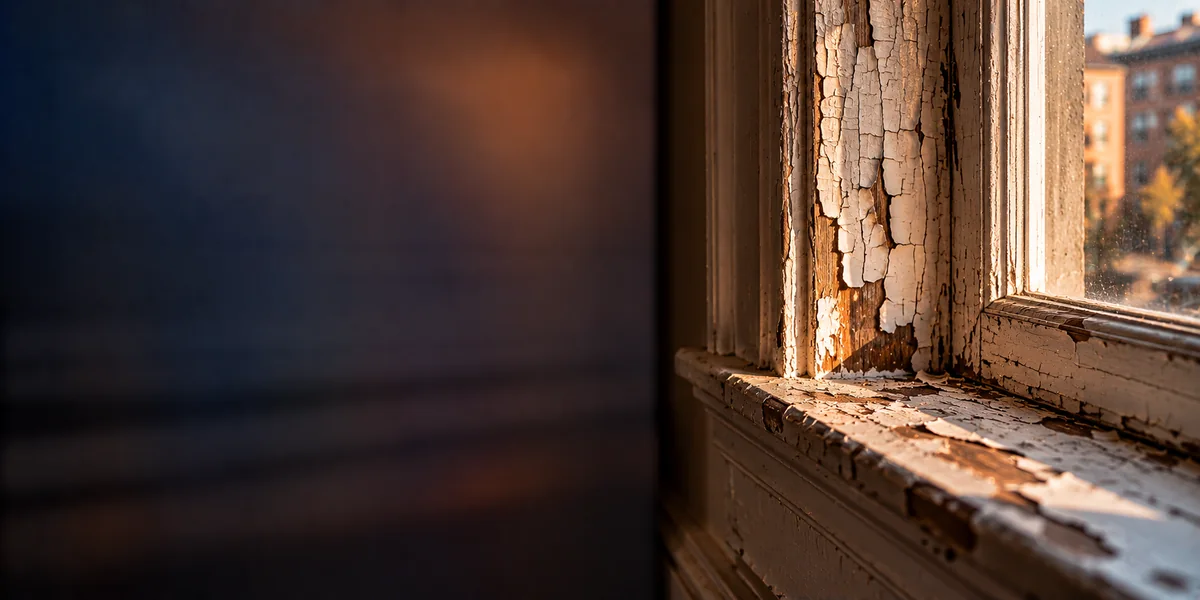
- Photograph "Alligator Skin" Cracking and Window Friction: Lead paint typically deteriorates in a distinctive rectangular cracking pattern resembling alligator hide, or sheds chalky white residue along sliding window sashes. Take clear, well-lit photos with a coin or ruler placed next to the cracked paint to document the scale.
- Use an EPA-Recognized Lead Swab for Rapid Screening: Purchase an EPA-recognized chemical test kit (such as 3M LeadCheck or D-Lead) from a hardware store. Crush the swab and rub the tip against cracked paint; if the swab turns bright red or pink, lead paint is present. Film a short video of the swab turning color.
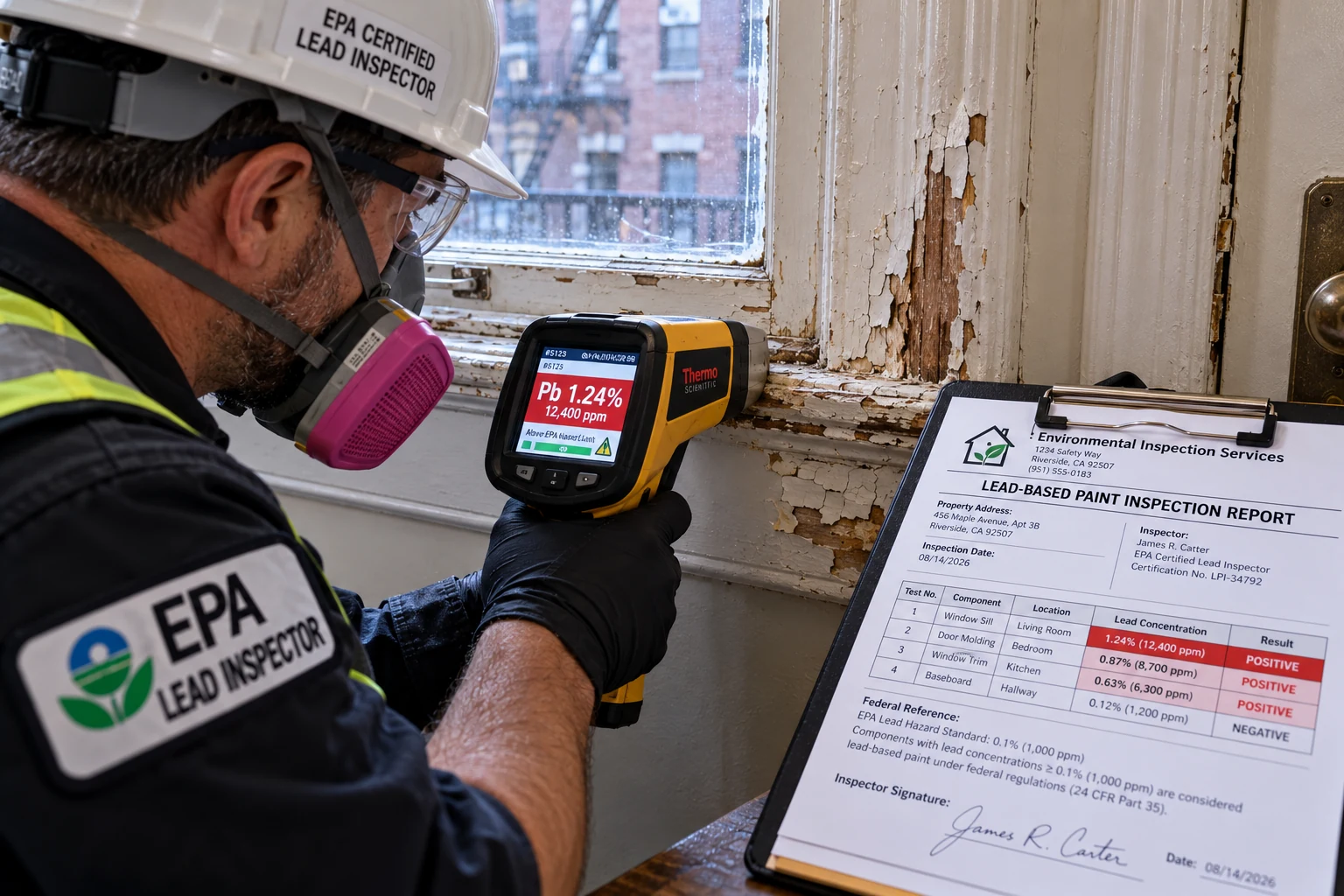
- Request an Official Municipal XRF Inspection: While DIY swabs provide quick peace of mind, courts rely most heavily on government records. Contact your local City or County Health Department or Code Enforcement division. An inspector uses a specialized X-ray fluorescence (XRF) analyzer gun that non-destructively detects lead concentrations through multiple coats of old paint and generates an official violation notice.
- Obtain a Venous Pediatric Blood Lead Test: If you have young children or are pregnant, schedule a venous blood test with your pediatrician immediately. Unlike a fingertip prick test (which can be contaminated by skin surface dust), a venous blood draw from a vein provides definitive proof of systemic lead absorption. Under CDC guidelines, any level of 3.5 µg/dL or higher triggers public health case management.
- Examine Your Lease for the Mandatory Federal Lead Addendum: Retrieve your original lease paperwork. Under federal Title X, your landlord was required to give you an EPA lead disclosure form signed by both parties, an attached warning statement, and any past inspection records. If that disclosure is absent, you have immediate grounds for statutory penalties.
If your apartment also suffers from dampness or plumbing leaks that accelerate paint breakdown, review our detailed guide on suing a landlord for mold.
Ready-to-Send Lead Paint Hazard & Disclosure Demand Letter
Before initiating formal court proceedings or breaking your lease, send this formal legal demand letter. It establishes formal notice under federal Title X and state habitability laws, gives your landlord a strict cure deadline, and requires certified EPA Lead-Safe remediation:
VIA CERTIFIED MAIL WITH RETURN RECEIPT REQUESTED
AND VIA ELECTRONIC DELIVERY (EMAIL / TENANT PORTAL)

Date: [TODAY'S DATE, e.g. October 15, 2026]

To: [LANDLORD OR PROPERTY MANAGEMENT COMPANY NAME]
Address: [OFFICIAL LEASE NOTICE ADDRESS]
City, State, Zip: [CITY, STATE, ZIP]

From: [YOUR FULL NAME]
Rental Address: [YOUR APARTMENT NUMBER AND STREET ADDRESS]
Phone Number: [YOUR PHONE NUMBER]
Email: [YOUR EMAIL ADDRESS]

SUBJECT: FORMAL NOTICE OF LEAD-BASED PAINT HAZARDS AND FEDERAL DISCLOSURE VIOLATION — DEMAND FOR CERTIFIED EPA RRP REMEDIATION AND EXPENSE REIMBURSEMENT

Dear [LANDLORD OR PROPERTY MANAGER NAME],

This letter serves as formal written notice under federal law (42 U.S.C. § 4852d), state housing habitability statutes, and the implied warranty of habitability that my rental home contains serious, hazardous lead paint conditions requiring immediate certified corrective action.

1. PROPERTY AGE AND EXISTING HAZARDS:
County property records indicate that this residential property was constructed in [YEAR BUILT, e.g. 1928], prior to the 1978 federal ban on residential lead-based paint.

Active deteriorated, peeling, chipping, or chalking paint and/or hazardous uncontained paint dust are currently present in the following locations:
- [DESCRIBE LOCATIONS: e.g., Master bedroom window sill and sash friction tracks / Living room baseboards / Front porch railing / Kitchen pantry door frame].

[IF APPLICABLE — UNCONTAINED SANDING / RENOVATION DUST:]
On [DATE], maintenance personnel dispatched to this unit engaged in dry-scraping/dry-sanding without plastic containment or HEPA vacuums, contaminating living areas with toxic dust in direct violation of the EPA Renovation, Repair, and Painting (RRP) Rule (40 C.F.R. Part 745).

2. VIOLATION OF FEDERAL DISCLOSURE REQUIREMENTS:
[CHOOSE APPLICABLE OPTION:]
- At the time of lease signing, management failed to provide the mandatory federal Lead Warning Statement, signed Lead-Based Paint Disclosure Addendum, and the EPA pamphlet "Protect Your Family from Lead in Your Home," in direct violation of 42 U.S.C. § 4852d.
- Management provided disclosure paperwork but has failed to maintain the premises free from deteriorating lead hazards, breaching state habitability codes.

3. REQUIRED CORRECTIVE ACTIONS AND DEADLINE:
Because lead dust and chipping paint present an immediate life-safety and neurological hazard (particularly to young children and pregnant individuals), I hereby demand that you complete the following actions within [FIVE (5) TO SEVEN (7)] BUSINESS DAYS of receipt of this notice:
1. Retain an EPA Lead-Safe Certified contractor to perform comprehensive containment, safe stabilization, or permanent abatement in strict compliance with the EPA RRP Rule. Dry-sanding, dry-scraping, and uncertified handyman repairs are explicitly prohibited.
2. Provide alternative temporary lodging (hotel accommodations) or a 100% daily rent credit for all days during which containment and hazardous work are being performed.
3. Reimburse me in the amount of $[AMOUNT, e.g. $1,200] for out-of-pocket expenses incurred to date, including independent testing fees, hotel accommodations, HEPA cleaning equipment, and personal belongings ruined by toxic dust (itemized receipts attached).
4. Provide a retroactive rent refund of $[AMOUNT, e.g. $1,800] representing the diminished rental value of the home during the period of unaddressed lead contamination.

4. NOTICE OF LEGAL ACTION:
If certified remediation is not scheduled and confirmed in writing within the statutory deadline above, I will immediately exercise all legal remedies without further notice, including:
- Filing an emergency complaint with the City/County Department of Health and the U.S. Environmental Protection Agency (EPA) Lead Enforcement division.
- Exercising statutory rights to terminate the lease immediately due to constructive eviction, holding you liable for all relocation expenses.
- Initiating legal proceedings in court for actual damages, statutory treble damages (3x financial losses) under 42 U.S.C. § 4852d, and statutory attorney fees.

Please contact me immediately in writing at [YOUR EMAIL ADDRESS] to confirm inspection and remediation dates.

Sincerely,

_________________________________________
[YOUR SIGNATURE]

[YOUR PRINTED NAME]
Tenant at [YOUR APARTMENT NUMBER]
How to Send This Letter So It Counts in Court:
- Fill in the brackets: Replace all bracketed information with your building's year built, unit number, hazard locations, and actual financial expenses.
- Upload to the tenant portal or email: Send an electronic copy immediately so management has same-day timestamped proof of your notice.
- Send via USPS Certified Mail: Go to the post office and mail the signed letter via Certified Mail with Return Receipt Requested (the green card). Keep the receipt and tracking confirmation as primary evidence for a judge.
How Much Can You Recover for Lead Paint Violations?
When taking your landlord to Small Claims Court or Housing Court, financial recovery is determined by statutory damages categories, proven out-of-pocket losses, and rent reduction formulas:
| Recovery Category | Calculation Standard | Statutory Authority & Limits |
|---|---|---|
| 1. Statutory Treble (Triple) Damages | Federal law awards three times the tenant's actual damages if landlord failed to provide the EPA lead disclosure pamphlet before lease execution. | Residential Lead-Based Paint Hazard Reduction Act, 42 U.S.C. § 4852d. |
| 2. Mandatory Legal Fees & Costs | Full statutory recovery of attorney fees and expert witness testing costs for prevailing tenants. | 42 U.S.C. § 4852d(b)(3). |
| 3. Pediatric Medical Monitoring & Care | Past and future medical monitoring, cognitive therapy, and educational assistance for elevated blood lead levels (BLL $\ge 3.5\mu ext{g/dL}$). | CDC Lead Reference Standards; Toxic Tort Law. |
Small Claims Filing Limits: Most tenants resolve these disputes without hiring an attorney in Small Claims Court. Maximum claim limits vary by state: for example, $12,500 in California (California Courts Self-Help), $10,000 in New York City (NY Courts Small Claims), and $20,000 in Texas (Texas Judicial Branch). If your total damages exceed small claims thresholds, you may file in standard civil district court.
Frequently Asked Questions
Yes. If your pre-1978 apartment has peeling or chipping lead paint, toxic lead dust, or the landlord hid known lead hazards when you signed the lease, you can deliver a formal written cure notice. If the landlord fails to complete certified remediation, you can have the local health department cite the property and terminate your lease under constructive eviction without paying termination fees.
In most states, intact lead paint sealed beneath sound paint layers on flat walls does not legally require immediate removal. However, if lead paint exists on friction surfaces—such as windowsills, window sashes, and door frames that grind together when opened—or if a child under age 6 resides in jurisdictions with strict rules like Massachusetts or New York City, the landlord must abate or encapsulate those friction surfaces.
In Small Claims Court, claims for rent refunds, emergency hotel stays, moving expenses, and ruined rugs or furniture from uncontained sanding dust typically recover $2,500 to $12,500—or up to triple (3x) that amount under federal disclosure penalty rules. In general civil court, personal injury lawsuits where a child suffers an elevated blood lead level regularly settle between $100,000 and $2,000,000+ depending on the child's blood lead level and long-term educational or cognitive impacts.
Under federal Title X (42 U.S.C. § 4852d), landlords of pre-1978 properties must provide the EPA lead booklet and a signed disclosure form before lease signing. Reporting violations to HUD or the EPA can trigger federal administrative fines exceeding $21,000 per violation. Furthermore, if the landlord knew about lead hazards and concealed them, you can sue in federal or state court for triple your actual financial damages plus reasonable attorney fees.
Yes. Under the legal doctrine of tolling the statute of limitations for minors, the legal deadline to file a lawsuit for childhood lead poisoning is paused in almost every state until the child reaches 18 years of age. Even if you vacated the rental property several years ago, an attorney can file a claim as long as pediatric blood test records, medical evaluations, and tenancy records document the exposure.
SueLegal is an independent educational legal publisher, not a law firm or lawyer referral service. The information provided in this guide is for general informational and educational purposes only and does not constitute formal legal advice. Residential landlord-tenant laws, repair notice periods, and statutory remedies vary significantly across state and municipal jurisdictions. If you are facing eviction, severe uninhabitable conditions, or complex litigation, consult a licensed attorney in your jurisdiction or contact your local legal aid organization. For more details on our standards, read our Editorial Policy and Legal Research Methodology.