
Key Points to Know
- Online Rental Listings Are Legally Binding Commercial Advertisements: Landlords cannot publish deceptive listing prices on Zillow, Apartments.com, or social media to lure renters, then spring undisclosed mandatory fees during lease execution.
- "Junk Fees" Violate Emerging State and Federal FTC Guidelines: Hiding mandatory trash valet, administrative, package locker, or amenity fees that were omitted from advertised rent violates consumer protection laws.
- Preserve Listing Evidence Before the Ad Disappears: Always take timestamped screenshots and PDF printouts of the original online rental advertisement showing listed prices and included amenities.
- Distinguish Listing Advertising from Physical Unit Misrepresentation: False advertising addresses deceptive marketing and undisclosed fees, whereas misrepresenting the rental property covers pre-lease lies, hidden defects, and model unit bait-and-switch.
- Demand Enforcement via State Attorney General or Small Claims: Filing a complaint under state UDAP statutes unlocks statutory damages, civil penalties, and attorney fee awards against commercial landlords.
What Constitutes Illegal Landlord False Advertising?
Rental housing is a consumer product. Just like retail merchants and automobile dealerships, landlords and property management conglomerates are strictly prohibited from publishing false, deceptive, or misleading advertisements to solicit lease agreements.
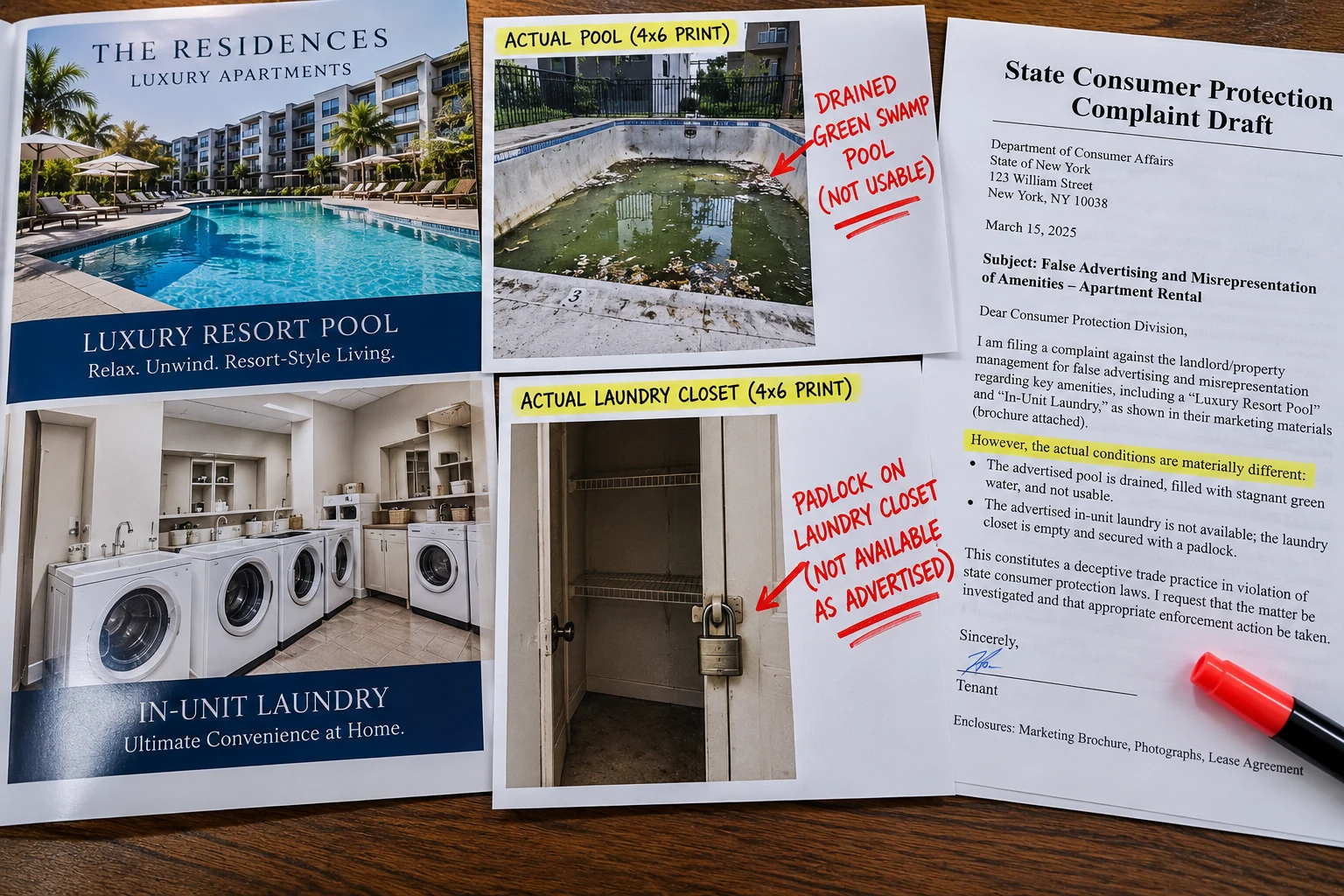
Illegal landlord false advertising typically encompasses three common deceptive practices:
- Bait Pricing & Hidden Mandatory Fees: Advertising an apartment for "$1,900/month" when the minimum mandatory move-in payment requires an unadvertised $250 monthly technology fee, $100 trash fee, and $75 administrative fee. Under FTC pricing rules and state consumer protection statutes, mandatory non-optional fees must be incorporated into the prominently advertised base price.
- Phantom Amenities & Misleading Renderings: Promoting a "24-hour resort swimming pool, state-of-the-art fitness center, and co-working lounge" in marketing brochures when those facilities are condemned, permanently closed, or scheduled for demolition.
- Fictitious Concessions: Advertising "Two Months Free Rent" but structuring the lease so that the tenant is charged retroactive back-charges or excessive lease penalties if they vacate at the natural end of the lease term.
If the landlord lied about the physical condition of the apartment itself or concealed toxic hazards, review our dedicated guide on suing your landlord for misrepresenting the rental property and our guide on breach of lease lawsuits.
Suing Under State Unfair and Deceptive Trade Practices Acts (UDAP)
Every state has enacted a Deceptive Trade Practices Act or Consumer Protection Act—commonly referred to as UDAP statutes. These laws allow deceived tenants to file private lawsuits against property management companies that employ deceptive marketing.
The primary advantage of asserting a consumer fraud claim rather than a simple breach of contract is the availability of statutory penalty multipliers:
- Texas Deceptive Trade Practices Act (DTPA): Authorizes up to three times actual economic damages and mental anguish damages for knowing and intentional false advertising.
- California Unfair Competition Law (UCL - Bus. & Prof. Code § 17200): Prohibits unlawful, unfair, or fraudulent business acts and deceptive advertising, allowing restitution of all improperly collected fees.
- New York General Business Law § 349: Outlaws deceptive acts and practices in business and commercial leasing, awarding statutory damages and attorney fees.
- Massachusetts Chapter 93A: Grants 2x to 3x multiple damages upon proof that the landlord engaged in willful or knowing unfair or deceptive leasing practices.
How to Document False Advertising and Recover Your Losses
To successfully recover compensation in Small Claims Court for deceptive advertising, follow these strategic documentation steps:
- Archive the Public Listing: Save a complete PDF printout and screenshot of the online listing on Zillow, Redfin, Trulia, or Apartments.com, ensuring the timestamp and URL are visible.
- Compare Lease Terms to Advertised Pricing: Highlight discrepancies between the advertised rent and the final lease terms, specifically noting mandatory fee addenda that were never disclosed in writing prior to application submission.
- Submit a Formal Pre-Litigation Demand: Deliver a formal written demand letter citing your state's Deceptive Trade Practices Act, demanding immediate refund of the undisclosed charges or lease cancellation.
For additional resources on tenant legal rights, visit our master Tenant Rights Directory, explore remedies for constructive eviction, or review your rights regarding security deposit recovery.
Frequently Asked Questions
Yes. Advertising an apartment at one price and then refusing to lease it unless the tenant pays mandatory unadvertised fees constitutes unlawful "bait-and-switch" pricing under state Consumer Protection and Deceptive Trade Practices Acts.
If the online advertisement explicitly stated parking was included and you relied on that claim when submitting your application and signing the lease, you can demand that the landlord waive the parking fee or sue in Small Claims Court for the monthly fair market cost of parking across your entire tenancy.
Yes. Material false advertising that induces a tenant to execute a lease gives the tenant the legal right to rescind the contract, vacate the property with zero early-termination liability, and recover their full security deposit and advance rent.
SueLegal is an independent educational legal publisher, not a law firm or lawyer referral service. The information provided in this guide is for general informational and educational purposes only and does not constitute formal legal advice. Residential landlord-tenant laws, repair notice periods, and statutory remedies vary significantly across state and municipal jurisdictions. If you are facing eviction, severe uninhabitable conditions, or complex litigation, consult a licensed attorney in your jurisdiction or contact your local legal aid organization. For more details on our standards, read our Editorial Policy and Legal Research Methodology.