
What You Should Know
- An "As-Is" Clause in Your Lease Does NOT Protect a Lying Landlord: Even if your lease says you inspected the unit and accept it "As-Is," courts in all 50 states rule that active concealment (like painting over black mold or water stains) and fraudulent misrepresentation override any "As-Is" clause.
- Silence Counts as Lying When Laws Require Written Disclosure: Landlords cannot just "stay quiet" about prior bed bugs (in CA, NY, IL, ME, CT, AZ), prior apartment flooding (in TX, CA, NJ, NY, GA, OR), lead paint (federal law for pre-1978 buildings), or shared utility meters where your bill pays for hallway lights.
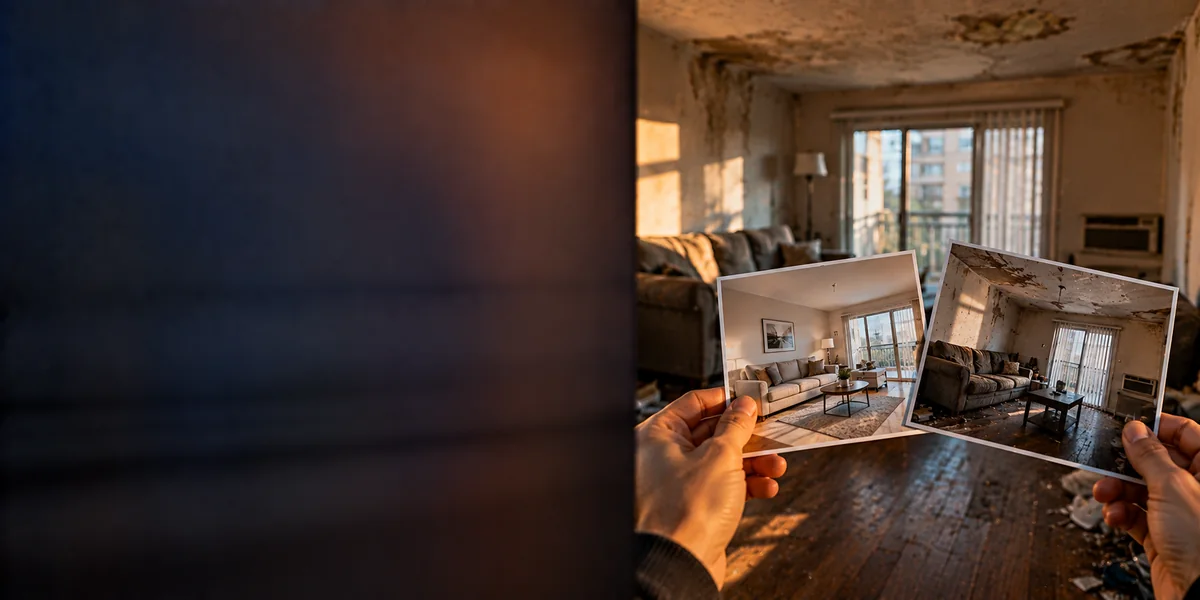
- Victim of a "Model Apartment Bait-and-Switch"? Act in the First 72 Hours: If the landlord showed you a spotless model unit (or fake photos) and handed you keys to a smaller, dirtier, or downgraded unit on move-in day, take 50 photos immediately and send a written Notice of Protest or Rescission within 72 hours so the landlord cannot claim you accepted the swap.
- Save the Zillow / Apartments.com Listing Before the Landlord Deletes It: The moment you complain that the online listing promised central AC, 900 sq ft, or included utilities, a dishonest landlord will scrub the ad offline. Screenshot the listing, save the tour emails/texts, or pull the archived Zillow listing history today.
- Use State Consumer Fraud Laws (
UDAP) to Multiply Your Payout by 3x: In states like New Jersey, North Carolina, Massachusetts, Texas, Pennsylvania, and Washington, deceptive rental representations violate state Unfair & Deceptive Trade Practices Acts—unlocking 2x to 3x Triple Damages and mandatory lawyer fees!
Calculate Your Rental Misrepresentation Lawsuit Payout
Estimate your recoverable rent refund, deposit and moving losses, and state consumer fraud triple damages.
Defect percentage determines your statutory diminished rental value under benefit-of-the-bargain standards.
Select your contract monthly rent and how many months you have endured the misrepresented condition.
Security deposit, application/broker fees, moving truck, or extra utility bills.
State Deceptive Trade Practices Acts (UDAP) provide up to 3x multiple damages plus attorney fees for willful misrepresentation.
Sales Puffery vs. Illegal Misrepresentation: What Actually Wins in Court
When you confront a landlord or leasing agent about an online ad that promised granite countertops, in-unit laundry, or quiet double-pane windows, their immediate response is predictable: "Rental ads are marketing. Every listing uses flattering language." In small claims and civil court, judges draw an uncompromising line between harmless sales puffery and illegal material misrepresentation of fact.
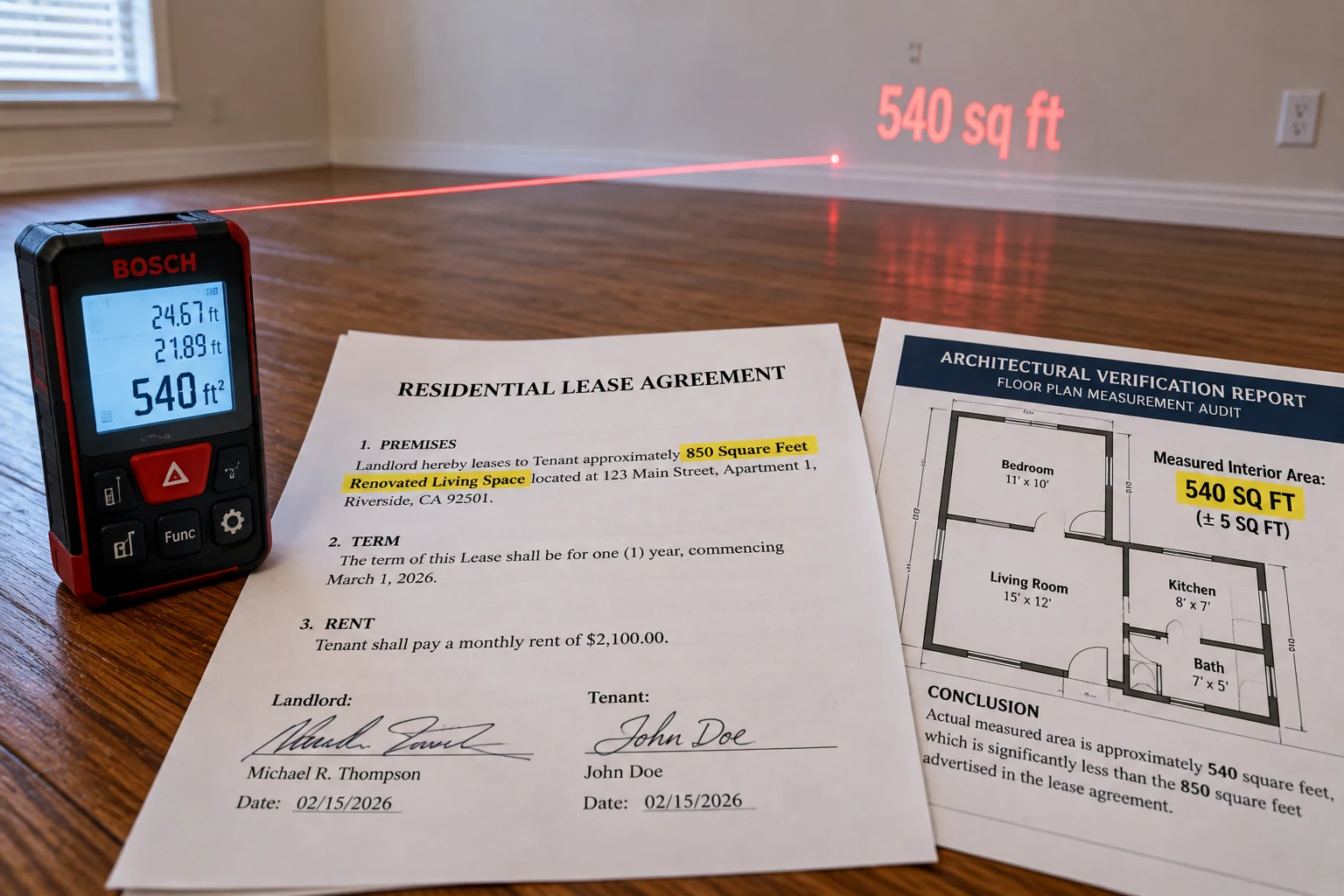
Sales puffery consists of vague, subjective opinions that cannot be measured or proven true or false. Statements like "cozy studio," "charming neighborhood," or "great views" are opinions. You cannot sue a landlord because your apartment does not feel "cozy" to you. In contrast, a material representation is a specific, measurable factual claim about the property that would influence a reasonable renter's decision to sign the lease or agree to that monthly rent.
To win a lawsuit for fraudulent misrepresentation, you must establish four core elements in court: (1) the landlord made a false statement of material fact, (2) the landlord knew the statement was false or acted with reckless disregard for the truth, (3) the landlord intended for you to rely on that statement to sign the lease, and (4) you reasonably relied on that statement and suffered financial damages. When an online listing promises features that do not exist, the ad itself serves as documentary evidence of the landlord's intent.
You can discover additional tenant protections in our comprehensive Tenant Rights Master Directory and our guide on landlord false advertising lawsuits.
Lying by Silence: 5 Things Your Landlord Must Legally Disclose in Writing
You do not need an audio recording of your landlord telling an outright lie to win your lawsuit. Under state and federal housing statutes, silence is legally equivalent to fraud when the landlord fails to provide a mandatory written disclosure before lease execution. In civil litigation, this is known as Fraudulent Concealment.
When a landlord conceals these statutory facts, you gain the immediate right to void the lease contract, recover all moving expenditures, and pursue statutory damages:
- Prior Bed Bug Infestations in the Unit or Building: Under California Civil Code § 1954.602, landlords must provide a written bed bug notice outlining infestation history and treatment protocols. In New York City, New York Multiple Dwelling Law § 69 requires landlords to furnish a certified one-year bed bug history report for the entire building prior to signing. Similar mandatory disclosure statutes protect renters in Illinois, Maine (14 M.R.S. § 6021-A), Connecticut, and Arizona. If a landlord fails to disclose active pests or recent infestations, you can review our legal guide on suing your landlord for bed bugs.
- Prior Flooding or 100-Year FEMA Flood Zone Records: Under Texas Property Code § 92.0135, landlords must deliver a separate written flood disclosure notice disclosing whether the unit flooded in the prior five years or sits in a 100-year floodplain. Similar statutory mandates exist in California (Gov. Code § 8589.45), New Jersey (N.J.S.A. 46:8-50), New York (RPL § 231-b), Georgia (O.C.G.A. § 44-7-20), Oregon, and Oklahoma. If a landlord hides flood history and storm runoff ruins your belongings, the landlord faces strict financial liability for all damaged personal property plus statutory lease termination.
- Federal Lead-Based Paint Disclosure (Pre-1978 Buildings): Under federal law (42 U.S.C. § 4852d and 24 CFR Part 35), landlords leasing residential properties constructed prior to 1978 must furnish prospective tenants with an EPA-approved lead hazard information pamphlet, disclose known lead hazards, and provide all available inspection records. Willful non-disclosure triggers federal statutory liability: tenants can recover 3x Treble Damages plus 100% of reasonable attorney fees.
- Known Toxic Mold, Methamphetamine Hazards, or Asbestos: Under California Health & Safety Code § 26147, residential landlords must disclose known mold exceeding permissible exposure thresholds prior to lease execution. Similar hazardous substance disclosure laws govern properties in Washington, New York, Indiana, and Montana. Rolling heavy primer paint over black mold patches 48 hours before an apartment viewing constitutes active, willful fraudulent concealment. Explore your legal remedies in our detailed guide on suing a landlord for toxic mold.
- Shared Utility Meters and "Foreign Load" Theft: Under New York Public Service Law § 52 and California Civil Code § 1940.9, landlords must disclose whether a tenant's gas or electric meter measures service outside the tenant's dwelling unit—such as common hallway lighting, laundry facilities, or a neighboring apartment. Failing to disclose a shared meter allows the tenant to demand that the utility transfer the entire account into the landlord's name and compel the landlord to reimburse 100% of past utility payments.
When a landlord violates any of these disclosure mandates, judges view the lease agreement as tainted by bad faith. The landlord cannot hide behind general lease provisions when statutory disclosures were omitted.
Why "As-Is" and Integration Clauses Cannot Save a Lying Landlord
When tenants discover major pre-existing defects or missing amenities, landlords routinely pull out the lease agreement and highlight two specific contractual clauses:
- The Integration / Merger Clause: "This agreement represents the entire understanding between the parties. No prior verbal statements, listing descriptions, or promotional representations shall have any legal effect."
- The As-Is Clause: "Tenant acknowledges having inspected the apartment and accepts the premises in their current As-Is condition, waiving all claims regarding pre-existing defects."
Landlords believe these two boilerplate sentences give them a license to deceive prospective renters. In every American jurisdiction, that belief is legally incorrect. Contract law and statutory consumer protection establish that fraud in the inducement destroys contractual immunity.
Under the Restatement (Second) of Contracts § 164 and § 214, the Parol Evidence Rule—which normally excludes outside verbal statements from overriding a written contract—has an absolute, universal exception for fraud and material misrepresentation. A party cannot use fine print in a contract to shield themselves from fraudulent conduct that convinced the other party to sign that contract in the first place.
Furthermore, residential leases are governed by the non-waivable Implied Warranty of Habitability and state Unfair and Deceptive Trade Practices Acts (UDAP). In states like California, Texas, New York, and Massachusetts, statutory rights cannot be waived by residential lease clauses as a matter of public policy. If a landlord lied on Zillow about central air conditioning, rolled paint over water damage, or promised parking that belongs to another resident, the small claims judge will admit your text messages, tour emails, and listing screenshots as direct evidence.
For related lease enforcement rules, see our comprehensive analysis on suing your landlord for breach of lease and recovering an improperly withheld security deposit.
Model Unit Bait-and-Switch: The Crucial 72-Hour Move-In Playbook
Thousands of tenants relocate across state lines or rent apartments sight-unseen after viewing virtual 3D tours or walking through a gleaming leasing office model unit. The leasing agent assures them: "The previous resident is in your unit until tomorrow, but your apartment is identical in size, layout, and quality." Then on move-in day, the tenant opens the door to warped floors, peeling laminate, roach carcasses, or missing appliances.
If you fall victim to a model unit bait-and-switch, your conduct during the first 72 hours dictates whether you recover every dollar or get trapped in a costly legal dispute.
Path 1: You Have Not Unloaded — Reject Possession Immediately (Rescission on Day 1)
If you can avoid unloading your moving truck or have alternative lodging, do not unload your boxes or spend the night in the apartment. Taking possession weakens your argument that the unit was completely unacceptable.
- Take a 3-minute continuous video walkthrough showing every flaw, damaged fixture, and missing feature. Hold up your phone showing the date and time.
- Walk directly back to the leasing office. Hand the keys to the manager, take a photo of the keys on their desk, and request a written key return receipt.
- Immediately deliver our Notice of Immediate Lease Rescission via certified mail and email. Under contract rescission, you are entitled to 100% refund of your deposit, advance rent, application fees, and reimbursement for moving truck and emergency hotel bills.
Path 2: You Must Sleep There Tonight — Move In Under Written Protest
Many renters have moving trucks parked outside with children, pets, or work obligations and cannot afford a last-minute hotel. You can move into the apartment without waiving your lawsuit—provided you establish your legal position in writing before midnight on Day 1.
- Send an email and tenant portal ticket with the exact subject line: NOTICE OF MOVE-IN UNDER PROTEST — MATERIAL MISREPRESENTATION OF UNIT [NUMBER].
- Detail every discrepancy between the advertised unit and the delivered apartment (e.g., 200 fewer square feet, broken air conditioning, unrenovated kitchen).
- State that you are occupying the space out of emergency necessity only, strictly under protest, without waiving any legal rights. This written record prevents the landlord from claiming you accepted the unit's inferior condition.
- You can then pursue a 15% to 45% monthly rent abatement retroactive to move-in day, or assert constructive eviction if conditions are unlivable.
For tenants forced out by extreme undisclosed defects, review our comprehensive legal guide on suing your landlord for constructive eviction.
How to Recover Deleted Rental Ads and Unlock 3x Consumer Fraud Damages
The moment a tenant complains that the apartment lacks the advertised features, dishonest property managers scramble to delete the listing from Zillow, Trulia, Apartments.com, and social media. Preserving evidence before the landlord erases it is essential to building an airtight legal claim.
3 Proven Ways to Retrieve Deleted Rental Listings
- Search Address Listing History on Major Portals: Even when a landlord takes an active rental listing offline, platforms like Zillow, Redfin, and StreetEasy preserve the property's public "Price and Tax History." Clicking the property's permanent address page frequently displays previous listing photos, advertised square footage, and amenities.
- Check Automated Tour Confirmation Emails: Review your inbox for automated messages received when scheduling tours through Zillow, Realtor.com, or property management portals. These automated confirmations often embed the original asking rent, advertised bedroom counts, and listed amenities.
- Capture Active Listings for Identical Units: If you reside in a multi-unit complex, property managers frequently maintain active listings for sister units using the exact same floor plan and marketing copy. Capture timestamped screenshots of those listings immediately.
Multiply Your Payout with State Deceptive Trade Practices Statutes (UDAP)
When drafting your small claims complaint, do not restrict your claim to simple breach of contract. Citing your state's Unfair and Deceptive Trade Practices Act (UDAP) elevates your lawsuit from simple contract damages to statutory double or triple damages plus mandatory legal fees:
- New Jersey Consumer Fraud Act (N.J.S.A. 56:8-19): Imposes mandatory 3x Treble Damages plus 100% of reasonable attorney fees against commercial landlords who make deceptive representations regarding residential rental housing.
- Massachusetts Consumer Protection Act (M.G.L. c. 93A, § 9): Sending a formal 30-Day Chapter 93A Demand Letter requires the landlord to make a reasonable settlement offer within 30 days. Unreasonable refusals entitle tenants to 2x to 3x Multiple Damages.
- Texas Deceptive Trade Practices-Consumer Protection Act (Tex. Bus. & Com. Code § 17.50): Allows recovery of up to 3x Economic Damages and mental anguish damages when the landlord knowingly or intentionally misrepresents residential lease terms.
- North Carolina (N.C. Gen. Stat. § 75-16), Pennsylvania (UTPCPL), Washington (RCW 19.86), and New York (GBL § 349): All provide private rights of action for deceptive leasing practices, authorizing statutory multipliers and legal fee recovery.
Formal Demand Letters: Rescission & Move-In Under Protest (Copy Ready)
Below are two formal legal demand letter templates configured to match your specific objective. Select the appropriate tab, click the copy button, and insert your specific dates and dollar figures. Delivering this notice via certified mail with return receipt requested creates an indisputable court record.
How Much Can You Recover for Rental Property Misrepresentation?
When taking legal action in Small Claims Court or Housing Court, financial recovery is calculated using established statutory remedies, documented out-of-pocket expenses, and rent reduction standards:
| Recovery Category | Calculation Standard | Statutory Authority & Limits |
|---|---|---|
| 1. Complete Lease Rescission & Deposit Return | Immediate court cancellation of the rental lease contract with 100% refund of security deposit and prepaid rent under fraudulent inducement principles. | Restatement (Second) of Contracts § 164. |
| 2. Rental Value Differential Abatement | Retroactive refund of the dollar difference between the agreed contract rent and the true degraded market value of the misrepresented unit. | State consumer protection acts. |
| 3. Relocation & Out-of-Pocket Moving Costs | Reimbursement for moving vans, packing supplies, temporary self-storage, and broker commissions incurred due to deceptive marketing. | Compensatory incidental reliance damages. |
Small Claims Filing Limits: Most tenants resolve these matters pro se (without a lawyer) in Small Claims Court. Maximum claim limits vary by state: for example, $12,500 in California (California Courts Self-Help), $10,000 in New York City (NY Courts Small Claims), and $20,000 in Texas (Texas Judicial Branch). If damages exceed local small claims thresholds, lawsuits proceed to standard Civil Court.
Frequently Asked Questions
Yes. Under the legal rule of Fraudulent Inducement, if a landlord lies about a "material fact"—something important enough that a reasonable person would not have signed the lease at that price if they knew the truth, such as hiding a roach or bed bug infestation, painting over mold, or lying about included utilities or central air conditioning—you have the legal right to rescind (cancel) the lease immediately with zero penalty and get 100% of your deposit and prepaid rent returned.
Fraud overrides an "As-Is" clause in all 50 states. While an "As-Is" or "Entire Agreement" merger clause can block minor disputes regarding visible wear you observed during an in-person tour, courts nationwide establish that a landlord cannot use boilerplate contract terms to shield themselves from active lies, false online advertisements, painted-over mold or water damage, or violations of mandatory state disclosure laws.
If the online listing was off by a negligible amount—such as 780 square feet instead of 800 square feet—or stated "approximate measurements," judges typically treat that discrepancy as minor. However, if the landlord overstated the square footage by 15% to 30% or more—such as advertising 1,000 square feet when the apartment actually measures 700 square feet, or listing a windowless interior storage room as a legal second bedroom—you can sue for a pro-rated monthly rent reduction or rescind the lease contract.
That constitutes an unlawful Bait-and-Switch. When a landlord tours a model unit or displays virtual renderings, the law requires the delivered apartment to be substantially identical in layout, quality, and functioning appliances. Document every discrepancy on move-in day: you can either reject possession on Day 1 for a 100% refund of all deposits, rent, and moving expenditures, or move in strictly under written protest and sue in Small Claims Court for the monthly diminished value.
Most states do not require landlords to volunteer historical crime or death statistics unless a specific state statute applies—such as California Civil Code § 1710.2, which requires disclosing any death on the property occurring within the prior three years. However, if you directly asked the landlord before signing whether break-ins occurred or whether adjacent neighbors generate noise complaints, and the landlord actively lied while possessing written police or incident records, that direct false statement can support an actionable claim for fraudulent misrepresentation.
SueLegal is an independent educational legal publisher, not a law firm or lawyer referral service. The information provided in this guide is for general informational and educational purposes only and does not constitute formal legal advice. Residential landlord-tenant laws, repair notice periods, and statutory remedies vary significantly across state and municipal jurisdictions. If you are facing eviction, severe uninhabitable conditions, or complex litigation, consult a licensed attorney in your jurisdiction or contact your local legal aid organization. For more details on our standards, read our Editorial Policy and Legal Research Methodology.