
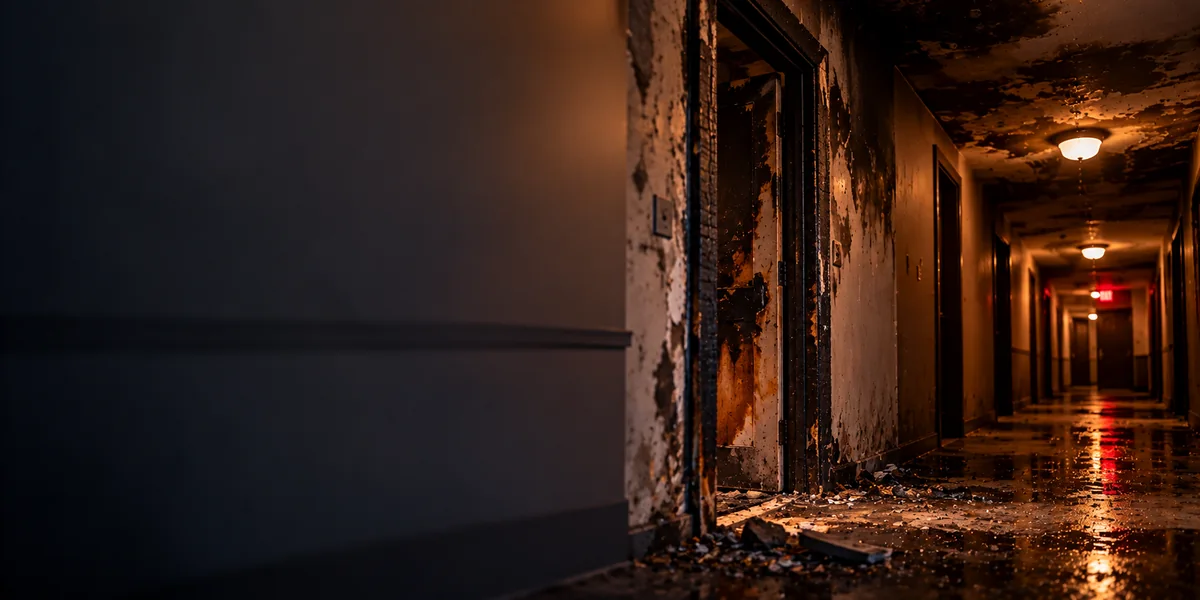
Yes, you can sue your landlord for an apartment fire injury, smoke inhalation, and total property loss—and the landlord’s Commercial General Liability (CGL) insurer is typically on the hook for $35,000 to $1,000,000+ in damages.
Your legal claims after an apartment fire proceed through two distinct compensation tracks:
- Track 1: Bodily Injury, Smoke Inhalation & Escape Trauma ($35,000 to $1,000,000+ Insurance Settlements): If your landlord violated municipal fire codes—such as failing to install working smoke alarms, padlocking fire escapes, cluttering stairways, or neglecting faulty electrical wiring—the legal doctrine of Negligence Per Se applies. The landlord’s insurance must pay for emergency room treatment, hyperbaric oxygen therapy, skin grafting, Reactive Airways Dysfunction Syndrome (RADS) lung damage, lost wages, and permanent physical and psychological suffering.
- Track 2: Immediate Casualty Lease Termination, Full Security Deposit Return & Prepaid Rent Refund ($2,500 to $15,000+ Statutory Recovery): Under state casualty damage laws across all 50 states, the moment fire, smoke, or firefighter water renders your apartment unlivable, your duty to pay rent stops as a matter of law. Your landlord cannot charge future rent, must refund every unused day of prepaid rent calculated down to the hour of the blaze, and must return 100% of your security deposit with zero deductions for fire damage.
At a Glance
- Fire Code Violations Equal Automatic Negligence ("Negligence Per Se"): If the landlord failed to provide operational smoke detectors under NFPA 72, blocked exterior fire escapes, or violated building electrical codes, the court presumes the landlord was negligent without requiring you to prove ordinary carelessness.
- Landlords Remain Liable Even If a Neighbor Started the Blaze: Property managers always attempt to shift blame onto the tenant in whose unit the fire originated. However, if the landlord failed to maintain self-closing fire doors, unsealed drywall fire barriers, or central building alarms, the landlord is legally accountable under the Fire-Spread Rule for failing to contain the blaze.
- Smoke Inhalation and Escape Trauma Win Substantial Settlements Without Flame Burns: Toxic chemical smoke containing hydrogen cyanide and burning polyurethane plastics causes permanent Reactive Airways Dysfunction Syndrome (RADS) and vocal cord damage. Fleeing down dark, unlit, or smoke-choked stairwells causing bone fractures also supports major insurance recoveries.
- Never Pay Rent or Sign Landlord Release Forms Following a Fire: Casualty damage statutes automatically terminate your rental obligations if the premises are untenantable. Never accept a "relocation stipend" or emergency hotel voucher from management if the agreement contains a release of claims or waiver of liability.
- Demand the Official Fire Marshal Origin and Cause Report Immediately: Municipal fire department investigators file a formal forensic report identifying the exact origin point, ignition source, and code violations within days. This public document provides the single most critical piece of evidence against the landlord and their insurance carrier.
The 5 Fire Code Violations That Establish Landlord Negligence Per Se
When an apartment building catches fire, landlords and their insurance adjusters invariably attempt to frame the disaster as an unforeseeable accident. In premises liability law, however, building owners are bound by strict municipal fire codes, housing maintenance statutes, and the Life Safety Code published by the National Fire Protection Association (NFPA). When an owner violates one of these mandatory public safety laws, a powerful legal doctrine shifts the burden of proof entirely in your favor: Negligence Per Se.
Under the doctrine of Negligence Per Se (codified in the Restatement (Third) of Torts § 14 and recognized in nearly all American jurisdictions), you do not need to prove that the landlord acted with general carelessness. Instead, if the landlord violated an enacted fire safety statute designed to prevent fire ignition or facilitate emergency evacuation, and that violation caused your injuries, the law presumes the landlord was negligent as a matter of law. If you are examining your landlord’s overall legal duties to maintain a habitable property, review our pillar resource on Can I Sue My Landlord? for a comprehensive survey of residential litigation.
In apartment fire litigation, five specific statutory fire code violations consistently trigger Negligence Per Se against commercial property owners:
1. Inoperable or Missing Smoke Detectors
Under NFPA 72 and local building ordinances, landlords must equip every sleeping room, immediate hallway, and common corridor with functional, interconnected smoke alarms. If alarms were missing, dead, or lacked mandatory hardwired battery backups, tenants are deprived of the critical 120 seconds required to escape, transforming minor smoke into fatal entrapment.
2. Blocked or Chained Egress Routes
NFPA 101 (Life Safety Code) mandates that all exit doors, fire escape ladders, and stairwells remain completely unobstructed and unlocked from the inside at all times. Landlords who padlock rear security gates, store maintenance equipment in stairwells, or allow metal fire escapes to rust solid commit direct statutory violations that trigger immediate liability for jump injuries.
3. Breached Fire Compartmentalization
Building codes require 1-hour or 2-hour fire-rated assemblies between separate apartments. When landlords run unpermitted plumbing pipes or electrical wiring through walls without firestop sealant, or install hollow-core doors without self-closing hinges, fire and superheated gases rip horizontally through walls rather than remaining confined to the unit of origin.
4. Substandard or Unpermitted Wiring
Violations of NFPA 70 (National Electrical Code)—such as deteriorating aluminum wiring, double-tapped circuit breakers, bypassed fuses, and ungrounded circuits—represent the leading origin of structural apartment fires. If an owner hired an unlicensed handyman instead of a licensed master electrician, liability is open and shut. See our detailed guide on Can I Sue My Landlord for Faulty Wiring? for specific electrical code standards.
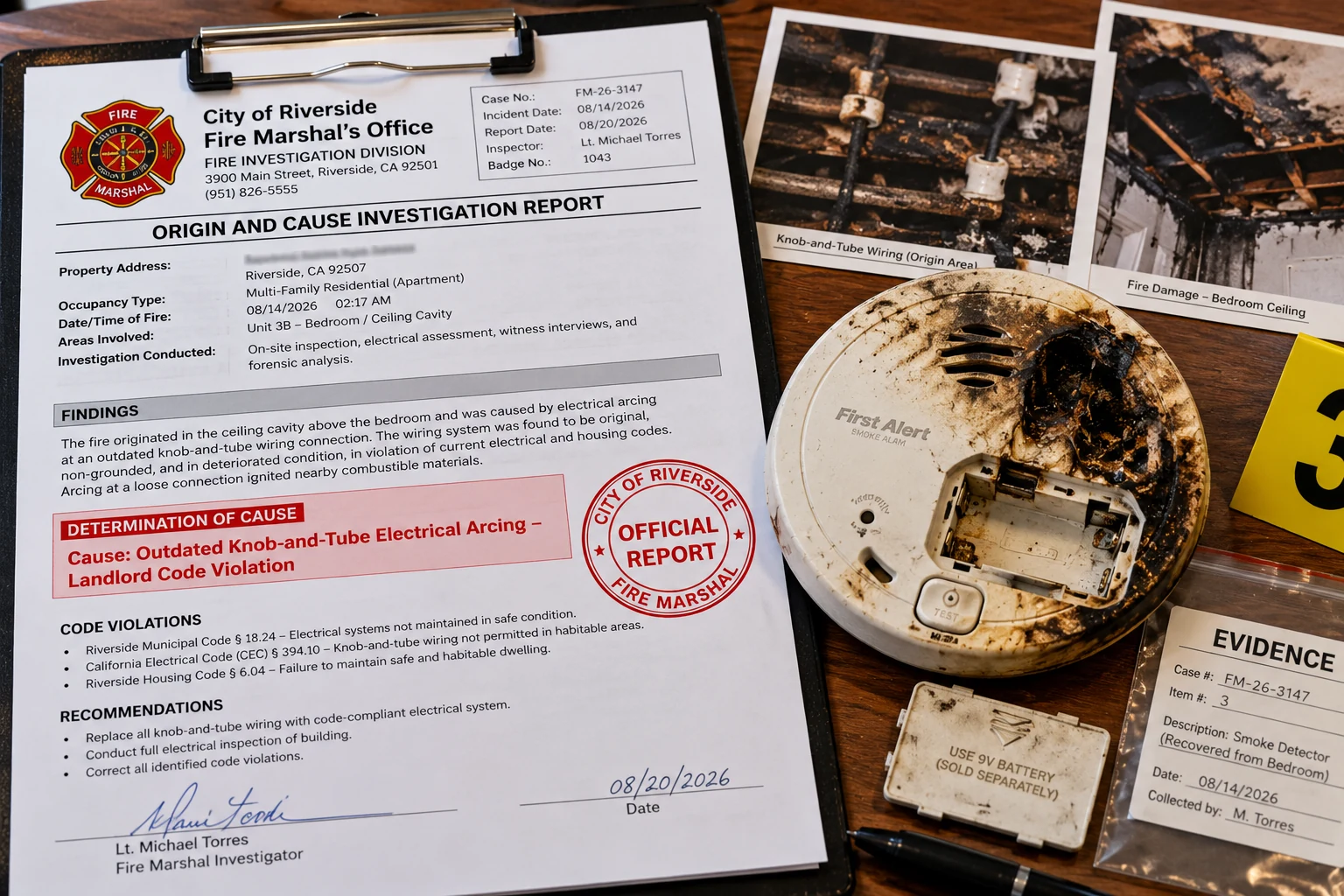
Establishing statutory non-compliance allows your personal injury attorney to file summary judgment motions on liability early in litigation. Rather than spending months disputing whether the landlord exercised "ordinary care" under general tort principles, the inquiry centers on the objective violation and the extent of your physical and economic damages. For an examination of how premises liability standards interact with ordinary tort claims, see our analysis on Can I Sue My Landlord for Negligence?.
"My Neighbor Started the Fire—Why Can I Still Sue My Landlord?" (The Fire-Spread Rule)
One of the most frequent tactics deployed by property management companies and commercial insurance claims adjusters is shifting sole culpability onto another resident: "The fire started in apartment 3B because tenant Smith fell asleep with an unextinguished candle. Our management company has zero legal fault; you have to sue Mr. Smith."
To an unrepresented tenant, this defense sounds convincing. In civil litigation, however, that argument fails. Under the well-established Fire-Spread Rule and the doctrine of concurrent causation, a landlord is independently and non-delegably responsible for the containment, warning, and suppression systems that protect adjacent residents from fire propagation.
The Legal Principle of Concurrent Proximate Cause
Tort law recognizes that a catastrophic injury can have more than one proximate cause. While the neighbor’s careless act provided the initial spark, the landlord’s negligent failure to provide operating smoke alarms, functional self-closing fire doors, or compliant firewall drywall barriers constitutes an independent concurrent proximate cause of your burns, smoke inhalation, and property loss. Both the neighbor and the property owner share joint and several liability.
Why does pursuing the landlord matter so profoundly from a financial recovery perspective? The financial realities of residential litigation make the distinction clear:
- The Negligent Neighbor Is Judgment-Proof: In the vast majority of apartment fires, the individual resident who left an appliance on or mishandled smoking materials carries zero renters insurance, or at most a minimal $25,000 personal liability policy that is instantly exhausted by a single ambulance transport and emergency department visit. Once their policy is exhausted, the individual has no attachable assets.
- The Landlord Carries $1,000,000 to $5,000,000+ in Commercial General Liability (CGL) Insurance: Multifamily property owners and corporate asset managers are required by commercial mortgage lenders to maintain multi-million-dollar CGL policies. When your legal team establishes that defective compartmentalization or absent corridor alarms allowed a small bedroom fire in 3B to engulf your apartment in 3C, the landlord’s multi-million-dollar insurer must provide the financial settlement.
- Failure to Warn Adjacent Tenants: Modern building codes require centralized or interconnected fire alarm systems. If a fire starts in a neighbor’s kitchen, building-wide alarms should alert residents on adjacent floors immediately. If the landlord disabled the system, ignored trouble signals on the main fire panel, or failed to replace dead batteries in hallway detectors, your delayed evacuation and resultant lung trauma are directly attributable to property management.
Do not allow property managers or their claims adjusters to brush you off with claims that the fire was purely a neighbor dispute. Demand to inspect the municipal Fire Marshal’s official findings regarding how the fire spread between units.
You Don’t Need Flame Burns to Win Big—Smoke Inhalation (RADS), Cyanide & Escape Injuries
There is a pervasive myth among injured renters that an apartment fire lawsuit requires visible second-degree or third-degree skin burns from open flames. While catastrophic thermal burns command enormous settlements, the reality of modern residential fires is that superheated toxic smoke and traumatic escape injuries account for over 75% of fire-related hospitalizations and generate multi-hundred-thousand-dollar recoveries.
Contemporary residential interiors are constructed almost entirely of synthetic chemical materials. Sofas, memory foam mattresses, synthetic carpeting, vinyl plank flooring, and insulation are manufactured from polyurethane, polyvinyl chloride (PVC), and chemical flame retardants. When heated, these petroleum-derived synthetics do not simply produce wood smoke; they release a lethal chemical aerosol containing:
Hydrogen Cyanide (HCN)
Generated when synthetic polyurethane foams combust. Cyanide halts cellular respiration within minutes, causing rapid loss of consciousness, pulmonary edema, metabolic acidosis, and long-term neurological impairment.
Carbon Monoxide (CO)
Binds to blood hemoglobin with 200 times the affinity of oxygen, depriving vital organs of oxygenation and causing permanent cognitive and cardiovascular injuries. For deeper analysis, consult our guide on Carbon Monoxide Poisoning Lawsuits.
Acrolein & Phosgene Gas
Corrosive chemical vapors that severely burn the epithelial lining of the bronchial tree, causing chemical tracheobronchitis, pulmonary hemorrhage, and permanent airway hyperreactivity.
Reactive Airways Dysfunction Syndrome (RADS)
The most significant long-term respiratory injury arising from apartment smoke inhalation is Reactive Airways Dysfunction Syndrome (RADS), also known as irritant-induced asthma. Unlike occupational asthma that develops over years of low-level exposure, RADS develops within 24 hours of a single, acute toxic inhalation event—such as being trapped in a smoke-filled apartment hallway.
Tenants diagnosed with RADS suffer permanent bronchial hyperreactivity. Even years after the fire, normal household dust, cold air, perfume, or mild exercise triggers severe bronchospasms, shortness of breath, and chronic coughing fits. In a personal injury lawsuit, a confirmed RADS diagnosis supported by pulmonary function tests (PFT) documenting reduced FEV1 scores establishes permanent disability, substantial future medical care expenses, and lifetime prescription inhaler costs that routinely push settlement valuations into the $250,000 to $750,000+ range.
Traumatic Escape Injuries & Severe Psychological Trauma
When a landlord’s failure to maintain emergency exit lights, functional fire escapes, or clear hallways traps residents, victims must make desperate choices. Serious physical injuries suffered during the escape are 100% compensable against the building owner:
- Window Jump Fractures: Shattered calcaneus (heel) bones, compound tibia-fibula fractures, pelvic fractures, and spinal burst fractures sustained when jumping from second-story or third-story windows because interior hallways were impassable.
- Stairwell Falls in Blind Smoke: Torn anterior cruciate ligaments (ACL), rotator cuff tears, and concussive head injuries suffered tumbling down pitch-black stairways when emergency egress battery-pack lights failed to illuminate.
- Post-Traumatic Stress Disorder (PTSD): Escaping a burning building while choking on toxic soot causes profound psychological trauma. Victims experience recurring night terrors, panic attacks upon smelling cooking smoke, and severe insomnia. For insight into emotional trauma recoveries, review our detailed guide on Can I Sue My Landlord for Emotional Distress?.
What to Do in the First 72 Hours After an Apartment Fire (Before Proof Is Cleared)
The first 72 hours following an apartment fire represent the most critical window in your legal case. While you are coping with sudden displacement and shock, property management companies and commercial insurers immediately deploy risk management teams. Their primary objective is damage control: securing the building, hauling away charred electrical components, and obtaining recorded statements or waivers from displaced tenants before an independent origin-and-cause investigator inspects the scene.
To protect your legal rights and preserve vital evidence, execute the following emergency action protocol:
The 5-Step Post-Fire Protection Protocol
Ask the on-scene Battalion Chief or Fire Captain for the official incident report number and the contact information for the municipal Fire Prevention Bureau or Fire Marshal’s Office. The Fire Marshal’s Origin and Cause Report is an objective public record that identifies where the fire started and whether smoke alarms or sprinklers were operational.
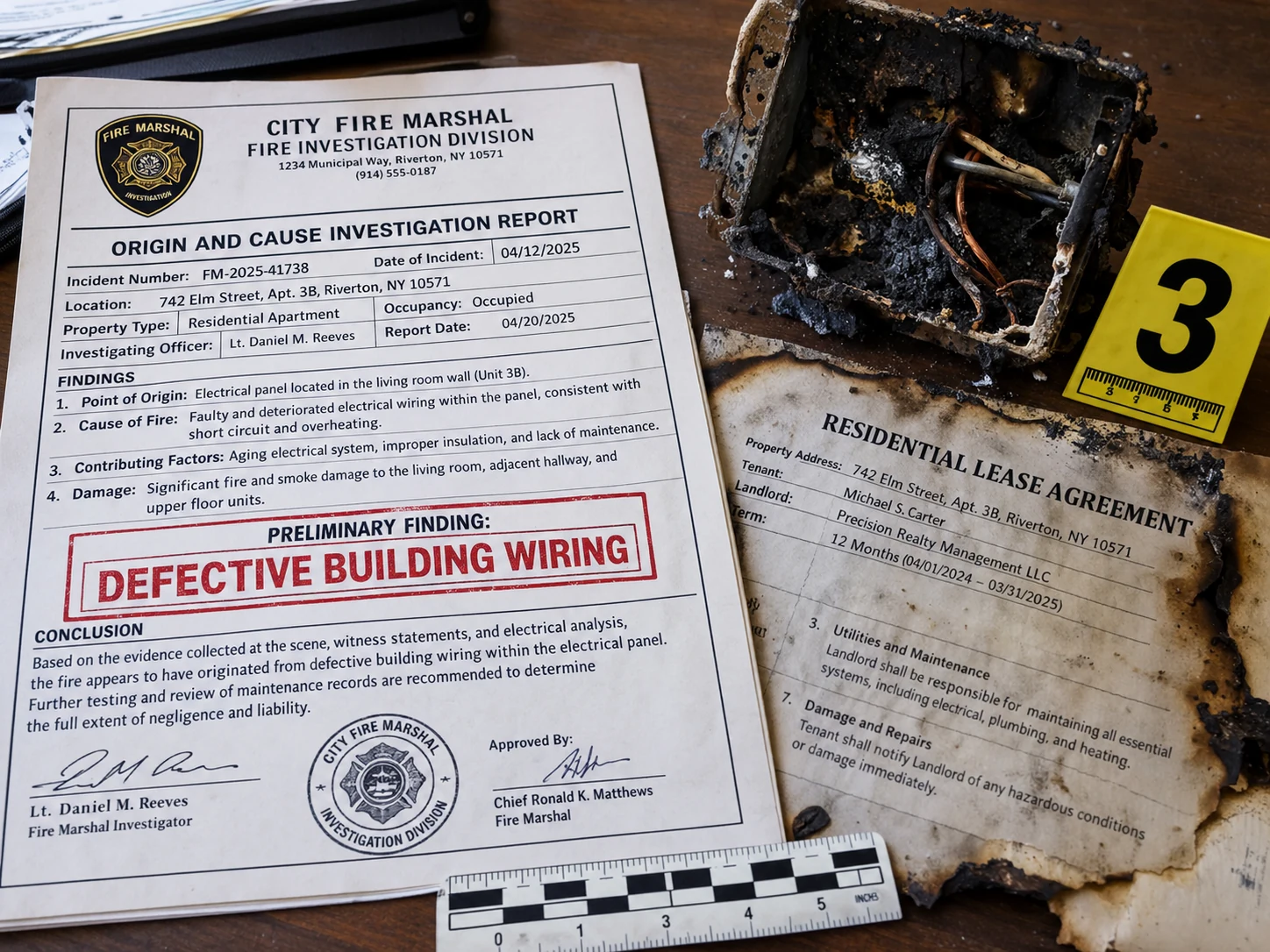
Landlords frequently hire rapid demolition and remediation contractors within 48 hours to gut the structure, tossing molten breaker boxes, defective heaters, and melted smoke alarms into commercial dumpsters. Delivering a formal Spoliation Notice puts the landlord on legal notice that destroying physical artifacts constitutes intentional spoliation of evidence, which can result in court sanctions or directed verdicts on liability.
Property managers often offer displaced tenants emergency cash, $500 Red Cross matching stipends, or temporary hotel vouchers. Inspect the paperwork carefully. Unscrupulous landlords embed broad exculpatory releases stating that accepting the funds constitutes a "full and final settlement releasing the owner from all claims arising from the casualty." Never sign anything other than a standard property itemization sheet without legal review.
Even if you believe you only inhaled a little smoke, visit an emergency department or urgent care center immediately. Inform the physician that you escaped an apartment fire involving burning plastics. Physicians must order carboxyhemoglobin blood gas levels, perform chest radiography, and check for upper airway soot deposition. Immediate medical records eliminate insurance arguments that your respiratory problems were pre-existing.
Once fire authorities clear the perimeter for brief escorted entry, photograph every room from multiple angles. Capture serial numbers on electronics, appliance nameplates, smoke detector brackets on ceilings, and the extent of black soot penetration inside closets. Create a digital spreadsheet detailing replacement costs, purchase dates, and brand names.
Your Lease, Security Deposit & Prepaid Rent Rights After a Fire (Even With Zero Physical Injury)
A common crisis facing displaced renters occurs when a landlord attempts to continue collecting monthly rent while the apartment stands charred, smoke-damaged, or boarded up. Disreputable management companies routinely threaten tenants with credit bureau reporting, eviction filings, or early lease termination penalties if the tenant stops paying rent.
Under residential landlord-tenant statutes across all 50 states, this practice is strictly unlawful. When a residential building suffers catastrophic casualty loss not caused by the tenant’s willful misconduct, the contractual lease obligations terminate as an operation of law.
| Jurisdiction | Statutory Authority | Tenant Legal Protections & Remedies |
|---|---|---|
| California | Cal. Civ. Code § 1933(4) & § 1941.1 | The hiring of a thing terminates upon the total destruction of the thing hired. The lease dissolves instantly. The landlord must return 100% of the security deposit within 21 days and refund prepaid rent calculated pro-rata to the date of the fire. |
| Texas | Tex. Prop. Code § 92.054 | Casualty loss statute: If premises are totally unusable, either party may terminate the lease by written notice. The tenant is entitled to a pro-rata refund of rent from the date the premises moved into unlivability, plus a full accounting and refund of the security deposit. |
| New York | N.Y. Real Prop. Law § 227 | Where any building is destroyed or so injured by the elements or any other cause as to be untenantable and unfit for occupancy, the lessee may quit and surrender possession with zero future rent liability. |
| Florida | Fla. Stat. § 83.63 | If the premises are damaged or destroyed other than by the wrongful or negligent acts of the tenant, the tenant may vacate immediately and terminate the rental agreement, discharging all rent obligations from the casualty date forward. |
Security Deposit Protections After Casualty Loss
Landlords frequently attempt to retain security deposits after a fire, claiming the funds are needed to cover insurance deductibles or property remediation. This is illegal. A security deposit exists exclusively to cover tenant-caused breaches or physical waste beyond ordinary wear and tear. Unless the Fire Marshal conclusively determines that you intentionally or recklessly ignited the fire, the landlord cannot deduct one cent for fire, smoke, or water damage.
If the landlord fails to return your full deposit within your state’s statutory deadline (typically 14 to 30 days after surrender of keys), you can sue in Small Claims Court for statutory bad-faith penalties—which range from double to treble damages plus attorney’s fees. For an in-depth breakdown of state-by-state return deadlines and penalty calculation formulas, consult our comprehensive guide on Can I Sue My Landlord for Withholding My Security Deposit?.
Recovering Ruined Property Without Renters Insurance
If you lacked a personal renters insurance policy at the time of the fire, do not assume your ruined personal property is a total loss. While a landlord is not an insurer of tenant personalty under pure contract principles, when landlord negligence or fire code violations caused or spread the fire, the landlord is liable under tort law for the actual cash value or replacement value of all destroyed personal property. Your clothing, furniture, computers, and household goods become part of your civil tort claim against the owner’s commercial insurance policy.
Ready-to-Send Dual-Tab Demand & Preservation Notice
To protect your physical evidence and formally establish your statutory casualty termination rights, deliver these two formal legal notices to your landlord and property management company. Tab 1 serves as an urgent Evidence Preservation and Insurance Disclosure Demand, while Tab 2 serves as a formal Casualty Lease Termination and Rent/Deposit Refund Demand.
Frequently Asked Questions (FAQ)
Calculate Your Apartment Fire Injury & Loss Settlement
Estimate your potential compensation for emergency room visits, smoke inhalation lung trauma, burn care, destroyed belongings, hotel displacement, and statutory rent refunds under commercial landlord liability insurance.
SueLegal is an independent educational legal publisher, not a law firm or lawyer referral service. The information provided in this guide is for general informational and educational purposes only and does not constitute formal legal advice. Residential landlord-tenant laws, repair notice periods, and statutory remedies vary significantly across state and municipal jurisdictions. If you are facing eviction, severe uninhabitable conditions, or complex litigation, consult a licensed attorney in your jurisdiction or contact your local legal aid organization. For more details on our standards, read our Editorial Policy and Legal Research Methodology.