
The Short Answer
Yes, you can sue your landlord for faulty wiring.
Landlords have a strict legal duty under state habitability laws and building codes to keep electrical wiring safe and up to code. Depending on whether the faulty wiring is an unfixed danger right now or already caused an accident, you have two ways to sue:
- If Faulty Wiring Caused an Electric Shock or Apartment Fire ($25,000 to $1,000,000+ Insurance Settlements): If bad wiring, an ungrounded appliance, or a wall fire injured you or destroyed your belongings, a personal injury lawyer can sue your landlord's commercial insurance policy at $0 upfront cost for medical bills, lost wages, pain and suffering, hotel relocation, and 100% of your destroyed property.
- If You Have Dangerous Wiring Your Landlord Won't Fix ($1,500 to $15,000 in Small Claims Court): Even if no fire has started yet, if your landlord ignores sparking outlets, burning smells, ungrounded wiring, or surges that fry your electronics, you can sue in Small Claims Court for rent refunds (30%–100% off rent), fried electronics replacement, hotel stays, and moving costs to break your lease.
Key Legal Points
- You Can Still Win Even If You Never Complained About the Wire Before: Because electrical wires run hidden behind drywall and inside breaker panels, courts do not expect tenants to have X-ray vision. If old wiring, unpermitted handyman work, or rodent-chewed wires cause a fire or shock, the landlord is still liable.
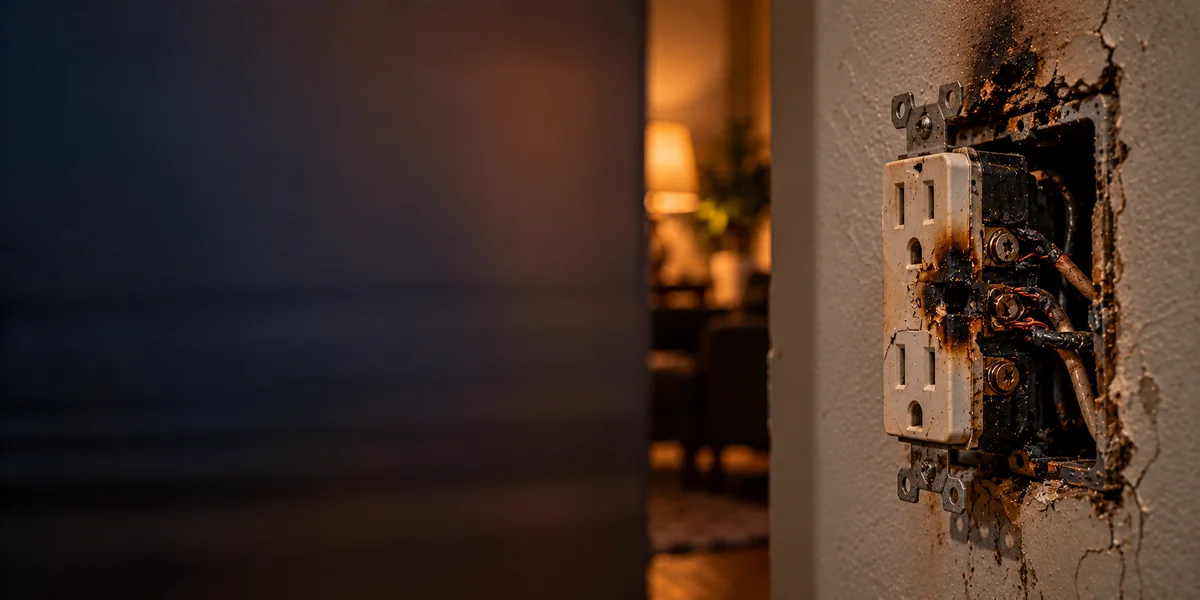
- Don't Let the Landlord's Handyman Throw Away the Burned Outlet: After an electric shock or smoking outlet, landlords rush to replace the $3 socket and toss the melted part in the trash—destroying your #1 piece of evidence. Always photograph the burned wires inside the wall box and demand in writing that the old parts be saved!
- Your Landlord Cannot Blame Their Contractor or Handyman: Under the legal rule of "Non-Delegable Duty," a property owner is legally responsible for unsafe electrical work performed by their maintenance workers or hired contractors.
- Rats, Mice & Old Renovations Are Top Causes of Faulty Wiring: If your landlord ignored a rat, mouse, or roach problem—and those pests chewed through wire insulation inside the walls—the landlord is 100% liable for the resulting electrical hazard or fire.
- Renters Insurance Does NOT Let a Negligent Landlord Off the Hook: Even if you have renters insurance, policy limits often fall short after a fire, and they don't pay a dime for your physical injuries, burns, smoke inhalation, or emotional trauma. You can sue the landlord's insurance for everything renters insurance doesn't cover (plus your deductible).
The 4 Types of Faulty Apartment Wiring That Win Lawsuits
When tenants think of electrical issues, they often think of blown fuses or broken appliances. But in a courtroom, winning a lawsuit against a negligent landlord requires showing the exact type of physical wiring defect behind your walls that breached the Implied Warranty of Habitability.
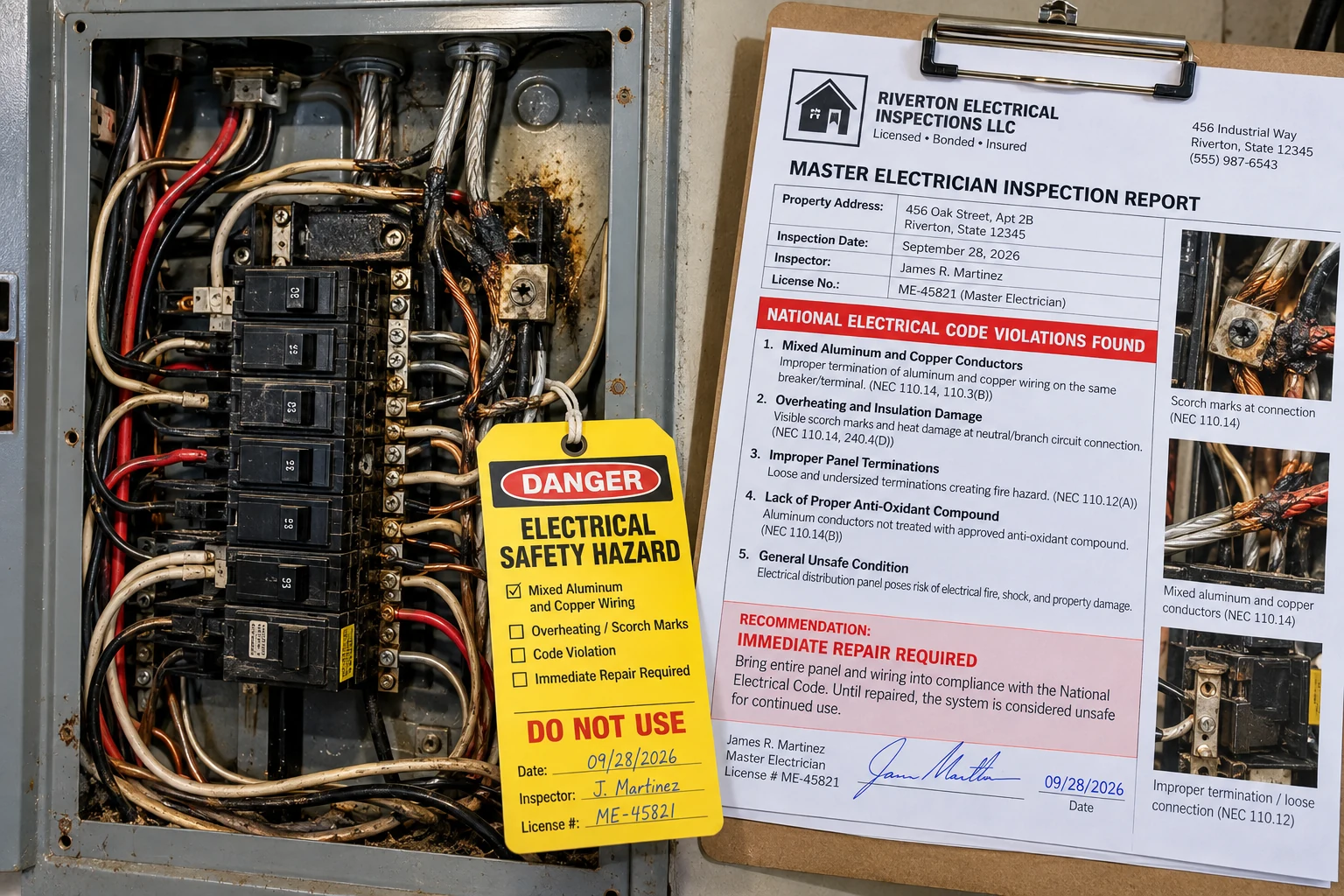
Insurance defense lawyers frequently attempt to dismiss electrical claims as routine wear and tear. Below is the official spotter's guide to the four most dangerous wiring conditions in rental properties, how to identify them, and why each represents clear legal liability:
| Type of Faulty Wiring | How to Spot It in Your Apartment | Why It Is Legally Dangerous |
|---|---|---|
| 1. Unpermitted "Handyman Special" Splices & Bootleg Grounds | Outlets loose in the wall, extension cords run through drywall, 3-prong outlets installed on old 2-wire circuits with no ground wire, or mismatched breakers. | Violates the National Electrical Code (NEC) and city permit laws—triggering Automatic Negligence (Negligence Per Se) if it shocks you or starts a fire. |
| 2. 1965–1973 Solid Aluminum Branch Wiring | Common in apartments built or remodeled between 1965 and 1973; wires inside outlet boxes look dull silver instead of copper orange; cover plates feel warm. | According to the U.S. Consumer Product Safety Commission (CPSC), old aluminum wiring is 55 times more likely to reach "fire hazard conditions" at outlets unless retrofitted with special COPALUM or AlumiConn connectors. |
| 3. Crumbling Pre-1950 Cloth-Wrapped or Knob-and-Tube Wiring | Black, frayed fabric insulation around wires behind ceiling lights or in basements; no 3rd ground prong; old screw-in round glass fuse boxes. | The 75-year-old rubber and cloth insulation turns brittle and flakes off when touched, leaving bare live metal wires touching wood wall studs. |
| 4. Rodent-Chewed Wires + Overloaded Remodel Circuits | Landlord puts modern stainless-steel kitchen appliances and AC units onto a 60-amp 1950s panel, OR ignores rats/mice scratching inside walls. | Rats and mice constantly gnaw on plastic PVC wire jackets inside walls—causing hidden arc-fault fires behind the drywall while you sleep. Review our guide on suing for rats. |
If you notice any of these signs, do not treat them lightly. For related issues like frequent tripping breakers or power outages, see our dedicated guide on suing for electrical problems.
Electrocuted or Shocked in Your Apartment? How to Prove Negligence (Even If You Never Complained Before)
Getting an electric shock when plugging in a toaster, flipping a light switch, or touching the metal handle of your refrigerator is a terrifying experience. When tenants report an electrical shock, landlords and insurance adjusters immediately deploy their standard legal defense:
The Landlord's Typical Legal Defense:
"You never sent a written repair ticket saying the outlet or switch was shocking people. Because we had no prior written notice, we cannot be held legally liable for an unforeseen accident."
In premises liability law, this defense is completely invalid when applied to concealed electrical wiring. Here are the three legal doctrines that defeat that defense and hold the landlord accountable:
- The Hidden Defect Rule (Exclusive Control Behind Walls): Under state landlord-tenant acts, tenants are not expected to have X-ray vision. You are legally forbidden from tearing open drywall, rewiring junction boxes, or opening the main service panel. Because the electrical distribution infrastructure remains under the landlord's exclusive operational control, courts hold property owners to an affirmative duty of reasonable inspection. When a wire degrades or sparks inside a wall cavity, the landlord cannot claim lack of notice for a hazard they alone had the legal right to maintain.
- The Landlord Created the Hazard (Unlicensed Handyman Work): Prior written notice is legally required only for random defects that develop on their own. If the electric shock occurred because the landlord or their unlicensed maintenance worker wired a receptacle backward, skipped installing a ground wire, or pinched a wire during a remodel, no prior notice is required. The property owner created the dangerous condition through negligence per se.
- The "Stop-and-Preserve" Rule (Don't Let Them Steal the Evidence!): The morning after you report an electric shock or smoking outlet, landlords routinely send a handyman to quickly swap out the $3 socket and throw the burned component in the dumpster. Under the legal doctrine of Spoliation of Evidence, destroying the defective item deprives you of crucial courtroom proof. Take close-up photos and videos of the melted outlet before anyone touches it, and deliver a formal written notice ordering management not to discard the damaged components.
Did Faulty Wiring Cause an Apartment Fire? How to Recover 100% of Your Losses
An apartment fire is a life-altering tragedy. Within minutes, toxic black smoke and flames can destroy your furniture, family heirlooms, clothing, computers, and peace of mind. Knowing how post-fire legal investigations work is critical to recovering full financial compensation:
Step 1: Obtain the Fire Department "Origin and Cause Report"
Whenever a fire engine responds to a structure fire, the local Fire Marshal or Municipal Fire Investigator conducts an origin-and-cause investigation. They carefully examine the char patterns ("V-patterns"), inspect the wiring inside wall studs, and test the breaker panel.
If the Fire Marshal's official report concludes the fire originated from "electrical arcing in concealed branch wiring" or "failure of an outdated breaker panel," the liability battle is won. That government document establishes proximate cause and prevents the landlord from blaming candles, cooking, or tenant appliances.
Step 2: Why Renters Insurance Is Only Half the Battle
Many renters assume their personal insurance policy solves everything. In reality, basic renters policies carry personal property limits of $15,000 to $30,000—which quickly falls short when replacing an entire household of clothing, furniture, and electronics.
More importantly, renters insurance pays $0 for bodily injury, burn scars, smoke inhalation lung damage, or psychological trauma (PTSD). It only covers personal possessions up to your policy limit minus your deductible.
Step 3: Suing the Landlord's $1,000,000 Commercial Fire Policy
Commercial apartment buildings carry substantial commercial general liability (CGL) and property casualty insurance policies, typically ranging from $1,000,000 to $5,000,000. When faulty wiring causes a fire, a personal injury and fire litigation attorney can sue the landlord's commercial carrier to recover:
- 100% of Uninsured Property Losses: Every dollar of furniture, clothing, and electronics not covered by personal insurance.
- Emergency Relocation & Hotel Expenses: Extended hotel lodging, temporary apartment leases, moving fees, and storage costs.
- Medical Expenses: Emergency room bills, intensive care treatment, burn care, and respiratory therapy for smoke inhalation.
- Pain, Suffering & Emotional Distress: Significant damages for the trauma of escaping a burning building and enduring displacement.
Fire injury attorneys handle these claims on a contingency fee basis—meaning you pay $0 upfront, with legal fees paid as a percentage of the insurance recovery.
What If a Fire Hasn't Happened Yet, But Your Landlord Ignores Dangerous Wiring?
You do not have to wait for your home to catch fire or suffer a severe electric shock before taking legal action. If your apartment has hot outlets, buzzing breakers, or visible wire splices that management refuses to address, you have powerful legal remedies:
1. Call 311 for a Free Municipal Electrical / Fire Inspection
Never rely solely on repeated text messages to a slow property manager. Contact your city's Building Inspection Department (Electrical Division) or Fire Prevention Bureau. Explain that your rental unit has sparking outlets, warm faceplates, or a smell of burning plastic.
Municipal electrical inspectors possess statutory authority to issue an official Notice of Electrical Code Violation. These citations legally mandate that the landlord hire a licensed master electrician and pull city permits within 24 to 72 hours. Learn more about local enforcement in our guide on suing for unsafe living conditions.
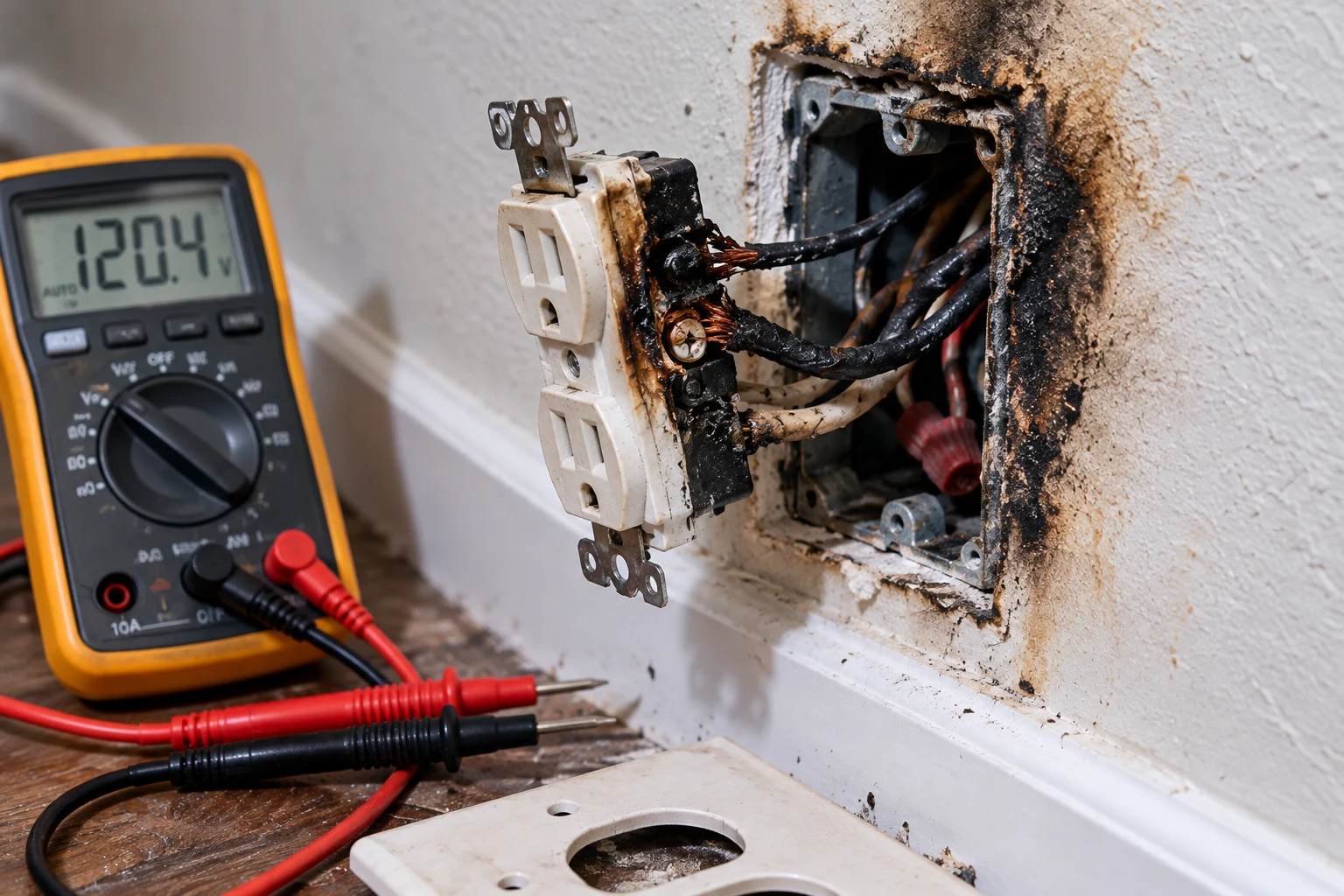
2. Plug In an $8 Receptacle Tester & Photograph the Indicator Lights
Purchase an inexpensive three-prong outlet tester at any local hardware store. Plug the tester into every receptacle in your apartment:
- A reading of "Open Ground" proves the landlord installed modern 3-prong outlets without running grounding wires—violating National Electrical Code Section 406.4.
- A reading of "Hot/Neutral Reverse" proves an amateur wired the circuit backward, creating a permanent shock hazard.
Photograph the glowing indicator lights on the tester. These dated photographs provide concrete, objective evidence for housing inspectors and court judges.
3. Break Your Lease Without Penalty or Sue for Rent Refunds
Under the legal doctrine of Constructive Eviction, living with an active, unremediated electrical fire hazard constitutes an intolerable breach of the lease. Once you have an inspection report or photo documentation and have given final written notice, you can legally terminate your lease, demand your entire security deposit back, and recover moving costs.
Alternatively, if you remain in the property, you can file an action in Small Claims Court to recover a 30% to 100% retroactive rent refund for every month you were forced to live with hazardous electrical systems. Review our comprehensive guide on suing for repairs.
Ready-to-Send Faulty Wiring Demand & Evidence Preservation Letters
Whether you need to force an emergency electrical repair or formally notify your landlord's insurance carrier following an electric shock or fire, a written legal notice is mandatory.
Select the tab below that matches your situation, fill in your specific details in the bracketed placeholders, and click Copy Letter to Clipboard or Download .TXT.
How Much Can I Recover for Faulty Wiring Hazards?
When taking your landlord to Small Claims Court or Housing Court, financial recovery is determined by statutory damages categories, proven out-of-pocket losses, and rent reduction formulas:
| Recovery Category | Calculation Standard | Statutory Authority & Limits |
|---|---|---|
| 1. Rent Abatement for Hazardous Conditions | Refund of rent paid while living with dangerous electrical hazards (e.g. spark hazards, ungrounded wiring). | National Electrical Code (NEC) & municipal housing maintenance acts. |
| 2. Fried Electronics / Appliance Replacement | Fair market value compensation for computers, TVs, and appliances destroyed by voltage spikes or open neutrals. | Tort negligence property damages. |
| 3. Electrician Inspection Fees | Reimbursement for certified master electrician diagnostic reports documenting building code violations. | Consequential litigation expenses. |
Small Claims Filing Limits: Most tenants resolve these disputes without hiring an attorney in Small Claims Court. Maximum claim limits vary by state: for example, $12,500 in California (California Courts Self-Help), $10,000 in New York City (NY Courts Small Claims), and $20,000 in Texas (Texas Judicial Branch). If your total damages exceed small claims thresholds, you may file in standard civil district court.
Frequently Asked Questions About Faulty Wiring Lawsuits
Can I sue my landlord if I was electrocuted or shocked by an outlet or appliance, even if I never complained about it before?
Yes—because electrical wires are hidden behind walls and inside panels controlled by the landlord, you do not always need a prior complaint to win. If the shock was caused by unpermitted handyman work, missing ground wires, a building code violation, or a leak into an electrical box that the landlord should have prevented, the landlord is still legally liable.
What if my landlord says the building "passed inspection" years ago?
Passing a basic city or purchase inspection years ago does not shield a landlord from a lawsuit if the wiring was unsafe when you got hurt or when the fire started—especially if wiring deteriorated, circuits were overloaded, or maintenance workers made improper repairs afterward.
Who is responsible if rats or mice chew through apartment wires and cause a fire?
The landlord. Rats and mice chewing through wire insulation inside walls is one of the leading causes of unexplained apartment fires in the U.S. Because keeping the building structure sealed and free of rodents is the landlord's legal duty, they are liable when rodent-damaged wires spark a fire or fry your electronics.
Can I sue my landlord if an electrical fire destroys my belongings and I don't have renters insurance?
Yes! While landlords aren't automatically liable for accidental fires caused by a tenant or lightning, if the fire started because of faulty building wiring, an overloaded panel, or landlord negligence, you can sue the landlord and their commercial property insurance company for 100% of the value of your destroyed furniture, clothes, and belongings—even if you didn't have renters insurance.
Can I break my lease immediately if I discover faulty or illegal wiring in my apartment?
Yes—if a city electrical inspector, fire marshal, or licensed electrician confirms that your apartment has dangerous, ungrounded, or unpermitted wiring and your landlord fails to fix it immediately after written notice, you can legally terminate your lease without penalty under Constructive Eviction and sue for your moving costs and full security deposit.
SueLegal is an independent educational legal publisher, not a law firm or lawyer referral service. The information provided in this guide is for general informational and educational purposes only and does not constitute formal legal advice. Residential landlord-tenant laws, repair notice periods, and statutory remedies vary significantly across state and municipal jurisdictions. If you are facing eviction, severe uninhabitable conditions, or complex litigation, consult a licensed attorney in your jurisdiction or contact your local legal aid organization. For more details on our standards, read our Editorial Policy and Legal Research Methodology.