
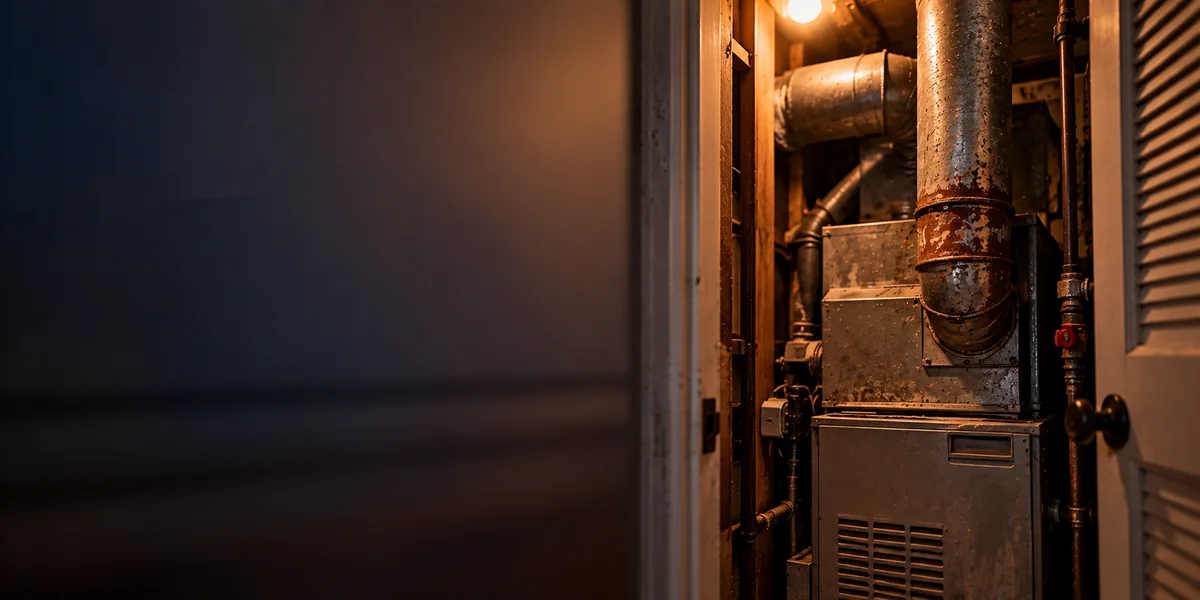
Yes, you can sue your landlord for carbon monoxide poisoning—and for every dollar of your medical bills, lost wages, and pain and suffering.
Landlords have a strict legal duty under state housing laws and municipal building codes to maintain all gas furnaces, water heaters, and ventilation pipes in safe working order, and to install working carbon monoxide detectors. Depending on your medical treatment and duration of exposure, you can recover:
- Acute Poisoning & Emergency Room Settlements ($50,000 to $250,000+): If a sudden leak caused an ER visit, oxygen therapy, severe headaches, dizziness, vomiting, or temporary loss of consciousness, a personal injury lawyer can sue your landlord’s commercial liability insurance policy at $0 upfront cost.
- Chronic Exposure, Brain Injury & Neurological Damage ($250,000 to $1,000,000+): If an unmaintained furnace or boiler leaked low levels of CO over weeks or months—causing permanent memory loss, cognitive decline, chronic fatigue, speech impairment, or hospitalization—lawsuits routinely settle for high six-figure or multi-million dollar verdicts.
- Immediate Hotel Lodging, Prepaid Rent Refund & Security Deposit Return: The moment the gas company or Fire Department red-tags your furnace, your apartment is legally uninhabitable. The landlord must pay for your hotel, refund 100% of your prepaid rent for the unheated days, and return 100% of your deposit if you break your lease.
Important Things to Know
- Go to the ER Immediately & Demand a "Carboxyhemoglobin" (COHb) Blood Test: Carbon monoxide leaves your bloodstream within 4 to 5 hours of breathing clean air. Do not wait until tomorrow morning to see a doctor—getting an immediate blood gas test at the hospital proves the exact percentage of poison in your blood before it clears!
- Missing or Dead Carbon Monoxide Alarm = Automatic Landlord Negligence: In over 30 states (including CA, NY, IL, TX, MA, FL, and WA), landlords are legally required to provide working CO detectors near sleeping areas. If your apartment lacked an alarm or had dead batteries, the landlord is guilty of Negligence Per Se.
- Get the Gas Company or Fire Department’s "Red-Tag" Report: When emergency technicians measure over 9 to 35+ Parts Per Million (PPM) of carbon monoxide, they shut off the gas and physically padlock the appliance with a red warning tag. That official inspection report is indisputable proof of a dangerous leak.
- Chronic Low-Level Leaks Are Just as Dangerous as Sudden Poisoning: If you suffered from "mystery flu symptoms," morning headaches, and brain fog for 3 months that disappeared every time you left the apartment, an uninspected, cracked furnace heat exchanger is often the culprit—and supports a major personal injury lawsuit.
- Multiple Parties Can Be Sued (Landlord + HVAC Repair Company + Appliance Maker): Your lawyer doesn’t just sue the building owner—if an outside heating contractor did sloppy repair work on the boiler, or if an appliance had a manufacturing defect, their commercial insurance policies must contribute to your settlement!
The 4 Most Common Causes of Apartment Carbon Monoxide Poisoning (And Who Is Liable)
Carbon monoxide (CO) is often referred to by toxicologists as the "silent killer" because it is completely colorless, odorless, and tasteless. When organic fossil fuels—such as natural gas, heating oil, propane, kerosene, or wood—burn without sufficient oxygen, incomplete combustion produces lethal concentrations of carbon monoxide gas.
In residential rental properties, carbon monoxide leaks almost never stem from tenant misuse. Instead, they trace directly back to aging, uninspected building heating infrastructure that property management companies neglected for years. If you are reviewing your legal options regarding rental property maintenance failures, consult our pillar guide on Can I Sue My Landlord? for a comprehensive view of tenant claims.
| Source of the CO Leak | What Caused the Malfunction | Who Is Legally Liable? | Typical Claim Value |
|---|---|---|---|
| 1. Cracked Furnace Heat Exchanger | Old furnace metal expands and contracts for years without annual tune-ups, developing metal fatigue cracks that blow exhaust gas directly into living area heating ducts. | Landlord / Property Owner (Failure to maintain central heating systems). | $100,000 to $1,000,000+ |
| 2. Leaking Gas Water Heater or Boiler | Corroded venting pipes, disconnected draft hoods, or failed burner assemblies venting poison directly into basements or utility closets. | Landlord + Third-Party HVAC Repair Contractor (Sloppy or unperformed maintenance). | $75,000 to $500,000+ |
| 3. Blocked or Rusted Chimney / Exhaust Flue | Exhaust flue pipes rust through or get clogged with animal nests, soot, or masonry debris, forcing toxic exhaust back into apartments. | Landlord (Premises liability & municipal building code non-compliance). | $50,000 to $350,000+ |
| 4. Attached Garage or Running Generator Exhaust | Fumes from vehicle idling or gas equipment in an attached garage seep through unsealed drywall or door gaps into residences. | Landlord (Failure to seal building envelope and install required CO alarms). | $50,000 to $250,000+ |
Unlike residential fires that cause immediate visible destruction—as examined in our guide on Apartment Fire Lawsuits—carbon monoxide leaks can poison an entire apartment complex silently through shared ductwork. When multiple units share a defective central boiler or flue, multi-party mass tort litigation frequently develops.
Furthermore, your personal injury attorney will investigate whether third-party commercial contractors share legal accountability. If the landlord hired an outside HVAC company that signed off on an annual safety inspection without testing the heat exchanger, or an appliance manufacturer produced a water heater burner with a design defect, multiple commercial insurance policies become available to fund your recovery.
Acute Poisoning vs. Chronic Low-Level Poisoning (The "Mystery Illness" That Fools Doctors)
Insurance claims adjusters routinely attempt to minimize carbon monoxide claims by arguing that if a tenant did not collapse unconscious on the floor, they were never truly poisoned. In medical and legal reality, carbon monoxide poisoning presents in two distinct clinical patterns, both of which support substantial personal injury lawsuits:
1. Acute High-Level Poisoning
Occurs when a furnace flue pipe completely dislodges or a central boiler vents directly into residential corridors. Ambient levels spike rapidly above 100 to 400+ parts per million.
Clinical Presentation: Sudden onset of crushing frontal headaches, violent nausea, dizziness, confusion, heart palpitations, seizures, syncope (loss of consciousness), or coma. Patients require immediate ambulance transport, high-flow normobaric oxygen therapy, or emergency transfer to a regional hyperbaric oxygen chamber to displace carbon monoxide from cellular tissue.
2. Chronic Low-Level Exposure
Occurs when a hairline crack in a furnace heat exchanger vents modest amounts of gas each time the thermostat triggers the burner.
The "Mystery Flu" Pattern: Tenants suffer chronic morning headaches, nausea, chronic fatigue, brain fog, and short-term memory lapses. Crucially, symptoms improve during weekends away from home or while at work, only to return upon sleeping in the apartment.
Long-Term Neurological Damage & White-Matter Brain Injury
Carbon monoxide binds to hemoglobin with an affinity 200 to 250 times greater than oxygen, forming carboxyhemoglobin (COHb). This chemical lock starves high-oxygen-demand organs—specifically the brain and heart—of vital cellular respiration. Even after CO clears the bloodstream, secondary cellular inflammation causes lipid peroxidation in the brain’s central white matter and basal ganglia (the globus pallidus).
Victims of prolonged exposure frequently develop Delayed Neurological Sequelae (DNS) within two to forty days after initial exposure. Symptoms include persistent cognitive impairment, executive function deficits, Parkinsonian tremors, severe depression, and insomnia. Documenting these permanent brain injuries through brain MRI imaging (specifically diffusion tensor imaging) establishes severe, permanent disability that drives lawsuit valuations well above $500,000.
The psychological trauma of discovering that you and your children were slowly poisoned in your sleep also supports compensable emotional distress claims. For a detailed breakdown of mental anguish damages in tenant litigation, see our analysis on Can I Sue My Landlord for Emotional Distress?.
State-by-State Mandatory Carbon Monoxide Detector Laws (Negligence Per Se)
Under general premises liability principles, an injured tenant must prove that the landlord knew or should have known about a hazardous condition. However, in cases involving missing or broken carbon monoxide detectors, state statutes establish an enormous legal advantage: Negligence Per Se.
When a landlord violates an explicit public safety statute designed to protect tenants from poison gas, the court presumes negligence as a matter of law. You do not need to prove that the landlord acted carelessly regarding the furnace; the absence of a functional detector proves liability automatically. Review our foundational guide on Can I Sue My Landlord for Negligence? for a broader examination of statutory non-compliance.
| Jurisdiction | Governing Statute | Where Alarms Are Legally Required | Landlord Penalty & Tenant Remedies |
|---|---|---|---|
| California | Cal. Health & Safety Code § 17926 | In all dwelling units containing a fossil-fuel appliance, fireplace, or attached garage; outside each sleeping area. | Missing detector makes unit legally uninhabitable; $200 statutory fine per violation + full tort liability. |
| New York (State & NYC) | NY Exec. Law § 378(5-a) (Amanda’s Law) & NYC Admin. Code § 27-2046.1 | Within 15 feet of every bedroom in all multiple dwellings, one-family, and two-family rental homes. | NYC HPD Class B / C hazardous violation, statutory rent reductions, and automatic negligence in civil court. |
| Illinois | 430 ILCS 135/ (Carbon Monoxide Alarm Detector Act) | Within 15 feet of every room used for sleeping purposes in all residential rental buildings. | Class B misdemeanor for willful failure; automatic civil liability for tenant injuries and medical bills. |
| Texas | Tex. Prop. Code § 92.251 – § 92.2611 & Municipal Ordinances | Mandated in major municipalities (Houston, Austin, Dallas) and rental units with fuel-burning heaters or garages. | Statutory damages of 1 month’s rent plus $500, court costs, attorney fees, and immediate lease cancellation rights. |
| Massachusetts | Mass. Gen. Laws c. 148, § 26F½ (Nicole’s Law) | On every level of the residence, including finished basements and within 10 feet of bedroom doors. | Fire code non-compliance citation, municipal stop-work or condemnation orders, and treble damages. |
| Florida | Fla. Stat. § 553.885 | In all new construction and existing rental units with fossil-fuel heaters or attached parking facilities. | Building code violation, statutory rent withholding rights, and premises liability damage awards. |
| Washington State | RCW 19.27.530 | In all residential rental properties; owner must ensure operational units prior to tenant move-in. | Negligence per se finding in personal injury litigation; civil penalties and habitability damages. |
For additional context regarding dangerous housing conditions and municipal code enforcement inspections, see our resource on Can I Sue My Landlord for Unsafe Living Conditions?.
The 4-Hour "Carboxyhemoglobin" (COHb) Test & What to Do in the First 24 Hours
When a carbon monoxide leak strikes, the medical and physical proof can disappear within hours. Carbon monoxide has a biological elimination half-life of roughly four to five hours while breathing room air, and only 60 to 90 minutes when receiving 100% supplemental oxygen via a non-rebreather mask.
If you wait until the next afternoon to visit a clinic, your blood carboxyhemoglobin levels may return to baseline normal, allowing insurance adjusters to argue that you simply had a standard seasonal viral infection. Execute this emergency protocol immediately:
The 4-Step Carbon Monoxide Protection Protocol
-
1
Evacuate & Call 911 (Leave Windows Closed if Safe)
Get every human and pet outside into fresh air immediately. If you can do so safely, leave windows and doors closed as you exit. Opening all windows ventilates the apartment before emergency crews arrive, which can artificially lower the gas meter readings recorded by first responders.
Step 1 Emergency Evacuation: Immediately evacuate all occupants into fresh air and dial 911 before opening windows so crews can measure true gas levels. -
2
Obtain the Gas Company or Fire Department PPM Meter Report
Firefighters and gas utility technicians carry calibrated multi-gas atmospheric monitors. Request the incident report number and ask the technician for the peak parts-per-million (PPM) reading measured in the unit. If the utility technician physically padlocks a red warning tag onto the furnace or boiler, take clear photographs of the tag and serial numbers.
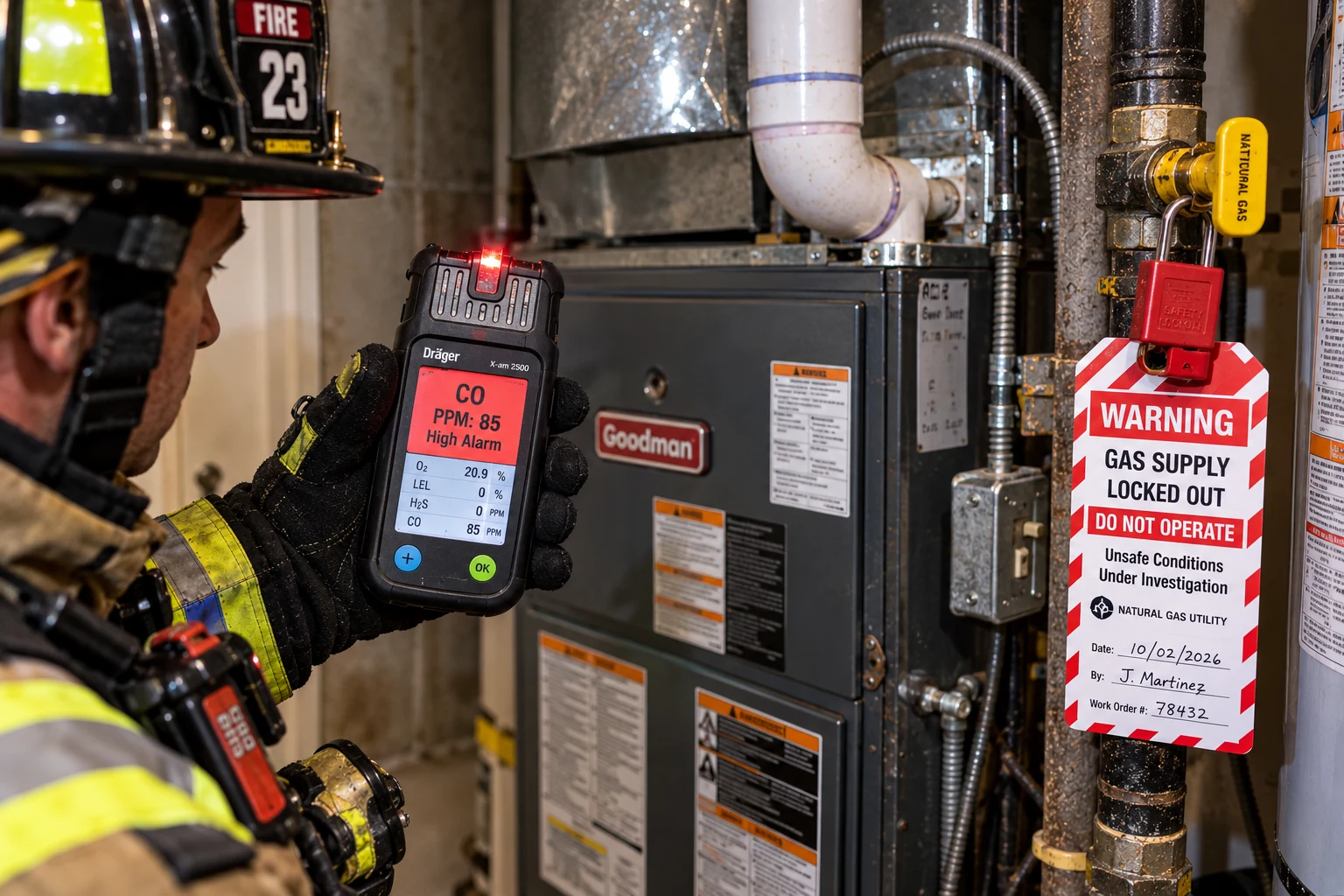
Step 2 PPM Measurement: Calibrated gas company meter readings and utility red lockout tags provide objective forensic proof of toxic hazard. -
3
Go to the Emergency Department & Insist on a COHb Blood Gas Test
Tell the triage nurse immediately: "I escaped an active carbon monoxide leak in my apartment and need an arterial or venous carboxyhemoglobin blood gas test." In non-smokers, normal baseline levels are under 1% to 2%. Levels between 5% and 15% indicate significant clinical poisoning, while levels exceeding 20% to 25% signify severe, life-threatening cellular toxicity.
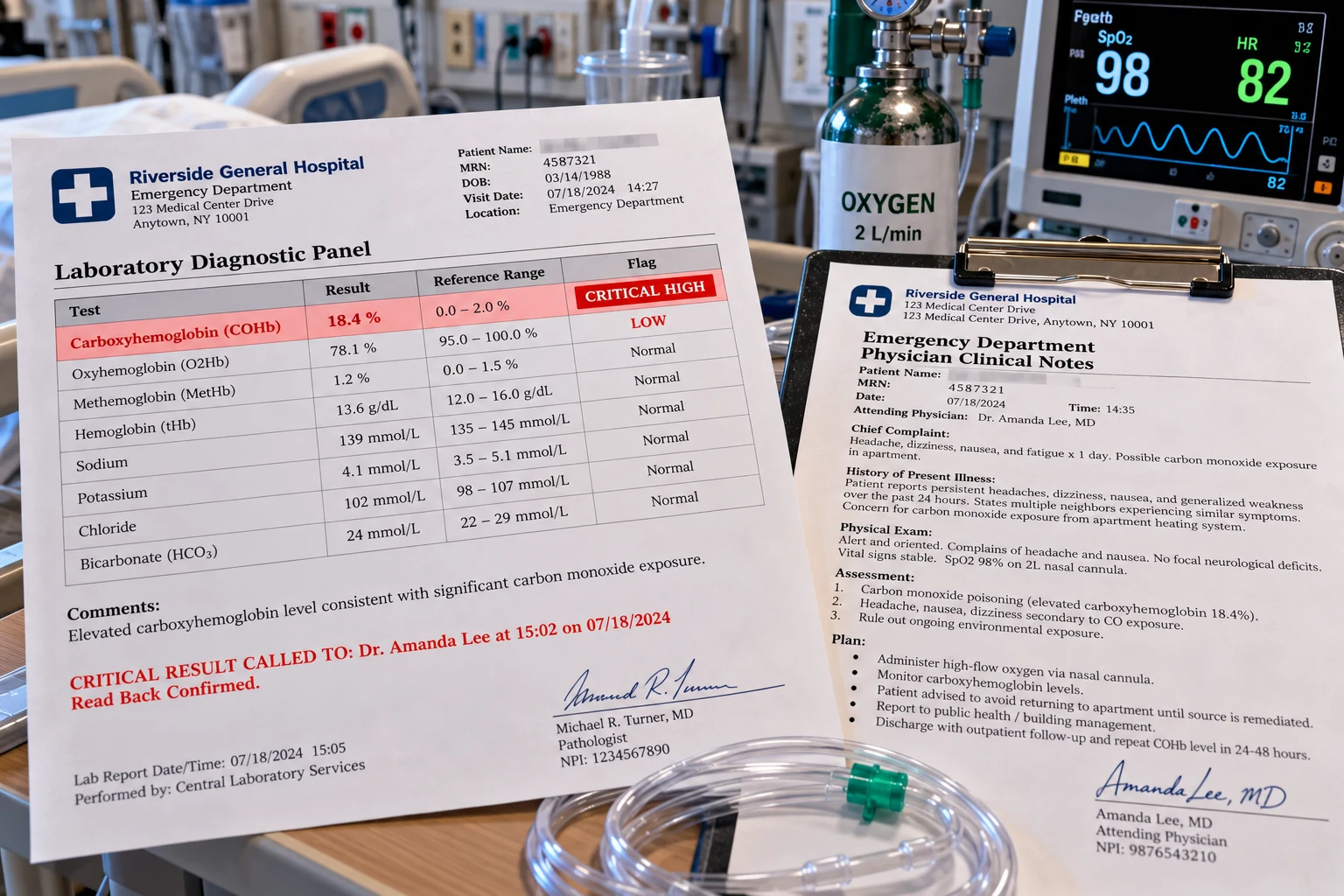
Step 3 Clinical Blood Test: Immediate hospital carboxyhemoglobin (COHb) lab testing provides definitive medical causation evidence before gas leaves your bloodstream. -
4
Serve an Immediate Anti-Spoliation Evidence Preservation Directive
Landlords frequently dispatch unlicensed handymen within 24 hours to rip out the cracked furnace, discard defective water heaters in municipal scrapyards, or install cheap detectors to cover up code violations. Delivering our formal Spoliation Directive legally bars the landlord from altering or destroying physical heating equipment before an independent engineering inspection.
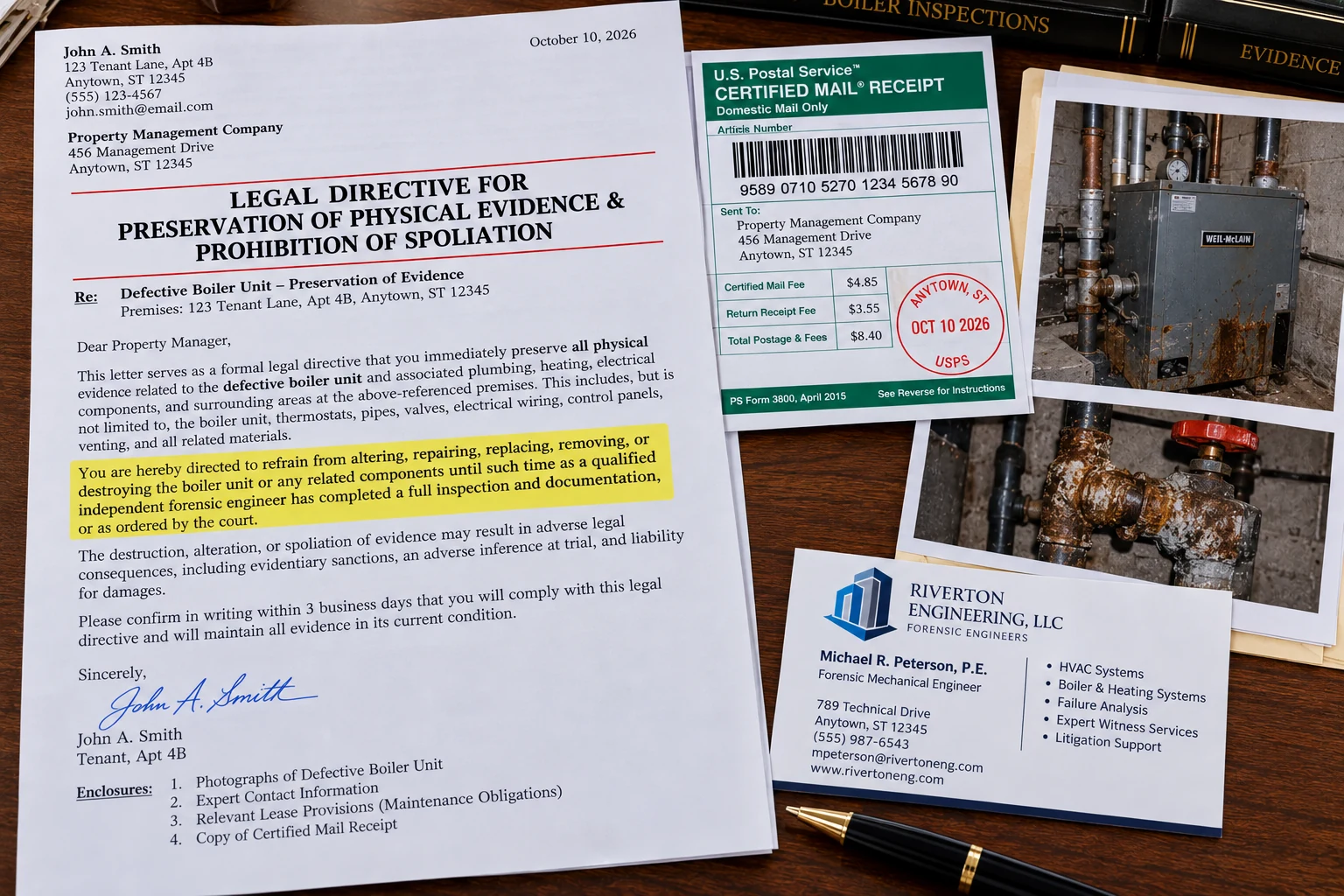
Step 4 Spoliation Notice: A formal legal preservation notice legally prevents the landlord from replacing or scrapping the defective furnace before inspection.
What If the Furnace Is Red-Tagged? (Prepaid Rent, Hotel Bills & Lease Cancellation)
When the local gas company or municipal fire marshal places a physical red tag on an apartment furnace, boiler, or water heater, the appliance is locked out of service. Turning the gas back on without certified repairs and municipal reinspection is a criminal offense in most jurisdictions.
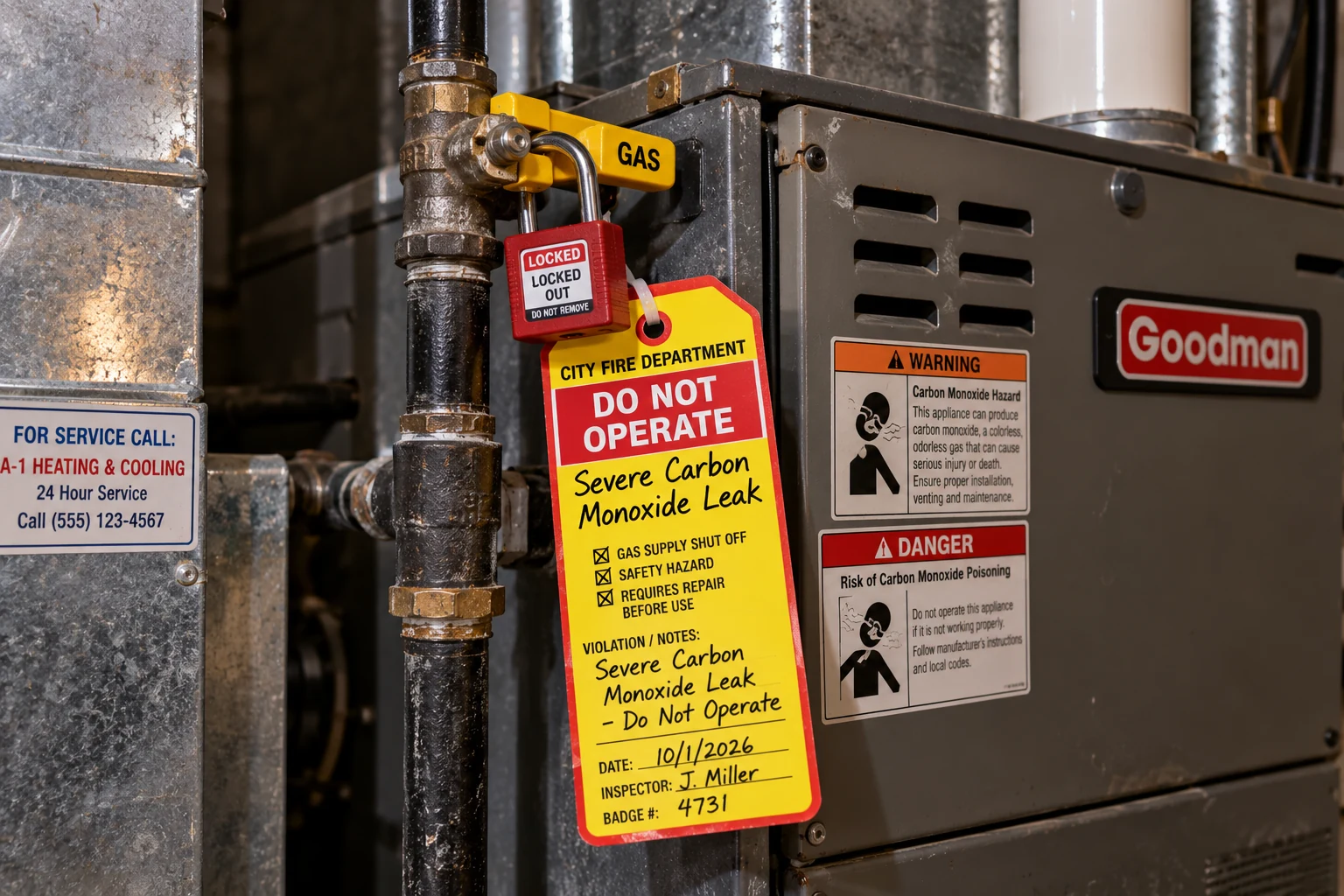
A red-tagged heating appliance during cold weather immediately renders the rental property legally uninhabitable under the Implied Warranty of Habitability. As a tenant, your statutory protections include:
1. Immediate Landlord-Paid Alternate Housing
Under state habitability laws, a tenant cannot be required to reside in an unheated apartment or rely on hazardous portable space heaters. The landlord (or their commercial insurer) is legally obligated to provide safe alternate housing—such as paying for a hotel room or temporary corporate apartment—until a certified new heating unit passes utility inspection.
2. 100% Rent Abatement ($0 Rent Owed)
You owe zero rent for every calendar day the apartment lacks operational heat or hot water. If the furnace remains red-tagged for fifteen days, you are entitled to a 50% rent reduction for the month as retroactive rent abatement.
3. Immediate Refund of Unused Prepaid Rent
If you paid full rent on the first of the month and the leak occurred on the tenth, the landlord must refund the remaining twenty days of unearned rent immediately. The landlord cannot retain your housing funds while you are displaced.
4. Penalty-Free Lease Cancellation Under Constructive Eviction
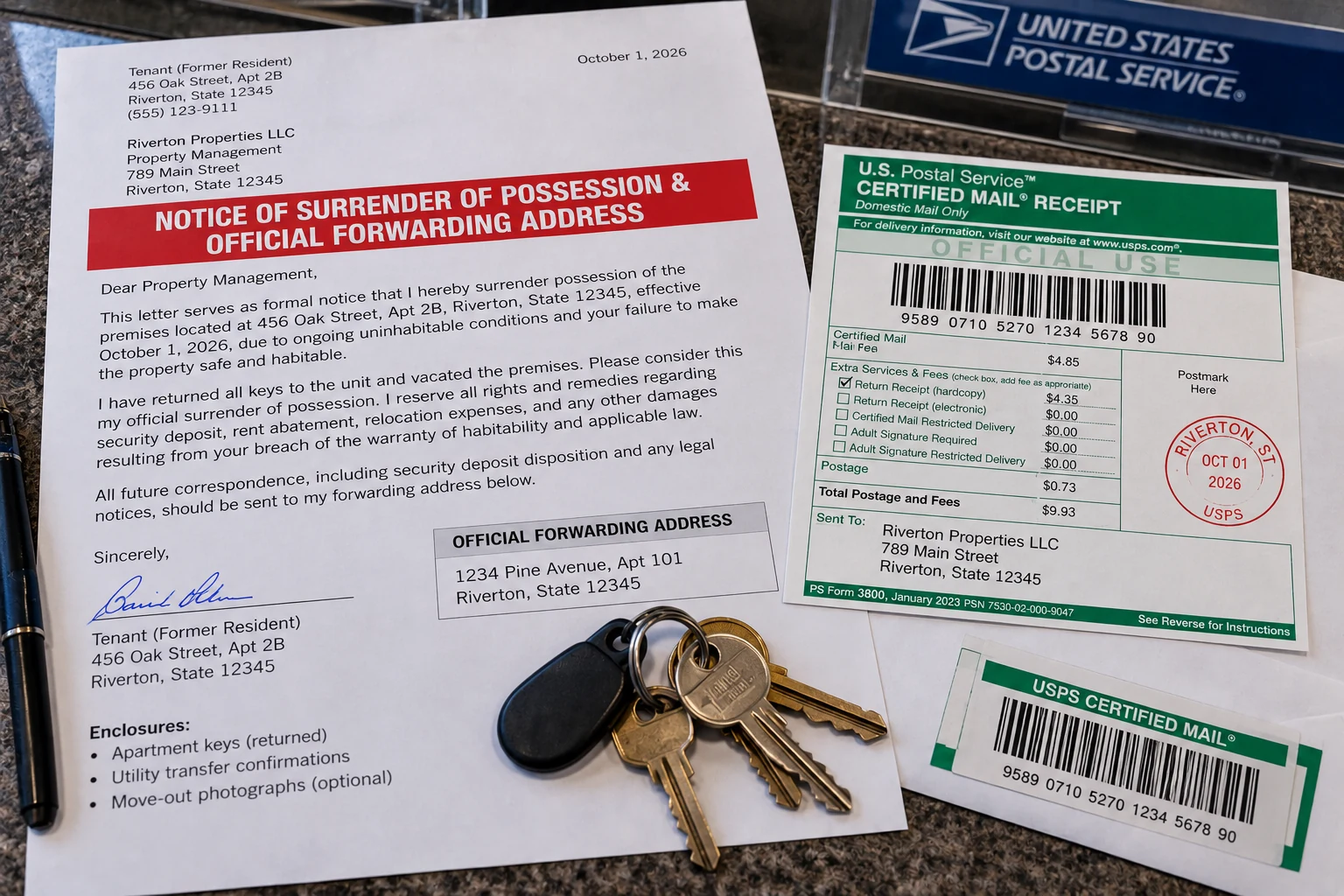
If the landlord refuses to pay for temporary lodging or fails to replace the heating system promptly, you have the legal right to terminate your lease immediately without early termination fees. The landlord must return 100% of your security deposit. For detailed procedural steps on surrendering possession without penalty, see our complete guide on Can I Sue My Landlord for Constructive Eviction?.
Ready-to-Send Carbon Monoxide Evidence Preservation & Injury Claim Letter
To protect your legal claims and freeze physical evidence before contractors tamper with the heating system, deliver these two formal legal notices to your landlord and property management company. Tab 1 serves as an urgent Anti-Spoliation Evidence Preservation Directive, while Tab 2 serves as a formal Casualty Lease Rescission and Deposit Refund Demand.
Frequently Asked Questions (FAQ)
Calculate Your Carbon Monoxide Lawsuit Payout
Estimate your financial recovery for emergency room care, hyperbaric oxygen therapy, neurological trauma, lost income, hotel displacement, and statutory rent refunds under commercial landlord liability insurance.
SueLegal is an independent educational legal publisher, not a law firm or lawyer referral service. The information provided in this guide is for general informational and educational purposes only and does not constitute formal legal advice. Residential landlord-tenant laws, repair notice periods, and statutory remedies vary significantly across state and municipal jurisdictions. If you are facing eviction, severe uninhabitable conditions, or complex litigation, consult a licensed attorney in your jurisdiction or contact your local legal aid organization. For more details on our standards, read our Editorial Policy and Legal Research Methodology.