
Important Legal Information
- Your Landlord Owes You for Electronics Fried by Bad Building Wiring: If flickering lights, a bad breaker panel, or a loose neutral wire sends a power surge that fries your TV, laptop, PS5, or air fryer—and you previously warned the landlord about flickering lights or bad outlets—you can sue for full replacement costs.
- Prove Illegal Wiring in 10 Seconds With an $8 Hardware Store Outlet Tester: Buy an $8 three-prong outlet tester with indicator lights at Home Depot or Amazon, plug it into your outlets, and take a photo. If it lights up "Open Ground" or "Hot/Neutral Reversed," you have undeniable courtroom proof of a housing code violation.
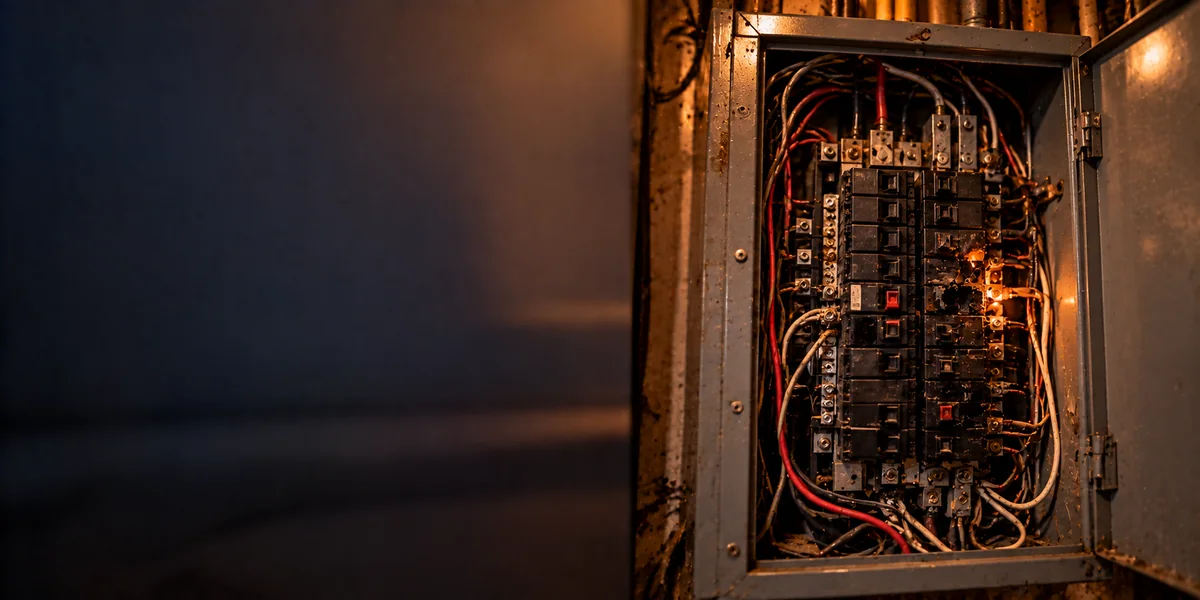
- Warning Sign: A "Dead Fish" or Burning Plastic Smell Means Call 911 / Fire Dept: Overheating outlets and breaker boxes are made of heat-resistant plastic that smells strongly like rotting fish or ammonia when melting behind the wall. Do not wait 14 days—shut off the breaker and call the Fire Department immediately so they write an official hazard report.
- It Is Illegal for an Unlicensed Handyman to Rewire Your Apartment: In almost every city, landlords cannot legally use an unlicensed maintenance worker to install breaker boxes, rewire burned outlets, or run new circuits. Calling your City Electrical Inspector (311) will force the landlord to hire a licensed electrician.
- Breakers That Trip Every Time You Use a Microwave Break Housing Codes: Under national housing codes (
IPMC § 604), your apartment's wiring must safely run normal household appliances. A landlord cannot tell you to "just stop using your microwave and hair dryer" or force you to run extension cords from the hallway.
7 Apartment Electrical Hazards That Violate Housing Codes (And What Each Is Worth)
Safe, code-compliant electricity is not an optional rental amenity. Under state housing laws and municipal building codes, landlords must keep all wiring, circuit breaker boxes, light switches, and wall receptacles in safe operating condition. When a landlord cuts corners, uses unlicensed maintenance workers, or ignores electrical warning signs, they violate the Implied Warranty of Habitability.
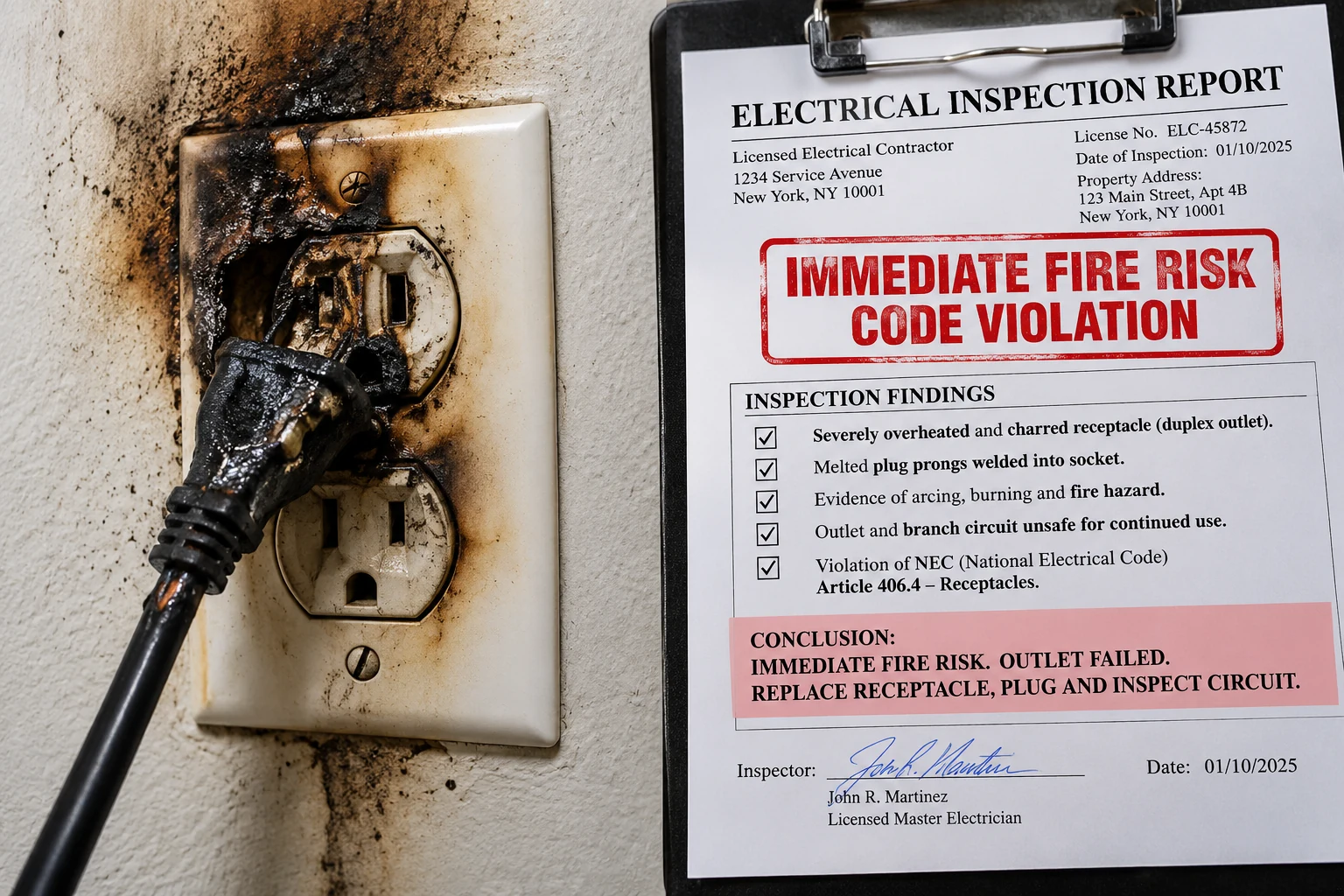
Electrical violations are treated much more urgently than normal repair issues because faulty wiring is a leading cause of residential apartment fires. Below is the official breakdown of the seven most common apartment electrical defects, the safety codes they break, the mandatory repair deadlines, and the damages you can recover in court:
| Electrical Problem in Your Apartment | Why It Violates Housing & Fire Codes | Landlord's Legal Repair Deadline | What You Can Sue For |
|---|---|---|---|
| 1. Sparking, Smoking, Buzzing, or Hot Outlets/Switches (or "Dead Fish" Smell) | Active arc-fault behind the wall that can ignite drywall and insulation tonight. | 24 Hours (Immediate Fire Emergency) | 50% to 100% daily rent refund + Hotel stay until a licensed electrician certifies it safe. |
| 2. Flickering/Dimming Lights & Surges That Fry Your Electronics ("Open Neutral") | Loose or corroded neutral wire in the landlord's breaker panel sending 180V+ spikes into your outlets. |
24 to 72 Hours | 100% replacement cost of fried TVs, computers, consoles & appliances + Rent refund. |
| 3. Power Out in Half the Apartment (Dead Kitchen, Bedroom, or Bathroom) | Loss of essential living space, refrigeration, or safe lighting under IPMC § 604. |
24 to 72 Hours | 35% to 60% rent refund + Spoiled refrigerator/freezer groceries + Takeout meals. |
| 4. Circuit Breakers That Trip Every Time You Run a Microwave, AC, or Hair Dryer | Overloaded/undersized circuits violating code mandates for normal appliance loads (forcing dangerous extension-cord use). | 7 to 14 Days | 20% to 35% rent refund or right to break lease if landlord refuses to upgrade panel/circuits. |
| 5. "Fake" 3-Prong Outlets With No Ground Wire (or Missing Kitchen/Bath GFCI Outlets) | Violates National Electrical Code (NEC); leaves you vulnerable to lethal electric shock near water and ruins surge protectors. |
7 to 14 Days | City Code Violation fine against landlord + Rent abatement + Full liability for any shock or fried gear. |
| 6. Recalled "Fire-Hazard" Breaker Boxes (Federal Pacific Stab-Lok or Zinsco) or Exposed Wires | Known defective panels whose breakers fail to trip during overloads; rodents chewing bare wires in walls/attics. | 7 to 14 Days (Immediate if overheating) |
Mandatory replacement via City Electrical Inspector + Lease termination if left unsafe. Also review our guide on rats chewing wires. |
| 7. Shared-Meter Electricity Theft (Paying for Hallway Lights, Laundry, or Neighbor) | Unlawful cross-metering violating state utility laws and utility regulations. | Immediate Rebilling to Landlord | 100% refund of past electric bills you overpaid + Utility company forces meter back into landlord's name. |
If your apartment has any of these conditions, you do not have to endure living in fear of a fire. You can document the hazard, issue formal written notice, and claim monetary damages if your landlord ignores their repair obligations.
Did Bad Apartment Wiring Fry Your TV, Computer, or PS5? Here Is How to Force Your Landlord to Pay
Few tenant experiences are as frustrating as plugging in your television, gaming console, laptop charger, or microwave, only to hear a loud pop, see a wisp of smoke, and realize your $1,200 device is permanently dead. When this happens, property managers almost always use the same dismissive excuse:
The Landlord's Typical Excuse:
"A power surge came from the electric company down the street. It was an Act of God, so it's not our fault. File a claim with your personal renters insurance or call the utility company."
Do not accept this brush-off. In the vast majority of cases where multiple appliances fry inside one apartment while neighbors' electronics are unharmed, the cause was not the utility company. It was an internal electrical failure inside the landlord's building.
How to Prove It Was Building Wiring (Not the Street):
You can prove the landlord's building wiring ruined your equipment using three clear pieces of evidence:
-
The "Bright & Dim" Open Neutral Sign:
When a main neutral wire comes loose or rusts inside an electrical panel or service weatherhead, standard 120-volt current becomes unbalanced. Whenever you turn on a heavy appliance—like a microwave, toaster, or air conditioner—lights in one room suddenly glow blindingly bright, while lights in another room go dim. This sends massive voltage spikes (
180V to 240Vinstead of safe120V) into wall sockets. If your lights flicker or vary in brightness when appliances kick on, that is indisputable proof of an open neutral inside the building. - Get a 1-Sentence Note From the Electrician (or Repair Shop): When an electrician finally visits to inspect the breaker panel, ask them directly: "Was there a loose neutral connection, a burned busbar, or an ungrounded circuit?" Take a photo of any burned wiring in the panel and ask for a copy of the contractor's work order. Alternatively, take your fried computer or TV power supply to a local repair technician and ask for a written diagnostic stating: "Unit suffered severe over-voltage failure consistent with building power surge."
- What If Renters Insurance Has a $500 Deductible or Denies Coverage?: Renters insurance policies often exclude gradual electrical decay or have deductibles of $500 to $1,000. Take dated photos showing the serial numbers of every fried device, record a short video showing the item plugged into a live wall socket with no power, print out current replacement prices from Amazon or Best Buy, and file in Small Claims Court. Under state habitability laws and landlord negligence standards, the landlord must pay 100% of your replacement costs or reimburse your insurance deductible.
How to Prove Illegal Wiring Yourself for $8 (Without Touching a Single Wire)
When you report electrical issues, shady landlords frequently send an unlicensed handyman who resets a breaker, wipes soot off an outlet plate, and claims "everything tests fine." You do not need to be an electrician or dismantle a wall to prove code violations in court.
Here are three safe, foolproof methods any tenant can use to gather conclusive courtroom proof for less than ten dollars:
Method 1: Buy an $8 "3-Light Outlet Tester" (Plus GFCI Button)
Available at Home Depot, Lowe's, Walmart, or Amazon for roughly $8 to $12, a three-light receptacle tester is the single best tool a tenant can own. You simply plug it into any wall receptacle like a nightlight. Three colored lights illuminate to reveal the exact wiring condition behind the wall:
- Two Amber Lights: Correctly wired and safely grounded.
- One Amber Light Only ("Open Ground"): The outlet has three prongs, but no ground wire is connected. This is an illegal "bootleg" outlet under the National Electrical Code that leaves appliances unprotected and creates shock hazards.
- Red and Amber Together ("Hot/Neutral Reversed"): The handyman connected the live hot wire to the wrong terminal, creating a continuous shock hazard even when switches are turned off.
- Push the GFCI Test Button: If an outlet within six feet of a kitchen sink or bathroom fails to trip and shut off power when you press the button, it is a direct municipal code violation.
Take a clear, well-lit photo of the tester plugged into every bad outlet in your home. That photo is admissible, undeniable proof in Small Claims Court.
Method 2: Use an Infrared Laser Thermometer on Hot Breakers & Outlets
Loose electrical connections generate electrical resistance, which creates intense heat behind the drywall. If an outlet cover plate, light switch, or breaker handle feels warm to the touch, purchase a $15 infrared laser thermometer from a grocery or hardware store.
Point the laser at the warm faceplate and photograph the digital screen showing temperatures of 105°F to 145°F+ (normal indoor room temperature is around 68°F to 72°F). When an outlet reaches these temperatures, plastic melts and drywall charring begins. Presenting a photograph of a 125°F outlet faceplate proves an active, imminent fire hazard that no judge or inspector will ignore.
Method 3: Call 311 for a Free Municipal Electrical / Fire Inspection
Unlike general drywall cracks or worn carpets, electrical safety is strictly enforced by municipal building departments and Fire Marshals. If your landlord refuses to hire a licensed electrician, dial 311 (or your city's Department of Building Inspection) and request an emergency electrical code inspection.
When the city electrical inspector arrives, show them your outlet tester photos, any buzzing subpanels, and hot switches. Municipal inspectors have the authority to issue formal Notices of Electrical Code Violation with mandatory 24-to-72-hour repair orders. City laws legally require the landlord to pull an official electrical permit and hire a state-licensed master electrician to clear the citation. Learn more about municipal citations in our guide on suing for unsafe living conditions.
Electric Shocks & Apartment Electrical Fires (How Insurance Settlements Work)
While Small Claims Court is ideal for rent refunds and fried electronics, serious physical injuries fall into an entirely different legal category. When bad apartment wiring causes an electric shock or triggers a structure fire, the landlord's commercial property and liability insurance policy pays for bodily harm, pain and suffering, and destroyed property.
If You Got Shocked Touching an Appliance, Light Switch, or Shower Faucet:
Tenants are frequently shocked when touching the metal handle of a refrigerator, stove, or water faucet in the bathroom. This phenomenon—known as stray voltage or a ground fault—occurs when an ungrounded live wire makes contact with metal plumbing pipes or metal appliance frames.
Even if you feel completely fine after receiving a shock, seek immediate medical care at an Urgent Care or Emergency Room the very same day. Explain to the doctor that you received an electrical shock in your apartment and request an Electrocardiogram (EKG / ECG):
- Electric currents traveling through the human body can disrupt the heart's electrical rhythm, causing delayed ventricular arrhythmias that manifest hours after the shock.
- Medical documentation of electrical shock, elevated creatine kinase levels, or muscle spasms creates the official record required to negotiate a $15,000 to $100,000+ premises liability settlement with the landlord's insurer.
If Faulty Wiring Starts an Apartment Fire:
Landlords and their insurers routinely attempt to blame tenants for fires by alleging unattended candles, space heaters, or grease fires on stoves. However, the official Fire Marshal Origin and Cause Investigation Report establishes exactly where and how the fire began.
If the Fire Marshal determines the fire originated inside a wall cavity, ceiling light fixture, subpanel, or from rodent damage to electrical lines, the landlord is guilty of actionable negligence. Their commercial insurance carrier must pay for 100% of your ruined personal property, displaced hotel living expenses, emergency medical bills for smoke inhalation or burns, and substantial compensation for emotional trauma.
Ready-to-Send Electrical Hazard, Fried Electronics & Rent Refund Demand Letters
Whether you need to force management to send a licensed electrician immediately or recover compensation for electronics burned out by power surges, serving a formal written demand creates the essential evidentiary record for court.
Select the tab below that matches your situation, replace the bracketed placeholders with your apartment details, and click Copy Letter to Clipboard or Download .TXT.
How Much Can You Recover for Electrical System Failures?
When taking legal action in Small Claims Court or Housing Court, financial recovery is calculated using established statutory remedies, documented out-of-pocket expenses, and rent reduction standards:
| Recovery Category | Calculation Standard | Statutory Authority & Limits |
|---|---|---|
| 1. Food Spoilage & Electronic Losses | Fair market reimbursement for perishable groceries, frozen goods, refrigerated medications, and computers fried by ungrounded voltage surges. | Negligence property damages. |
| 2. Certified Electrician Repair Reimbursement | Full repayment under state repair-and-deduct statutes for emergency licensed electrical troubleshooting, breaker replacement, and wiring repairs. | State repair-and-deduct statutes. |
| 3. Habitability Rent Reduction | Refund of 20% to 50% of monthly rent for every month rooms remained without functional lighting, safe wall outlets, or heat circuitry. | Warranty of Habitability. |
Small Claims Filing Limits: Most tenants resolve these matters pro se (without a lawyer) in Small Claims Court. Maximum claim limits vary by state: for example, $12,500 in California (California Courts Self-Help), $10,000 in New York City (NY Courts Small Claims), and $20,000 in Texas (Texas Judicial Branch). If damages exceed local small claims thresholds, lawsuits proceed to standard Civil Court.
Frequently Asked Questions About Landlord Electrical Problems
How long does a landlord have to fix electrical problems?
If the electrical problem is an emergency—such as total loss of power, sparking or smoking outlets, a hot breaker box, a burning fishy smell, or power out to your refrigerator or heater—the landlord must respond within 24 to 72 hours. For non-emergency electrical issues like a dead outlet in one room or tripping breakers, landlords generally have 7 to 14 days after receiving written notice.
Can my landlord send their regular maintenance handyman to fix electrical wiring?
For swapping a lightbulb or resetting a tripped breaker, yes—but in almost every city and state, opening a breaker panel, replacing wiring inside walls, or installing new circuits legally requires a licensed electrician and often a city electrical permit. If an unlicensed handyman does unsafe wiring in your apartment, report it to your City Building / Electrical Inspector immediately.
Why does my outlet or breaker box smell like dead fish?
Electrical outlets, switches, and circuit breakers are made with heat-resistant plastics and resins that release a strong rotting fish or ammonia smell when they overheat and begin melting from a loose wire or electrical arc. If you smell dead fish near an outlet, light fixture, or breaker panel, turn off that circuit breaker immediately and call the Fire Department or an emergency electrician—it is an active fire hazard.
Can I sue my landlord if faulty apartment wiring fried my TV, computer, or refrigerator?
Yes—if your electronics were burned out by faulty building wiring, such as a loose neutral wire in the breaker box, improper grounding, or water leaking into an electrical panel—especially after you warned the landlord about flickering lights or electrical issues—you can sue in Small Claims Court for 100% of the replacement cost or your renters insurance deductible.
Can I break my lease without a penalty because of dangerous electrical wiring?
Yes—exposed wiring, overloaded circuits that constantly trip, ungrounded wet-area outlets, or a fire-hazard breaker panel that the landlord refuses to fix after written notice violates the Implied Warranty of Habitability. Call 311 / City Code Enforcement to get an official electrical violation report on file, give a final written deadline, and you can legally terminate your lease without penalty.
SueLegal is an independent educational legal publisher, not a law firm or lawyer referral service. The information provided in this guide is for general informational and educational purposes only and does not constitute formal legal advice. Residential landlord-tenant laws, repair notice periods, and statutory remedies vary significantly across state and municipal jurisdictions. If you are facing eviction, severe uninhabitable conditions, or complex litigation, consult a licensed attorney in your jurisdiction or contact your local legal aid organization. For more details on our standards, read our Editorial Policy and Legal Research Methodology.