
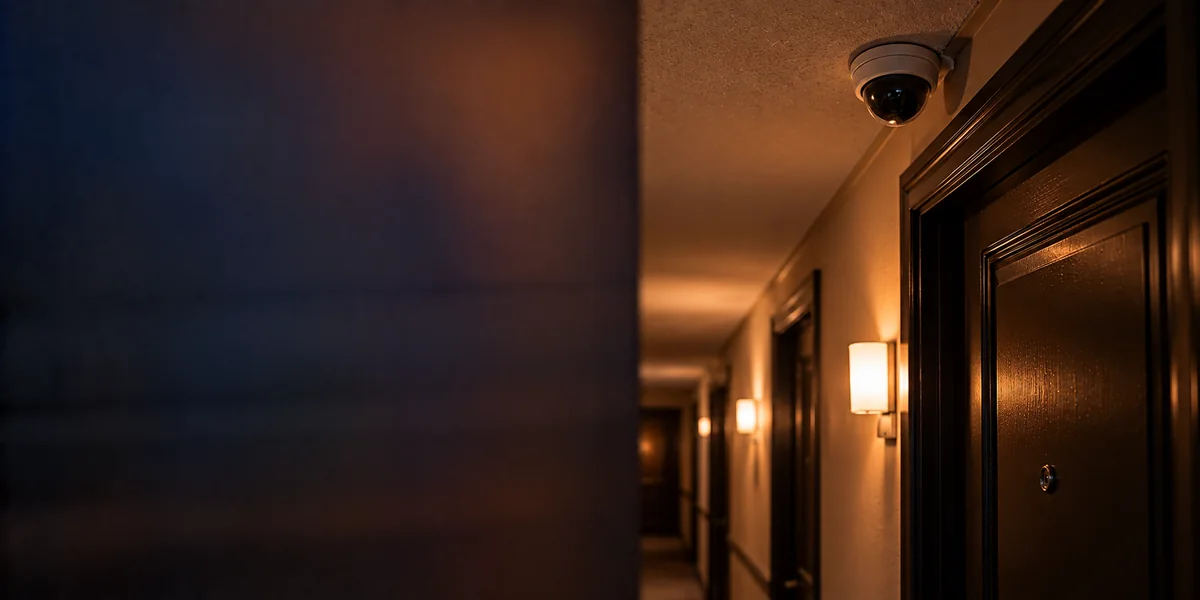
The Short Answer
Yes, you can sue your landlord for installing cameras if they violate your privacy, record your audio, or target you for harassment.
While a landlord can legally place silent video cameras in shared public areas like parking lots, lobbies, and hallways for building safety, a landlord crosses the line into an illegal lawsuit in four specific situations:
- The Camera Records Your Voice / Audio ($2,500 to $10,000+ Statutory Wiretap Fines): Even in "One-Party Consent" states, it is 100% illegal in all 50 states for a landlord who is not present to use a camera microphone (like a Ring, Nest, or Blink cam) to secretly listen to or record your private conversations.
- The Lens Sees Inside Your Door, Window, or Private Backyard ($2,000 to $15,000 in Small Claims / Housing Court): A camera cannot be angled so that it sees inside your living room whenever you open your front door, peers through your window blinds, or watches the private fenced backyard of a single-family rental house.
- The Landlord Uses the Camera to Stalk or Harass You ($2,000 to $10,000 Harassment Penalties): If the landlord watches the live feed and texts you about your guests, when you come home, or what you are carrying, that is illegal Landlord Harassment and Breach of Quiet Enjoyment.
- Hidden Indoor Cameras ($25,000 to $500,000+ Civil Settlements & Felony Arrest): Any camera inside an apartment, bedroom, bathroom, air vent, or smoke detector is a serious crime and a high-value personal injury/privacy lawsuit.
Quick Legal Guide
- Catch the #1 Landlord Mistake—Recording Audio on a Porch or Hallway Camera: Most landlords buy a $99 Ring or Blink camera and leave the microphone turned ON. Because the landlord is not part of the conversation happening on your porch or hallway, recording your voice violates the Federal Wiretap Act ($10,000 statutory minimum) and state eavesdropping laws (like California Penal Code § 637.2 — $5,000 per violation)!
- A Hallway Camera Cannot Look Inside Your Apartment When You Open the Door: If a camera is mounted directly across from your front door so the lens captures your interior hallway, couch, or bedroom every time you walk in or out, you have the legal right to demand the landlord move or angle it away.
- Renting a Single-Family House? The Fenced Backyard Is Private: Unlike a shared apartment complex courtyard, when you rent a whole single-family house, you pay for exclusive privacy in the fenced backyard and patio—your landlord cannot mount cameras watching your family in the yard without your written consent.
- Your Landlord Cannot Use YOUR Wi-Fi or Electric Bill to Power Their Cameras: Unless your lease specifically says so and gives you a utility credit, a landlord cannot plug building cameras into outlets on your electric meter or demand your personal Wi-Fi password. See our guide on utility shutoffs and meter tampering.
- Never Smash or Spray-Paint the Camera (Do This Instead): Destroying the landlord's camera can get you charged with vandalism or evicted. Instead, photograph the camera's exact angle, check if the blue/red audio recording light turns on when you speak, and send the formal Cease-and-Desist / Repositioning Demand Letter below.
Where Can a Landlord Legally Put Cameras vs. Where Is It Illegal? (The Complete Matrix)
When a landlord installs security cameras outside an apartment building or near your doorstep, renters often assume the rules are black-and-white. Online discussions often suggest exterior cameras are always legal while indoor cameras are always illegal. In practice, residential privacy law evaluates the specific sightlines, audio capabilities, and exclusive rights granted under your lease agreement.
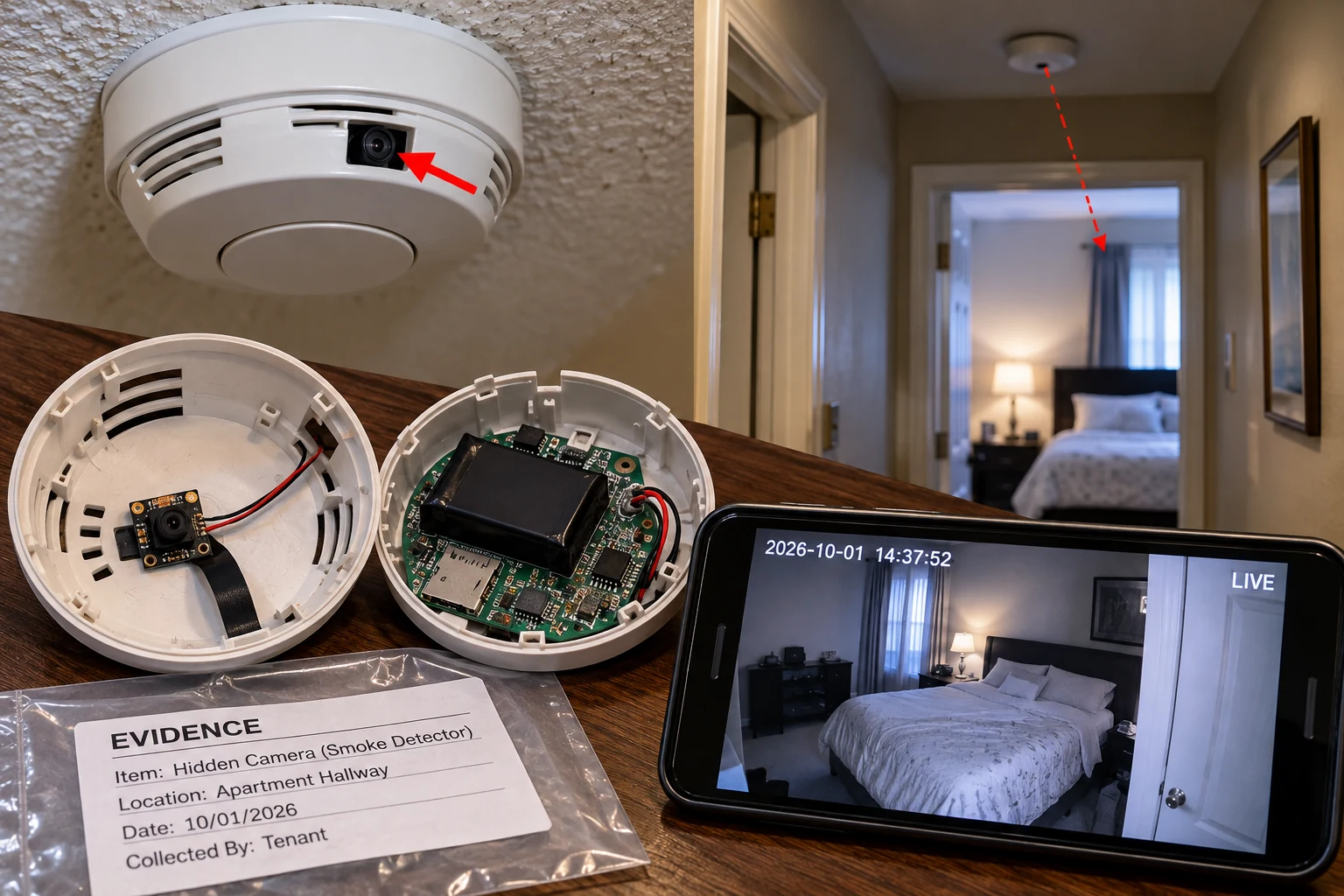
The governing legal principle is the Reasonable Expectation of Privacy. Under common-law privacy torts (specifically Restatement (Second) of Torts § 652B, Intrusion Upon Seclusion), you do not possess an expectation of privacy in open public spaces such as parking lots, main driveways, or public sidewalks. However, you maintain absolute privacy rights inside your private dwelling, behind closed blinds, through your private doorways, and across the exclusive fenced perimeter of a rented single-family house. For an overarching framework of residential tenancy protections, review our master guide on suing your landlord.
| Where the Camera Is Installed | Is It Legal or Illegal? | Why & What You Can Sue For |
|---|---|---|
| 1. Building Lobby, Driveway, Parking Lot, or Mailroom (Video Only) | ✅ Legal | No reasonable expectation of privacy in shared public areas—provided the device does not intercept or record private audio conversations. |
| 2. Hallway or Porch Camera Pointed Directly INSIDE Your Front Door | ❌ ILLEGAL Sightline | If the lens captures your interior living room, hallway, or bedroom when you open the door, it invades your private home. The landlord must re-angle the camera or install an electronic privacy mask. |
| 3. Exterior Camera Angled at Your Bedroom, Bathroom, or Living Room Window | ❌ ILLEGAL (Peeping / Constructive Invasion of Privacy) | Violates civil privacy statutes (such as California Civil Code § 1708.8, awarding up to 3x damages) and criminal voyeurism laws—even when mounted on an exterior light pole, garage, or adjacent tree. |
| 4. Fenced Backyard or Private Patio of a Rented Single-Family House | ❌ ILLEGAL (Without Your Consent) | Renting a full house conveys exclusive possession of the curtilage. Surveilling your family in your private enclosed yard constitutes a material breach of the Covenant of Quiet Enjoyment. |
| 5. ANY Exterior or Hallway Camera That Records Audio / Voices (Ring, Blink, Nest) | ❌ ILLEGAL in All 50 States (Felony Eavesdropping) | Because the landlord is not present in the conversation, recording voices violates the Federal Wiretap Act and state penal codes. Triggers $5,000 to $10,000 in automatic statutory fines. |
| 6. Camera Aimed Only at YOUR Door to Track Your Guests & Text You | ❌ ILLEGAL (Targeted Harassment) | Singling out one tenant to track personal visitors, delivery packages, or work hours violates state anti-harassment laws and local Tenant Anti-Harassment Ordinances (TAHO). |
| 7. Hidden Camera Inside Your Apartment, Vent, Smoke Detector, or Bathroom | 🚨 FELONY CRIME + $25,000 to $500,000+ Lawsuit | Immediate police emergency. Triggers criminal prosecution for felony video voyeurism and substantial civil tort damages for intentional infliction of emotional distress. |
The Legal Boundary: What Does "Exclusive Possession" Mean?
When you sign a residential lease, property law separates ownership from possession. Your landlord retains legal title to the real estate, but you hold the exclusive right of possession. That means your landlord cannot treat your rented home as an open observation post. Aiming a lens at your doorway or private patio invades the core zone of residential privacy established under centuries of common-law tenancy rules.
The "$5,000–$10,000 Microphone Trap" (Why Landlord Ring & Blink Cameras Almost Always Break Wiretap Laws)
The single most potent legal claim available to tenants facing intrusive surveillance involves audio recording. Most consumer security cameras—including Ring Video Doorbells, Blink Outdoor cams, Google Nest Cams, Arlo, and Wyze cameras—ship from the factory with sensitive audio microphones enabled by default. These microphones routinely pick up whispering and spoken conversations from 15 to 25 feet away.
When landlords install these devices in common stairwells, porches, or exterior entryways, they almost always commit a serious statutory violation without realizing it. Under both federal wiretapping statutes and state criminal codes, intercepting spoken conversations without proper consent is a crime.
Why "One-Party Consent" Does Not Protect Your Landlord
Landlords in states like Texas, New York, Georgia, and Ohio frequently argue: "My state is a one-party consent state, so I am legally permitted to record on my own property." This argument fails completely under established federal and state wiretap precedent.
One-party consent laws mean that a person who is an active participant in the conversation may record it without telling the other speaker. When you and your partner, child, or guest are speaking on your front porch or inside your hallway, and your landlord is sitting miles away streaming the audio on a smartphone app, zero participants in the conversation consented.
Under the Federal Wiretap Act (18 U.S.C. § 2511), an interception conducted by an absent third party constitutes illegal electronic eavesdropping. The law does not recognize property ownership as an exemption to criminal wiretapping standards.
Statutory Monetary Penalties: How Much You Can Recover
Unlike standard negligence claims where you must prove financial loss or physical harm, wiretapping laws provide automatic statutory damages. You do not need to prove you lost wages or visited a doctor to receive compensation:
- Federal Statutory Damages (18 U.S.C. § 2520): The federal statute entitles victims of unlawful electronic audio interception to recover actual damages or statutory damages of $100 per day of violation, or $10,000, whichever is greater. The court must also award reasonable attorney fees and litigation costs to prevailing plaintiffs.
- California Penal Code §§ 632 & 637.2: California's Invasion of Privacy Act provides for $5,000 in statutory damages per violation or three times actual damages. Tenants do not need to show actual economic harm to obtain the statutory penalty.
- Strict All-Party Consent States: In Illinois (720 ILCS 5/14-6), Florida (Fla. Stat. § 934.10), Pennsylvania (18 Pa. C.S. § 5725), Massachusetts (M.G.L. c. 272 § 99), Washington (RCW 9.73.060), and Maryland (Md. Code Cts. & Jud. Proc. § 10-410), civil eavesdropping statutes authorize statutory damages between $1,000 and $10,000 per violation, along with punitive damages.
How to Prove Your Landlord's Camera Is Recording Voice Audio: Look for three pieces of direct evidence. First, does the landlord speak to you through the camera's two-way speaker? Second, did your landlord send a text message or email referencing a conversation that took place near the door? Third, did management share a video clip in an email that contains clear background audio? Save every email, voicemail, or text immediately. That electronic paper trail establishes an indisputable wiretapping claim.
Renting a Single-Family House vs. an Apartment vs. a Shared Room (How Camera Rules Change)
Surveillance rights depend heavily on the physical structure of your rental unit and the specific spaces your lease grants you. The legal rules governing a suburban house differ dramatically from those applied to a high-rise apartment building or a shared rooming house.
1. If You Rent an Entire Single-Family House
When you lease an entire single-family home, your tenancy encompasses the entire property, including the driveway, front porch, back patio, and enclosed yard. Unlike an apartment building where stairs and foyers are shared with neighbors, you possess exclusive rights over the private curtilage.
While an unmonitored exterior camera aimed outward toward a public street or driveway may be permissible to protect the physical building, your landlord cannot install cameras pointing into your private fenced backyard, deck, or patio without your written consent. Watching your family or guests relax in a fenced backyard directly violates the Implied Covenant of Quiet Enjoyment and gives you grounds for rent reduction or constructive eviction.
Utility Meter Theft & Wi-Fi Tampering: A landlord cannot plug exterior cameras into exterior outlets connected to your electric meter or connect devices to your private home Wi-Fi network without your permission. Doing so constitutes utility diversion under state law. You have the immediate right to change your Wi-Fi password and demand reimbursement for unauthorized electrical usage. Read our guide on utility shutoffs and meter disputes.
2. If You Rent an Apartment in a Multi-Family Complex
In an apartment complex, common areas like parking structures, laundry rooms, and entrance vestibules are controlled by management. Landlords are permitted to mount visible, video-only cameras in these shared areas to deter crime.
However, the camera lens cannot cross the threshold of your home. If a hallway camera is positioned so that opening your front door reveals your living room sofa, kitchen table, or interior corridor, the landlord must reposition the camera or activate an electronic privacy masking zone that blacks out your doorway.
3. If You Rent a Private Bedroom in a Shared House ("Rent-by-the-Room")
In boarding arrangements or co-living spaces where unrelated tenants rent individual bedrooms and share a central kitchen and living room, landlords sometimes install indoor security cameras in the shared kitchen or common hallway.
While courts permit silent security cameras in shared common kitchens if disclosed in advance, three strict restrictions apply:
- The camera must be strictly video-only—recording conversations between roommates in the kitchen violates felony wiretap laws.
- The camera sightline cannot see inside private bedroom or bathroom doorways when opened.
- The camera cannot be used to police personal habits, such as timing how long you cook or monitoring when you return from work.
Landlord Camera Privacy, Wiretapping Fine & Harassment Lawsuit Calculator
Calculate your estimated statutory wiretapping penalties, invasion of privacy damages, and rent refund under federal and state eavesdropping laws.
*Illustrative educational estimate, not legal advice or an outcome prediction. Small claims limits, judge discretion, and state statutes vary.
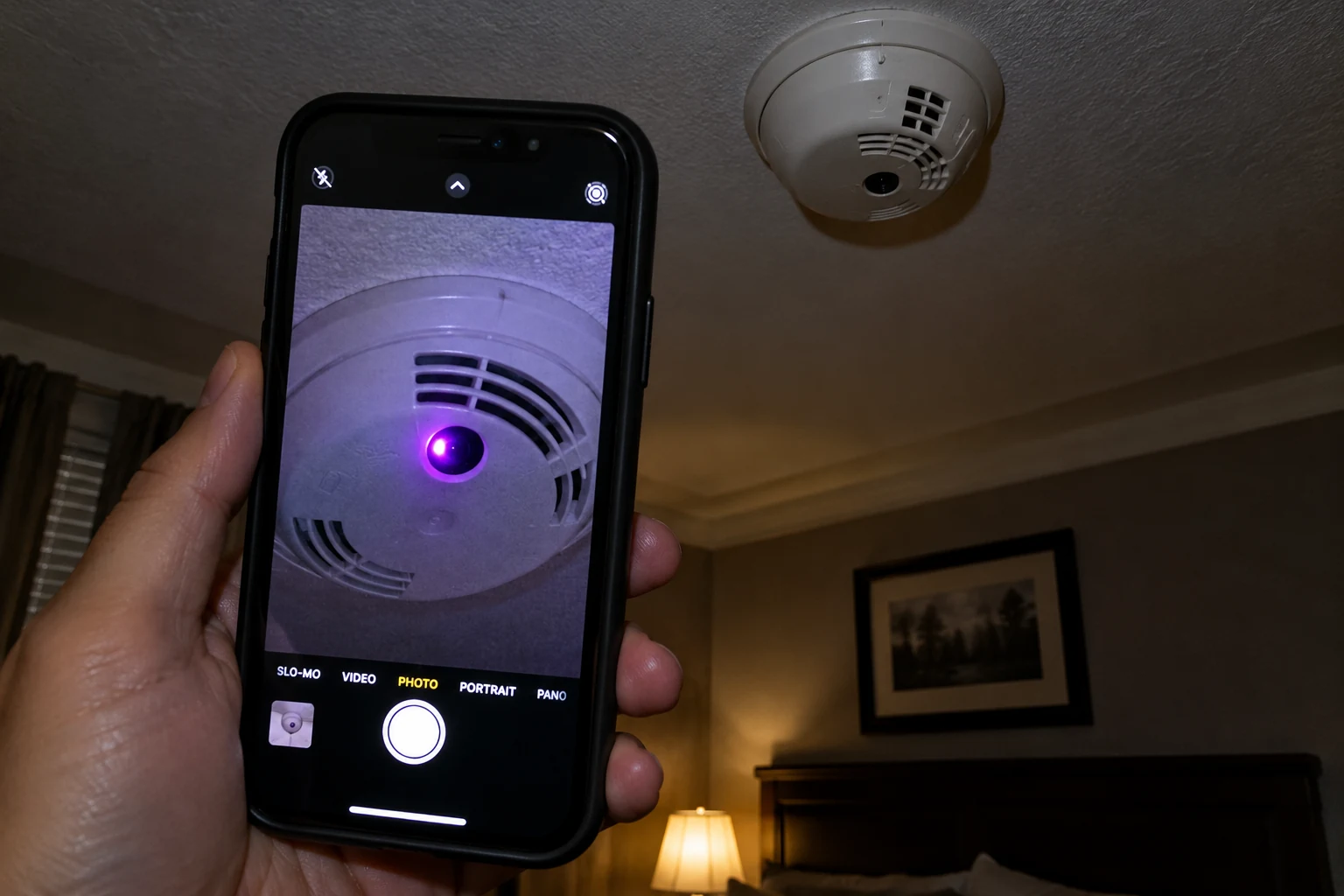
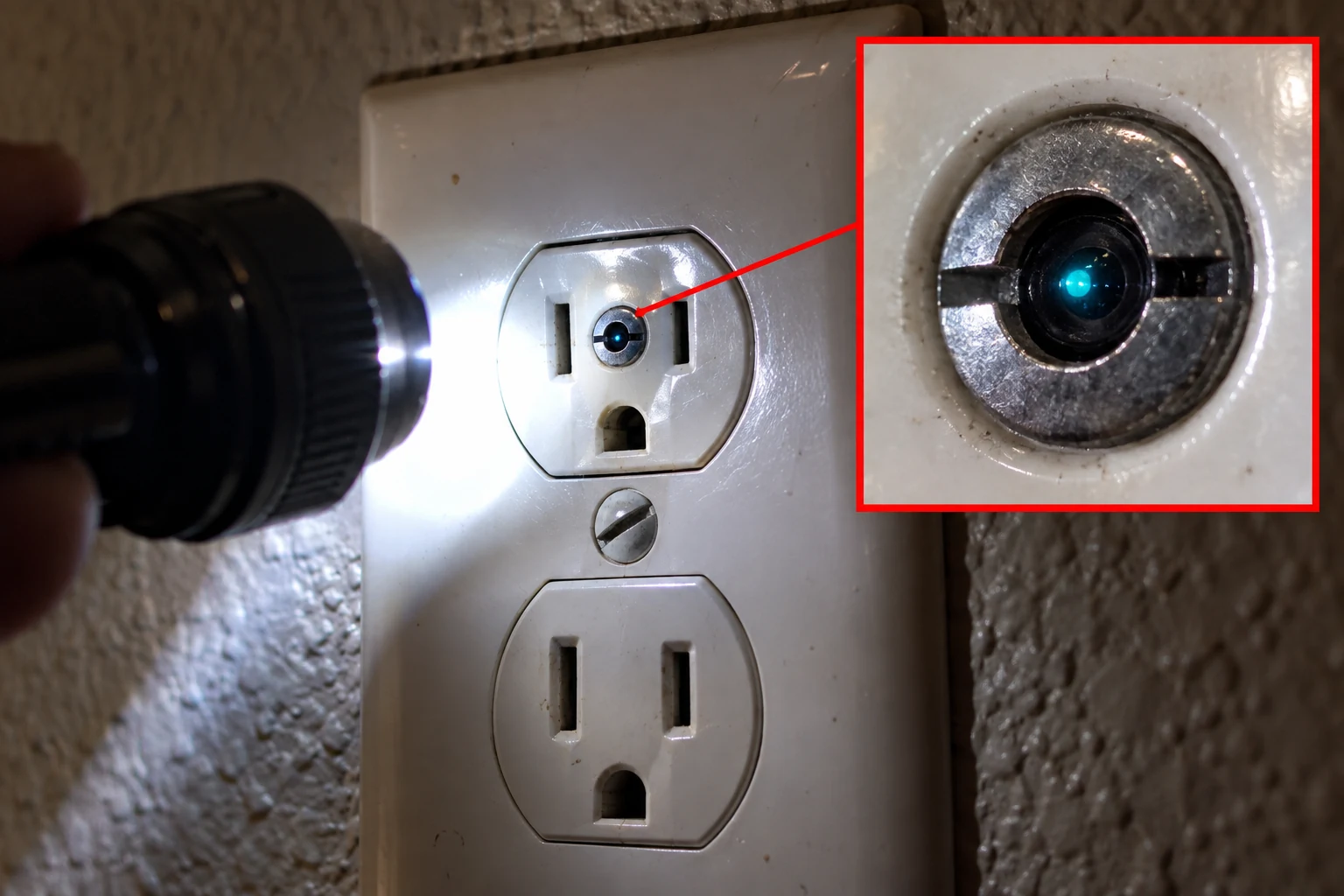
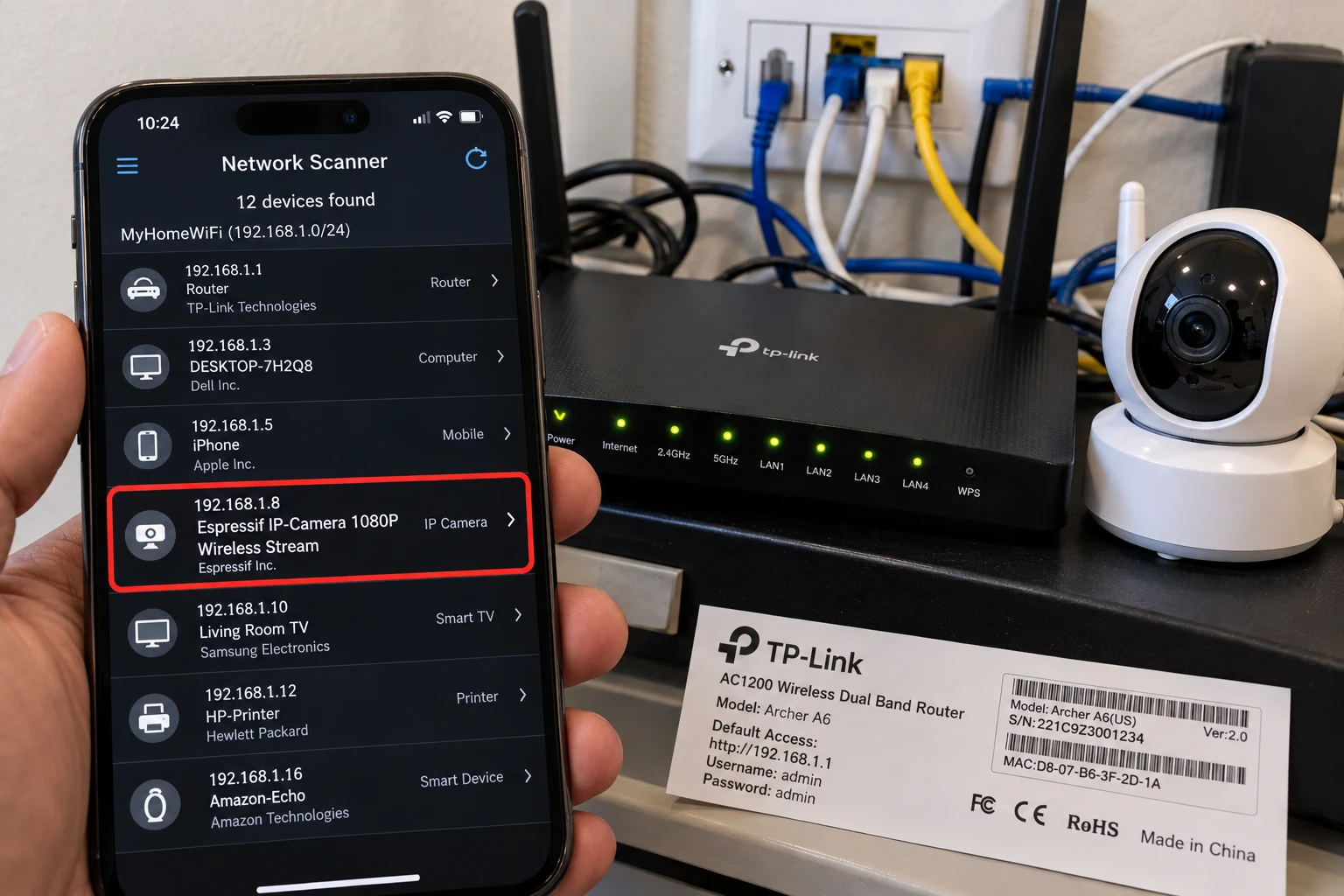
What Can You Legally Do If an Outside Camera Points at Your Door or Window? (Safe Self-Help Rules)
When a landlord or neighbor mounts an intrusive camera pointing toward your windows or front door, renters frequently wonder if they can physically disable the equipment. Understanding what self-help remedies are lawful—and which actions create legal jeopardy—is essential to protecting your tenancy.
What You Must NEVER Do
Never smash the camera lens, cut the power cables, spray-paint the glass, or remove the device from the wall. Even if the camera placement is completely unlawful, destroying physical property belonging to the landlord or building can result in criminal misdemeanor vandalism charges and an immediate 3-day eviction notice for property destruction. Protect your position by avoiding physical damage to the equipment.
3 Lawful Self-Help Steps You Can Take Today
- Apply Static-Cling One-Way Daytime Privacy Film ($15): If an exterior camera points toward your living room or bedroom window, install removable static-cling mirror film on the interior glass surface. This film reflects outside sunlight during daylight hours, creating a mirror effect that prevents cameras from seeing inside while allowing natural light into your room. Because it uses static cling rather than adhesive, it causes zero wall or glass damage and leaves no residue when you move out.
- Place a Tall Privacy Plant or Screen on Your Exclusive Balcony: If your lease grants you exclusive use of a patio or balcony, you are entitled to place potted bamboo, hanging plants, sunshades, or patio furniture within that space. If an authorized plant or privacy divider naturally obstructs an exterior camera's view into your window, you are fully within your legal tenancy rights.
- Deliver a Formal Written Demand Letter: In the vast majority of cases, landlords install intrusive cameras out of casual disregard rather than malice. When presented with a formal written notice citing federal wiretap statutory fines ($10,000) and civil privacy liabilities, most landlords promptly reposition the camera or disable audio recording to avoid litigation. Use the template below.
Ready-to-Send Landlord Camera Removal, Repositioning & Wiretap Demand Letter (With Copy Button)
Deliver this formal legal notice through certified mail with return receipt requested, or submit it through your official management portal. Establishing written notice puts your landlord on statutory notice, eliminating any defense of lack of awareness.
How Much Can You Recover for Landlord Privacy Violations?
When taking legal action in Small Claims Court or Housing Court, financial recovery is calculated using established statutory remedies, documented out-of-pocket expenses, and rent reduction standards:
| Recovery Category | Calculation Standard | Statutory Authority & Limits |
|---|---|---|
| 1. Common-Law Invasion of Privacy Damages | Compensatory damages for severe emotional distress, anxiety, and loss of private seclusion from intrusive camera placement. | Restatement (Second) of Torts § 652B. |
| 2. Statutory Surveillance Fines | Civil statutory penalties assessed under state electronic surveillance, wiretap, and video voyeurism statutes. | State privacy & voyeurism codes. |
| 3. Mandatory Removal Injunction | Court injunction ordering the immediate physical removal of cameras pointed at tenant windows, interior rooms, or private patios. | Judicial equitable relief. |
Small Claims Filing Limits: Most tenants resolve these matters pro se (without a lawyer) in Small Claims Court. Maximum claim limits vary by state: for example, $12,500 in California (California Courts Self-Help), $10,000 in New York City (NY Courts Small Claims), and $20,000 in Texas (Texas Judicial Branch). If damages exceed local small claims thresholds, lawsuits proceed to standard Civil Court.
Frequently Asked Questions
While a landlord can place a camera in a shared hallway or porch to monitor the building entrance, the camera cannot be positioned so that it sees inside your apartment when you open the door, and the landlord cannot use it to record your audio conversations or harass you by texting you about who visits your apartment. In cities like New York and Los Angeles, using a camera aimed only at one tenant's door to intimidate them violates municipal Tenant Anti-Harassment laws.
No—it is illegal in all 50 states. Even in "One-Party Consent" states, wiretapping laws only allow someone who is actually part of the conversation to record it. A landlord who uses a Ring, Blink, or Nest camera microphone to remotely listen to or record tenants talking on the porch, yard, or hallway commits illegal eavesdropping/wiretapping—which carries $5,000 to $10,000+ in statutory civil penalties under federal law (18 U.S.C. § 2520) and state penal codes.
For silent cameras in shared apartment building parking lots or lobbies, landlords generally do not need lease permission. However, if you rent a single-family house or duplex with exclusive use of the yard/porch, or if you live in a Two-Party Consent state where audio/video notice signs are required, installing new cameras on your leased space without your consent violates your Right to Quiet Enjoyment and exclusive possession.
If the camera is plugged into your private Wi-Fi network or an electrical outlet inside your rented space that you pay the electric bill for, you can change your Wi-Fi password and demand they unplug it from your meter after giving written notice. However, for cameras mounted in shared building hallways on building power, never smash, paint, or tape over the camera yourself—instead, hang a privacy curtain inside your doorway/window and send a formal written legal demand or file in Small Claims/Housing Court.
Yes. If your landlord installs a hidden indoor camera, records your private conversations on audio, angles a camera into your windows or private yard, or uses cameras to stalk and harass you—and refuses to remove them after a written demand—they have breached the Implied Covenant of Quiet Enjoyment. You can terminate your lease under Constructive Eviction with zero penalty and sue for your full security deposit, moving costs, and statutory privacy fines.
SueLegal is an independent educational legal publisher, not a law firm or lawyer referral service. The information provided in this guide is for general informational and educational purposes only and does not constitute formal legal advice. Residential landlord-tenant laws, repair notice periods, and statutory remedies vary significantly across state and municipal jurisdictions. If you are facing eviction, severe uninhabitable conditions, or complex litigation, consult a licensed attorney in your jurisdiction or contact your local legal aid organization. For more details on our standards, read our Editorial Policy and Legal Research Methodology.