
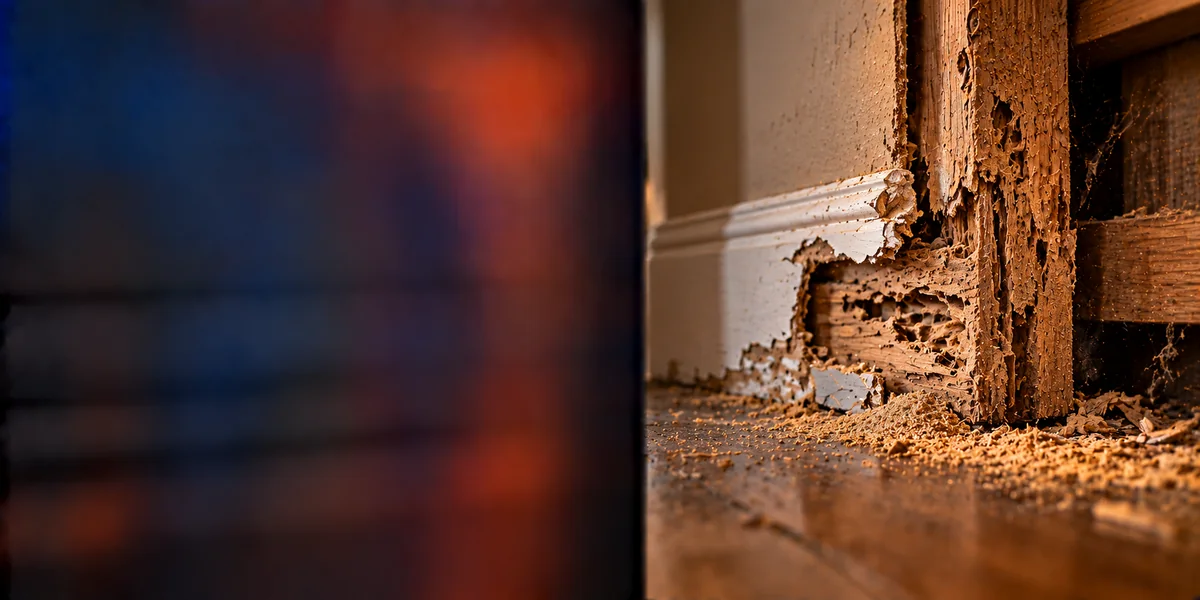
Important Steps to Take
- Structural Integrity is Non-Delegable Landlord Duty: Unlike minor insects, termites destroy the load-bearing framing of the building. Landlords cannot blame tenants or use lease disclaimers to escape mandatory structural maintenance.
- Save Frass and Shed Wings in a Sealed Plastic Bag: Termite droppings (hexagonal pellets called frass) and shed translucent swarm wings provide undeniable physical evidence for building inspectors and small claims judges.
- Mandatory Relocation Compensation During Tenting: When a building requires whole-structure fumigation with toxic gases (like sulfuryl fluoride), landlords must either suspend rent for displacement days or cover reasonable hotel and pet boarding expenses.
- Request City Structural Code Inspection if Landlord Delays: If management ignores sagging baseboards or active mud tubes, calling the municipal building inspector creates an official citation verifying habitability violations.
- Destroyed Wooden Furniture is Recoverable in Small Claims: If termites burrow into your antique hardwood tables, dressers, or pianos, document pre-damage value and replacement costs to include in your financial damages claim.
Over 600,000 American homes suffer structural damage from subterranean and drywood termites each year, generating more than $5 billion in property destruction. But when wood-destroying insects hollow out the wall studs, subflooring, or window casements of a rental property, the landlord cannot simply hand you a can of bug spray or blame your housekeeping. Under the implied warranty of habitability and municipal housing codes, the property owner bears strict legal responsibility for whole-building extermination and structural safety.
When a landlord ignores termite mud tubes along foundation sills, permits structural decay to worsen, or attempts cheap surface spot sprays while thousands of winged reproductive alates swarm your living room, tenants have enforceable legal remedies: compelling professional fumigation, demanding hotel stipends during tenting, recovering retroactive rent abatement, or terminating the lease without penalty.
To understand small claims court limits, filing procedures, and burden of proof standards across residential tenancy disputes, read our central pillar guide on suing your landlord.
Can I Sue My Landlord for Termites?
Yes. Under the implied warranty of habitability and municipal building codes, landlords must keep residential premises structurally safe and free from insect decay. If a landlord fails to treat termites or repair compromised structural framing, a tenant can sue in court for:
- Temporary Relocation Expenses: Compensation for hotel lodging, dining stipends, and pet boarding if the building must be evacuated for structural fumigation (tenting).
- Retroactive Rent Abatement: Refunding a portion of rent paid during active swarms or while living with sagging, structurally compromised floors under our guide to unsafe living conditions.
- Constructive Eviction: Terminating the lease without penalty if structural decay threatens life safety or the landlord refuses to tent the building.
- Personal Property Damage: Compensation for expensive wooden furniture, pianos, or antique book collections destroyed by termites under our guide to property damage claims.
When the Landlord May Be Responsible
Critical Legal Standards
- Compromised Load-Bearing Framing: When subterranean or drywood termites hollow out foundation sills, wall studs, or roof rafters, creating collapse hazards.
- Swarming Termites Inside Living Areas: Massive swarms of winged termites emerging from electrical outlets, doorframes, or baseboards into the tenant's living space.
- Failure to Pay Relocation Costs During Tenting: In states like California, if a landlord tents a building for fumigation, they must provide proper statutory notice and either waive rent or pay relocation assistance during the displaced days.
- Refusal to Hire Licensed Structural Pest Control Operators: Relying on unlicensed maintenance staff to spray surface insecticide rather than hiring licensed pest control operators for whole-structure fumigation or ground trenching.
When the Landlord May Not Be Responsible
- Tenant-Introduced Infested Wood: If the tenant brought severely infested firewood or unsealed reclaimed lumber into a single-family home that introduced the pests.
- Absence of Written Notice: If termites were nesting hidden inside wall studs without visible mud tubes or swarms, and the tenant never informed the landlord in writing.
- Refusal to Vacate for Scheduled Tenting: If the landlord arranged a certified fumigation and the tenant refused to vacate or prep the unit, preventing the treatment.
Notice and Landlord Knowledge
Because termites work hidden inside walls, establishing written notice is vital:
Send a formal "Notice of Structural Termite Infestation" via USPS Certified Mail with Return Receipt Requested. Detail visible evidence: mud tubes along foundation walls, discarded wings on windowsills, or sagging floorboards. Demand an immediate inspection by a licensed structural pest control operator.
Evidence Required to Prove a Termite Lawsuit
| Required Termite Evidence | Action to Take & Courtroom Value |
|---|---|
| ✓ Photographs of Swarmers & Wings | Photos of winged alates emerging from walls or piles of discarded wings on windowsills proving an active reproductive swarm inside living areas. |
| ✓ Photos of Frass & Mud Tubes | Clear close-ups of sand-like termite droppings (frass) or earthen mud shelter tubes on foundation walls establishing ongoing structural consumption. |
| ✓ Hollow-Sounding / Sagging Wood | Video tapping on hollow baseboards, door frames, or spongy floorboards demonstrating hidden internal structural damage. |
| ✓ Licensed Pest Inspection Report | An independent Wood Destroying Organism (WDO) report from a licensed pest control operator confirming active infestation. |
| ✓ City Building Code Citations | Inspection citations from municipal building inspectors declaring structural wood decay and unsafe habitability conditions. |
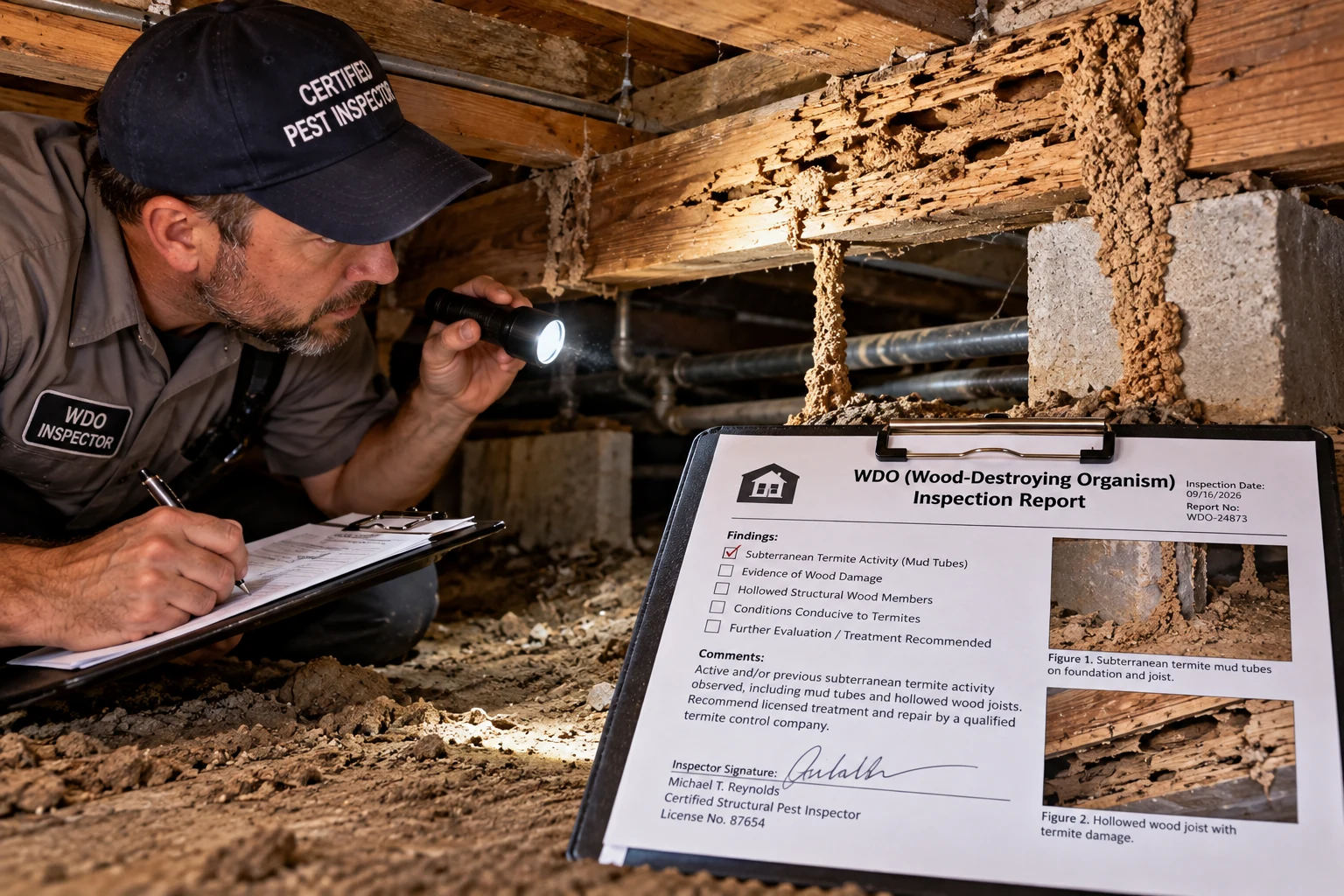
Problem-Specific Legal Analysis: Structural Integrity & Fumigation Relocation
Termites present distinct legal issues surrounding building habitability during treatment.
Eradicating drywood termites typically requires whole-building fumigation using toxic gases (such as sulfuryl fluoride). Because the gas is lethal to humans and pets, the entire property must be evacuated for 2 to 4 days. Under state property codes (such as Cal. Civ. Code § 1940.9), landlords must provide at least 15 days' written notice before fumigation and cannot charge rent for the days the tenant is locked out. If the landlord refuses to abate rent or cover reasonable relocation costs during mandatory tenting, the tenant can sue for breach of contract and statutory damages under our guide to constructive eviction.
Judicial Precedent: Structural Integrity and Vital Facility Maintenance
Landlords are legally required to maintain structural support beams, wall framing, and subfloors free from severe insect decay that threatens the physical stability of the building.
In Pugh v. Holmes, the Supreme Court of Pennsylvania abolished traditional doctrines that forced tenants to accept structural defects, adopting the implied warranty of habitability in all residential leases. The court held that landlords must maintain structural facilities in safe working order, empowering tenants to withhold rent, make repairs and deduct expenses, and recover damages when structural defects impair habitable use.
This precedent matters because termite infestations frequently damage structural framing hidden behind drywall. Proving that termite swarms or hollowed woodwork pose structural safety risks shifts liability squarely to the owner, supporting tenant claims for emergency lease termination or municipal condemnation damages.
Legal Authority Note: While binding in Pennsylvania and persuasive across other jurisdictions, Pugh is a leading authority establishing that structural defects fall squarely under the implied warranty of habitability.
What If the Landlord Performed Spot Treatment Instead of Tenting?
Landlords frequently attempt localized "spot treatments" (drilling small holes and injecting foam) to avoid the $3,000–$8,000 cost of whole-building tenting.
While spot treatments can manage isolated pockets, they are often legally inadequate if the colony extends throughout the attic and wall framing. If termites continue swarming following a spot treatment, the landlord remains in ongoing breach of habitability and you can pursue judicial remedies under our guide to landlord refusal to make repairs.
Potential Remedies: Relocation Costs, Rent Abatement & Lease Cancellation
| Remedy | Description | Legal Basis |
|---|---|---|
| Relocation Assistance / Per Diem | Reimbursement for hotel rooms and meals during structural fumigation tenting. | Statutory Relocation Mandates & Contract |
| Rent Abatement | Refund of rent for the duration the home was swarmed or structurally compromised. | Warranty of Habitability |
| Constructive Eviction | Terminating the lease early if structural damage creates a collapse hazard. | Breach of Quiet Enjoyment |
Common Landlord Defenses and How to Refute Them
- "Termites Don't Harm Humans, So It's Not a Habitability Issue": Landlords argue termites don't bite. How to refute: The warranty of habitability mandates structural safety. Compromised load-bearing wood violates municipal building safety codes.
- "We Plan to Tent Next Year": Landlords delay fumigation to save money. How to refute: Landlords cannot force tenants to live with indoor swarms for months while waiting for seasonal tenting.
State Laws on Wood-Destroying Organisms and Tenting
- California (Cal. Civ. Code § 1940.9): Governs temporary relocation for fumigation. Landlord must give 15 days' written notice and must not charge rent while the tenant is displaced.
- Florida (Fla. Stat. § 83.51(2)(a)(1)): Landlords of apartments must provide for the extermination of wood-destroying organisms.
- Hawaii / Southern States: Rigid structural pest control board oversight requiring licensed WDO certifications.
What to Do Next: Step-by-Step Tenant Protocol
-
1
Capture Photographic Evidence:
Photograph swarming alates, discarded wings, mud tubes, and frass pellets.
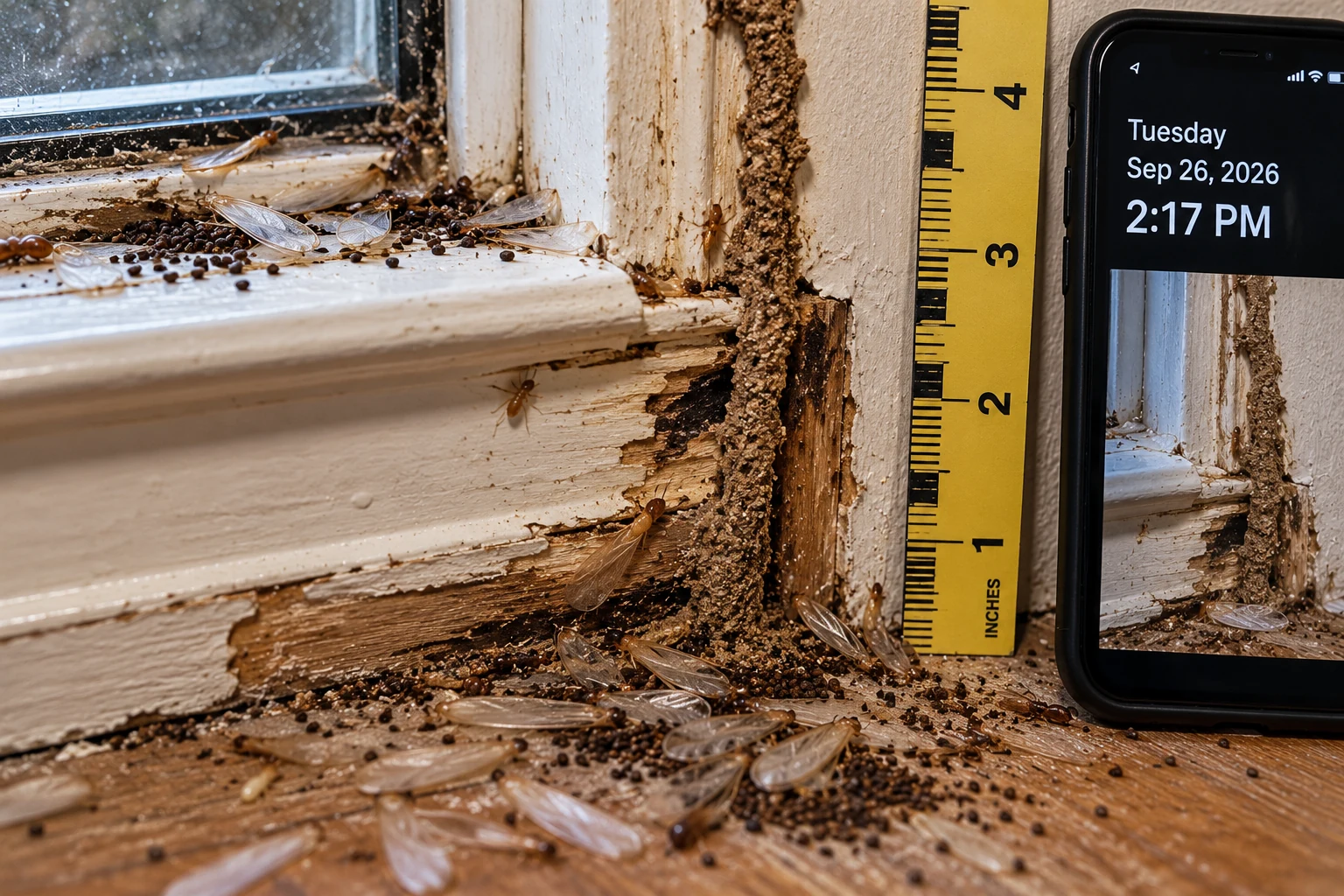
Step 1 Documentation: Photograph discarded wings, mud tubes, and fecal pellets alongside a measurement scale and timestamp. -
2
Send Certified Mail Notice:
Demand immediate inspection by a licensed structural pest control company.
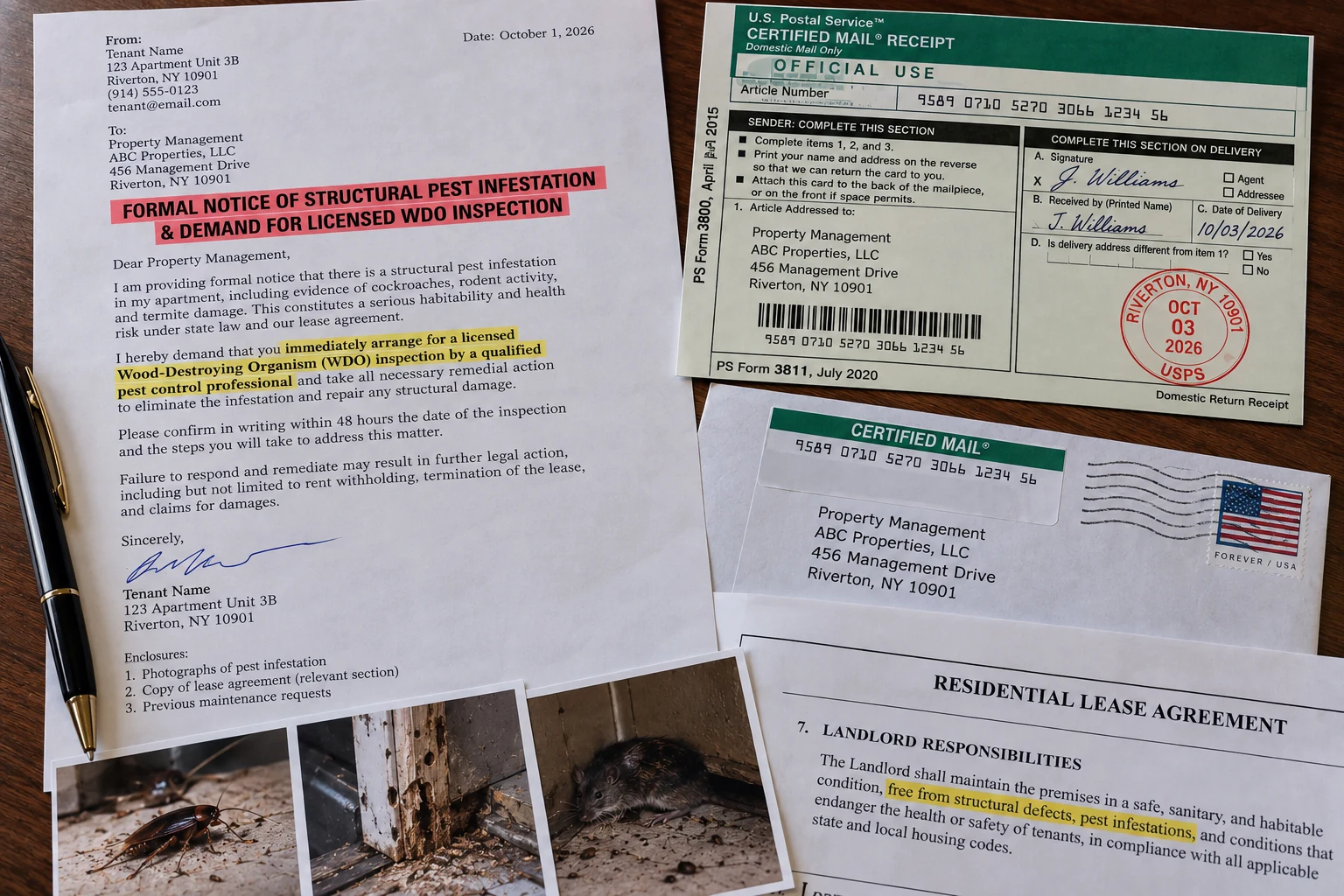
Step 2 Formal Demand: A formal written demand via certified mail creates indisputable proof of landlord notice for structural repairs. -
3
Obtain an Independent WDO Report:
If the landlord refuses to inspect, hire a licensed inspector to document structural activity.
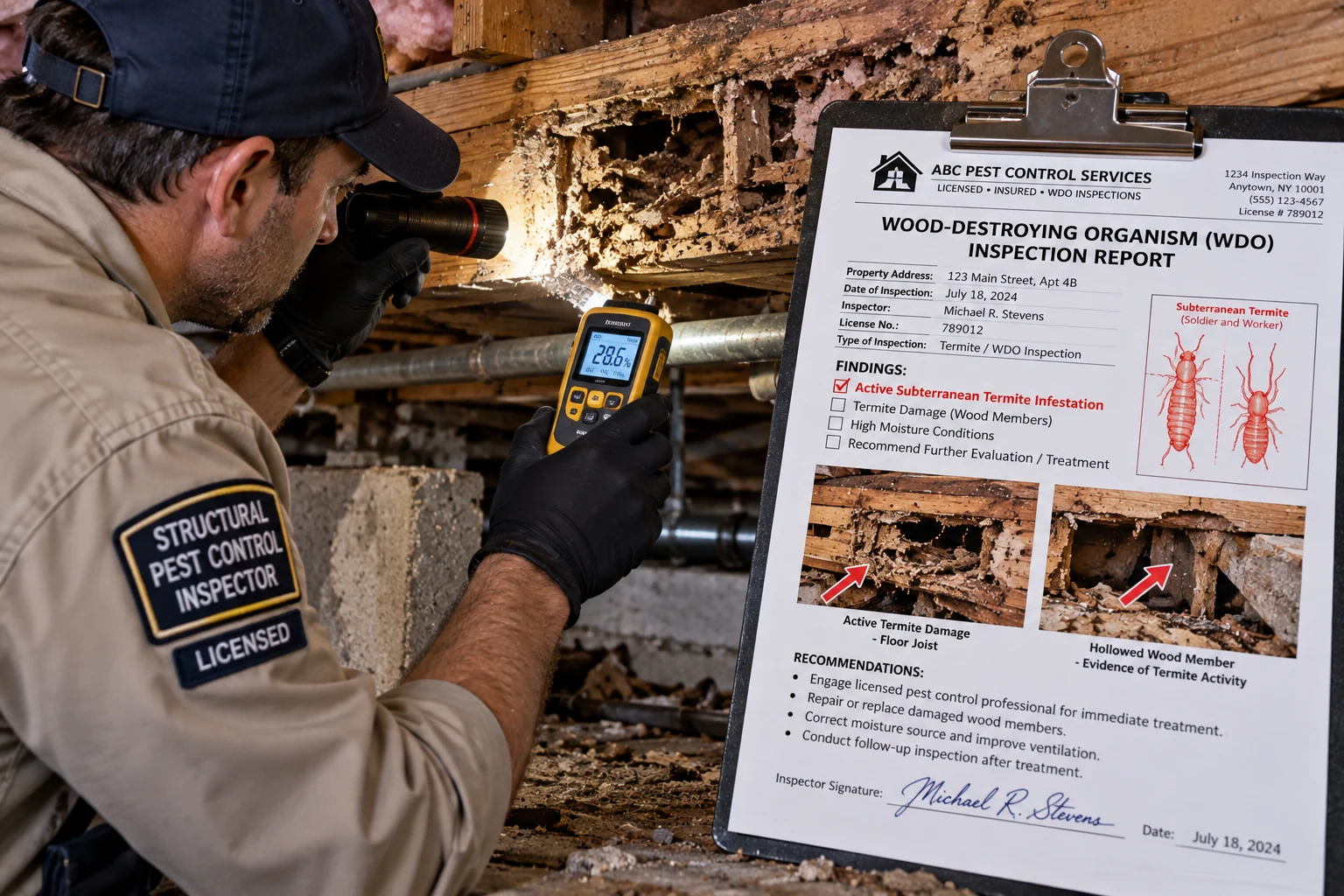
Step 3 Expert Inspection: An independent Wood-Destroying Organism (WDO) report establishes unbiased evidence of active structural infestation. -
4
Request City Building Inspection:
Contact municipal building officials if floor joists or ceilings sag.
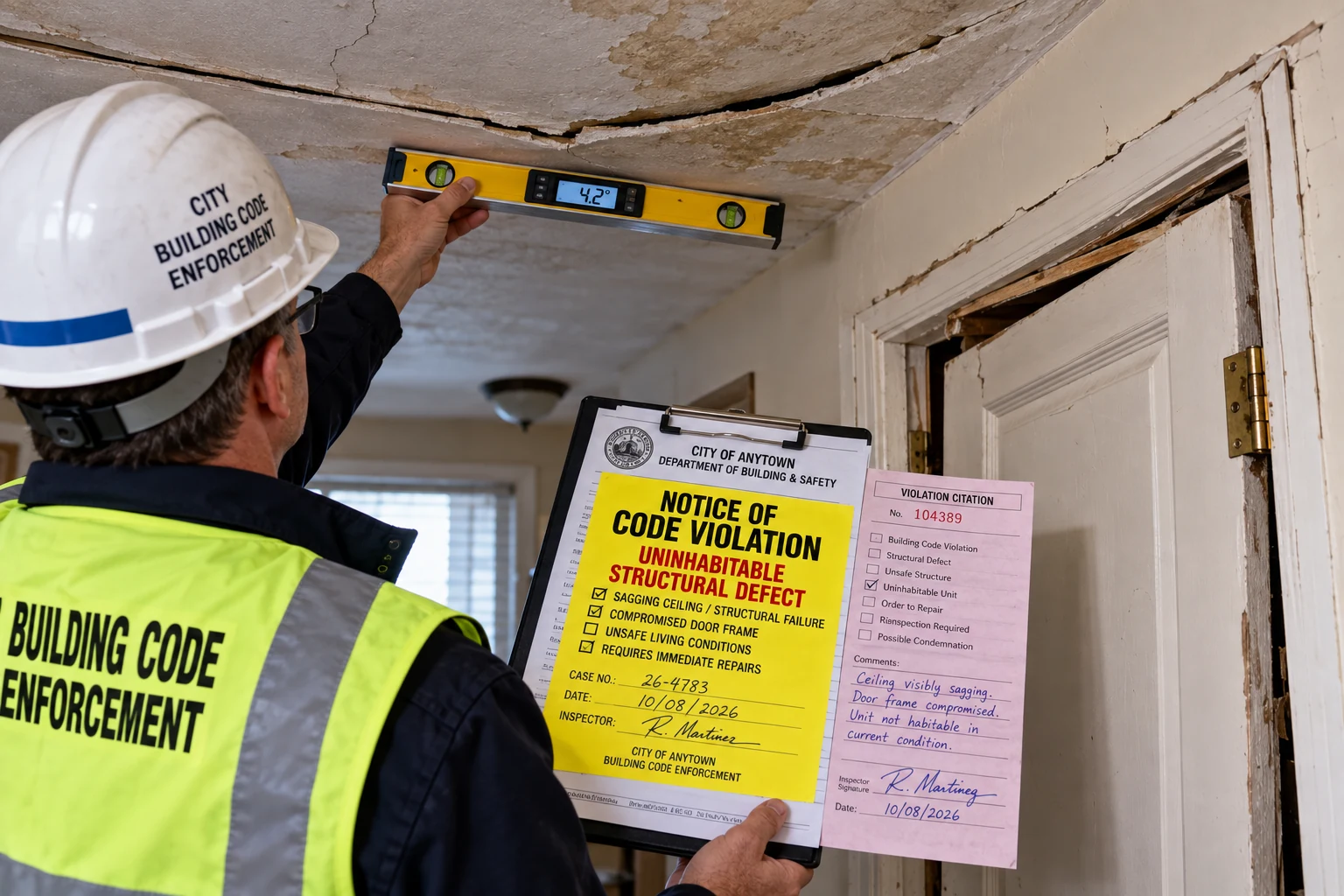
Step 4 Code Enforcement: City building citations for structural compromises eliminate the landlord defense of minor cosmetic wear. -
5
File in Small Claims Court:
Sue for relocation costs, rent abatement, and damaged wooden property.
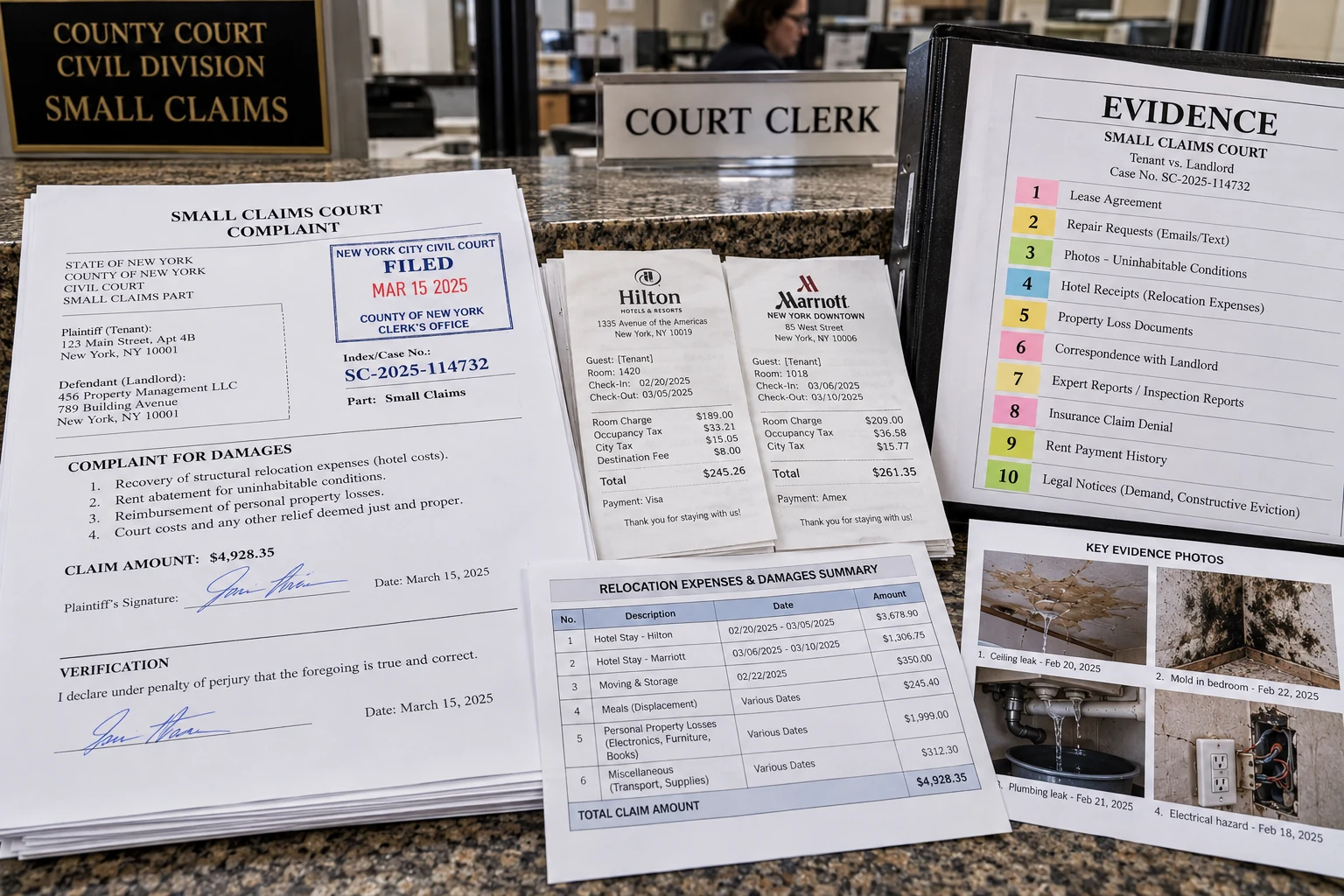
Step 5 Judicial Claim: File your clerk-stamped complaint alongside itemized hotel bills, WDO findings, and proof of rent abatement entitlement.
How Much Can You Sue for in a Termite Infestation Case?
When taking legal action in Small Claims Court or Civil Court, financial recovery is based on established tort principles, documented out-of-pocket expenses, and statutory damages:
| Recovery Category | Calculation Standard | Statutory Authority & Limits |
|---|---|---|
| 1. Destroyed Wooden Property Replacement | Fair market value compensation for wooden bed frames, dining sets, antique furniture, and books ruined by termite colony feeding. | Negligence property damages. |
| 2. Hotel Lodging During Fumigation / Tenting | Full reimbursement for hotel lodging, pet boarding, and food per diems while the building is tented for structural chemical fumigation. | Uninhabitable apartment doctrine. |
| 3. Proportional Habitability Rent Abatement | 20% to 50% monthly rent reduction for every month active swarms or structurally sagging wooden floors impacted living spaces. | Warranty of Habitability. |
Small Claims Filing Limits: Most tenants resolve property and minor habitability disputes without hiring an attorney in Small Claims Court. Maximum claim limits vary by state: for example, $12,500 in California (California Courts Self-Help), $10,000 in New York City (NY Courts Small Claims), and $20,000 in Texas (Texas Judicial Branch). If physical injuries or permanent trauma damages exceed small claims limits, cases proceed to standard Civil Court.
Frequently Asked Questions
In many states (such as California), landlords cannot charge rent during tenting and must either provide alternative lodging or a per diem reimbursement for displaced tenants. Check your local property code.
Yes, if the infestation causes thousands of winged swarmers inside your unit or damages structural joists to the point of unfitness, and the landlord refuses proper fumigation, you can claim constructive eviction and vacate without penalty.
SueLegal is an independent educational legal publisher, not a law firm or lawyer referral service. The information provided in this guide is for general informational and educational purposes only and does not constitute formal legal advice. Residential landlord-tenant laws, repair notice periods, and statutory remedies vary significantly across state and municipal jurisdictions. If you are facing eviction, severe uninhabitable conditions, or complex litigation, consult a licensed attorney in your jurisdiction or contact your local legal aid organization. For more details on our standards, read our Editorial Policy and Legal Research Methodology.