
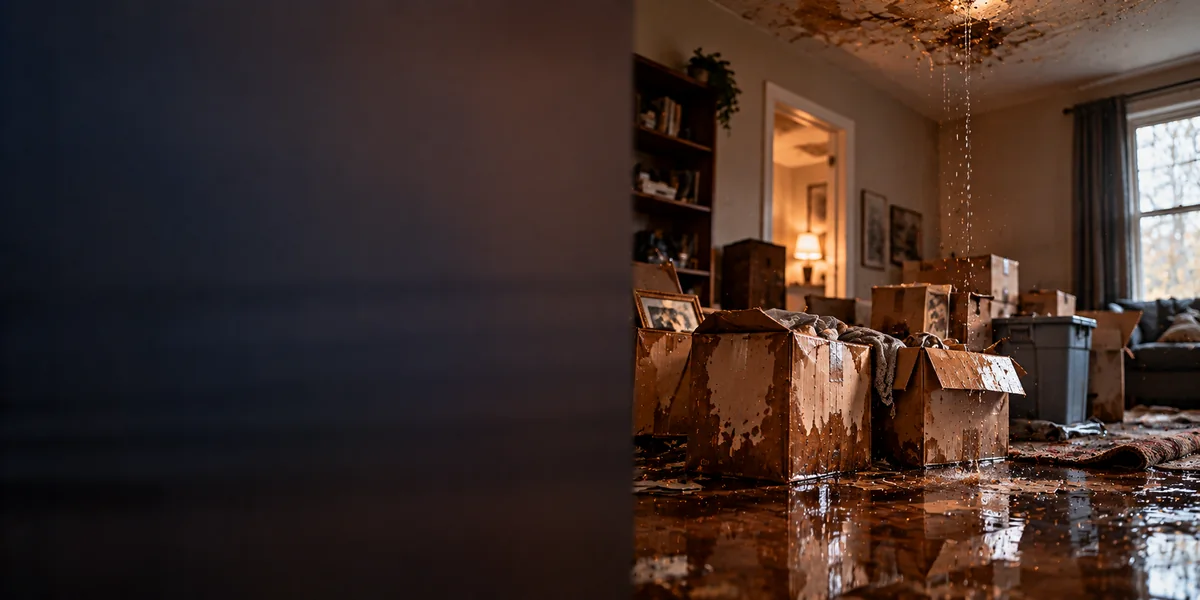
Quick Legal Guide
- Your Lease’s "We Aren’t Responsible for Property Damage" Clause Is Void When They Are Negligent: Don’t let your landlord hide behind Section 18 of your lease. Statutes in NY (
GOL § 5-321), CA (Civ. Code § 1953), MA (c. 186 § 15), IL (765 ILCS 705/1), TX (Prop. Code § 92.006), WA, and 35+ other states forbid landlords from waiving liability for their own negligent maintenance! - You Do NOT Need Renters Insurance to Sue a Negligent Landlord: If your landlord says "You violated the lease by not having renters insurance, so we don’t owe you for the ceiling collapsing on your couch," they are wrong. Not having insurance never excuses a landlord who negligently ruined your property!
- Did Maintenance Workers or Contractors Ruin Your Things? Sue the Landlord: If a plumber floods your rug, painters get plaster dust inside your PC and couch, or roofers leave the roof open before a rainstorm, the landlord is directly responsible for the workers they let into your home.
- Never Throw Out Ruined Items Until You Photograph Every Label & Serial Number: Before hauling a waterlogged mattress, moldy couch, or fried TV to the curb, take close-up photos of the damage, the brand tag/model number, and the source of the leak/hazard—then pull Amazon/retail screenshots showing what that exact model costs today.
- If the Landlord Threw Out Your Belongings on Purpose, Claim "Conversion" for 2x–3x Money: A landlord can never throw away items from your apartment, basement locker, or porch without giving formal statutory written notice (15 to 30 days in most states). Tossing your property early triggers massive Conversion and unlawful-eviction penalties!
Calculate Your Damaged or Trashed Property Lawsuit Payout
Estimate your financial recovery for ruined furniture, electronics, clothing, cleaning expenses, statutory conversion penalties, and habitability rent refunds.
When Must Your Landlord Pay for Your Ruined Belongings? (The 6 Winning Scenarios vs. 2 Exceptions)
Property managers and insurance adjusters frequently attempt to dismiss tenant property losses with a blanket statement: "Landlords are never responsible for furniture or personal items—that is what renters insurance is for."
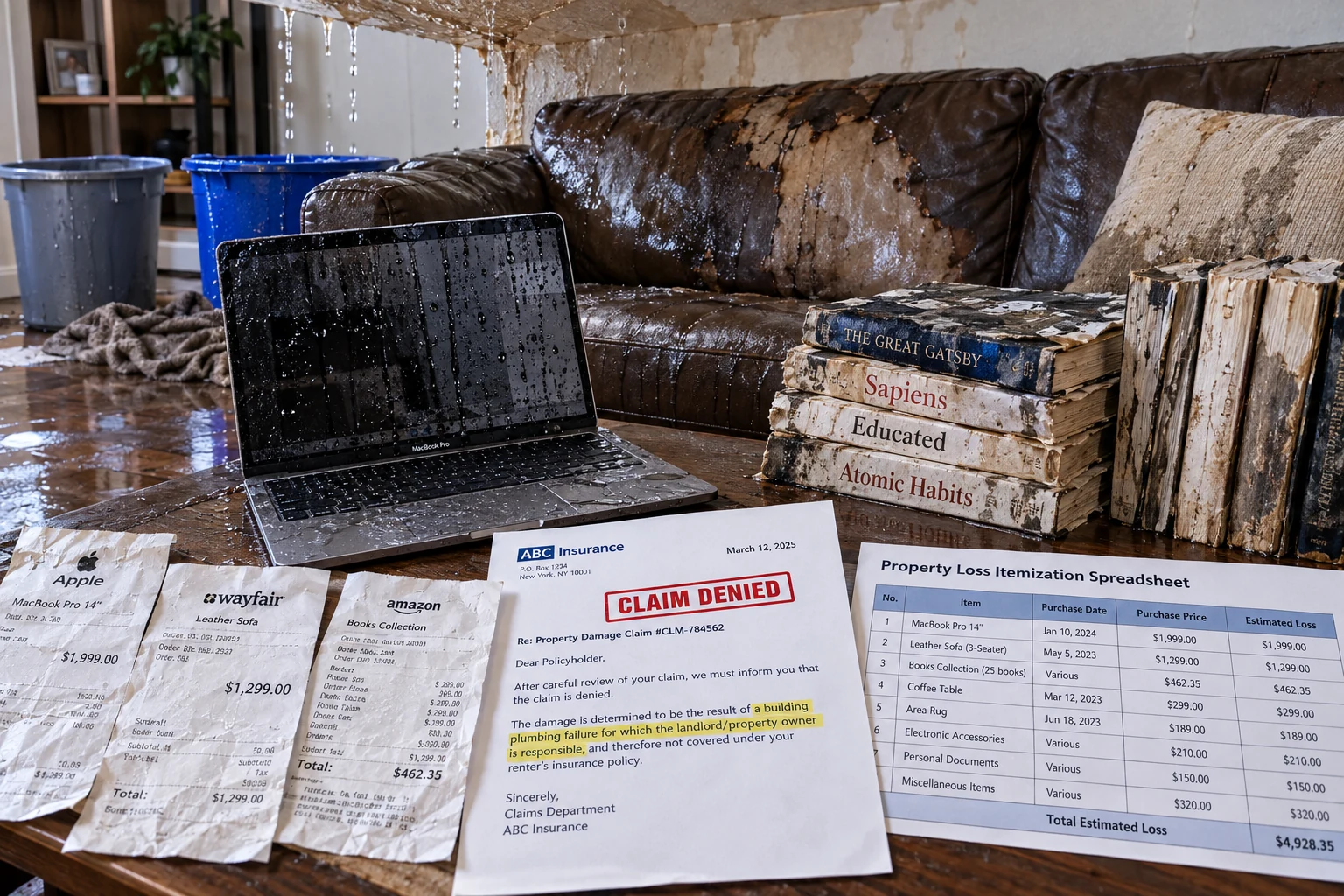
Under American tort and contract law, that defense only applies to unpredictable, natural Acts of God. When a building defect, contractor blunder, or intentional disposal destroys your belongings, the landlord is legally liable for full replacement value. For foundational principles on holding management accountable, review our master guide to Can I Sue My Landlord? and our analysis of suing a landlord for negligence.
| What Ruined Your Belongings | Is the Landlord Liable? | Why You Win in Small Claims Court |
|---|---|---|
| 1. Known Roof Leak, Plumbing Leak, Radiator Burst, or Ceiling Collapse | YES (100% Liable) | Once management receives written or verbal notice of a stain, drip, or corroded pipe—or if maintenance was neglected—the landlord is responsible for every destroyed mattress, sofa, and laptop. See our guides on water damage liability and ceiling collapse claims. |
| 2. Raw Sewage Backup, Toxic Mold Spores, or Bed Bug / Roach Contamination | YES (100% Liable) | Porous household items (mattresses, couches, rugs, pillows, baby cribs, clothing) contaminated by Category 3 black water, toxic mold contamination, or severe bed bug infestations cannot be safely sanitized. The landlord must replace them. See our guide on sewage backup lawsuits. |
| 3. Sloppy Maintenance Workers, Painters, Plumbers, or Roofers | YES (Direct Vicarious Fault) | If management’s handyman gets plaster dust inside your electronics, a painter ruins your couch, or roofers leave an unsealed opening before a rainstorm, the landlord is vicariously liable for the workers they authorized into the building. |
| 4. Landlord Threw Out Items From Unit, Storage Locker, Porch, or Yard | YES + 2x to 3x Penalties! | Disposing of tenant property without strictly obeying state abandoned-property notice and storage statutes (15 to 30 days) constitutes civil Conversion, carrying statutory double or treble damages. Review our guide on illegal eviction lockouts. |
| 5. Faulty Wiring Fried Your Electronics OR Broken Fridge Spoiled Your Food | YES (100% Liable) | Ungrounded outlets or open-neutral voltage surges that destroy computers and gaming consoles—or an unaddressed broken refrigerator that spoils groceries—are direct habitability breaches. Review our guide on electrical wiring shock and property damage. |
| 6. Rotten Tree Branch, Falling Brick, or Broken Parking Gate Smashed Car | YES (100% Liable) | If a dead or diseased tree on complex grounds collapses onto your parked vehicle, or a malfunctioning motorized gate arm crushes your car hood, the landlord owes your repair invoice or comprehensive insurance deductible. |
| 7. Sudden Tornado, Hurricane, or Neighbor’s Accidental Fire | Usually No (Use Renters Policy) | True unpreventable Acts of God are covered by your renters insurance policy, unless landlord negligence aggravated the disaster (such as boarded fire escapes or missing smoke alarms). |
How to Crush the Lease’s "Landlord Is Not Liable for Property Damage" Waiver Clause
Most residential lease agreements contain an exculpatory clause: "Landlord shall not be liable for any damage to Tenant's personal property caused by water, rain, burst pipes, fire, or theft, and Tenant agrees to look solely to their own Renters Insurance."
When your belongings are ruined, property managers cite this paragraph to scare you away from filing a claim. In small claims courts across the nation, this clause is legally worthless when the landlord’s negligence caused the damage.
State Anti-Waiver Statutes That Invalidate Exculpatory Clauses:
- New York (General Obligations Law § 5-321): Explicitly mandates that any residential lease agreement exempting a lessor from liability for damages to person or property caused by or resulting from the negligence of the lessor in the operation or maintenance of the demised premises is "wholly void as against public policy and unenforceable."
- California (Civil Code § 1953(a)(5) & § 1668): Forbids any lease clause modifying or waiving a landlord’s duty of care, declaring that contracts having for their object the exemption of anyone from responsibility for willful injury, negligence, or violation of law are completely invalid.
- Massachusetts (M.G.L. c. 186, § 15): Provides that any lease provision attempting to shield a landlord from liability for negligence in common areas or leased premises is void and unenforceable.
- Illinois (765 ILCS 705/1 — Lessor’s Liability Act): Establishes that exculpatory lease clauses attempting to waive landlord responsibility for property damage caused by negligent operation are contrary to public policy and void.
-
Texas (Property Code § 92.006) & URLTA States: In Texas, Washington (
RCW 59.18.230), Florida (Fla. Stat. § 83.47), and more than 35 Uniform Residential Landlord and Tenant Act states, landlords cannot contract away basic maintenance duties.
What If You Didn’t Have Renters Insurance?
Landlords often argue: "You breached your lease by not carrying renters insurance, so we don’t have to pay for your waterlogged bed." This argument fails in court. Failing to buy a renters insurance policy is a separate lease matter; it does not grant the landlord immunity for negligently destroying your property. The proximate cause of your loss was the landlord’s defective pipe or roof, not your lack of insurance.
Did Your Landlord Throw Out Your Belongings (During a Move-Out, Lockout, or "Storage Cleanout")?
One of the highest-value personal property claims in tenancy law is Tortious Conversion—the unauthorized exercise of ownership or destructive control over another person’s personal property.
Landlords frequently commit conversion in three common situations—often occurring alongside an illegal eviction lockout:
- The Early Move-Out Cleanout: Your lease runs through the last day of the month. You transport primary furniture on the 29th, planning to retrieve your remaining clothing, electronics, and keepsakes on the 30th—only to find the landlord discarded everything into a dumpster early.
- The Basement Storage Locker or Patio Purge: Management decides to clean out the shared basement, bike rack, or garage without proper individual notice, tossing your bicycle, winter gear, tools, or storage bins.
- Disposing of Left-Behind Property Without the Mandatory Holding Window: Even when a tenancy terminates or a formal eviction occurs, landlords cannot discard possessions on Day 1.
Mandatory Statutory Storage Periods Across Key States:
| Jurisdiction | Mandatory Storage & Notice Rules | Statutory Penalty for Early Disposal |
|---|---|---|
| California | Cal. Civ. Code § 1983–1988: Must itemize property, serve formal written notice, and hold goods safely for 15 days (in-person) or 18 days (by mail). | Liable for conversion damages, value of property, and statutory damages under Cal. Civ. Code § 789.3. |
| New Jersey | N.J.S.A. 2A:18-72 (Abandoned Tenant Property Act): Must deliver written notice and store items for 30 to 33 days. | Mandatory Double (2x) Damages under N.J.S.A. 2A:18-82 plus attorney fees. |
| New York | RPAPL § 853 & § 768: Unlawful lockouts or disposing of belongings without judicial execution process. | Mandatory Triple (3x Treble) Damages in civil court. |
| Texas | Tex. Prop. Code § 54.044 & § 92.0081: Landlords cannot seize or discard property without strict statutory compliance. | Actual damages, one month’s rent plus $1,000 statutory civil penalties, and attorney fees. |
How Judges Value Your Ruined Couch, Clothes & Laptop (Beating the "Garage Sale Depreciation" Trick!)
When requesting reimbursement for ruined furniture, clothing, or household goods, landlords and insurance claims adjusters will attempt to apply flea-market depreciation: "Your wardrobe and sectional sofa were three years old. At a garage sale, used clothes are worth only a few dollars."
Small claims judges firmly reject this secondhand resale valuation for personal household effects under the governing standard articulated in the Restatement (Second) of Torts § 911, Comment e:
The "Actual Value to the Owner" Rule
Personal clothing, mattresses, and furniture are not purchased as commercial inventory for resale. A tenant who loses their bed or wardrobe because of a sewage flood or roof leak cannot reasonably replace those essential goods from a flea market. Courts measure damages by the replacement cost of equivalent new items, adjusted only for genuine, severe pre-existing wear—not secondhand yard sale pricing.
How to Prove Property Value in Court:
- Porous Items Damaged by Sewage or Mold: Mattresses, pillows, upholstered couches, and baby cribs exposed to Category 3 black water or toxic mold cannot be safely sanitized. Courts award 100% replacement value.
- Electronics & Appliances: Obtain a written diagnostic inspection report from an authorized repair technician confirming electrical over-voltage surge destruction, water corrosion, or irreparable damage.
- Retail Pricing Screenshots: Pull current online retail listings (e.g., Amazon, Target, Best Buy, IKEA) for identical or closely comparable make and model items to substantiate your itemized damage schedule.
Build Your "4-Column Small Claims Property Ledger" in 15 Minutes
Judges love organized, realistic spreadsheets. Bring 3 printed copies of a simple 4-column table listing every ruined item:
- Column 1 (Item & Brand/Model): e.g., Queen Casper Original Mattress + West Elm 84" Sofa + Apple MacBook Air M2.
- Column 2 (Photo Proof): Attach a photo of the waterlogged/moldy/trashed item (or a photo of you owning it in the apartment before the landlord threw it out).
- Column 3 (Current Amazon / Target / Best Buy Replacement Link): Print the product page showing what it costs to buy that item today.
- Column 4 (Professional Cleaning / Dry-Cleaning / Data-Recovery Receipts): Any money you spent at a dry cleaner, rug cleaner, or computer repair shop trying to save your items is 100% reimbursable with zero depreciation!
| Column 1: Item & Model | Column 2: Photo Proof | Column 3: Retail Price (Amazon / Best Buy) | Column 4: Cleaning / Recovery Receipt |
|---|---|---|---|
| Queen Casper Original Mattress | Exhibit A: Photo of waterlogged, moldy fabric & law tag | $1,295.00 (Casper.com printout) | $0 (Porous item declared total loss) |
| West Elm 84" Harmony Sofa | Exhibit B: Photo of sewage water soaking base & cushions | $2,199.00 (West Elm listing) | $75.00 (Biohazard technician evaluation) |
| Apple MacBook Air M2 (16GB) | Exhibit C: Photo of ceiling plaster & water inside keyboard | $1,399.00 (Apple Store invoice) | $299.00 (Apple Genius Bar data recovery) |
| Designer Wool Coat & Silk Dresses | Exhibit D: Photo of mold spores spreading through closet | $850.00 (Retail store printouts) | $185.00 (Specialty dry cleaning invoice) |
| TOTAL SMALL CLAIMS PROPERTY CLAIM | $6,302.00 (100% Replacement + Zero Depreciation on Restoration Receipts) | ||
Have Renters Insurance? How to Use the "Two-Pocket Strategy" to Get Paid 100%
What if you do have Renters Insurance? Should you file with your own insurance or sue the landlord? Do both the smart way:
1. If Your Loss Is Small (Under $2,000) — Demand Cash From the Landlord First
Because most Renters Insurance policies have a $500 to $1,000 deductible (and filing a claim can trigger rate hikes on your personal insurance record for up to 3 years), for smaller losses under $2,000—such as spoiled refrigerator food, a fried television monitor, or an area rug damaged by a sloppy maintenance worker—send our Small Claims Demand Letter directly to the landlord first rather than tapping your insurer.
2. If Your Loss Is Huge ($3,000 to $30,000+) — Use the "Two-Pocket Strategy"
When facing catastrophic losses from a ceiling collapse, structural fire, raw sewage flood, or severe toxic mold infestation, splitting your recovery across two legal channels guarantees maximum speed and full compensation.
How the Two-Pocket Strategy Recovers 100% of Your Losses:
If your policy includes Replacement Cost Value (RCV), file an immediate claim with your carrier. Your insurer will advance emergency housing stipends and wire funds within days to replace mattresses, clothing, laptops, and essentials at current 100% retail prices without waiting months for court hearings.
Even after your renters insurance carrier reimburses your primary belongings, you can still sue your negligent landlord in Small Claims Court to collect everything your insurance policy excluded:
- Your $500 to $1,000 Renters Insurance Deductible;
- Any Uninsured Items Above Policy Sub-Limits (fine jewelry, cash, high-end electronics, or tools exceeding standard caps);
- Spoiled Food, Cleaning Labor & Moving Costs; AND
- A 25% to 75% Retroactive Rent Refund for every month water leaks, mold, or sewage rendered your apartment substandard (which renters insurance policies never cover)!
The 5-Step "Proof Portfolio" Before Hauling Anything to the Trash
Carrying waterlogged furniture or ruined electronics out to the dumpster before preserving objective physical proof severely damages your Small Claims case. Follow this evidentiary protocol:
Step 1: Photograph Labels, Tags & Leak Origins
Capture close-up and wide-angle images before moving any damaged item.
- Photograph the manufacturer label, serial number tag, and model details.
- Photograph the water pooling, mold colony, or sewage line directly contacting the item.
- Photograph the origin overhead: zoom in on the cracked ceiling, pipe rupture, or radiator joint.
Step 2: Build Your 4-Column Small Claims Ledger
Create a structured itemized schedule of personal property loss.
- List each item, approximate purchase year, original cost, and current replacement cost.
- Attach printed online retail replacement screenshots for every item over $50.
- Include receipts or bank statements for original purchases if available.
Step 3: Preserve Diagnostic & Decontamination Invoices
Professional third-party assessments carry substantial weight in Small Claims Court.
- Obtain computer repair diagnostic receipts confirming liquid or electrical damage.
- Secure written statements from professional dry cleaners if specialty clothing cannot be salvaged.
- Document spoiled food receipts and grocery invoices following refrigerator failure.
Step 4: Track Disposal Fees & Hotel Invoices
Include all out-of-pocket reliance costs caused by the property destruction.
- Track municipal junk removal or roll-off dumpster rental receipts.
- Keep receipts for storage locker rentals, laundry fees, and emergency clothing replacement.
- Retain hotel receipts if the flooding or sewage condition rendered the apartment unlivable.
Ready-to-Send Damaged / Trashed Property Reimbursement & Conversion Demand Letters
Select the legal notice tailored to your situation below. Copy the text or download the pre-formatted .txt file to deliver via certified mail and your landlord’s resident online portal.
Frequently Asked Questions (FAQ)
SueLegal is an independent educational legal publisher, not a law firm or lawyer referral service. The information provided in this guide is for general informational and educational purposes only and does not constitute formal legal advice. Residential landlord-tenant laws, repair notice periods, and statutory remedies vary significantly across state and municipal jurisdictions. If you are facing eviction, severe uninhabitable conditions, or complex litigation, consult a licensed attorney in your jurisdiction or contact your local legal aid organization. For more details on our standards, read our Editorial Policy and Legal Research Methodology.