

Yes, you can sue your landlord for a dog bite—provided you establish one of four strict legal grounds connecting the property owner to the animal or the premises.
While the pet owner is almost always strictly liable under state canine injury statutes, holding a landlord or property management company financially accountable requires proving either direct animal ownership, premises liability, or the landmark legal doctrine of Actual Knowledge of Vicious Propensities. You have four primary paths to recover monetary damages:
- The Landlord Knew the Dog Was Dangerous and Did Nothing (Premises Liability & Severe Injury Damages): Under the foundational rule of Uccello v. Laudenslayer, if property management had actual knowledge that a tenant was keeping an aggressive, lunging, or snapping dog on the property, and the landlord possessed the legal authority under the lease to demand the animal's removal or issue an eviction notice, failing to act makes the landlord directly liable for your injuries through their Commercial General Liability (CGL) insurance policy.
- The Landlord or Staff Owned or Harbored the Dog (100% Strict Liability): If the dog belongs to the property owner, resident manager, on-site leasing agent, or building maintenance technician, the landlord is held strictly liable as the animal's legal keeper under state dog bite statutes (such as California Civil Code § 3342, Florida Statutes § 767.04, or New Jersey N.J.S.A. 4:19-16) without any requirement to prove prior viciousness or warnings!
- Defective Fences, Latches, or Common Area Gates (Premises Liability & Building Codes): If a dog escaped or attacked because the landlord failed to maintain a self-closing courtyard gate, ignored a rotted wooden fence board, or left a common dog run perimeter unlatched, the landlord is liable under premises liability and municipal property maintenance codes.
- Small Claims Track for Vet Bills & Lost Quiet Enjoyment ($1,500 to $12,500 Payouts): If an aggressive dog attacked your leashed pet, racked up emergency veterinary surgery bills, or forces you to live in daily terror of entering your hallway, you can sue in Small Claims Court for 100% of all veterinary and medical expenses, plus a 20% to 50% retroactive rent refund!
What Matters Most
- Demand Same-Day Hallway & Courtyard Security Camera Footage in Writing: Multifamily residential properties routinely overwrite CCTV surveillance footage within 7 to 30 days. Send an immediate written evidence preservation notice demanding that management preserve all hallway, elevator, lobby, parking lot, and courtyard recordings showing the attack and earlier incidents of the animal roaming off-leash.
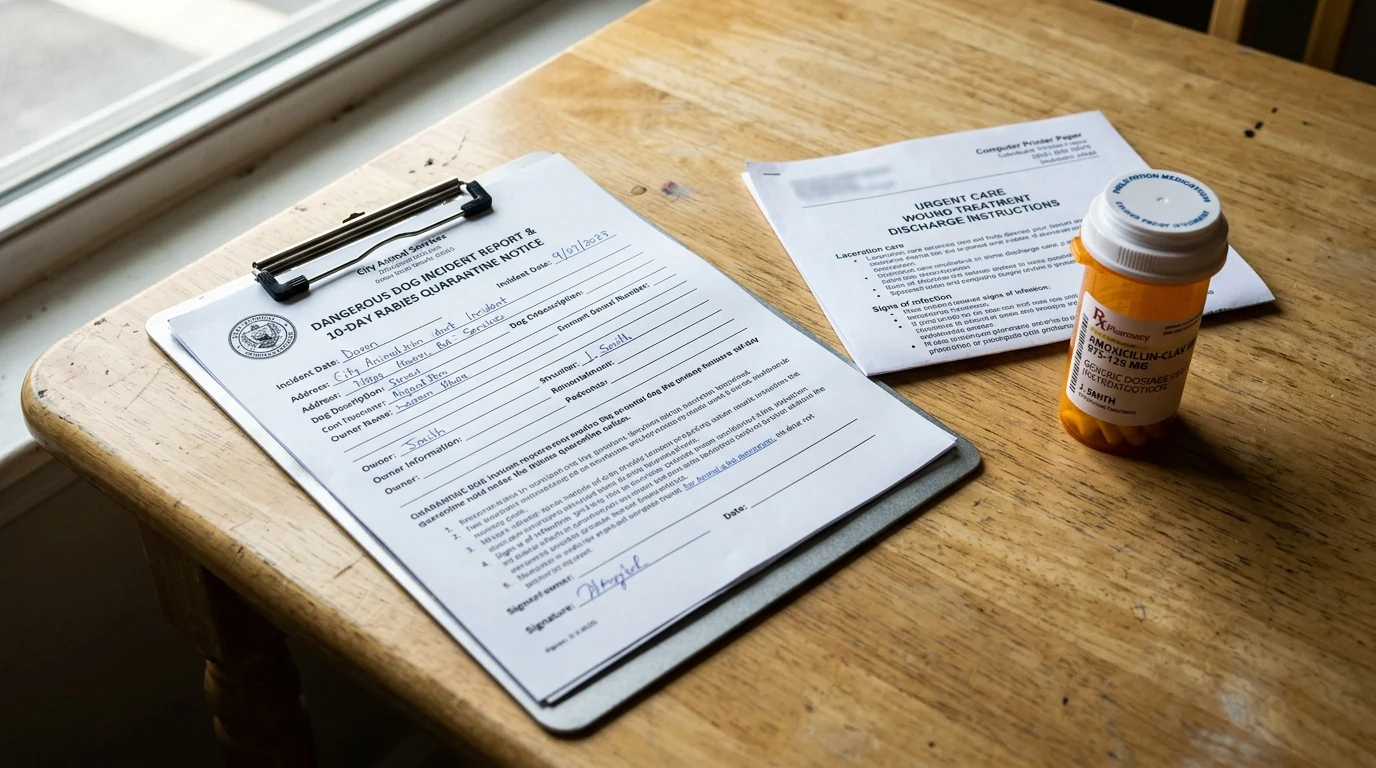
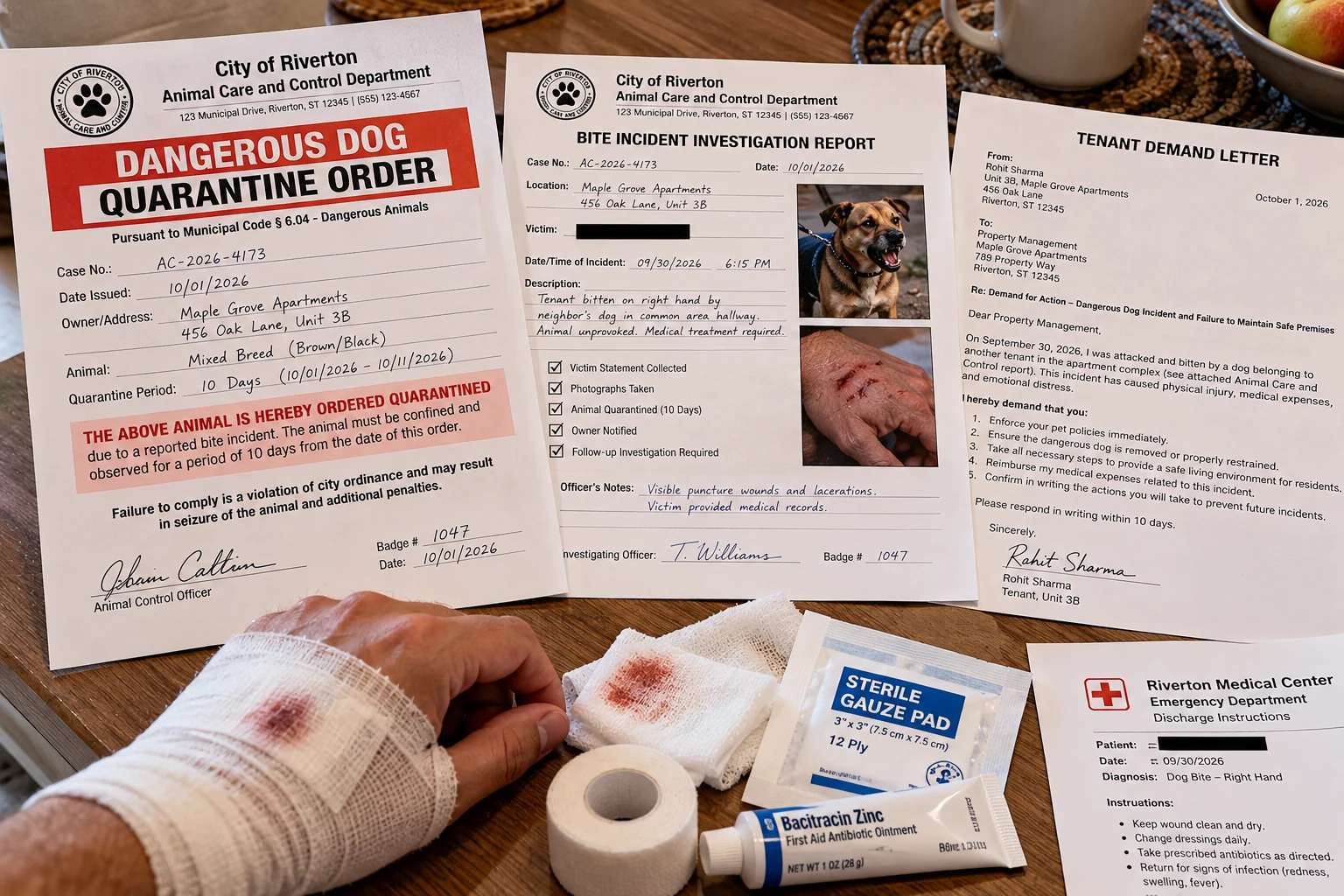
- Call 911 and File an Official County Animal Control Bite Report: Emergency room staff and responding animal control officers place a mandatory 10-day rabies quarantine on the biting canine. The resulting municipal investigation report documents the owner’s verified identity, vaccination history, and any prior citations or dangerous dog declarations.
- The "One Free Bite" Rule Does Not Shield Negligent Landlords: Even in states with common-law scienter rules, a landlord who received prior warnings, emails, or portal tickets from other tenants, postal workers, or delivery couriers about aggressive growling or lunging satisfies the legal threshold of actual knowledge.
- The "Emotional Support Animal" (ESA) Defense Fails Under Federal Law: Landlords often claim they could not remove an aggressive dog because it had an ESA designation. Under the federal Fair Housing Act (
42 U.S.C. § 3604(f)(9)), any animal that poses a direct threat to the health or safety of others is stripped of accommodation protections immediately. - Photograph Puncture Wounds and Retain a Plastic Surgeon for Scar Valuation: Canine bites cause severe crush injuries, torn muscle tissue, and raised keloid scars. Getting an evaluation and formal cost estimate from a board-certified plastic surgeon for scar revision surgery dramatically multiplies the pain and suffering value of your claim.
The 4 Situations Where a Landlord Must Pay for a Dog Bite
When a dog attacks a tenant, guest, or delivery worker in an apartment complex, the dog's owner is typically the first person held legally accountable. However, many pet owners carry only a minimal renter's insurance policy with an aggressive breed exclusion—or have no insurance and zero collectible assets. If you want to know if you can hold the property owner financially liable, the answer depends entirely on four strict legal conditions.
Under American premises liability principles, landlords do not incur automatic strict liability for every pet housed on their real estate. Instead, liability emerges when management had legal control over the premises, had advance warning of danger, or owned the animal. For an exhaustive foundation of tenant rights against property management, review our cornerstone guide to Can I Sue My Landlord? and our analysis of suing a landlord for negligence.
| Legal Situation | Legal Doctrine & Precedent | Required Proof | Insurance Target |
|---|---|---|---|
| 1. Landlord or Staff Owned the Animal | Strict Owner & Harborer Liability Cal. Civ. Code § 3342, Fla. Stat. § 767.04, N.J.S.A. 4:19-16 |
Proof of animal ownership or harboring by property manager, maintenance tech, or building owner. No prior bite history required. | Commercial General Liability ($1M–$5M) |
| 2. Actual Knowledge & Right to Evict | The Scienter Doctrine Uccello v. Laudenslayer, 44 Cal. App. 3d 504 (1975) |
Written proof management knew the tenant's dog was vicious AND had the lease power to demand removal or serve an eviction notice. | Landlord CGL + Tenant Renter's Policy |
| 3. Attack in Controlled Common Areas | Common Area Premises Duty Matthews v. Amberwood, 351 Md. 544 (1998) |
Attack took place in a hallway, lobby, courtyard, elevator, or complex dog run under management's operational dominion. | Multifamily Property Umbrella Policy |
| 4. Defective Property Physical Conditions | Premises Defect / Negligence Per Se Curran v. Heslop, 115 Cal. App. 2d 476 |
Defective perimeter fence, rusted dog park gate latch, or broken self-closing spring hinge permitted animal escape. | Commercial Property Maintenance Policy |
Analyzing the 4 Liability Tracks:
- Situation 1: The Landlord or On-Site Staff Owned the Dog. When a resident apartment manager, superintendent, leasing agent, or property owner keeps an aggressive animal on site—even as a personal companion or guard dog—the law treats the property owner as an animal owner or harborer. In statutory strict liability jurisdictions, you do not need to prove that the dog ever growled or bit anyone before. The landlord is strictly liable for medical expenses, lost wages, and permanent disfigurement from dollar one.
- Situation 2: The Landlord Had Actual Knowledge of Vicious Propensities (The Uccello Rule). In the landmark decision Uccello v. Laudenslayer, California courts established the prevailing American standard: a landlord owes a duty of care to third persons when the landlord has actual knowledge of the presence of a dangerous animal on leased premises AND possesses the legal authority under the lease agreement to order the animal removed or terminate the tenancy. If management knew a tenant's pit bull, rottweiler, or shepherd had repeatedly snapped at neighbors in the hallway and failed to issue a 3-Day Notice to Cure or Quit, the landlord is directly liable.
- Situation 3: The Attack Happened in a Common Area (The Matthews v. Amberwood Rule). In Matthews v. Amberwood Associates, the Maryland Court of Appeals held that a landlord's duty of care is magnified in shared common areas—including apartment breezeways, stairwells, lobbies, elevators, playgrounds, and shared courtyards. Because tenants are forced to use these shared passages to reach their front doors, management has an affirmative obligation to eliminate dangerous conditions, including vicious animals lurking in common thoroughfares.
- Situation 4: Defective Property Conditions Allowed the Dog to Escape. Even if an animal had no documented aggressive history, a landlord can be held liable under pure premises liability if an architectural or maintenance defect caused the attack. Common examples include a rotted wooden fence board that collapsed, a broken exterior gate latch that failed to catch, or a self-closing spring hinge that management ignored for months.
How to Prove the Landlord "Knew" the Tenant’s Dog Was Dangerous (The 5 Smoking Guns)
When personal injury lawyers file a dog bite claim against an apartment owner's insurance company, the insurer's first line of defense is almost universal: "Our leasing office had no idea this dog was aggressive. This was an unforeseeable, isolated event."
To defeat this defense and unlock the property owner's $1,000,000 to $5,000,000 Commercial General Liability (CGL) coverage, you must unearth evidence showing that property management had actual or imputed notice before the attack took place. If security flaws or broken gates also contributed to the incident, consult our guide on suing for inadequate security. The five most powerful forms of evidence include:
Imputed Knowledge from Maintenance Staff & Couriers
Under agency law, knowledge possessed by property employees is legally imputed to the property owner. If an on-site maintenance technician, groundskeeper, or leasing agent was previously lunged at, barked at through an open door, or warned by a US Postal Service mail carrier that mail delivery was suspended due to that specific dog, management legally knew the animal was dangerous.
Prior Written Tenant Complaints & Portal Tickets
Subpoenaing property management tenant portals (e.g., AppFolio, RealPage, Yardi) frequently uncovers earlier work orders, emails, and complaints from other residents. Messages stating "The dog in unit 304 tried to bite my kid by the mailboxes" or "Neighbor keeps their pit bull off-leash in the hallway" completely destroy the landlord's lack-of-knowledge defense.
County Animal Control & Police Incident Reports
Filing a public records request under state Freedom of Information Acts (FOIA) with your municipal Animal Control agency or police department reveals prior 911 calls, bite quarantines, or dangerous dog citations registered to that apartment address. If animal control visited the complex previously, the leasing office was almost always notified.
Owner's Use of Muzzles, Choke Collars, or Warning Signs
Physical evidence showing the dog was routinely walked through common areas with a steel wire basket muzzle, heavy prong pinch collar, or had a "Beware of Dog" sticker posted on their apartment window proves everyone in the building—including management—recognized the animal's volatile temperament.
Violations of Lease Restricted Breed Clauses & Ignored Pet Fees
Multifamily residential leases nearly always contain a prohibited dangerous breed list (e.g., Pit Bulls, Rottweilers, Dobermans, Wolf Hybrids, German Shepherds) or weight caps (e.g., 35 lbs). If management approved an unauthorized 80-pound restricted animal, or pocketed monthly "pet rent" while turning a blind eye to an aggressive breed prohibited by their own corporate rules, that deliberate non-enforcement establishes gross negligence.
Crushing the Landlord’s #1 Modern Excuse—"It Was an Emotional Support Animal (ESA), So We Couldn’t Evict It!"
In modern multifamily apartment litigation, landlords frequently attempt to evade premises liability by invoking federal disability laws: "The tenant gave us an online Emotional Support Animal (ESA) certificate. Under the Fair Housing Act, we had our hands tied and could not legally remove the animal without facing a federal discrimination lawsuit."
This argument is a legal fallacy. Both federal statutory law and official Department of Housing and Urban Development (HUD) guidelines explicitly protect other tenants from dangerous animals, regardless of whether the pet has an ESA or Service Animal designation. For a full analysis of disability assistance rules, review our comprehensive guide on landlords and service animal regulations.
The Fair Housing Act "Direct Threat" Statutory Exception
Under 42 U.S.C. § 3604(f)(9):
"Nothing in this subsection requires that a dwelling be made available to an individual whose tenancy would constitute a direct threat to the health or safety of other individuals or whose tenancy would result in substantial physical damage to the property of others."
Furthermore, HUD's definitive guidance document (Notice FHEO-2020-01) mandates that a housing provider may deny or rescind a reasonable accommodation for an assistance animal if the specific animal poses a direct threat that cannot be eliminated or reduced by reasonable measures.
How to Demolish the ESA Defense in Settlement Negotiations:
- The Direct Threat Doctrine Overrides ESA Status Immediately: The instant an emotional support animal snaps at a resident, bites another pet, or lunges aggressively in an elevator, the animal transforms into an immediate physical threat. The landlord not only has the legal authority to revoke the accommodation and demand the animal's immediate permanent removal—they have a legal duty to do so.
- Failure to Issue a 3-Day Notice to Remove or Evict: Once notified of aggressive behavior, if management took no affirmative steps—such as serving a formal Lease Violation Notice, issuing a Demand for Animal Removal within 72 hours, or initiating eviction proceedings—the landlord cannot claim immunity under the Fair Housing Act.
- Unverified Online "ESA Certificates" Carry Zero Legal Weight: Federal HUD rules clarify that downloadable instant certificates purchased online without an ongoing clinical relationship with a licensed healthcare practitioner do not establish legitimate disability accommodation rights. If management accepted a sham certificate without inquiry, their reliance on federal law is completely ungrounded.
What to Do in the First 24 Hours After an Apartment Dog Attack (Medical & Legal Checklist)
The medical and investigative actions you execute within the first 24 to 48 hours following a canine attack dictate the financial recovery of your personal injury lawsuit. Canine jaws exert hundreds of pounds of pressure per square inch, introducing virulent oral pathogens and causing deep muscle tearing. Simultaneously, negligent landlords work quickly to clean up blood, alter portal records, or delete surveillance camera files.
Step 1: Emergency Medical Trauma Care
Go immediately to an emergency room or urgent care clinic. Dog bites harbor virulent bacteria—including Pasteurella multocida, Staphylococcus, and Capnocytophaga—which can trigger severe sepsis within hours.
- Require high-pressure sterile saline wound irrigation.
- Obtain prophylactic oral or IV antibiotics (typically Augmentin).
- Receive a tetanus toxoid booster if your last shot was >5 years ago.
- Have the treating physician evaluate rabies post-exposure prophylaxis.
Step 2: 911 Call & Animal Control Quarantine
Never let a neighbor convince you to settle "quietly." Call 911 immediately so police officers and County Animal Control arrive on scene.
- Animal control will issue a mandatory 10-day bite quarantine order.
- Officers will inspect the dog's rabies tags and veterinary license.
- The official incident report establishes the legal identity of the dog owner.
- Obtain the Animal Control Case Number before officers depart.
Step 3: 48-Hour CCTV Video Spoliation Hold
Multifamily apartment digital video recorders (DVRs) overwrite camera archives automatically every 7 to 30 days. You must send a formal preservation demand.
- Demand preservation of hallway, lobby, courtyard, and elevator feeds.
- Request footage covering 2 hours before and after the attack.
- Send via email and certified mail with return receipt requested.
- Destroying video after receiving notice constitutes legal spoliation.
Step 4: Plastic Surgery Scar Revision & Photo Log
Photograph your injuries before stitches, with sutures in place, and throughout the 6-month healing process. Persistent scarring is key to damages.
- Schedule an evaluation with a board-certified plastic surgeon.
- Obtain a formal scar revision cost estimate ($5,000–$25,000+).
- Document nerve numbness, muscle stiffness, or loss of mobility.
- Keep a daily pain diary tracking sleep loss and psychological panic.
If the traumatic attack has triggered severe anxiety, insomnia, panic attacks, or post-traumatic stress disorder whenever you leave your apartment, read our guide on recovering compensation for emotional distress.
What If a Neighbor’s Dog Attacked YOUR Dog (Or Makes You Afraid to Walk Down Your Hallway)?
A large portion of apartment dog disputes do not involve human puncture wounds, but rather attacks on a tenant's leashed pet—or living under constant siege because an aggressive neighbor animal lunges at residents outside their apartment doors.
Renters often ask: "Can I sue if my dog was attacked, or can I break my lease because I am terrified to walk down the hallway?" You have two powerful legal remedies under civil contract and habitability law:
1. The Small Claims Court Track for Emergency Veterinary Bills ($1,500 to $12,500)
In American jurisprudence, pets are classified as personal property. However, modern Small Claims courts permit pet owners to recover the full reasonable cost of emergency veterinary treatment, regardless of the purchase price of the animal. If your dog was mauled by an uncontained neighbor dog:
- Name Both the Dog Owner and the Landlord as Co-Defendants: Sue the dog owner for direct negligence and sue the landlord for premises liability and failure to enforce pet safety rules.
- Recover 100% of Medical & Property Losses: Claim emergency hospital surgery invoices, wound drainage, prescription antibiotics, pet medication, and damaged walking gear (leashes, harnesses, carriers).
- No Attorney Required: Small Claims limits range from $5,000 to $12,500 (and up to $20,000 in Tennessee). Cases resolve within 30 to 60 days without expensive legal retainers.
2. Constructive Eviction & Rent Abatement for Loss of Quiet Enjoyment
Every residential lease carries an implied covenant of Quiet Enjoyment. If an aggressive animal lunges at residents in the breezeway, barks menacingly through thin doors, or roams common areas off-leash, and management fails to remedy the hazard within statutory cure periods:
- 25% to 50% Retroactive Rent Abatement: You can file a civil action demanding a partial rent refund for every month you were deprived of safe, peaceful use of your dwelling and common facilities.
- Penalty-Free Lease Termination under Constructive Eviction: If management refuses to remove the vicious dog, you have the legal right to declare Constructive Eviction, vacate the property, cancel all remaining lease liabilities, and demand the immediate return of your security deposit! For complete instructions, see our comprehensive walkthrough on suing for constructive eviction.
Ready-to-Send Dog Bite Injury Claim, Video Hold & Vicious-Dog Removal Letter
Select the legal notice tailored to your situation below. Copy the text or download the pre-formatted .txt file to deliver via certified mail and your landlord's resident online portal.
Frequently Asked Questions (FAQ)
Calculate Your Apartment Dog Bite Lawsuit Settlement
Estimate your total compensation for emergency room treatment, wound debridement, plastic surgery scar revision, veterinary bills, and rent refunds under commercial landlord insurance policies.
SueLegal is an independent educational legal publisher, not a law firm or lawyer referral service. The information provided in this guide is for general informational and educational purposes only and does not constitute formal legal advice. Residential landlord-tenant laws, repair notice periods, and statutory remedies vary significantly across state and municipal jurisdictions. If you are facing eviction, severe uninhabitable conditions, or complex litigation, consult a licensed attorney in your jurisdiction or contact your local legal aid organization. For more details on our standards, read our Editorial Policy and Legal Research Methodology.