

Yes, you can sue your landlord for an electrical shock—and for any electronics or appliances fried by bad building wiring.
Under the Implied Warranty of Habitability, state premises liability laws, and municipal Electrical Codes (NEC / IPMC § 604–605), your landlord has a non-delegable legal duty to provide safe, properly grounded electrical wiring, GFCI-protected kitchen and bathroom outlets, and safe appliances. Depending on what happened, you have two ways to recover money:
- If You Were Injured by an Electric Shock ($25,000 to $500,000+ Insurance Settlements): If a shock from a faulty outlet, wet light switch, ungrounded stove/fridge, or energized pipe sent you to the ER—causing nerve pain/numbness (neuropathy), heart palpitations/arrhythmia, electrical burns, muscle spasms, or a fall injury when the jolt knocked you backward—a personal injury lawyer can sue your landlord’s commercial liability insurance policy (and any outside electrician) at $0 upfront cost.
- If Bad Wiring Fried Your Electronics or Left Rooms Without Power ($1,500 to $12,500 in Small Claims Court): If an electrical short, ungrounded outlet, or "open neutral" power surge destroyed your laptop, TV, gaming console, or spoiled your food—or left you with unsafe wiring for weeks—you can sue in Small Claims Court for 100% replacement value of your fried electronics plus a 25% to 50% rent refund!
Key Points to Know
- Go to the ER or Urgent Care for an EKG Immediately: Household 120V and 240V alternating current travels through your chest and nervous system. Even if your skin isn’t badly burned, an electric shock can trigger delayed heart rhythm problems (arrhythmias) and permanent nerve damage in your hand or arm—getting a same-day 12-Lead EKG protects both your health and your legal case.
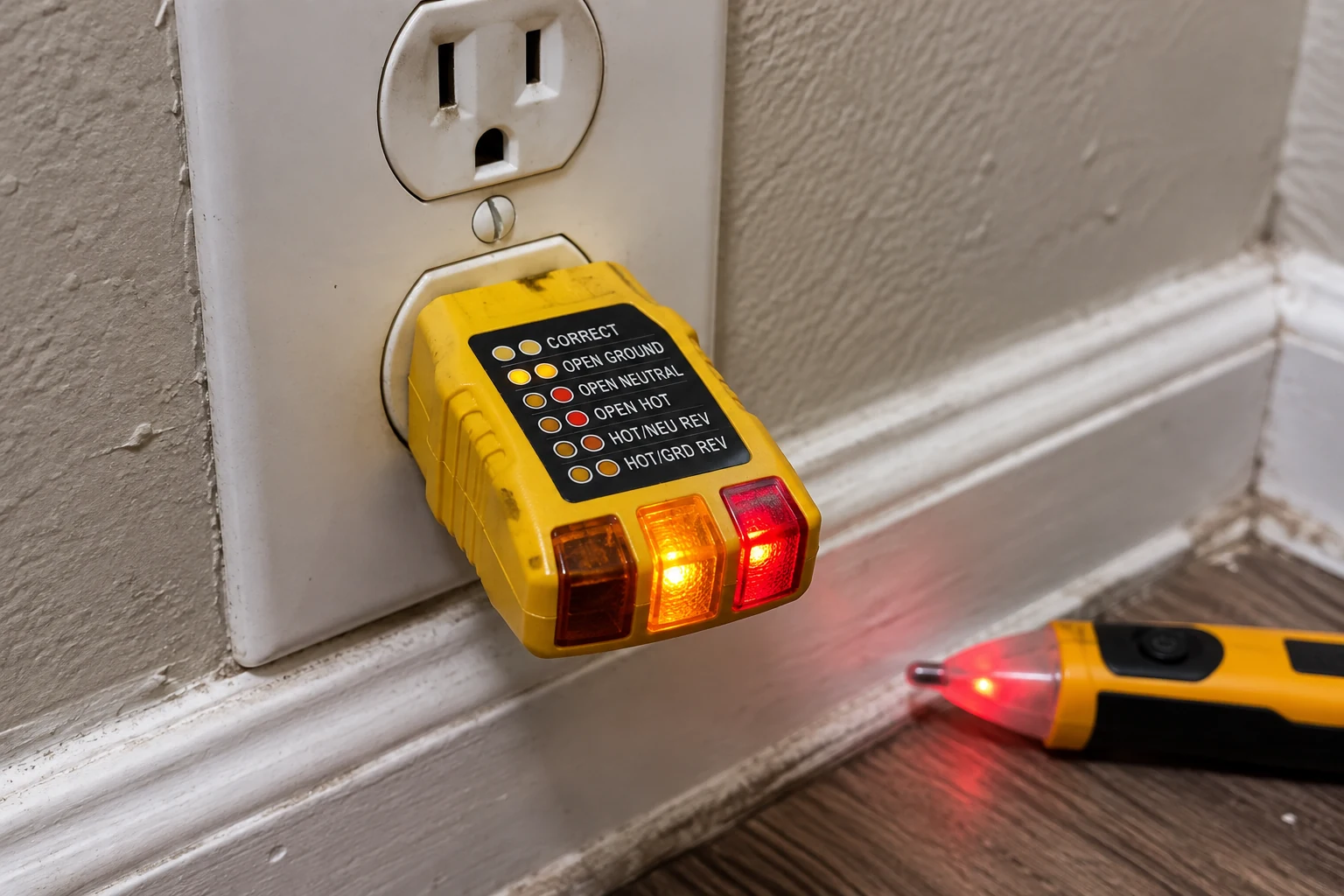
- Test & Film the Outlet With a $10 Hardware Store Tester BEFORE Maintenance Swaps It Out: The first thing a guilty landlord does after a shock is send a handyman to replace the $3 outlet and throw the old one in the trash! Plug a $10 3-Light Outlet Tester (from Home Depot, Lowe’s, or Amazon) into the outlet—or hold a $15 Non-Contact Voltage Pen next to the electrified stove/faucet—and record a video of the warning lights before anyone touches it!
- No GFCI ("Test/Reset") Outlet Near Water = Automatic Landlord Fault: Building codes nationwide (
NEC § 210.8) requireGFCIshock-protection outlets in all bathrooms, kitchens, laundry rooms, basements, and outdoor areas. Getting shocked near water where there was no working GFCI is an open-and-shut code violation. - Did the Jolt Throw You Backward Into a Counter, Tub, or Floor?: Nearly half of all serious apartment shock lawsuits involve "Secondary Fall Injuries"—where the involuntary muscle jolt throws you off a stepstool or knocks your head, back, wrist, or knee against a hard bathroom or kitchen surface. Every dollar of that injury is covered!
- Your Landlord Cannot Blame "Old Building Wiring" or Their Handyman: Claiming "The building was built in 1955" is not a legal defense. Landlords are strictly responsible for keeping wiring safe, and if their unlicensed maintenance worker did illegal DIY wiring behind the wall, the landlord is 100% liable.
The 5 Most Common Apartment Electrical Shock Hazards (And Why Each Breaks the Building Code)
Receiving an electric shock inside a residential apartment is never a normal incident or a minor inconvenience. In American rental housing, electrical shocks almost always stem from five specific, illegal building code violations where property management cut corners on maintenance or hired unlicensed handymen.
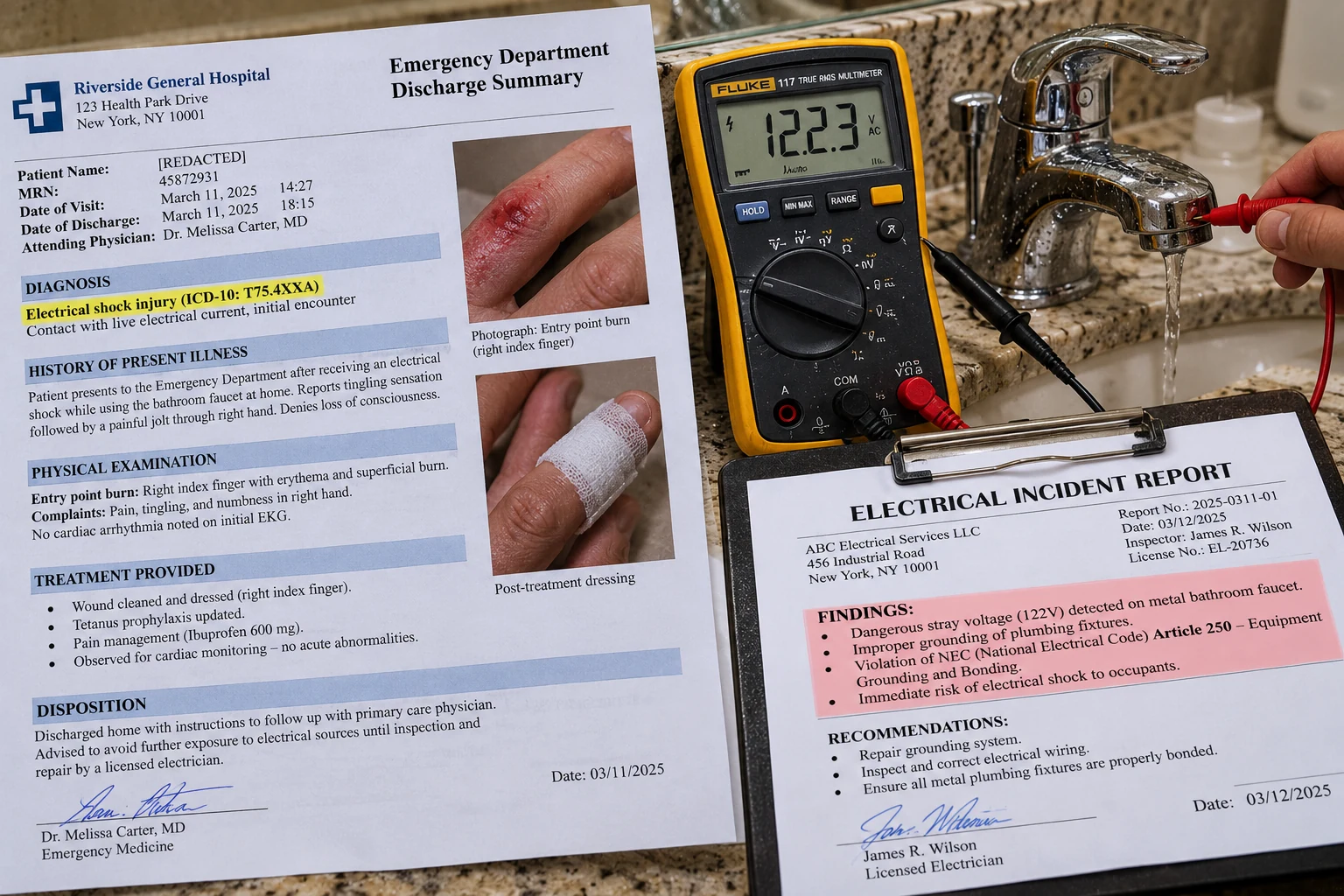
Under the National Electrical Code (NEC) and the International Property Maintenance Code (IPMC § 604 and § 605), landlords have an absolute, non-delegable duty to maintain safe, properly grounded, and weather-protected electrical distribution systems. If you are reviewing your broader legal options against a neglectful property owner, see our comprehensive guide on Can I Sue My Landlord? for an overview of tenant litigation rights.
| Electrical Shock Source | What Went Wrong Behind the Wall | Building / Electrical Code Violated | Why the Landlord Is Liable |
|---|---|---|---|
| 1. Bathroom, Kitchen, or Laundry Outlet With No GFCI | Outlet within 6 feet of a sink, tub, or water supply lacked a functional Ground-Fault Circuit Interrupter (GFCI) sensor. | NEC § 210.8 & IPMC § 605.2 (Mandatory GFCI protection in damp zones). | Automatic Negligence Per Se: A working $18 GFCI outlet senses current imbalances and cuts electrical flow in 0.025 seconds before human tissue is harmed. |
| 2. Electrified Metal Stove, Fridge, or Washer ("Bootleg Ground") | Landlord installed a 3-prong outlet on an old 2-wire system and connected the neutral wire to the ground screw, or a 240V element shorted against the appliance chassis. | NEC § 250 (Grounding & Bonding) & § 406.4(D) | Touching the energized appliance while standing on a damp floor or touching a metal sink turns your body into the return ground path. |
| 3. Water Leak Dripping Into Light Switch or Fixture | Landlord ignored an overhead plumbing or roof leak that traveled down interior wall studs into live electrical switch boxes. | IPMC § 304.7 (Roof/Water) & § 604.3 (Electrical Hazards from Water Incursion) | Water conducts current across internal terminal screws directly to your fingers when flipping the switch. Prior notice of leaks creates direct liability. |
| 4. Shock From Shower Faucet or Metal Water Pipe | Frayed hot wiring inside wall framing contacts copper piping, or an unbonded electrical panel uses plumbing as an ungrounded neutral return. | NEC § 250.104 (Metal Water Piping System Bonding) | Stepping barefoot into a wet tub while touching an energized metal faucet creates a lethal low-resistance pathway across the chest cavity. |
| 5. Loose, Sparking Outlets & DIY Handyman Wiring | Worn receptacle spring contacts cause continuous electrical arcing, or unlicensed maintenance wired hot and neutral in reverse polarity. | IPMC § 604.3 & State Electrical Licensing Statutes | Hiring unlicensed maintenance personnel to alter building wiring without municipal permits constitutes willful negligence. |
When electrical arcing occurs, the risk extends far beyond shocks. Sparks and overheated wall junctions represent the leading cause of residential infernos. For a detailed legal breakdown of electrical fire claims and smoke inhalation recoveries, consult our resource on Apartment Fire Lawsuits.
How to Prove Faulty Wiring in 2 Minutes With a $10 Hardware Store Tool (Before the Landlord Hides It!)
The most common reason injured tenants lose electrical shock lawsuits is that property management sends an on-site maintenance worker the morning after the incident. In five minutes, the handyman unscrews the charred $3 receptacle, drops it into his pocket, installs a new outlet, and tells the insurance claims adjuster: "We inspected the outlet and found zero electrical defects."
To prevent the destruction of your evidence and lock down scientific proof of electrical code non-compliance, execute this four-step verification protocol before maintenance touches the wall:
The 4-Step Electrical Evidence Lock Protocol
De-energize the circuit for personal safety. Capture macro photographs of black soot, carbon scoring around outlet faceplates, melted plug prongs, water stains, or exposed wire insulation inside the junction box.
For Wall Receptacles: Purchase a standard three-light receptacle tester at any hardware store or online retailer. With the circuit active, insert the tester into the problematic outlet and record a continuous video showing the illuminated code lights. If the pattern displays "Open Ground," "Hot/Neutral Reversed," or "Hot/Ground Reversed," you possess objective scientific proof of illegal wiring.
For Metal Stoves, Fridges, or Shower Faucets: Hold a non-contact voltage detector pen against the metal frame. If the pen flashes red and emits an audible tone without touching live conductors, you have incontrovertible video evidence of dangerous stray voltage.
Contact municipal code enforcement or the city building department and state: "I received an electrical shock due to ungrounded wiring and non-compliant electrical fixtures in my rental unit." A certified city electrical inspector will conduct an on-site multimeter inspection and issue an official hazardous violation citation against the property owner.
Deliver our formal Anti-Spoliation notice instructing the landlord that any removed outlets, switches, breakers, wiring pigtails, or appliances must be preserved in a clean plastic container for forensic engineering inspection. Altering or discarding these components constitutes intentional spoliation of evidence.
If the electrical shock was triggered by chronic plumbing failures or ceiling leaks dripping into electrical boxes, review our specialized analysis on Can I Sue My Landlord for Water Damage? to understand dual-liability documentation standards.
Why Insurance Companies Lie About "No Skin Burns"—Understanding Internal Nerve, Heart & Fall Injuries
When a tenant reports an electrical shock, commercial insurance adjusters routinely argue: "You only have a tiny mark on your fingertip and no third-degree burns, so your injury is worth nominal money." This argument relies on public confusion between high-voltage thermal burns and low-voltage alternating current (AC) trauma.
Household 120V and 240V alternating current (operating at 60 Hertz) penetrates the epidermal skin barrier with minimal exterior charring because resistance is low, especially when skin is damp. Once inside, electric current travels along the body’s lowest-resistance internal conduits: nerve pathways, blood vessels, and muscular structures.
1. Peripheral Nerve Damage & Neuropathy
Electric current damages the delicate myelin sheath protecting nerve axons. Victims experience chronic numbness, tingling ("pins and needles"), burning dysesthesia, and reduced grip strength weeks after the shock. Confirming neuropathy through an Electromyogram (EMG) and Nerve Conduction Study (NCS) regularly elevates settlement values into the $75,000 to $300,000+ tier.
2. Cardiac Arrhythmia & Muscle Injury
When current enters one hand and exits through a foot or opposite limb, it crosses the thoracic cavity and cardiac muscle. AC current disrupts cardiac electrical conduction, triggering ventricular arrhythmias, atrial fibrillation, and myocardial cell damage. Immediate 12-lead EKG monitoring and serum Troponin blood testing establish medical causation.
3. Tetany & Secondary Fall Trauma
60 Hz current induces involuntary tetanic muscle contractions, locking the victim’s hand onto the energized appliance before a violent muscular spasm throws the body backward. Victims suffer severe concussions, herniated lumbar discs, torn shoulder labrums, or fractured wrists when slamming into hard floors or countertops.
In personal injury law, the landlord is 100% legally responsible for all physical trauma resulting from the shock, including secondary blast falls and orthopedic surgeries. For an evaluation of general negligence standards in rental injury lawsuits, see our analysis on Can I Sue My Landlord for Negligence?.
Did Bad Apartment Wiring Fry Your Laptop, TV, or Appliances? (How to Win in Small Claims Court)
Beyond bodily injury, defective electrical wiring frequently destroys expensive tenant electronics. When landlords fail to maintain main electrical panels, an insidious electrical fault known as an "Open Neutral" can occur.
In a standard 120/240V split-phase electrical service, the center neutral wire returns unbalanced current to the transformer. When a landlord’s corroded or loose neutral lug detaches inside the panel, voltage across your apartment’s branch circuits becomes unstable: one circuit drops to 40 volts (causing brownouts and flickering), while an adjacent circuit surges to 200+ volts. These massive over-voltage surges instantly fry sensitive circuit boards inside laptops, high-definition televisions, gaming consoles, microwave ovens, and refrigerators.
Recovering Property Damages in Small Claims Court ($1,500 to $12,500)
If bad wiring fried your property but you did not suffer bodily injury requiring hospitalization, Small Claims Court provides a rapid, cost-effective avenue for full recovery without paying attorney fees:
- 1. 100% Replacement or Repair Costs for Destroyed Electronics: Take dead devices to an authorized electronics repair center (such as Best Buy Geek Squad or an independent certified technician). Request a diagnostic service note stating: "Device motherboard completely burned out due to severe AC voltage surge / over-voltage event." Combine this diagnostic report with original purchase receipts or current replacement pricing.
- 2. Spoiled Grocery Reimbursement ($200 to $600): When an electrical short or tripped faulty breaker cuts power to your refrigerator and freezer while you are away, photograph spoiled dairy, meats, and frozen goods before disposal and itemize the grocery replacement value.
- 3. Retroactive Rent Abatement (25% to 50% Monthly Refund): Under municipal housing codes (IPMC § 604 and § 605), habitable rental rooms must provide operational, safe electrical outlets and lighting. If your landlord left half your apartment without functional electricity for weeks—forcing you to run dangerous extension cords across living spaces—you can claim a 25% to 50% retroactive rent refund for every affected month.
If the electrical failure also disabled landlord-supplied kitchen appliances like stoves or refrigerators, review our dedicated guide on Can I Sue My Landlord for Broken Appliances? for specific appliance habitability remedies.
Who Can Be Sued After an Apartment Electrical Shock? (Multiple Insurance Policies!)
Personal injury attorneys investigating an apartment electrical shock do not limit their claim to the individual building owner. Multifamily electrical failures often expose multiple corporate entities with substantial commercial liability insurance coverage:
1. Landlord & Property Management
Multifamily property owners carry $1,000,000 to $5,000,000 in Commercial General Liability (CGL) coverage. Landlords possess a non-delegable statutory duty under premises liability law to ensure the living space is free from hidden electrical hazards, inspect older distribution panels, and provide mandatory GFCI protection.
2. Third-Party Electrical Contractors
If the property owner engaged an outside contractor who performed unpermitted electrical work, wired receptacles in reverse polarity, drove drywall screws through live conduit, or failed to connect equipment ground conductors, the electrical contractor’s commercial policy becomes directly liable.
3. Appliance Manufacturers
When an electrical shock occurs through an appliance handle or metal chassis due to an internal manufacturing defect or insulation breakdown, strict product liability applies against the appliance manufacturer regardless of landlord maintenance history.
Pursuing all accountable commercial defendants ensures that full financial compensation is available to cover catastrophic neurological care, future rehabilitation, and lost lifetime earnings. For further insight into tenant safety protections, examine our analysis on Can I Sue My Landlord for Unsafe Living Conditions?.
Ready-to-Send Electrical Shock Evidence Hold, Repair & Refund Demand Letter
To protect your legal rights and freeze physical hardware before on-site handymen alter the premises, deliver these two formal legal notices to your landlord and property management company. Tab 1 serves as an urgent Anti-Spoliation Evidence Preservation Directive for personal injury claims, while Tab 2 serves as a formal Small Claims Demand for electronics reimbursement and rent abatement.
Frequently Asked Questions (FAQ)
Calculate Your Electrical Shock or Wiring Lawsuit Payout
Estimate your financial recovery for emergency room care, EKG monitoring, neurological trauma, fried electronics, hotel displacement, and statutory rent refunds under commercial landlord liability insurance.
SueLegal is an independent educational legal publisher, not a law firm or lawyer referral service. The information provided in this guide is for general informational and educational purposes only and does not constitute formal legal advice. Residential landlord-tenant laws, repair notice periods, and statutory remedies vary significantly across state and municipal jurisdictions. If you are facing eviction, severe uninhabitable conditions, or complex litigation, consult a licensed attorney in your jurisdiction or contact your local legal aid organization. For more details on our standards, read our Editorial Policy and Legal Research Methodology.