

What to Know Before You Act
- A Text Message Does NOT Count as a Legal Rent-Increase Notice in Most States: In California (
Civ. Code § 827), New York (RPL § 226-c), Washington (RCW 59.18.140), Oregon, and most states, a rent increase must be delivered in writing on paper (and if the landlord mails it in California, they must add +5 extra calendar days to the notice period!). - Count the Calendar Days—Short Notice Means You Keep Paying Your Old Rent: If your state requires 60 or 90 days’ written notice and your landlord gives you only 25 days’ notice before the 1st, the notice is invalid for next month. Send our Rejection Letter below along with your normal old rent check!
- In Oregon, Seattle, Tacoma & NJ, Steep Rent Hikes Trigger Relocation Cash or 3x Penalties: Under Oregon law (
ORS 90.323), an illegal rent increase automatically costs the landlord 3 months’ rent plus the overcharge; and in Portland, Seattle, and Tacoma, a rent hike of 10% or more that forces you to move entitles you to 3 months’ rent ($2,900 to $6,500+) in mandatory relocation cash! - Did the Landlord Jack Up Your Rent Right After You Asked for Repairs?: Even in landlord-friendly states like Texas, Florida, Arizona, and Georgia, slapping you with a punitive rent hike within 6 months of a repair request or 311 call is illegal Retaliation—unlocking 1x to 3x rent penalties + moving costs + lawyer fees.
- Never Let a Landlord Raise Rent While Your Roof Leaks or Heater Is Broken: Under laws like California Civil Code § 1942.4 and Washington RCW 59.18.085, a landlord cannot serve a rent-increase notice while an uncorrected city housing code violation exists on your unit—doing so makes them liable for $100 to $5,000 in statutory penalties plus 100% of your lawyer’s fees!
Check If Your Rent Increase Is Illegal & Calculate Your Payout
Evaluate percentage cap breaches, defective notice clocks, retaliatory economic evictions, and statutory relocation cash awards.
Select the legal violation to apply the relevant statutory penalty formula.
Compares your baseline contract rent against the proposed dollar escalation.
Months you already paid the illegal increase, or months you will save by blocking it.
Select your residency outcome to calculate statutory relocation assistance.
Direct reimbursement of illegal increases paid or immediate rent savings.
Statutory multiples, treble damages, or anti-retaliation awards.
Mandatory tenant relocation assistance and out-of-pocket moving costs.
The 7 Rules That Make a Rent Increase 100% Illegal (Check Your Notice Against This List!)
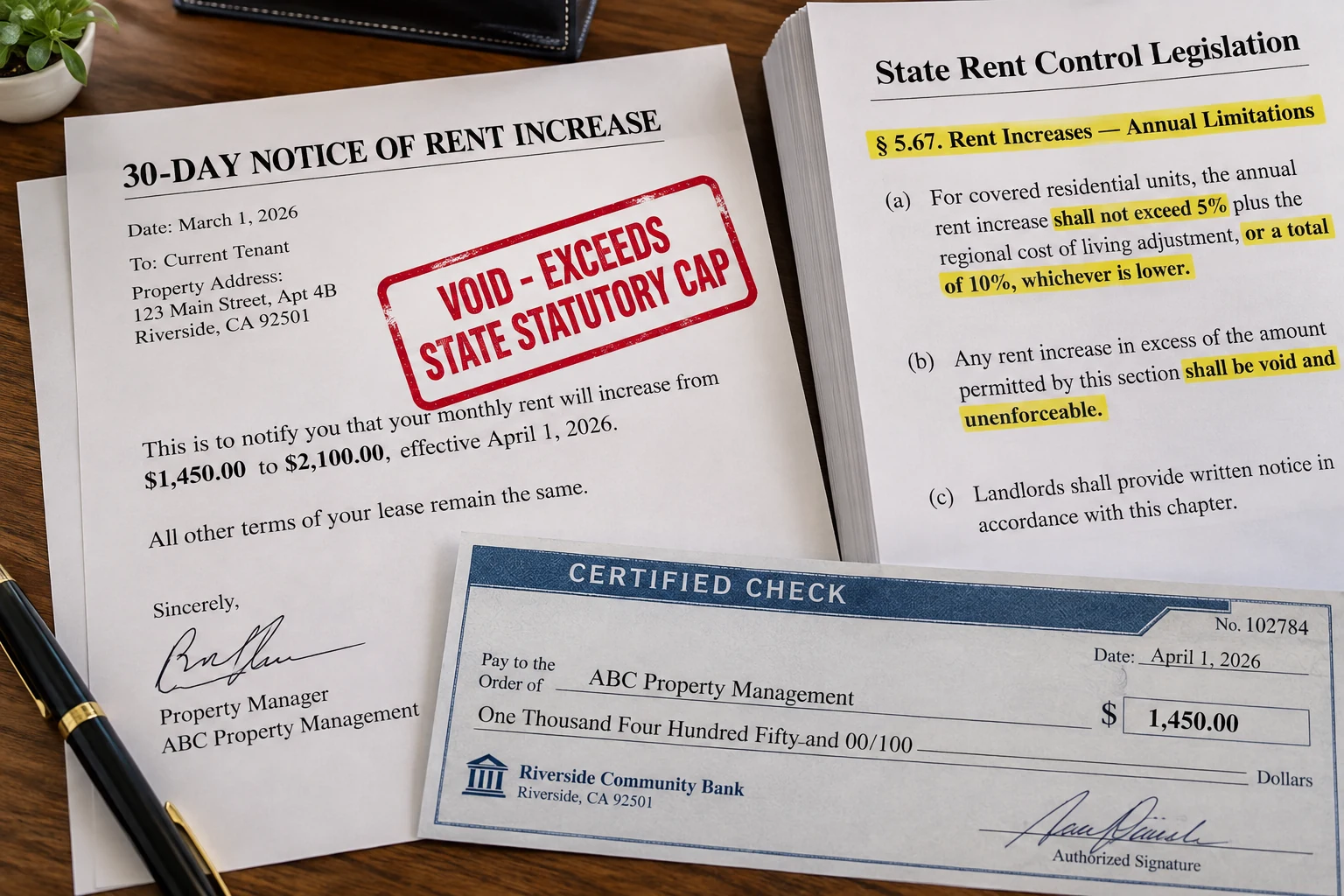
Opening an unexpected rent increase notice triggers immediate financial dread. However, residential rental contracts and state property statutes severely curtail when, how, and by how much a housing provider can escalate monthly rent. If your landlord breached even a single statutory prerequisite or procedural requirement, the rent hike is an absolute legal nullity. You have the right to challenge it, block it, and recover financial compensation.
| Legal Rule Violated | What the Landlord Did | Why It Is 100% Illegal | Your Immediate Remedy |
|---|---|---|---|
| 1. Raised Rent in the Middle of a Fixed-Term Lease | Sent a rent increase notice 4 months into a signed 12-month fixed residential lease. | A fixed-term lease legally locks in your monthly rental obligation until the final expiration date. Landlords cannot unilaterally modify financial covenants mid-term without voluntary tenant consent. | Refuse to pay the increase. Tender your exact contractual lease rent on time, citing your binding agreement. |
| 2. Exceeded State or Local Percentage Caps (3% to 10% Max) | Raised rent by 15% or 25% on a covered residential property in California, New York, Oregon, New Jersey, Washington, Maryland, or D.C. | Violates state or municipal rent cap statutes such as the California Tenant Protection Act (AB 1482), New York Good Cause Eviction Law, Oregon ORS 90.323, or municipal rent control ordinances. |
The notice is void. File a complaint or sue for a 100% refund of the excess rent plus up to 3x Treble Damages (or 3x Monthly Rent in Oregon) and attorney fees. |
| 3. Missed the 30 / 60 / 90 / 180-Day Written Notice Clock | Gave you only 15 or 25 days of advance notice before the 1st of the month when governing state law requires 60, 90, or 180 days. | A short-notice increase cannot legally take effect on the date demanded. Statutorily defective notices fail entirely and do not become effective until the full required period elapses following lawful service. | Keep paying your old rent. The landlord must either wait out the statutory window or reissue a legally compliant notice. |
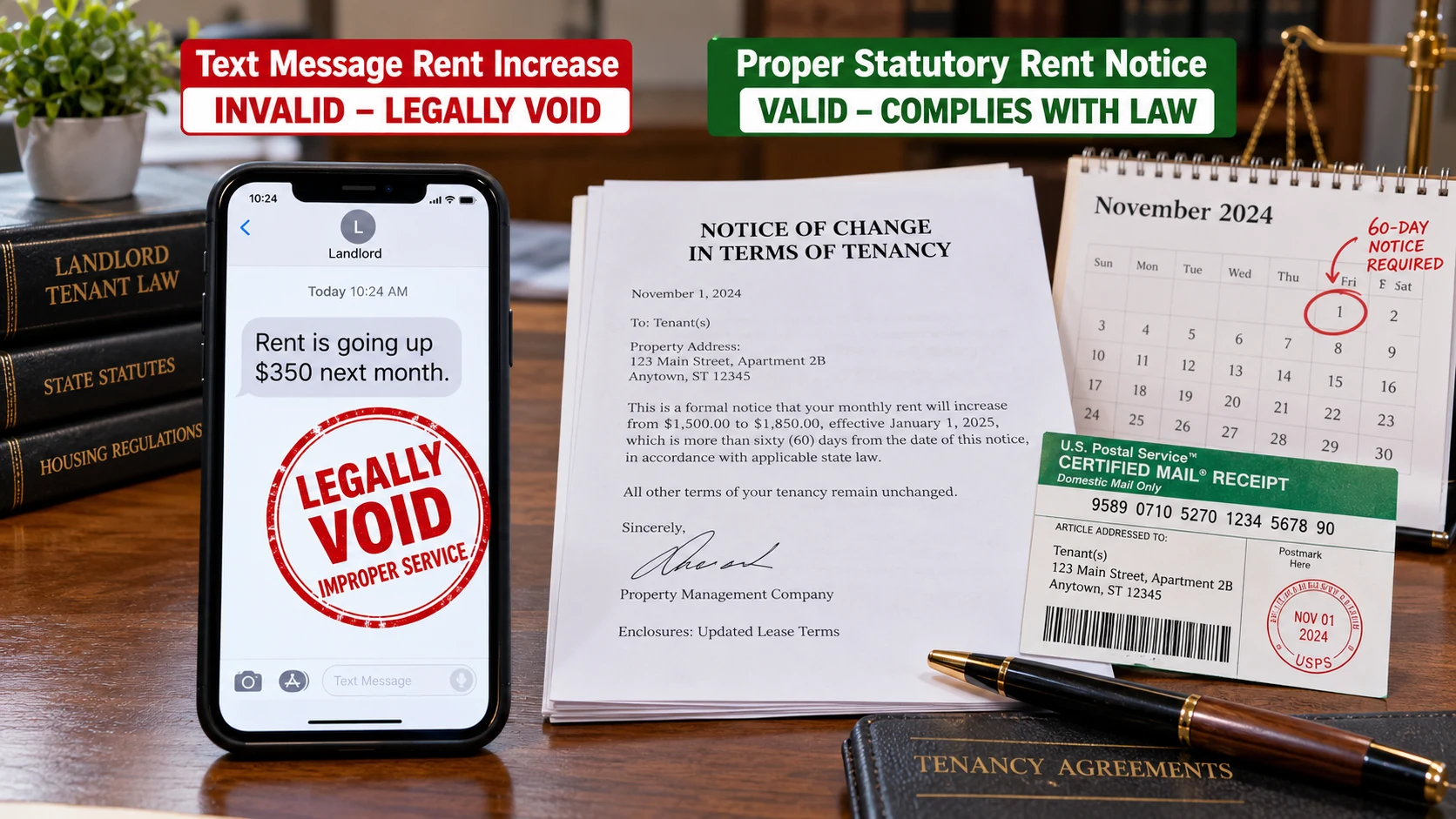
| 4. Sent the Rent Hike by Casual Text Message or Email | Sent an informal text message or casual email saying "Rent is going up $250 next month" without formal paper service. | State statutes (e.g., CA Civ. Code § 827, NY RPL § 226-c, WA RCW 59.18.140, ORS 90.155) mandate formal written paper notices delivered personally or via certified/first-class mail. |
The text message has zero legal effect. Your rent stays locked at the existing rate until proper statutory service occurs. |
| 5. Retaliatory Rent Hike (Within 90–365 Days of Asking for Repairs) | Imposed a steep rent increase shortly after you requested mold remediation, heat repairs, plumbing fixes, or contacted municipal code enforcement. | Statutorily prohibited across more than 45 states under tenant anti-retaliation protections. Rent increases intended to punish tenants for exercising legal rights are void. | The court voids the rent increase and awards 1x to 3x monthly rent statutory damages (or up to $2,000 in California), moving costs, and 100% attorney fees. |
| 6. Raised Rent While Open Code Violations Exist on Your Unit | Demanded higher rent while failing to correct severe habitability defects, roofing leaks, or open 311 housing code citations. | Statutes such as CA Civ. Code § 1942.4, WA RCW 59.18.085, and New York housing codes forbid housing providers from demanding or increasing rent on properties with uncorrected code violations. |
The rent hike is void and the landlord faces statutory fines of $100 to $5,000 plus attorney fees. |
| 7. Raised Rent >10% During a Declared State of Emergency | Imposed a 15% to 50% rent increase during or immediately following a governor-declared emergency for hurricanes, wildfires, or severe floods. | Violates state emergency anti-price-gouging statutes (e.g., CA Penal Code § 396, Florida, Texas, New York), which strictly cap rent hikes at 10% during declared crises, even for single-family rentals. |
Constitutes an unlawful business practice and criminal misdemeanor. Tenants win complete restitution and civil penalties under deceptive trade practices acts. |
When reviewing a rent hike, remember that an unlawful notice does not place you in default. If the landlord violates statutory caps or notice procedure, the demand cannot form the basis of a nonpayment eviction. For disputes involving auxiliary portal charges, review our dedicated guide on suing for rent overcharges and portal junk fees.
2026 State-by-State Rent Increase Caps & Mandatory Written Notice Deadlines
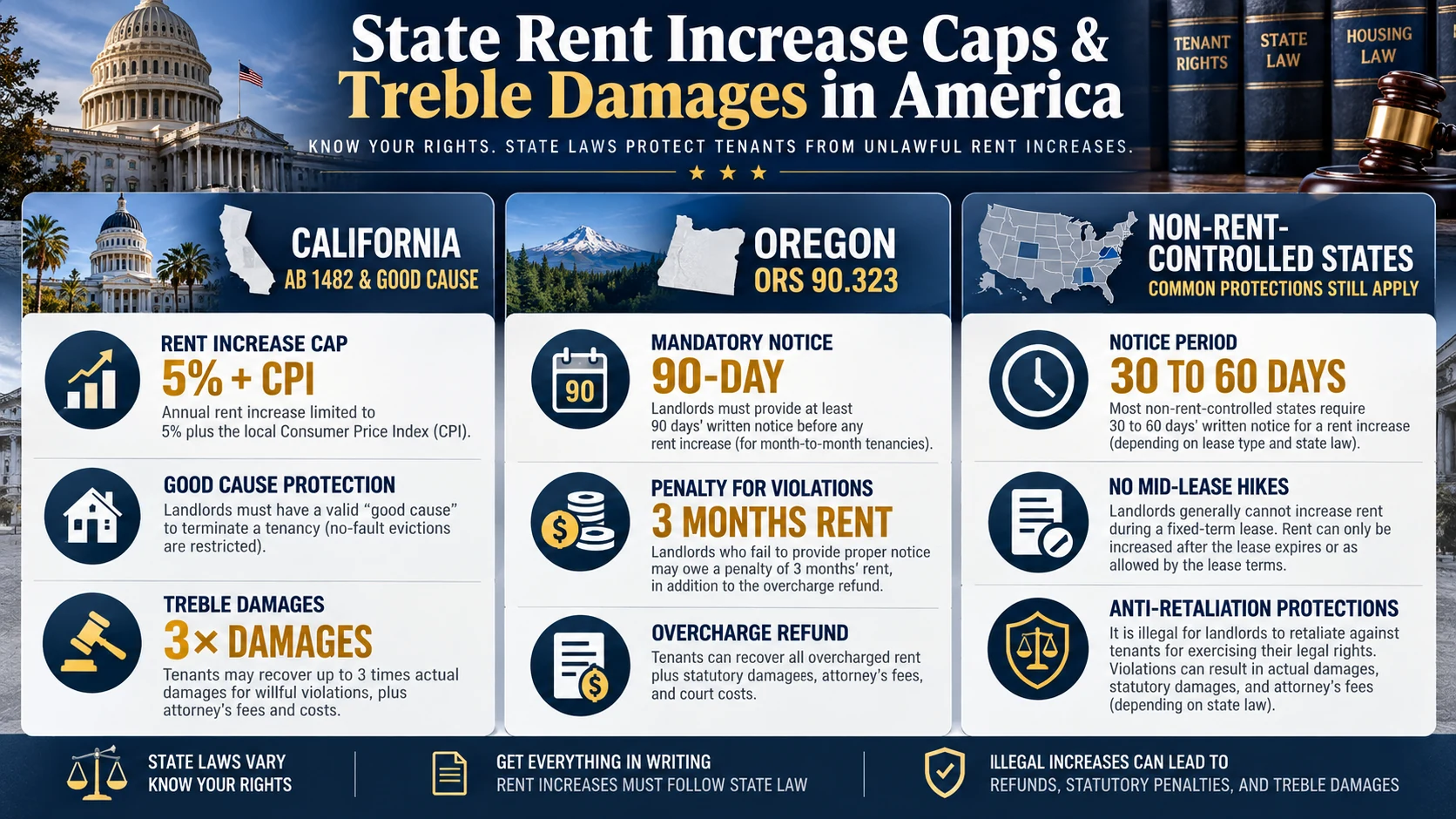
To evaluate whether a rent hike conforms to law, examine both the annual percentage increase limit and the mandatory notice clock applicable to your tenancy. The table below outlines the governing rules across key jurisdictions for 2026:
| State / City | Maximum Annual Rent Increase Allowed | Mandatory Written Notice Period Before Hike Starts | Cash Penalty / Relocation Payout If Landlord Violates It |
|---|---|---|---|
| California | 5% + Local CPI (Max 10% Statewide) under AB 1482; 3% to 4% in municipal rent-controlled units (Los Angeles, San Francisco, Oakland, Berkeley, Santa Monica); 10% Max during any declared State of Emergency (Penal Code § 396). |
30 Days Written Notice for increases equal to or below 10%; 90 Days Written Notice for increases exceeding 10% in exempt units. (Add +5 calendar days if the notice is mailed under CCP § 1013). | Hike is 100% void + 3x Treble Damages under local rent stabilization ordinances + $100 to $5,000 statutory penalty (Civ. Code § 1942.4) if unit has open habitability violations + 100% Attorney Fees. |
| New York | ~2.75% to 5.25% for Rent-Stabilized units; CPI + 5% (Capped at 10% Local Standard) under the New York Good Cause Eviction Law. | 30 Days (tenancy under 1 year); 60 Days (tenancy between 1 and 2 years); 90 Days Written Notice (tenancy of 2+ years) statewide for any increase of 5% or more under RPL § 226-c. |
If the landlord fails to satisfy the 30/60/90-day written notice window, your rent stays at the original rate until proper notice expires; willful overcharges trigger 3x Treble Damages under RSL § 26-516. |
| Oregon | 7% + Western Region CPI (Strictly Capped at 10% Statewide) under ORS 90.323 for buildings 15+ years old; 0% increase permitted during the first 12 months of tenancy. |
90 Days Advance Written Notice statewide (must specify dollar increase, new rent, and statutory math; add 4 days if mailed). | 3 Times the Monthly Rent PLUS Actual Overcharge Damages + Mandatory Attorney Fees under ORS 90.323(6). (Plus $2,900 to $4,500 Relocation Cash in Portland under PCC 30.01.085 if a 10%+ hike forces a move). |
| Washington State | 0% increase during any fixed-term lease. Market rate statewide, but subject to stringent notice windows and local relocation mandates in Seattle, Tacoma, Auburn, and Kenmore. | 60 Days Written Notice statewide under RCW 59.18.140; 180 Days (6 Full Months) Notice in Seattle (SMC 7.24.030); 120 Days in Tacoma and Auburn. |
In Seattle and Tacoma, if a rent hike of 10% or higher forces an eligible tenant to vacate, the landlord must pay 3 Months’ Rent in Mandatory Relocation Assistance. |
| New Jersey | 2% to 5% governed by over 100 municipal rent control boards. Statewide prohibition on "Unconscionable" rent increases under N.J.S.A. 2A:18-61.1(f). |
30 to 60 Days Written Notice. Landlord must legally terminate the old tenancy via a valid Notice to Quit and simultaneously tender an equitable new lease. | Tenants can challenge unconscionable hikes in court, pay the existing rent, and require the landlord to justify the increase or face 3x Treble Damages under the New Jersey Consumer Fraud Act. |
| Maryland, Washington D.C. & Maine | 3% to 6% CPI-linked rent caps in Washington D.C., Montgomery County, Prince George’s County, and Portland, Maine. | 90 Days Advance Written Notice in Maryland (Real Prop. § 8-209); 45 to 75 Days in Maine (14 M.R.S. § 6015); 60 Days in D.C. |
Up to 3x Treble Damages (D.C. Code § 42-3509.01), complete invalidation of short-notice rent increases, and mandatory rent rollbacks. |
| Texas, Florida, Georgia, Illinois, Colorado & Arizona | 0% increase during a fixed-term lease. Market rate upon lease conclusion, but subject to strict anti-retaliation bans and municipal notice requirements. | 60 Days Written Notice in Georgia (O.C.G.A. § 44-7-7), Colorado (C.R.S. § 38-12-701 — max 1 increase per 12 months!), Delaware, and Florida (Miami-Dade/Broward); 30 to 60 Days in Illinois, Texas, and Arizona. |
Retaliatory rent hikes trigger statutory penalties: 1 Month’s Rent + $500 + Moving Costs + Attorney Fees in Texas (§ 92.331); 2 Months’ Rent in Chicago (RLTO § 5-12-150) and Arizona (§ 33-1381). |
In jurisdictions requiring 60, 90, or 180 days of advance notice, landlords routinely serve notices too late in the month. If your landlord serves a 30-day notice on May 15, that notice cannot raise your rent on June 1. Under property law principles, because rent is payable on the first of each month, an untimely notice rolls forward to the beginning of the next complete rental cycle—meaning the increase cannot take effect until July 1 or August 1 at the earliest.
The "Calendar & Delivery Audit"—How 70% of Rent Increases Fail on a Technicality!
Even when a landlord owns an exempt single-family property or resides in an area without statutory rent caps, approximately 70% of rent increase notices fail on procedural grounds. Real estate law demands precise adherence to statutory notice mechanics. When a landlord stumbles over delivery methods, mailing timelines, or annual frequency restrictions, the notice is defective and legally unenforceable.
1. Technicality #1: Delivery via Text Message, WhatsApp, or Casual Email
With property management companies relying heavily on automated messaging systems, landlords frequently notify tenants of rent hikes via casual texts or portal alerts. In states including California (Civ. Code § 827), New York (RPL § 226-c), Washington (RCW 59.18.140), Oregon (ORS 90.155), and Illinois, a text message or casual email does not constitute legal notice.
State property codes require rent increase notices to be in writing on paper, formally served through personal hand-delivery or prescribed mailing protocols. A text message stating "Hi, just letting you know rent is $2,200 starting next month" has zero legal effect. Until a proper paper notice is formally served, the tenant is obligated to pay only the prior lawful rent.
2. Technicality #2: The "+5 Days for Mailing" Rule & Rental Period Resets
When landlords opt to mail a rent increase notice rather than hand-deliver it directly to the tenant, specific statutory extensions apply:
- California (Code of Civil Procedure § 1013 & Civ. Code § 827): If the notice is deposited in the mail, the landlord must add 5 calendar days to the statutory notice window. A 30-day notice becomes a 35-day notice; a 90-day notice becomes a 95-day notice. If the landlord fails to provide the full 35 or 95 days between the mailing date and the first of the month, the notice is defective.
- Oregon (ORS 90.155): First-class mailing requires the addition of 4 business days to the 90-day statutory notice clock.
- First-of-the-Month Rental Period Reset: If your monthly rental agreement runs from the 1st to the end of the month, notice provided mid-month cannot split a rental period. For example, a 60-day notice served on June 12 does not take effect on August 12; it becomes effective on the next complete rental cycle, pushing the increase date to September 1.
3. Technicality #3: Exceeding Annual Frequency Limitations
Statutes in several jurisdictions strictly cap the number of rent increases a housing provider may impose during a 12-month period, even for month-to-month tenancies:
- Colorado (C.R.S. § 38-12-701): Landlords cannot increase rent more than once in any 12-month period across all residential tenancies.
- Oregon (ORS 90.323), Washington D.C., and Maryland Counties: Statutorily restrict rent increases to a maximum of one adjustment per 12-month cycle.
- California (Civ. Code § 1947.12): Under AB 1482, landlords cannot increase rent more than twice in any 12-month period, and the cumulative total cannot exceed the statutory percentage ceiling.
Live in a State Without Rent Control (Like TX, FL, AZ, GA, or OH)? Use These 3 Laws to Stop a Huge Rent Hike!
Tenants residing in Sunbelt and Midwestern states frequently believe they have zero legal protections against exorbitant rent increases. While market-rate states like Texas, Florida, Georgia, Arizona, North Carolina, and Ohio do not impose universal percentage rent caps, landlords remain strictly bound by state anti-retaliation statutes, federal civil rights laws, and emergency price-gouging declarations.
Law #1: Retaliatory "Economic Eviction" Following Repair Requests or 311 Calls
If a landlord cannot lawfully evict you for demanding repairs, they may attempt an "economic eviction"—slapping you with a $400 to $800 monthly rent increase designed to force you out. In more than 45 states, this tactic constitutes illegal retaliation:
- Statutory Presumption of Retaliation: Under statutes like Texas Property Code § 92.331, Florida Stat. § 83.64, Arizona A.R.S. § 33-1381, and Ohio R.C. § 5321.02, a rent increase imposed within 90 to 180 days (or up to 1 year in NY and IL) after a tenant reports habitability issues or contacts municipal code inspectors is legally presumed retaliatory.
- Evidentiary Proof: To prove retaliation, compare your renewal offer against neighboring units. If neighboring tenants received routine 3% increases while you received a 25% increase following a complaint about broken air conditioning or plumbing, courts will readily recognize the hike as retaliatory.
- Statutory Damages: Tenants who prevail against retaliatory rent hikes recover 1x to 3x monthly rent, out-of-pocket moving expenses, civil statutory penalties, and 100% of attorney fees. For related issues, read our detailed guide on suing a landlord for retaliation.
Law #2: Federal Fair Housing Act Prohibitions (42 U.S.C. § 3604)
Housing providers cannot selectively raise rents based on protected class characteristics. In all 50 states, imposing an excessive rent increase because a tenant became pregnant, added a child to the household, requested an Emotional Support Animal (ESA), requested a disability accommodation, or belongs to a protected racial, religious, or gender group violates federal civil rights laws. In such cases, the rent increase is void, and the landlord faces severe compensatory and punitive damages under federal civil rights enforcement.
Law #3: The Habitability Freeze & Declared Emergency Anti-Gouging Rules
Two distinct legal doctrines can halt an otherwise permissible rent hike:
- Open Code Violations / Habitability Rent Freeze: Under statutes like California Civil Code § 1942.4, Washington RCW 59.18.085, and equivalent doctrines in New York and New Jersey, a landlord cannot demand or collect an increased rent while substantial housing code violations remain uncorrected. Attempting to collect an increase while ignoring citations subjects the landlord to statutory penalties of $100 to $5,000 plus attorney fees.
- State of Emergency 10% Price-Gouging Bans: Following natural disasters (hurricanes in Florida and Texas, wildfires in California, or severe flooding), state emergency declarations trigger anti-price-gouging statutes. For instance, under California Penal Code § 396, residential rent increases exceeding 10% during a declared state of emergency are unlawful misdemeanors that apply to all residential rental housing, including single-family homes normally exempt from rent control.
What to Do Right Now When You Get an Illegal Rent Increase Notice (Stay & Reject vs. Pay Under Protest)
When an illegal rent hike lands in your hands, your procedural strategy determines your legal outcome. Do not ignore the notice silently, and do not stop paying rent altogether. Select the appropriate legal playbook based on your circumstances:
Playbook A: The Notice Is Statutorily Defective ("Reject & Pay Old Rent")
Use this playbook when the rent increase clearly violates statutory percentage caps, missed mandatory 30/60/90-day notice periods, was sent via text message, or arrived mid-lease.
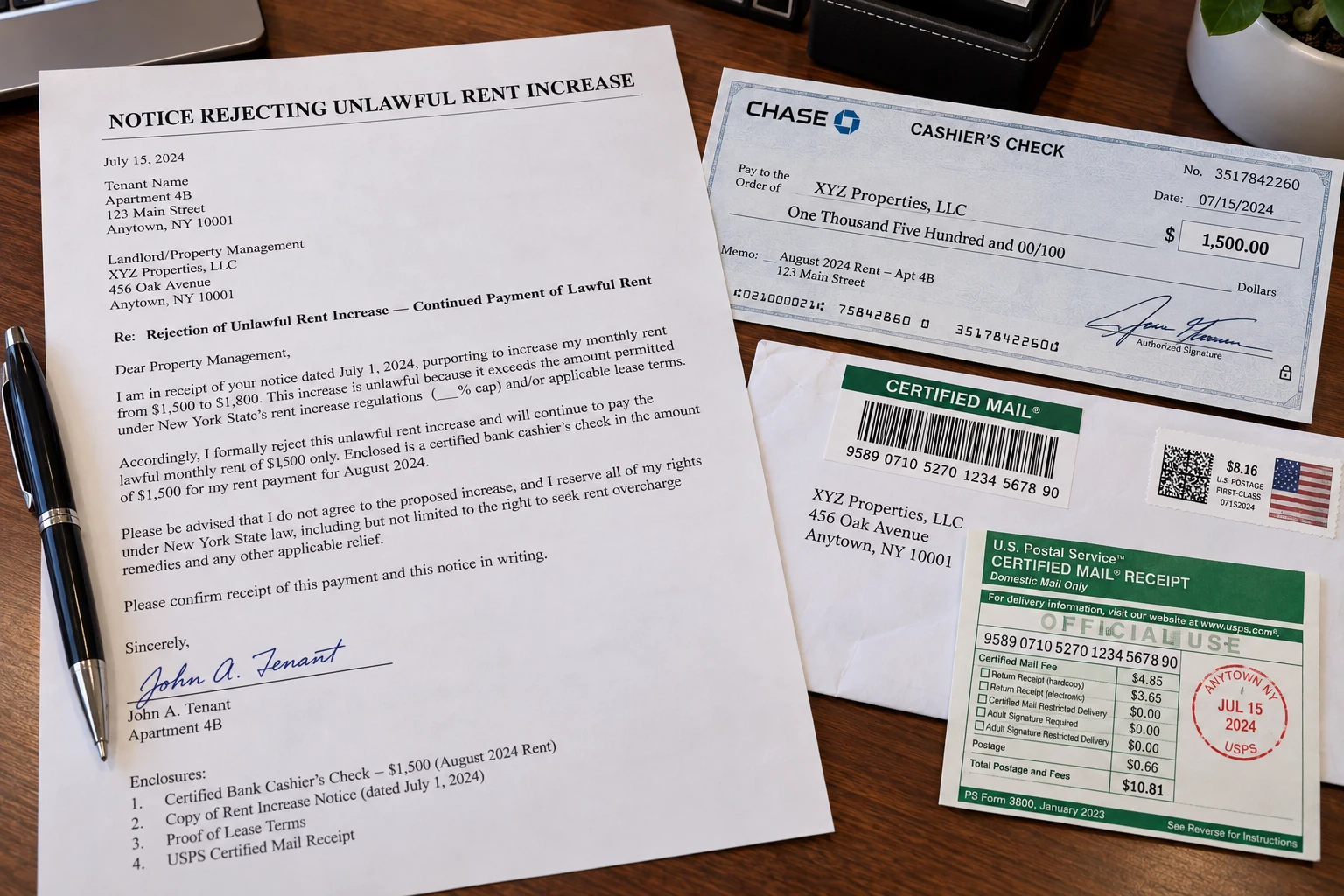
- Deliver Written Notice Before the 1st: Send our formal Notice Rejecting Unlawful Rent Increase via email and certified mail, specifying the exact statutory defect.
- Tender Lawful Existing Rent on Time: Pay 100% of your lawful base rent on or before the due date via check, money order, or screenshot verifiable portal payment.
- Preserve Proof of Tender: If the landlord refuses or returns your payment, deposit the funds into a separate escrow account. Under property law, a landlord cannot evict a tenant for refusing to pay an illegal surcharge.
Playbook B: Portal Is Locked or You Already Paid ("Pay Under Protest & Sue")
Use this playbook when management locks the online payment portal preventing partial payment, or if you already paid the higher rent for several months before discovering the violation.
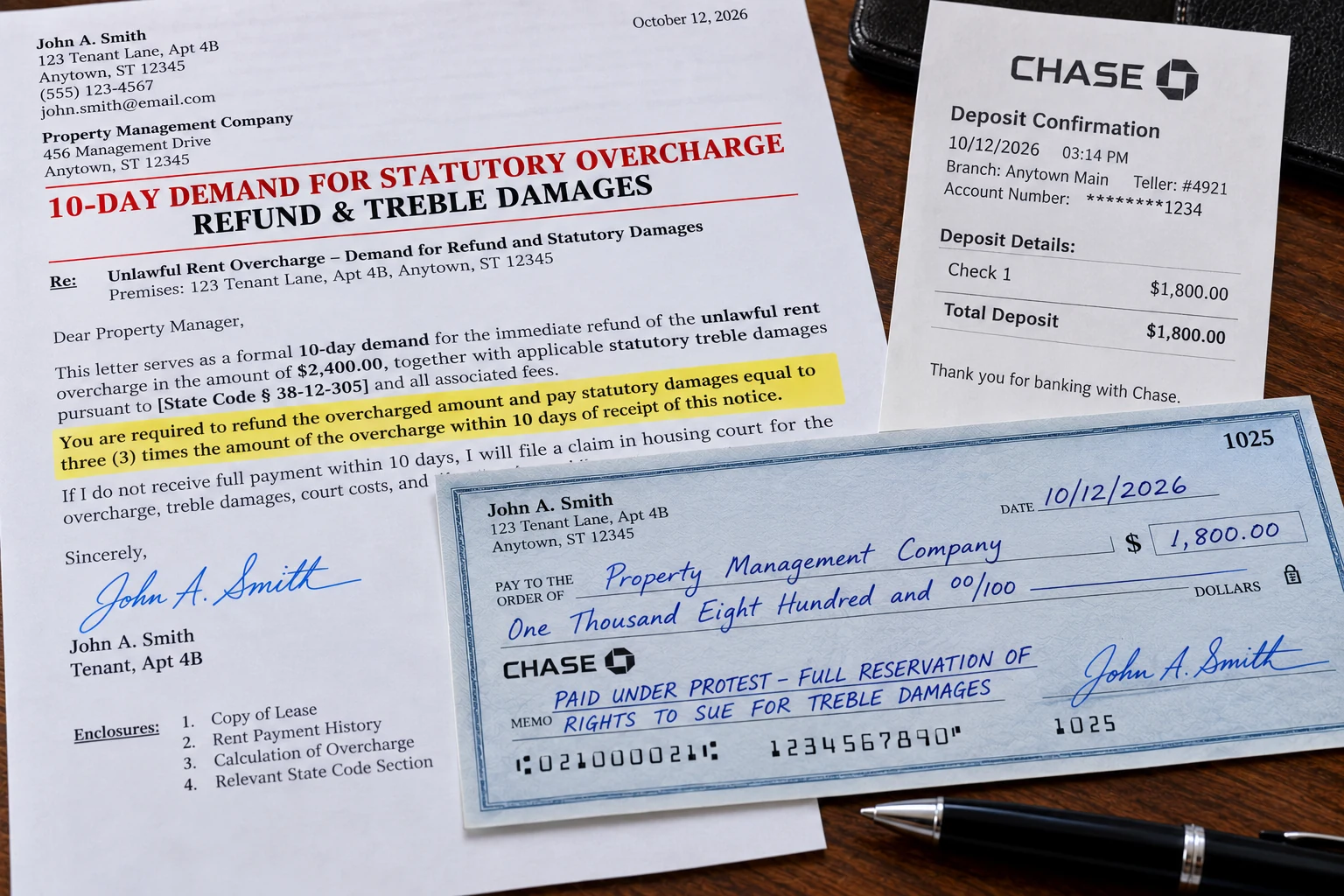
- Pay Under Explicit Written Protest: When remitting payment, state in the memo line and via email: "Disputed increase paid strictly under protest with full reservation of all legal rights to seek statutory refund and treble damages."
- Issue Formal Demand for Restitution: Serve our pre-lawsuit demand letter giving the housing provider 10 days to refund overpayments and roll back the rent.
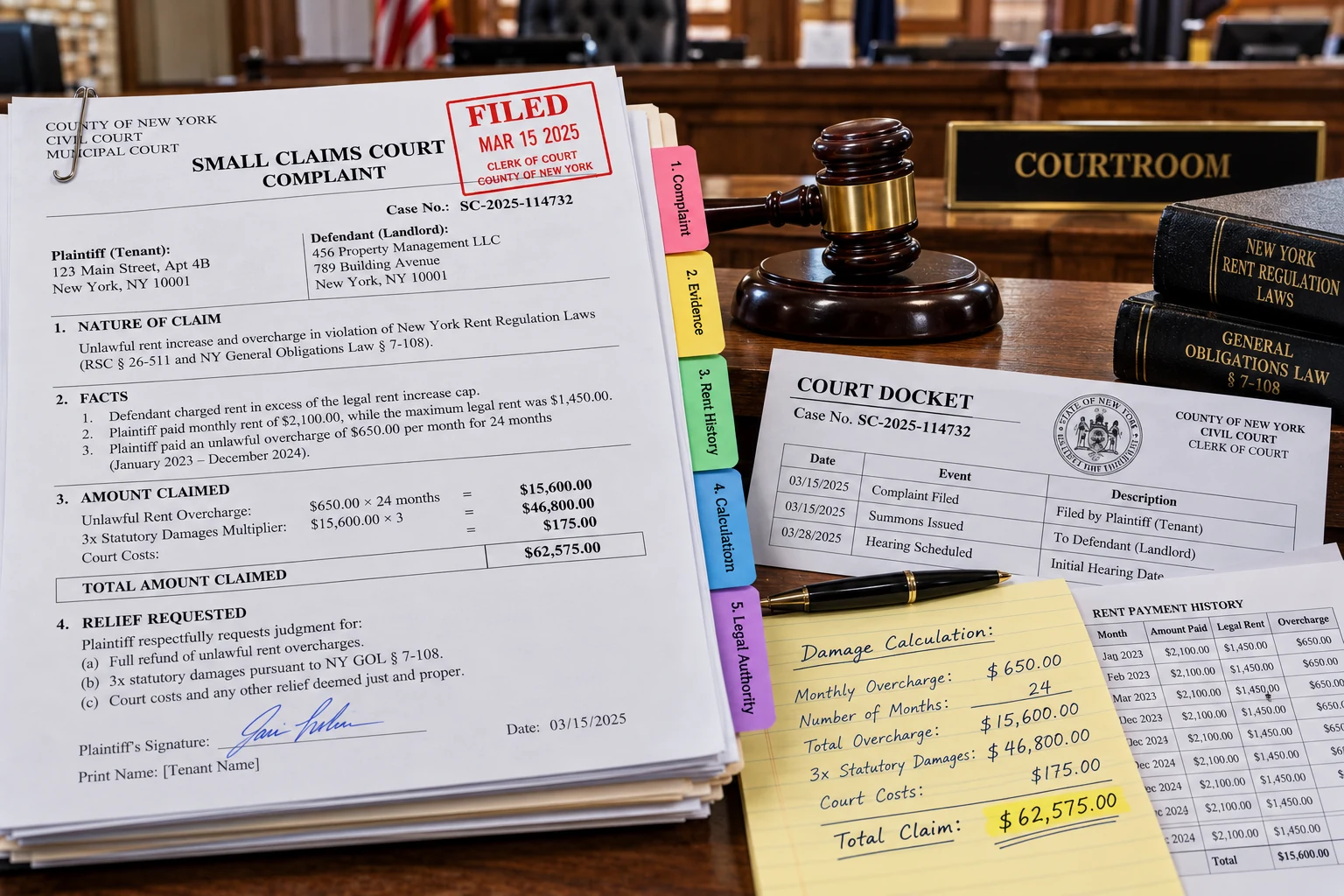
- Initiate Small Claims Court or Rent Board Action: File an action in small claims court or with your municipal housing authority to recover the overcharges plus statutory treble damages and attorney fees.
If your landlord responds to your objection by threatening lease non-renewal or locking you out, review our resources on challenging non-renewal notices and asserting claims for landlord lease breach. Additionally, if you decide to vacate and your landlord attempts to keep your deposit to cover disputed rent increases or fabricated repainting fees, learn how to protect your funds under our guides to suing for an improperly withheld security deposit and disputing unlawful painting charges.
Ready-to-Send Notice Rejecting Illegal Rent Increase & Statutory Refund Demand Letter (With Copy Button)
Serving a formal written notice before the 1st of the month establishes an undeniable legal record that you tendered lawful rent and identified the statutory defects of the increase. Use our interactive letter generator below to select the appropriate notice track, copy the text to your clipboard, or download a pre-formatted text file.
How Much Can You Recover for an Unlawful Rent Increase?
When taking legal action in Small Claims Court or Housing Court, financial recovery is calculated using established statutory remedies, documented out-of-pocket expenses, and rent reduction standards:
| Recovery Category | Calculation Standard | Statutory Authority & Limits |
|---|---|---|
| 1. 100% Refund of Rent Overcharges | Full repayment of all rental monies collected in excess of statutory rent stabilization caps or without valid advance notice. | State and municipal rent control ordinances. |
| 2. Treble Damages for Willful Overcharges | Triple damages awarded in rent-stabilized jurisdictions for intentional or bad-faith rent overcharges. | E.g., NYC HSTPA; Cal. Civ. Code § 1947.12. |
| 3. Lease Reformation to Lawful Baseline | Judicial reformation of the lease contract restoring rent to the legal statutory baseline rate. | Judicial contract reformation. |
Small Claims Filing Limits: Most tenants resolve these matters pro se (without a lawyer) in Small Claims Court. Maximum claim limits vary by state: for example, $12,500 in California (California Courts Self-Help), $10,000 in New York City (NY Courts Small Claims), and $20,000 in Texas (Texas Judicial Branch). If damages exceed local small claims thresholds, lawsuits proceed to standard Civil Court.
Frequently Asked Questions About Illegal Rent Increases
SueLegal is an independent educational legal publisher, not a law firm or lawyer referral service. The information provided in this guide is for general informational and educational purposes only and does not constitute formal legal advice. Residential landlord-tenant laws, repair notice periods, and statutory remedies vary significantly across state and municipal jurisdictions. If you are facing eviction, severe uninhabitable conditions, or complex litigation, consult a licensed attorney in your jurisdiction or contact your local legal aid organization. For more details on our standards, read our Editorial Policy and Legal Research Methodology.