
The Short Answer
Yes, you can sue your landlord for asbestos exposure.
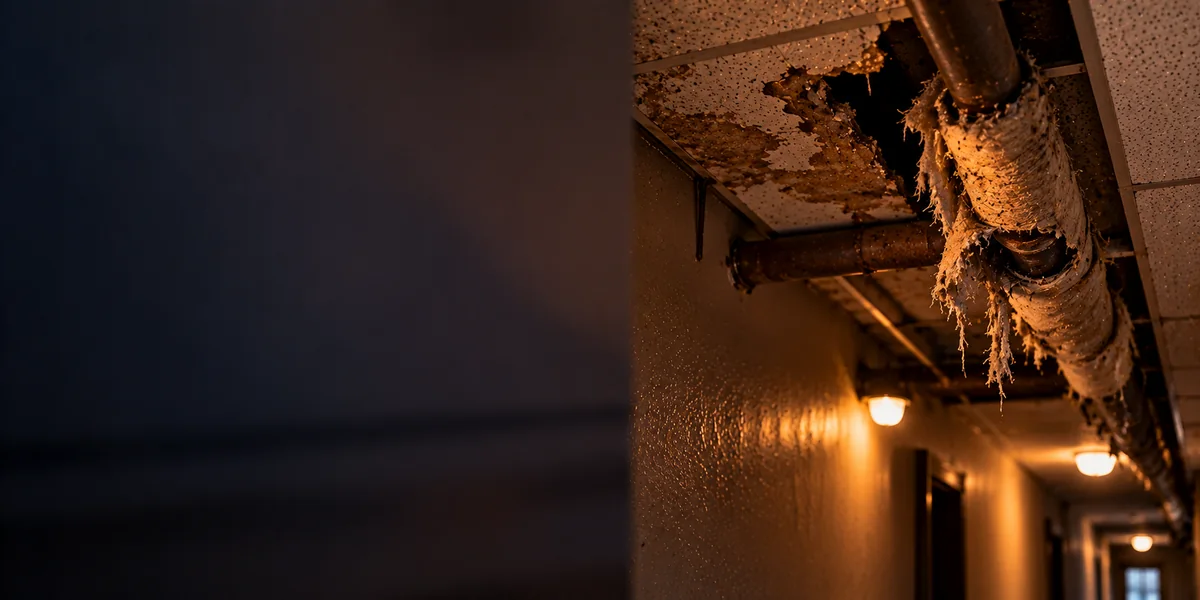
While landlords are legally permitted to leave intact asbestos alone if it is sealed and undisturbed, it is strictly unlawful to leave crumbling, water-damaged asbestos unaddressed or allow uncertified workers to scrape, sand, or demolish asbestos-containing materials without certified containment. Under state and federal law, tenants have two distinct avenues for recovery:
- Immediate Lawsuits for Property Contamination, Relocation & Rent Refunds: If a fallen popcorn ceiling, burst water pipe, or sloppy contractor work covered your apartment in toxic asbestos dust, you do not have to wait for an illness diagnosis to take legal action. You can sue immediately in Small Claims or Civil Court to recover the replacement value of contaminated furniture, mattresses, rugs, and clothing, emergency hotel expenses, independent laboratory testing fees, moving costs under constructive eviction, and a full refund of rent for every day the home was unsafe.
- Personal Injury Claims for Diagnosed Asbestos Illnesses: If long-term or severe exposure resulted in a medically diagnosed condition such as mesothelioma, asbestosis, or lung cancer, tenants can file a personal injury or toxic tort lawsuit against the landlord and responsible contractors for past and future medical expenses, lost earning capacity, and pain and suffering.
Key Points to Know
- You Don't Have to Wait 30 Years to Sue for Ruined Belongings & Hotel Bills: Most legal blogs only talk about cancer lawsuits. If asbestos dust contaminates your apartment today, you can sue right now in Small Claims or Civil Court for your ruined furniture, hotel nights, moving costs, and rent back.
- Fabric Items Covered in Asbestos Dust Cannot Be Washed: Microscopic asbestos fibers hook into fabric mattresses, couches, rugs, and clothing. Because normal vacuuming or washing machines spread the toxic fibers into the air and water, contaminated porous belongings are usually considered a 100% total loss that the landlord must pay to replace.
- Save and Test a Small Piece Before Maintenance Sweeps It Up: Landlords often rush over with a broom to sweep up fallen ceiling chunks and claim "It wasn't asbestos." Safely mist a fallen fingernail-sized piece with water, seal it in two Ziploc bags, and pay $40–$75 at an accredited lab for proof that wins in court.
- Intact Asbestos Is Legal—Disturbed Asbestos Is Not: You cannot sue just because your pre-1981 building has an undisturbed popcorn ceiling or old floor tiles. Your legal case begins the moment a water leak, crack, or uncontained renovation releases fibers into your living space.
- Call Your Local Air Quality Board or EPA to Stop Illegal Renovations Fast: If your landlord's workers are dry-scraping ceilings or ripping out old pipes/tiles without plastic containment suits, calling your local Air Quality Management District (AQMD), Health Department, or State EPA will get an inspector out to shut the job down immediately.
Intact vs. Crumbling Asbestos: When Is Your Landlord Breaking the Law?
Under federal and state law, asbestos materials are divided into two distinct legal categories: intact (non-friable) and crumbling (friable). Understanding this distinction is the key to knowing whether your landlord is breaking the law:
| Condition in Your Apartment | Is It Legal or Illegal? | Can You Sue Your Landlord? | What the Landlord Must Do by Law |
|---|---|---|---|
| Intact, painted popcorn ceiling or solid vinyl floor tiles with no cracks or dust | Legal to Leave Alone | No (Unless the landlord lied on a required state disclosure form) | Leave it undisturbed and warn maintenance workers never to sand, scrape, or drill into it. |
| Roof or plumbing leak makes a popcorn ceiling soggy, peeling, or collapse onto your floor/bed | Illegal Hazard | Yes (Immediate Claim) | Pay for licensed hazmat cleanup, pay for your hotel room, refund your rent, and replace every contaminated mattress, couch, or piece of clothing. |
| Handyman dry-scrapes a ceiling, sands plaster, or rips up old 9x9 floor tiles without plastic containment | Strictly Illegal (Violates EPA/OSHA Rules) | Yes (Strong Negligence Claim) | Stop work immediately, hire a licensed asbestos abatement crew to decontaminate the unit, and pay for all ruined belongings and temporary housing. |
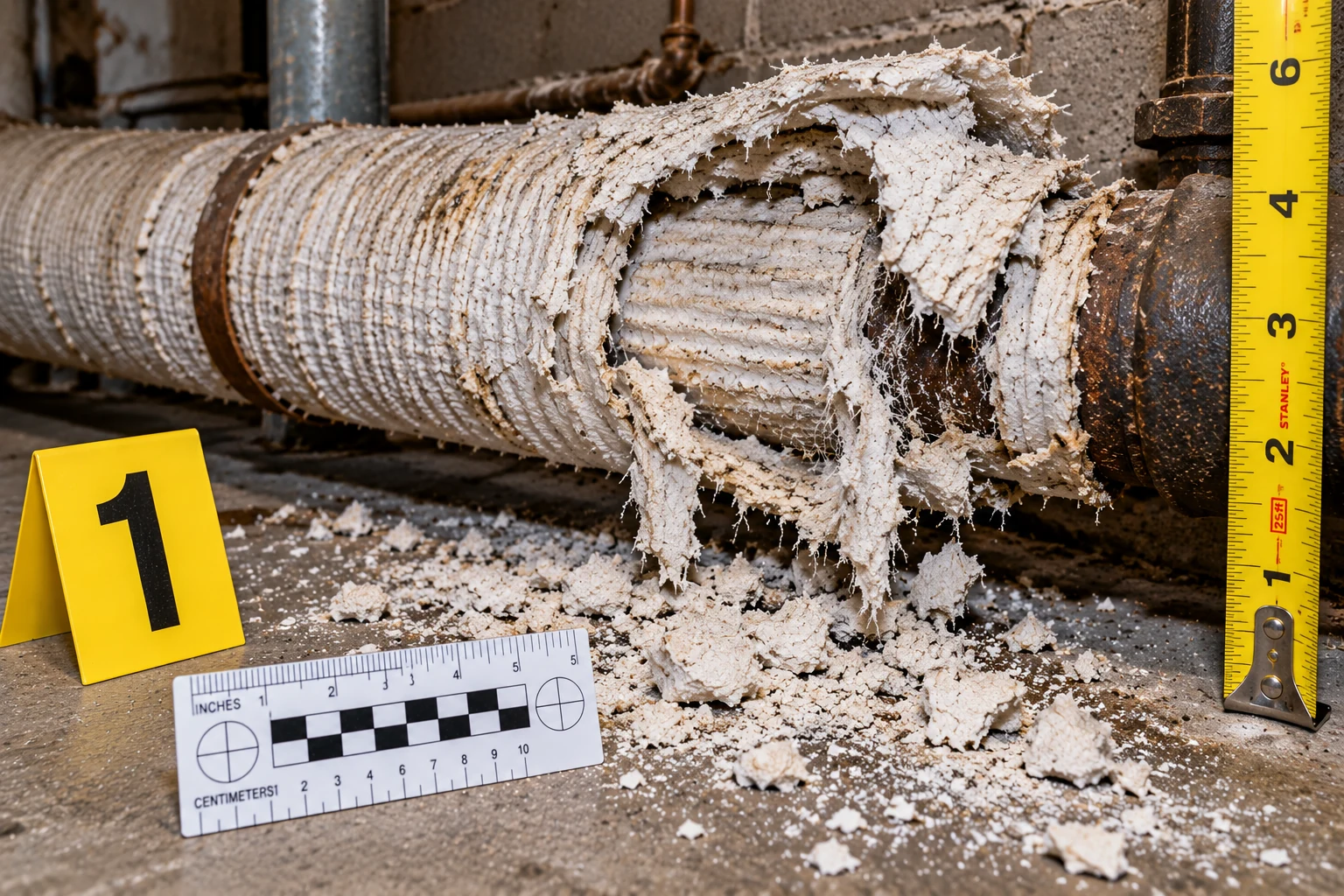
| White "cardboard-like" pipe wrap in your closet, basement, or laundry area is fraying or flaking | Illegal Hazard | Yes | Hire a licensed asbestos professional to encapsulate (seal) or remove the damaged pipe insulation before fibers enter your living space. |
When a water leak causes a ceiling to drop hazardous materials into your living area, review our comprehensive legal guide on suing your landlord for a ceiling collapse.
To learn how small claims and habitability claims proceed against negligent property managers, explore our master guide on suing your landlord.
Tenant Rights & Landlord Legal Duties for Asbestos
Federal and state laws establish strict safety standards regarding asbestos in residential rental housing. Under the implied warranty of habitability, landlords are legally obligated to maintain rental units in a condition that is clean, safe, and fit for human occupation.
The legal distinction between lawful asbestos and an actionable health hazard rests on whether the material is friable or disturbed:
- Intact, Non-Friable Asbestos (Lawful): In buildings constructed before 1981, materials like vinyl floor tiles, acoustic popcorn ceiling textures, and pipe insulation frequently contain asbestos. As long as these surfaces remain completely intact, painted, sealed, and undamaged, they do not release airborne fibers and do not constitute an immediate violation of the lease.
- Friable or Disturbed Asbestos (Actionable Breach): When asbestos materials become friable—meaning they can be crumbled, pulverized, or reduced to powder by hand pressure—microscopic fibers release into the indoor breathing air. A ceiling leak that causes acoustic texture to peel, a ceiling collapse, crumbling basement pipe wraps, or uncontained dry-scraping by maintenance workers immediately breaches the warranty of habitability.
- Federal Worker & Environmental Protections: Under OSHA standards (29 C.F.R. § 1926.1101) and the EPA Clean Air Act National Emission Standards for Hazardous Air Pollutants (NESHAP, 40 C.F.R. Part 61, Subpart M), building owners are prohibited from performing uncontained demolition or dry scraping. Contractors must establish negative-air containment zones, utilize HEPA filtration systems, and dispose of toxic debris in sealed, labeled containers.
Explore our related guides on other toxic environmental rental hazards: lead paint risks, radon gas testing, and toxic black mold remediation.
What You Can Sue For: Property, Rent Abatement & Health Claims
When taking your landlord to court over asbestos contamination, recoverable compensation is divided into tangible economic property losses and personal injury claims:
| Damages Category | Legal Standard & Calculation Method | Statutory Authority |
|---|---|---|
| 1. Ruined Personal Property | Microscopic asbestos fibers penetrate deep into porous fabrics. Standard household washing machines and vacuums disperse fibers rather than decontaminating them. Mattresses, couches, rugs, curtains, and contaminated clothing are treated as a total loss at fair market replacement value. | Actual economic property damages under tort negligence principles. |
| 2. Emergency Hotel & Lodging | Reasonable lodging and food stipend reimbursement for days or weeks displaced while certified abatement contractors decontaminate the rental unit. | Displacement expenses under constructive eviction. |
| 3. Retroactive Rent Abatement | 100% refund of all rent paid during the contamination and displacement period, plus refund of full security deposits. | Breach of the Implied Warranty of Habitability. |
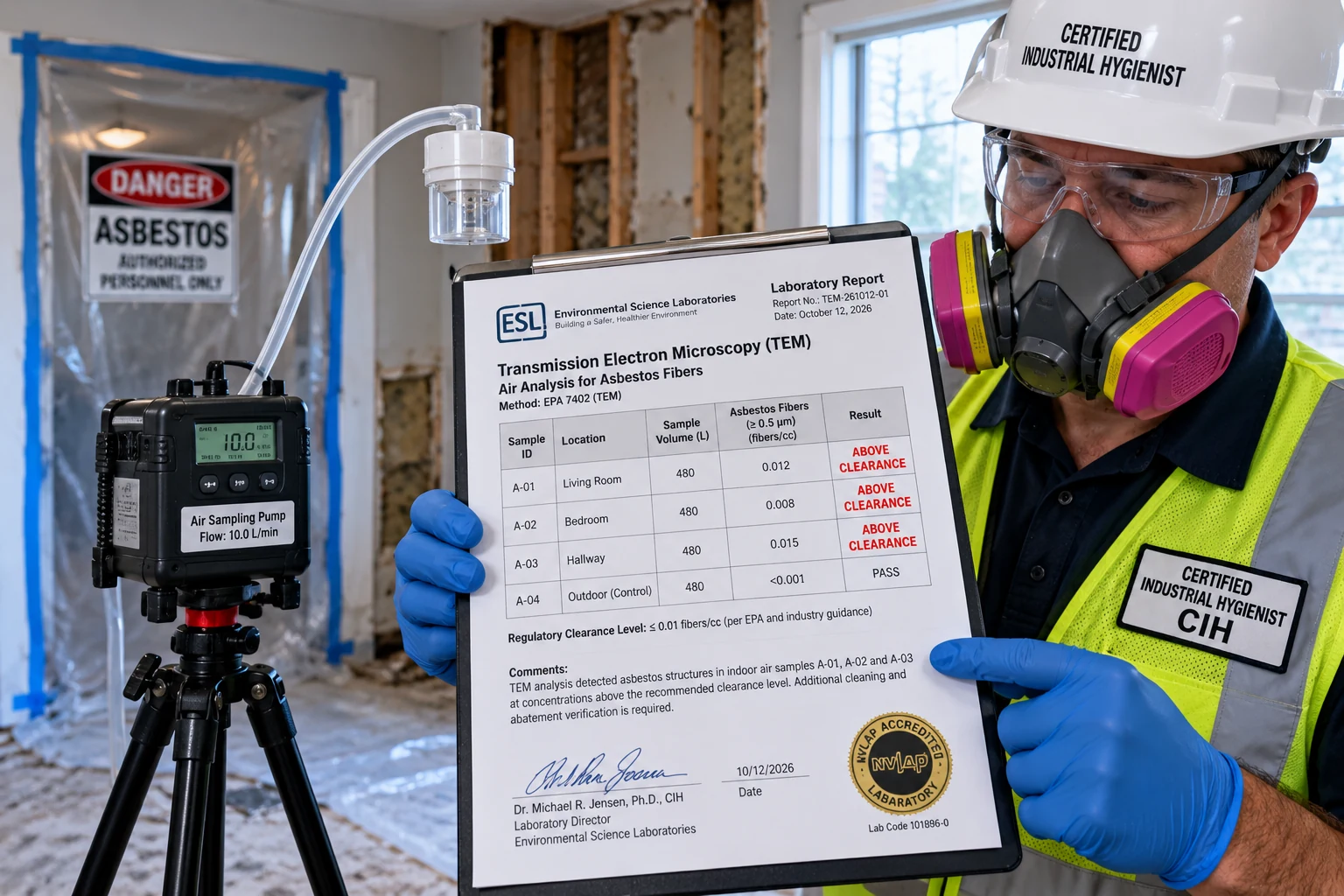
| 4. Independent Testing Fees | Full reimbursement for laboratory sampling invoices and certified industrial hygienist (CIH) air clearance testing. | Incidental out-of-pocket consequential damages. |
| 5. Medical Monitoring & Injury | In jurisdictions recognizing medical monitoring claims, tenants exposed to proven toxic fibers can seek court-ordered funds for periodic pulmonary function testing and chest high-resolution CT scans. For diagnosed illnesses (mesothelioma, lung cancer), compensatory personal injury damages apply. | Toxic tort liability; Restatement (Third) of Torts § 31. |
Statute of Limitations: The "Discovery Rule"
Statutes of limitations for asbestos claims operate on two completely separate legal timelines:
- Property Damage & Rent Refund Claims: Typically 2 to 4 years from the date the ceiling collapsed or the contamination event occurred, depending on your state's statute for contract or property tort claims.
- Personal Injury Illness Claims: Asbestos-related diseases have latency periods of 20 to 50 years. Under the Discovery Rule recognized in almost every U.S. jurisdiction, the personal injury statute of limitations does NOT begin when you lived in the apartment; it begins on the date an illness was medically diagnosed or reasonably should have been discovered.
What to Do in the First 24 Hours After an Asbestos Incident (Do NOT Vacuum!)
When a popcorn ceiling collapses or a handyman spreads white renovation dust throughout your home, your immediate actions make the difference between protecting your health and preserving your legal claim:
- NEVER Sweep or Use a Regular Vacuum Cleaner: Sweeping stirs dormant fibers back into the air. Running a household vacuum cleaner—even one with a store-bought "HEPA" label—blows microscopic asbestos particles right through the motor exhaust into your breathing zone.
- Turn Off the AC or Heater Fan Immediately: Central heating and cooling systems pull airborne asbestos dust into return vents and circulate toxic fibers into every closed bedroom and closet in your apartment.
- Take Wide & Close-Up Photos Before Touching Anything: Photograph the fallen ceiling chunks, dusty furniture, unsealed doorways, and any maintenance workers operating without protective gear.
- Safely Bag a Thumbnail-Sized Sample for a $40 Lab Test: Put on an N95 or P100 respirator mask and gloves. Lightly mist a fallen piece of ceiling texture or tile with water from a spray bottle so it doesn't create dust, place it inside two separate sealed Ziploc bags, and deliver it to a local NVLAP-accredited testing lab. For $40 to $75, you will receive an official lab certificate identifying the asbestos percentage—preventing the landlord from claiming it was normal drywall plaster.
- Check Into a Safe Hotel and Save Every Receipt: Evacuate your household to a clean hotel or family home. Keep every receipt for lodging, meals, emergency toiletries, and replacement clothing so your landlord can be held legally liable for reimbursement.
If your landlord tries to deny that the apartment is uninhabitable, consult our guide on suing for unsafe living conditions.
Who to Call to Shut Down an Illegal Landlord Renovation Today
Civil court dates take weeks or months, but environmental regulatory agencies have the statutory authority to halt illegal landlord renovations within 24 to 48 hours:
Government Agencies With Emergency Enforcement Authority
- Local Air Quality Management District (AQMD) or State EPA: Under federal Clean Air Act rules (NESHAP 40 C.F.R. Part 61), disturbing regulated asbestos-containing material in multi-family residential structures requires prior agency notification, certified containment, and wet stripping methods. Calling your regional air quality agency brings an inspector who can issue immediate Stop-Work Orders, quarantine the building, and levy daily administrative fines.
- City or County Department of Public Health: Municipal health inspectors can cite landlords for creating an acute environmental health nuisance, issue orders to vacate, and mandate that property management provide emergency tenant relocation assistance.
- California Health & Safety Code § 25915 (Connelly Act): In California, owners of commercial and residential buildings built before 1979 who know of asbestos-containing construction materials are legally required to deliver written asbestos notifications to tenants. Failure to provide this notice establishes bad-faith negligence in court.
If your apartment was built before 1978 and also features peeling paint, check our companion guide on suing a landlord for lead paint hazards.
Ready-to-Send Asbestos Contamination & Reimbursement Demand Letter
Before filing a lawsuit in Small Claims Court or terminating your tenancy, deliver this formal legal demand letter. It puts management on official notice of hazardous friable asbestos, prohibits uncertified cleanup attempts, and demands immediate hotel lodging and expense reimbursement:
VIA CERTIFIED MAIL WITH RETURN RECEIPT REQUESTED
AND VIA ELECTRONIC DELIVERY (EMAIL / TENANT PORTAL)

Date: [TODAY'S DATE, e.g. October 15, 2026]

To: [LANDLORD OR PROPERTY MANAGEMENT COMPANY NAME]
Address: [OFFICIAL LEASE NOTICE ADDRESS]
City, State, Zip: [CITY, STATE, ZIP]

From: [YOUR FULL NAME]
Rental Address: [YOUR APARTMENT NUMBER AND STREET ADDRESS]
Phone Number: [YOUR PHONE NUMBER]
Email: [YOUR EMAIL ADDRESS]

SUBJECT: FORMAL NOTICE OF DISTURBED ASBESTOS CONTAMINATION AND EMERGENCY DEMAND FOR CERTIFIED ABATEMENT, HOTEL LODGING, AND PROPERTY REIMBURSEMENT

Dear [LANDLORD OR PROPERTY MANAGER NAME],

This letter serves as formal written notice under federal Clean Air Act regulations (NESHAP, 40 C.F.R. Part 61), state health and safety codes, and the implied warranty of habitability that my rental apartment contains active, disturbed friable asbestos contamination rendering the premises legally uninhabitable.

1. INCIDENT DESCRIPTION AND NATURE OF HAZARD:
On [DATE OF INCIDENT], the following event resulted in the release of hazardous building dust into my living space:
- [CHOOSE APPLICABLE OPTION: Popcorn ceiling collapse caused by plumbing/roof leak / Uncontained scraping and sanding of ceilings/plaster by maintenance personnel / Removal of vintage floor tiles and black mastic without containment / Frayed and crumbling pipe insulation in utility area].

Location(s) impacted:
- [DESCRIBE SPECIFIC ROOMS: e.g., Master bedroom ceiling, living room rug, and hallway closet].

2. PROHIBITION OF UNCERTIFIED CLEANUP:
You and your employees are explicitly put on notice that sweeping with standard brooms or vacuuming with standard household/shop vacuums is strictly prohibited under EPA and OSHA standards. Such uncertified actions aerosolize microscopic asbestos fibers throughout the building and constitute willful negligence.

3. REQUIRED CORRECTIVE ACTIONS AND STRICT DEADLINE:
Because airborne asbestos fibers represent an immediate life-safety hazard, I hereby demand that you complete the following actions within [TWENTY-FOUR (24) TO FORTY-EIGHT (48)] HOURS of receipt of this notice:
1. Retain a state-licensed, insured asbestos abatement contractor to establish negative-pressure plastic containment, clean all surfaces using certified HEPA vacuums and wet methods, and obtain independent Transmission Electron Microscopy (TEM) air clearance testing before re-occupancy.
2. Provide immediate direct payment or daily reimbursement for alternative temporary hotel accommodations ($[AMOUNT]/night) and meal allowances, accompanied by a 100% rent abatement for all days during which the home remains uninhabitable.
3. Reimburse me in the amount of $[AMOUNT, e.g. $3,200] for contaminated porous personal property (mattress, upholstered furniture, clothing, rugs, and bedding) that cannot be safely laundered and represents a total loss, plus $[AMOUNT] for independent accredited lab testing fees (receipts attached).
4. In the alternative, agree in writing to an immediate, penalty-free lease cancellation with full refund of my security deposit and moving expenses.

4. NOTICE OF REGULATORY AND LEGAL ACTION:
If certified abatement and emergency lodging are not confirmed in writing within 48 hours, I will immediately contact the regional Air Quality Management District (AQMD), the State Environmental Protection Agency, municipal Code Enforcement, and OSHA to request an emergency inspection and Stop-Work Order, and file a civil action for damages.

Please contact me immediately in writing at [YOUR EMAIL ADDRESS] to confirm emergency accommodations and remediation arrangements.

Sincerely,

_________________________________________
[YOUR SIGNATURE]

[YOUR PRINTED NAME]
Tenant at [YOUR APARTMENT NUMBER]
How to Send This Letter So It Counts in Court:
- Fill in the brackets: Insert your incident date, room locations, emergency hotel rates, and itemized property losses.
- Email and upload immediately: Deliver an electronic copy through the tenant portal or by email so management has instant timestamped notice.
- Send via USPS Certified Mail: Mail a signed physical copy via Certified Mail with Return Receipt Requested. Keep your receipt and post office tracking log as courtroom evidence.
Frequently Asked Questions
Yes. While a diagnosed illness is required to file a personal injury toxic tort lawsuit, you can sue right now in Small Claims Court or Civil Court for your immediate economic damages. This includes replacing contaminated porous property (mattresses, fabric couches, clothes, and rugs), emergency hotel lodging bills, certified laboratory asbestos testing costs, moving expenses, and a 100% rent refund for every day your home was legally uninhabitable.
While federal law only mandates pre-lease disclosures for lead paint rather than asbestos, multiple states—most notably California under Health & Safety Code § 25915 for pre-1979 buildings—and many local housing codes strictly require landlords to provide written disclosure of known asbestos. Furthermore, every state's implied warranty of habitability makes it illegal for a landlord to conceal known crumbling asbestos or expose tenants during uncontained maintenance work.
Yes. Airborne friable asbestos fibers render an apartment legally uninhabitable under the legal doctrine of constructive eviction. Once you have physical proof—such as dated photographs of a collapsed ceiling or renovation dust, a positive laboratory test on debris, or a violation notice from your local air quality or health department—you can issue written notice terminating your lease without penalty and demand your full security deposit and relocation expenses back.
Almost never. While smooth, non-porous surfaces like glazed tile, glass, and metal can be wet-wiped by licensed professionals, microscopic barbed asbestos fibers hook deeply into porous fabrics, upholstery foam, carpets, and mattress padding. Standard home vacuuming or washing machines simply recirculate fibers into the air and municipal wastewater. As a result, insurance adjusters and courts routinely treat contaminated porous personal property as a 100% total replacement loss.
You protect future legal claims by establishing an airtight paper trail today. Preserve your certified laboratory test confirming asbestos in the fallen debris, any municipal air quality or health department violation notices, dated incident photographs, and your lease agreement. Most importantly, visit your physician immediately and request that they explicitly note in your permanent medical records that you experienced documented residential asbestos exposure at that specific address and date.
SueLegal is an independent educational legal publisher, not a law firm or lawyer referral service. The information provided in this guide is for general informational and educational purposes only and does not constitute formal legal advice. Residential landlord-tenant laws, repair notice periods, and statutory remedies vary significantly across state and municipal jurisdictions. If you are facing eviction, severe uninhabitable conditions, or complex litigation, consult a licensed attorney in your jurisdiction or contact your local legal aid organization. For more details on our standards, read our Editorial Policy and Legal Research Methodology.