
Quick Legal Guide
- A Broken Toilet in a 1-Bathroom Apartment Is a 24-Hour Emergency: If you only have one bathroom and the toilet won't flush or overflows, your home is legally uninhabitable immediately. Your landlord has 24 hours to fix it—not 14 or 30 days—or they owe you for a hotel room and 100% daily rent back.
- Don't Let Your Landlord Stick You With a $350 Main-Line Plumber Bill: Landlords love to blame tenants for every clogged drain. Unless the plumber's written invoice proves a foreign object was pulled from your immediate sink/toilet trap, clogs deep in the wall or main line (from old cast-iron pipes, grease buildup over years, or tree roots) are 100% the landlord's bill.
- Make the Landlord Pay When a Leak Spikes Your Water Bill: A single running toilet or hidden slab leak can waste 6,000+ gallons of water a month and add $150 to $500+ to your water and sewer bill. Once you text or email the landlord about the leak, every extra dollar on your water bill is their legal responsibility.
- Low Water Pressure ("Trickle Showers") Violates Plumbing Codes: Under the Uniform Plumbing Code, faucets and showers must maintain at least 15 to 20 PSI of water pressure. If old rusted pipes reduce your shower or sink to a tiny trickle, your landlord must fix it.
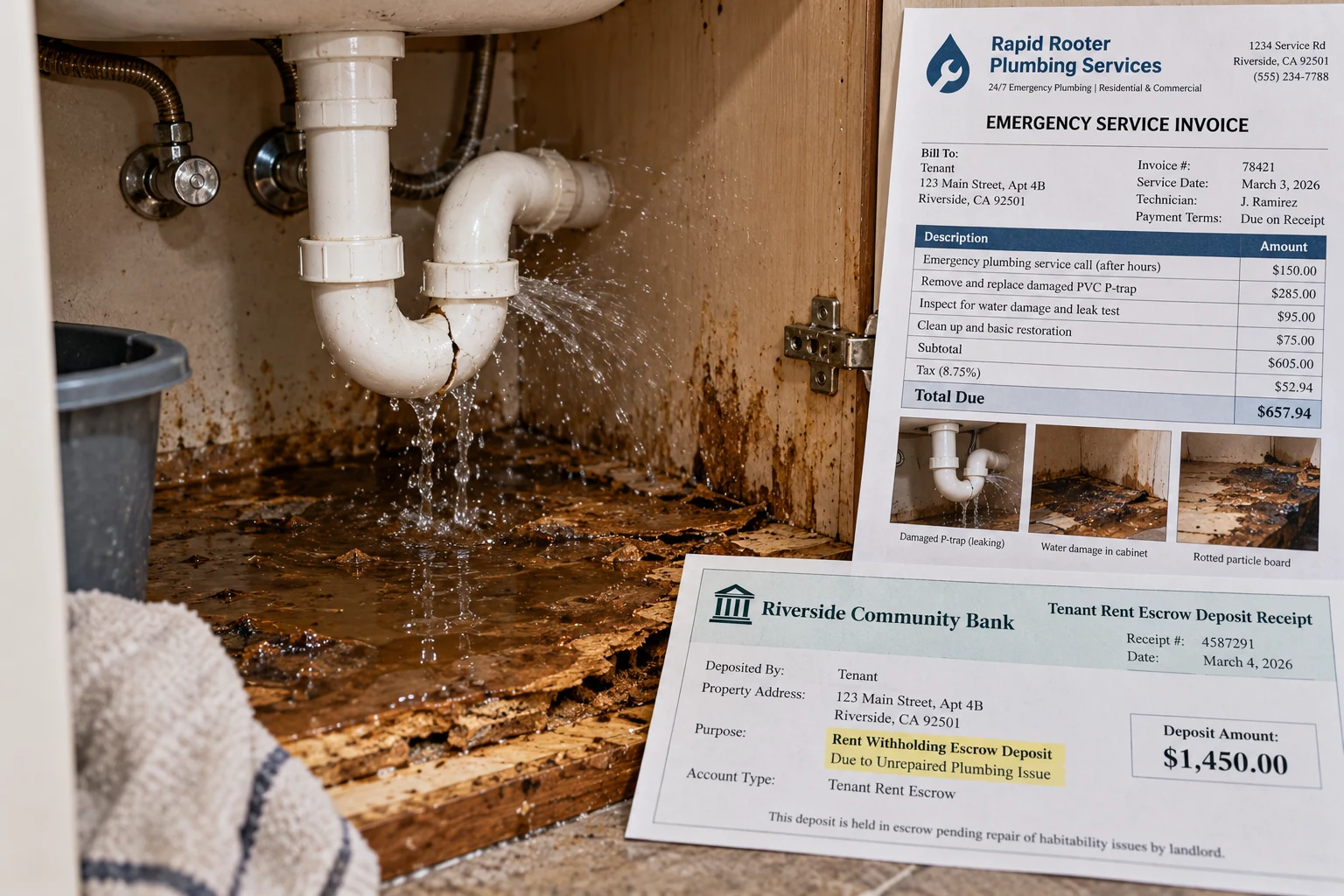
- Take a Photo of the Plumber's Work Ticket Before They Leave: Whenever a plumber visits your apartment, politely ask what caused the problem and snap a photo of their written work order before they hand it to the landlord—that one photo stops a dishonest landlord from lying and blaming you for the bill.
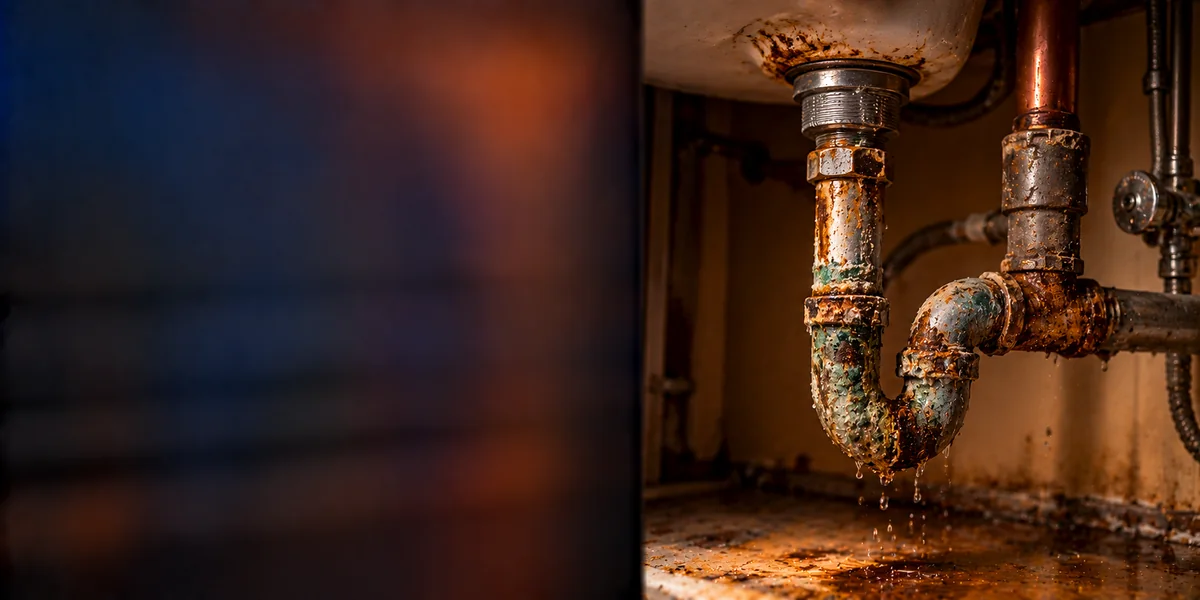
Few household problems cause more daily friction and stress than failing residential plumbing. Whether you are dealing with a toilet that refuses to flush, a kitchen sink that bubbles with standing gray water, a pipe leak dripping inside your cabinet, or a sudden $400 water bill, plumbing failures directly disrupt basic sanitation.
Under every state's Implied Warranty of Habitability and municipal sanitary plumbing codes, landlords have an affirmative legal duty to maintain all waste lines, supply pipes, faucets, and sanitary fixtures. Landlords cannot ignore your repair requests, blame you for building-wide pipe corrosion, or pass the cost of aging infrastructure onto your rent ledger.
If your landlord delays repairs or wrongfully bills you for plumbing maintenance, you can take immediate legal action. You can demand a substantial rent refund in Small Claims Court, recoup every dollar of an inflated water bill, and utilize statutory repair-and-deduct remedies to hire your own plumber.
For general procedural advice on small claims courts and landlord liability thresholds, refer to our pillar guide on suing your landlord.
Which Plumbing Problems Are 24-Hour Emergencies vs. 7-to-14-Day Repairs?
The law divides plumbing failures into two strict categories: acute sanitation emergencies and standard habitability repairs. Understanding this distinction determines whether your landlord must dispatch a contractor tonight or has a week to schedule service.
If your landlord ignores a written notice regarding an acute emergency, you are not trapped. You have the right to check into temporary lodging or execute statutory remedies under landlord refusal to repair laws.
Who Has to Pay the Plumber Bill for a Clogged Drain or Toilet? (Beating the Landlord's Blame Game)
One of the most frequent disputes between renters and property managers involves plumber invoices. A tenant reports a slow shower drain or backed-up toilet, management dispatches a contractor, and two weeks later a surprise $350 fee appears on the tenant's online rent portal with a note: "Plumber service call — tenant responsibility."
Under state law, landlords cannot automatically shift plumber bills to tenants. The default legal presumption is that residential plumbing infrastructure is the property owner's financial responsibility.
When the Landlord Must Pay 100% of the Plumber Bill:
- Clogs During Your First 30 Days of Tenancy: Any drain that backs up during your first month was caused by hair, grease, or debris left behind by previous occupants. New tenants cannot be held liable for inherited blockages.
- Main-Line, Stack, or Deep Pipe Blockages (10+ Feet Inside the Line): If the plumber had to run an electric auger snake 20 to 80 feet down the pipe, or pulled back tree roots, sediment, or rusted cast-iron pipe scale, that is a structural building defect.
- Multiple Fixtures Backing Up Simultaneously: If flushing the toilet causes water to gurgle into the bathtub, or running your kitchen faucet bubbles up in the hallway sink, the clog is in the building's central vertical stack. That is 100% the landlord's responsibility.
- Aging Galvanized Pipes & Faulty Toilet Components: Normal hair and soap buildup accumulating over years inside rough, corroded 40-year-old metal pipes constitutes normal wear and tear. Rubber flappers and fill valves deteriorating from municipal chloramines are also standard owner maintenance.
The Only Circumstance Where a Landlord Can Charge You:
A landlord can only pass a plumber invoice to a tenant if they possess written, itemized documentation from a licensed plumber proving that a tenant-introduced foreign object—such as flushable wet wipes, paper towels, feminine hygiene products, cat litter, or a children's toy—was extracted directly from your unit's immediate trap. General lease clauses stating "tenant pays for all drain clogs" are void and unenforceable under state habitability acts.
How to Protect Yourself When the Plumber Arrives:
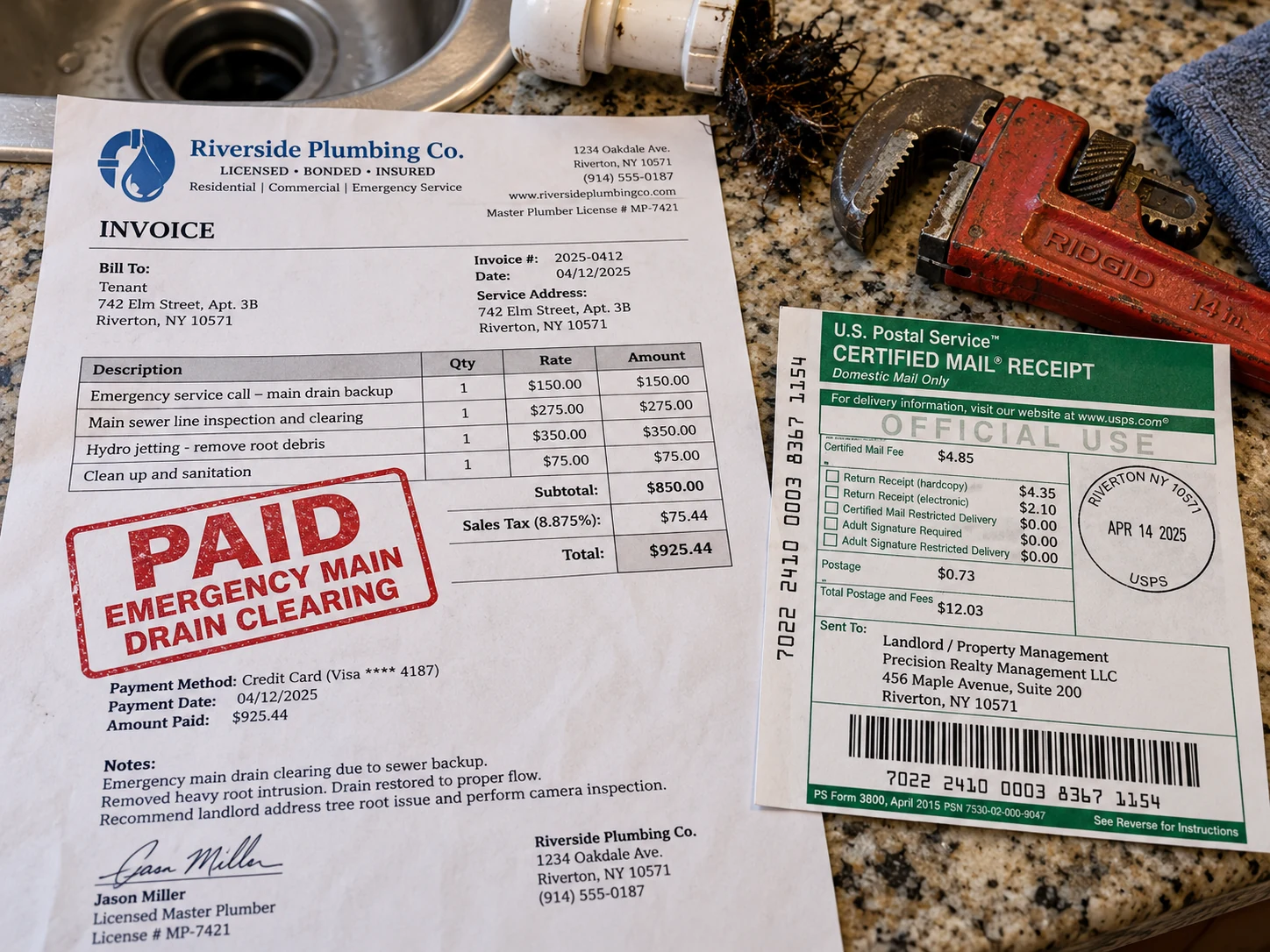
While the service technician is packing their tools, ask directly: "Where was the blockage, and what caused it?" Request that the plumber note on their written carbon work ticket: "Cleared main sewer line at 45 feet — grease and cast-iron corrosion, no foreign objects found." Take a clear photograph of that work ticket with your phone before the plumber hands it to the landlord. That single photo prevents dishonest landlords from fabricating a tenant-fault claim.
Did a Plumbing Leak or Running Toilet Spike Your Water Bill by $300+? Here Is How to Get It Back
Tenants who pay their own metered water and sewer bills often experience a shocking financial blow: a normal $45 monthly water bill suddenly spikes to $380 or $550. In almost every case, the cause is an unfixed mechanical leak that the landlord delayed repairing.
The Staggering Volume of Small Leaks:
- A standard running toilet with a deteriorated rubber flapper can waste 200 to 250 gallons of water per day—adding over 6,000 to 7,500 gallons of wasted water to your monthly municipal statement.
- A leaking underground hot water pipe under a concrete foundation (slab leak) can continuously drain your water heater, driving up both your water bill and your electric or natural gas bill by hundreds of dollars.
The 3-Step Water Bill Recovery Method
- Establish Your 3-Month Baseline Average: Print your last three utility statements prior to the leak (e.g., showing an average bill of $50/month) alongside the spike invoice ($350). The mathematical difference ($300) represents your exact monetary damage claim.
- Provide Written Proof of Notification: The date you transmitted your first written notice (via text, email, or online tenant portal) marks the legal boundary. The landlord is 100% financially liable for all excess water fees billed after that notification date due to their delay in dispatching a plumber.
- Submit a Municipal Leak Adjustment Request: Most municipal water authorities offer a formal "Leak Adjustment Program" that credits back 50% to 100% of excess sewer/water charges once a licensed plumber's invoice is submitted. Apply for this municipal credit and demand the landlord reimburse any remaining balance.
How to Use "Repair and Deduct" for Plumbing (Without Getting Evicted)
When a landlord refuses to fix a broken toilet or stops answering messages regarding a leaking pipe, tenants in approximately 35 states can utilize the statutory Repair and Deduct remedy. This procedure allows you to hire a licensed plumbing contractor yourself and subtract the paid invoice directly from your upcoming rent payment.
To protect yourself from wrongful eviction or non-payment disputes, you must strictly satisfy four statutory rules:
The 4 Essential Rules of Statutory Repair and Deduct:
- Deliver Formal Written Notice First: State the exact plumbing failure and declare your intention to exercise statutory repair-and-deduct remedies if repairs are not initiated by the statutory deadline.
- Wait Out the Mandatory Statutory Window: You must allow the statutory cure period to elapse—typically 24 to 72 hours for an emergency (such as an inoperable only toilet or active water line break) or 7 to 14 days for standard non-emergency defects.
- Verify Your State's Statutory Dollar Limit: Hire an independent, licensed, and insured plumbing contractor whose estimate falls within your state's statutory deduction ceiling (e.g., up to 1 month's rent in California; up to 2 months' rent in Washington; up to $500 or half a month's rent in Illinois; up to $500 or 1 month's rent in Texas).
- Submit the Itemized Receipt With Your Rent Check: When remitting next month's rent, deduct the contractor's paid invoice, attach a copy of the itemized receipt detailing the building defect repaired, and include proof of payment.
If you reside in a state that does not authorize repair-and-deduct (such as Florida or Arkansas), pay your full monthly rent and file a lawsuit in Small Claims Court for full reimbursement of your out-of-pocket plumber receipts and rent abatement.
Ready-to-Send Plumbing Repair, Water Bill Refund & Plumber Fee Dispute Letters
Whether you need to force an immediate plumbing repair, recover hundreds of dollars in spiked water bills, or dispute an unfair plumber fee charged by management, sending a formal written demand is essential.
Select the tab below that matches your situation, fill in your specific details in the bracketed placeholders, and click Copy Letter to Clipboard or Download .TXT.
How Much Can I Sue My Landlord for Plumbing Failures?
When pursuing a legal claim against your landlord in Small Claims Court or Housing Court, financial recovery is determined by statutory damages categories, proven out-of-pocket losses, and rent reduction formulas:
| Recovery Category | Calculation Standard | Statutory Authority & Limits |
|---|---|---|
| 1. Rent Abatement for Loss of Facilities | Refund of rent for days toilets, showers, or kitchen sinks were non-functional or leaking. | Warranty of habitability plumbing mandates. |
| 2. Property Damage from Water Leaks | Fair market value compensation for rugs, furniture, or electronics damaged by unaddressed pipe leaks. | Negligence property damages; see water damage guide. |
| 3. Reimbursement of Illegal Plumber Charges | 100% refund of any invoice landlord improperly passed on to tenant for building-wide or aging pipe clogs. | Statutory prohibition against shifting landlord maintenance duties. |
Small Claims Filing Limits: Most tenants resolve these disputes without hiring an attorney in Small Claims Court. Maximum claim limits vary by state: for example, $12,500 in California (California Courts Self-Help), $10,000 in New York City (NY Courts Small Claims), and $20,000 in Texas (Texas Judicial Branch). If your total damages exceed small claims thresholds, you may file in standard civil district court.
Frequently Asked Questions About Landlord Plumbing Problems
How long does a landlord have to fix a broken toilet?
It depends on how many bathrooms you have: if you live in a 1-bathroom apartment and your only toilet is broken, it is a 24-hour emergency because the apartment is uninhabitable without a working toilet. If you live in a 2-bathroom home and the second toilet still works, the landlord typically has 3 to 14 days to fix the broken one.
Can my landlord make me pay for a clogged drain or plumber visit?
Only if the landlord can prove with an itemized report from a licensed plumber that you or your guests caused the clog by flushing foreign objects like wipes, paper towels, or toys. If the clog was deep in the main sewer line, caused by tree roots or old corroded pipes, or happened shortly after you moved in, the landlord must pay 100% of the bill—even if your lease tries to blame you for all drain clogs.
Who pays for a high water bill caused by a running toilet or hidden pipe leak?
If you knew a toilet was running non-stop for months and never told the landlord, the landlord can argue you failed to report it. However, the moment you report a running toilet, dripping faucet, or suspected leak in writing, the landlord is legally responsible for reimbursing 100% of the excess water and sewer charges caused by their delay in fixing it.
Can I sue my landlord for very low water pressure?
Yes—under the Uniform Plumbing Code and state habitability laws, rental plumbing must supply adequate flow and water pressure, typically at least 15 to 20 PSI, so that you can shower, flush toilets, and wash dishes normally. If corroded pipes or a partially closed main valve reduce your water to a trickle and the landlord ignores your written repair requests, you can call 311 Code Enforcement and sue for a partial rent refund.
What if a leaking pipe under my sink grows mold or ruins my belongings?
Once an unfixed plumbing leak begins damaging your personal items or growing mold after 48 hours, your claim increases significantly: you can sue for 100% replacement of ruined towels, toiletries, and furniture, plus higher rent abatement—see our dedicated guides on suing for Water Damage and Mold.
SueLegal is an independent educational legal publisher, not a law firm or lawyer referral service. The information provided in this guide is for general informational and educational purposes only and does not constitute formal legal advice. Residential landlord-tenant laws, repair notice periods, and statutory remedies vary significantly across state and municipal jurisdictions. If you are facing eviction, severe uninhabitable conditions, or complex litigation, consult a licensed attorney in your jurisdiction or contact your local legal aid organization. For more details on our standards, read our Editorial Policy and Legal Research Methodology.